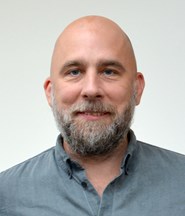
Matthew Selinskeمشاهده پروفایل
استاد مدعو
- Environmental Science and Management
- Policy and Administration
- Psychology and Cognitive Science
- +۵ مورد دیگر
Matthew Selinske serves as an Adjunct Industry Fellow at RMIT University's School of Global, Urban and Social Studies (GUSS) in Melbourne, Australia. His academic appointment positions him at the intersection of environmental science, urban planning, and human behavior change, with a particular focus on biodiversity conservation. As an active researcher with significant publication output, Selinske contributes to RMIT's research ecosystem through his expertise in conservation social sciences and engagement with government and non-government conservation organizations. His research spans several interconnected domains of environmental conservation, with particular emphasis on understanding and influencing human behaviors that affect biodiversity. Selinske investigates how urban design can integrate ecological principles through Biodiversity Sensitive Urban Design, examines financial incentives for private land conservation, and explores the psychological dimensions of human-nature relationships. His work consistently bridges theoretical frameworks from psychology and social sciences with practical conservation applications, making significant contributions to evidence-based conservation practice. A recurring theme across his research is the development of systematic approaches for identifying, prioritizing, and implementing behavior change interventions that deliver tangible biodiversity outcomes. Analysis of Selinske's publication record reveals a strong focus on conservation behavior change as his primary scholarly contribution, with secondary emphases on urban ecology, private land conservation, and interdisciplinary research methods. His work demonstrates increasing engagement with predictive conservation approaches and the integration of social network theory into conservation practice. The trajectory of his research shows movement from foundational work on identifying conservation behaviors toward more sophisticated investigations of systemic change and the social dimensions of conservation effectiveness. As a supervisor, Selinske has guided research projects including 'Beyond green facades: integrating ecology and architecture,' 'Onsets in the City Through Biodiversity Sensitive Urban Design,' and 'Unlocking sustainable agriculture for conservation.' His supervision portfolio reflects his commitment to translating conservation theory into practical applications for urban environments and agricultural landscapes. While specific grant details aren't publicly documented in the provided materials, his research collaborations with government agencies and conservation organizations suggest engagement with applied research funding mechanisms.