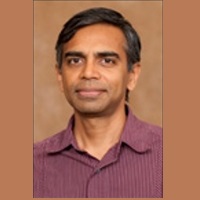
Wes Hartmann is the John G. McCoy-Banc One Professor of Marketing at the Stanford Graduate School of Business. His research focuses on the intersection of marketing, economics, and policy, with emphasis on pricing strategies, brand advertising, social interactions, and conservation. He has advised numerous PhD students who have secured academic and industry positions globally. Key research interests include understanding frequency in brand advertising, preference externality estimators, and the economics of harm reduction through conservation experiments. Hartmann’s work bridges theoretical econometric models with real-world applications, such as dynamic pricing in retail and the impact of digital cinema on market dynamics. His publications have been recognized with prestigious awards, including finalist nominations for the John D.C. Little Award and the Paul Green Award. Notable contributions include groundbreaking studies on Super Bowl advertising effectiveness and the implications of social networks on consumer behavior. Hartmann’s advising record spans over 15 students, many of whom have secured tenured positions or roles at top institutions like Harvard, Columbia, and NYU. His research collaborations include projects on conservation field experiments, internet vs. TV advertising efficacy, and the role of social interactions in targeted marketing.
Anders Parment is a Lecturer in Business Administration at Stockholm University , affiliated with the Stockholm Business School and its Department of Business Administration . With a focus on Marketing , he contributes to research on sustainability, generational differences, and urban-rural market dynamics. PhD in Economics from Linköping University (2005) MSc in Economics from Linköping University and Lund University Degree in Competition Law from Örebro University His research bridges Marketing , Sustainability , and Generational Behavior , examining how urbanization, digitalization, and societal polarization influence consumption and labor markets. Current projects explore urbanization effects and marketization in the Swedish school system . Publications highlight trends in Generational Marketing , Sustainable Practices , and Consumer Behavior across diverse contexts like automotive branding, retail evolution, and public administration. Swedish Marketing Association's Marketing Book of the Year (2019, 2016, 2014, 2013) Educational awards for teaching excellence He teaches basic and advanced marketing courses, including eMBA and leadership programs, emphasizing critical perspectives on corporate sustainability and consumer empowerment.
Stefania Borghini serves as an Associate Professor of Marketing Management at Bocconi University's School of Management, where she investigates critical intersections between consumer behavior and societal challenges. Her work bridges academic rigor with real-world applications in sustainable mobility, inclusive fashion practices, and data-driven cultural management. Her research program centers on how consumers navigate physical and digital marketplaces, with particular emphasis on generational shifts in urban mobility preferences and embodied experiences in retail environments. She employs mixed-method approaches to explore sensory marketing, store attachment dynamics, and the socio-cultural dimensions of consumption, consistently addressing sustainability and inclusivity imperatives. Analysis of her publication trajectory reveals a strategic evolution toward interdisciplinary societal impact: early work established foundational insights in marketplace ecology and consumer psychology, while recent output pivots toward Generation Z's sustainable mobility adoption and body-positive fashion marketing. This progression demonstrates increasing engagement with policy-relevant research on urban planning and industry transformation. Her scholarly contributions have earned significant recognition: Three-time recipient of Bocconi University's Excellence in Research Award (2020, 2010, 2009) Innovation in Teaching Award from Bocconi University (2016) Davidson Honorable Mention for Best Article in Journal of Retailing (2011)
Dan A. Iancu is an Associate Professor of Operations, Information & Technology at Stanford Graduate School of Business, affiliated with the Emmett Interdisciplinary Program in Environment and Resources (E-IPER). He holds a BS from Yale, SM from Harvard, and PhD from MIT. His research bridges operations, finance, and sustainability, focusing on dynamic optimization under uncertainty and its applications in supply chains, FinTech, and healthcare. Notable work includes designing financing solutions for global supply chains and promoting ethical analytics. Education: BS in Electrical Engineering (Yale, 2004), SM in Engineering (Harvard, 2006), PhD in Operations Research (MIT, 2010). Professional experience includes a Goldstine Fellowship at IBM Research and teaching roles at Wharton and INSEAD. He has won multiple awards including INFORMS Optimization Society (2009) and JFIG (2013) prizes. Research emphasizes fairness and environmental impact, with recent projects on sustainable palm oil production and climate impacts of digital supply chains. His work appears in Management Science, Operations Research, and Mathematics of Operations Research. Awards include Srivani Faculty Scholar (2023–24) and teaching commendations at Harvard, MIT, and INSEAD. He advises on multi-disciplinary projects involving engineering, environmental science, and business students.
Om Narasimhan is Professor of Marketing at the London School of Economics and Political Science. His research focuses on entrepreneurship in emerging markets, innovation, pricing, and distribution channels. He earned his Ph.D. from the University of Southern California and previously held the Board of Overseers Chaired Professorship at the University of Minnesota's Carlson School of Management. Education: Ph.D. in Business Administration (Marketing), University of Southern California M.S. in Physics, University of Virginia B.S. in Physics, University of Delhi His work explores how microentrepreneurs navigate informal economies and how marketing strategies adapt to emerging market constraints. Research integrates behavioral economics, supply chain dynamics, and consumer psychology to address real-world business challenges. Publications emphasize empirical analyses of market mechanisms, with recurring themes in retail strategy, compensation models, and global business development. Article keywords frequently include entrepreneurship, consumer behavior, and emerging economies. Awards: SIG Best Paper awards (American Marketing Association) John D. Little award finalist Marketing Science Institute Young Scholar Outstanding Researcher Award (Carlson School) Best MBA Professor Award (Carlson School) He teaches in the Masters in Management and Global Executive programs, with executive education engagements at companies including 3M, Samsung, and Target. Leads the Marketing Faculty Research Group at LSE.
Yini Chen is an Assistant Professor in the Department of Apparel, Merchandising, Design and Textiles at Washington State University (WSU), part of the College of Agricultural, Human, and Natural Resource Sciences (CAHNRS). Their work focuses on retail innovation, consumer behavior, and sustainable practices in the fashion industry. Education: PhD in Individual Interdisciplinary Doctoral Program, WSU MS in Apparel, Merchandising, Design, and Textiles (AMDT), WSU MA in Organizational Leadership, Gonzaga University BS in Business Administration (B.B.A.), International Business, University of Technology Sydney, Australia AS in Business Administration and Management, Shanghai University, China Research Interests: Chen’s research explores omnichannel retail strategies, lifestyle retailing in emerging markets, consumer responses to sustainability initiatives, and the impact of technology (e.g., AR, social media) on shopping behavior. Key themes include: Omni-channel integration and consumer decision-making Environmental stimuli in luxury retail environments Sustainability in apparel recycling and material innovation Millennial consumer behavior in fashion consumption Publications: Chen’s recent work highlights trends in sustainable materials (e.g., regenerated cellulose fibers), post-pandemic retail shifts, and omnichannel strategies. Over 15 peer-reviewed articles and book chapters since 2017 reflect a focus on empirical studies of consumer behavior and retail innovation. Awards & Honors: 2nd Place, 2022 GPSA Research Expo Poster Competition CAHNRS 2021 Graduate Student Leadership Award 2022 GPSA Excellence Awards Graduate Student Instructor Awardee WSU 2020 President’s Award for Leadership Grants & Advising: PI on a $2,000 CAHNRS-funded 2023 study exploring metaverse shopping experiences. Teaches courses in retailing, sustainability, and leadership, emphasizing practical applications of research findings. Labs/Teams: Engaged in cross-disciplinary collaborations within CAHNRS and WSU’s School of Food Science to address retail and supply chain challenges in the apparel industry.
Dr. Rajesh Bhargave is an Associate Professor of Marketing at the Department of Analytics, Marketing and Operations within Imperial Business School, Imperial College London. He holds a B.B.A. from the University of Texas at Austin and a Ph.D. from the Wharton School of the University of Pennsylvania. His research focuses on consumer behavior, particularly how social contexts and digital tools influence decision-making and product evaluations. Dr. Bhargave’s academic journey includes prior faculty positions at the University of Texas at San Antonio before joining Imperial College London. He teaches across programs including MBA, Executive Education, and Pre-experience Masters, emphasizing practical application of marketing principles. His research explores two primary areas: (1) the impact of social environments on product preferences, analyzing shared versus solitary consumption experiences, and (2) how online technologies reshape consumer decision-making processes. Key topics include hedonic judgments, numerical processing in choices, and the psychological effects of digital cues like 'cloud' reminders. His publications span journals such as Journal of Consumer Research and Psychological Science , reflecting a strong focus on behavioral economics and consumer psychology. Notable themes include 'collective satiation,' 'cue-of-the-cloud effects,' and the role of round numbers in consumer perceptions of product longevity. Dr. Bhargave has advised students such as JORGE PENA-MARIN and Nicole Votolato Montgomery. While no scientific awards are explicitly listed, his work contributes significantly to marketing theory and practice. His research and teaching underscore the intersection of technology, social dynamics, and consumer behavior.
Hannu Saarijärvi is a Professor in the Faculty of Management and Business at Tampere University, specializing in Marketing. His research bridges consumer behavior, retail innovation, and data-driven health studies. Based in Tampere University's City Centre Campus, he explores transformative retailing and societal impacts of consumer data. University: Tampere University School: Faculty of Management and Business Department: Business Studies Email: hannu.saarijarvi@tuni.fi His research focuses on consumer behavior in omnichannel and second-hand retailing, data analytics using loyalty card datasets, and health research linking maternal experiences to dietary patterns. Recent studies examine sustainable diets , alcohol consumption dynamics , and food waste reduction . Key article trends highlight loyalty card data applications in health informatics , retail transformation , and sustainability . Collaborative studies with Finnish institutions analyze population-level consumption behaviors, legislative impacts, and digital service innovations. Professor Saarijärvi's work emphasizes value co-creation , customer experience , and strategic digitalization in retail contexts, with practical implications for public health and business models.
Scott McCabe is a Professor of Marketing at Birmingham Business School, University of Birmingham. He earned his PhD from the University of Derby in 2001, focusing on visitor motivations in the Peak District National Park, and holds an MA in Leisure and Tourism Studies from the University of North London (1993) and an HND in Leisure Studies from the University of Salford (1991). Current co-editor in Chief of the Annals of Tourism Research Editorial board member of Tourism Management Elected fellow of the International Academy for the Study of Tourism (2019+) His research spans social tourism , responsible tourism , tourist emotions , and socio-linguistic methodology , with significant work on wellbeing outcomes from supported holidays for disadvantaged families. He has contributed to Annals of Tourism Research , Journal of Travel Research , and other top-tier journals. Recent publications address topics like qualitative research sampling , tourism theory , dark tourism motivations , and smart destination engagement . His work combines tourism policy critique , consumer behavior analysis , and methodological innovation . Scientific awards include fellowships and leadership roles in international tourism research committees. He has served as VP for the International Sociological Association's Tourism Research Committee and co-chairs the Academy of Marketing's Tourism Marketing SIG.
Michael Cottingham is an Associate Professor of Sport Administration in the Department of Health and Human Performance at the University of Houston's College of Liberal Arts and Social Sciences. He serves as the Director of Adaptive Athletics at UH, leading a comprehensive disability sport program and research lab that has produced over 50 publications and secured more than $1.3 million in external funding. Dr. Cottingham teaches senior-level undergraduate classes and is involved in the Sport Administration graduate program. B.A. in Political Science, Minor in Sociology at The University of Arizona, 2002 M.S. in Recreation Administration at The University of Southern Mississippi, 2008 Ph.D. in Human Performance concentration Sport Management at The University of Southern Mississippi, 2012 Dr. Cottingham's research focuses on disability sport, particularly examining perceptions of athletes with disabilities, spectatorship and sponsorship in disability sport, and broader topics in sport consumer behavior. His work explores promotional strategies in sport and how these apply specifically to disability contexts. He has conducted extensive research on wheelchair rugby, power soccer, and wheelchair tennis, examining consumer motivations, marketing approaches, and the experiences of athletes and spectators in these sports. Analysis of Dr. Cottingham's recent publications reveals a strong emphasis on disability sport consumer behavior across multiple disciplines including sports marketing, psychology, rehabilitation science, and sociology. His research spans both theoretical frameworks and practical applications, with particular attention to how disability sport programming impacts Latinx populations with mobility impairments. The publications demonstrate interdisciplinary collaboration with researchers in community health, rehabilitation, and sport management fields. As Director of Adaptive Athletics at UH, Dr. Cottingham oversees a program that hosts large-scale disability sport events including the annual Cougar Open wheelchair tennis tournament. The program partners with The Institute for Research and Rehabilitation and runs the Community Healthcare Worker Model Study, which examines the impact of disability sport programming on Latinx with mobility impairments. Through Adaptive Athletics, Dr. Cottingham has developed programs for wheelchair rugby and adaptive tennis, with plans to expand to power soccer and wheelchair basketball. The program has received funding from the National Institute on Disability, Independent Living, and Rehabilitation Research (NIDILRR) and has established partnerships with organizations including Houston Parks and Recreation, United States Quad Rugby Association, United States Tennis Association, Halliburton Charitable Foundation, and One Step Closer Foundation.
Overview Dr. Catherine Prentice is a Professor of Marketing and Head of the Marketing Discipline at the University of Southern Queensland, Australia. She also serves as Director of the Asia Pacific Association for Gambling Studies (APAGS) and holds editorial roles across multiple top-tier journals including Journal of Business Research and International Journal of Contemporary Hospitality Management . Her research focuses on artificial intelligence, emotional intelligence, service innovation, consumer behavior, and gambling studies, with significant contributions to the tourism and hospitality sectors. Education MBA, Lincoln University (2001) PhD in Marketing, Victoria University (2009) Research Interests Dr. Prentice’s work bridges theoretical and applied research, emphasizing the practical implications of her findings. Key areas include: - The role of AI in enhancing customer engagement and loyalty - Emotional intelligence in service encounters and leadership - Consumer psychology in tourism and hospitality contexts - Strategic marketing in the gambling and gaming industries - Sustainability and innovation in service delivery Publications & Impact Her over 100 peer-reviewed articles span journals like Journal of Hospitality & Tourism Research and Tourism Management , with a focus on empirical investigations of service quality, customer loyalty, and organizational performance. Recent work explores the intersection of AI and human service interactions. Leadership & Service In addition to her academic roles, Dr. Prentice contributes to industry through: - Editorial board memberships across 12+ Q1 journals - Leadership in professional associations like NAGS and ANZMAC - Consultancy in business strategy and marketing for corporations and governments
Jordan Etkin is an Associate Professor of Marketing at Duke University’s Fuqua School of Business, specializing in studies of goal pursuit, motivation, and time management. She explores how goal structures, variety in activities, and personal quantification impact behavior and well-being. Her research bridges consumer behavior, psychology, and decision science, with frequent publications in top-tier journals like the Journal of Consumer Research and Journal of Marketing Research. Education: PhD (Year not specified, but teaches since 2013) Her research interests focus on the interplay between goals and personal resources (e.g., time), including unintended consequences of tracking behaviors like step-counting. Key themes include motivation dynamics, goal conflict resolution, and temporal resource allocation. She frequently engages with popular media, appearing in outlets like the New York Times and BBC. Recent work (2020–2024) highlights topics such as time limits paradoxically increasing consumption, variety’s role in goal conflict, and machine learning’s applications in behavioral research. Her 2019 JCR Award underscores scholarly impact. Awards: 2019 JCR Awards Announcements (Recipient) Teaching responsibilities include the Marketing Core class for Fuqua’s MBA program. While no lab teams are explicitly mentioned, her research themes suggest collaborative work in behavioral science and consumer studies.
Danny Poo Chiang Choon is a tenured Associate Professor at the School of Computing (SOC), National University of Singapore (NUS). As Curriculum Chair of the Department of Information Systems and Analytics, he plays a key role in designing and implementing Information Systems and Computer Science curriculum at NUS. Dr. Poo earned his BSc (Honours), MSc and PhD in Computation from the University of Manchester Institute of Science and Technology (UMIST), United Kingdom. His academic journey has established him as a leader in health informatics and information systems at NUS. His research spans multiple domains with strong focus on Healthcare Informatics , where he investigates mobile health interventions, health analytics, and systems for improving patient care. His work in Data Science & Business Analytics explores knowledge management, information sharing, and effective search strategies. In Intelligent Systems , he examines software engineering approaches, object-oriented systems, and knowledge classification frameworks. His recent publications demonstrate a clear trajectory toward mobile health applications, particularly in coronary heart disease prevention and diabetes management. Dr. Poo's work consistently bridges technical computing with practical healthcare applications, focusing on user-centered design and evidence-based interventions. His research shows strong interdisciplinary integration between computer science, healthcare systems, and behavioral science, with emphasis on practical implementation in Singapore's healthcare context. Dr. Poo has served in numerous leadership roles including as the founding Director of the Centre for Health Informatics at NUS (2012-2015) and as a member of the Steering Committee of the Asia Pacific Software Engineering Conference (APSEC) since 1994, serving as Vice-Chairman from 2003-2005. He has been invited to speak at international forums including the Japanese Government's "USA, Kyushu and Asia International Exchange Project" and as a keynote speaker at the 2009 Arabic Scripts Second Symposium in Abu Dhabi. His expertise is recognized through invitations to speak on knowledge management topics at conferences in Singapore. Dr. Poo has authored five books in the Information Technology area: "Enterprise JavaBeans for Students" (2014), "Object-Oriented Programming and Java" (1998, 2007), "Learn to Program Enterprise JavaBeans 3.0" (2009), "Learn to Program Java" (2009), and "Learn to Program Java User Interface".
Magnus Linnarsson is a Professor of History at Stockholm University's Department of History, specializing in political history with a focus on early modern and modern Sweden. His research examines institutional change, public-private service organization, and the evolution of the welfare city. He leads undergraduate programs and supervises students at all levels. PhD in History (2010), Lund University Associate Professor (2017), Stockholm University His research spans four centuries of political conflicts over public services, state formation, and urban development. Key works include analyses of Sweden's postal, customs, and welfare systems, comparing hierarchical and contractual state organization models. Recent publications (2024) in Nordic Welfare Cities explore urban citizenship and inclusive welfare systems since 1850, challenging national narratives by emphasizing local governance. Earlier studies (2022–2018) dissected regime shifts, mercantile-state relations, and publicness concepts in tramway and telecom debates. Current projects include: Skiftande regimer (2021–2025): State formation and administrative reform (Vetenskapsrådet-funded) Olika vägar till välfärdsstaden (2021–2025): Nordic urban welfare debates (Riksbankens jubileumsfond-funded) He advocates for interdisciplinary analysis of political economy, institutional loyalty, and spatial dynamics, connecting historical debates to modern policy challenges.
Tridas Mukhopadhyay is the Deloitte Consulting Professor of e-Business at Carnegie Mellon University's Tepper School of Business, where he has served on the faculty since 1986. His academic journey at CMU progressed from Instructor of Information Systems (1986-1987) to Assistant Professor (1987-1993), Associate Professor (1993-1997), Professor (1998-present), and Deloitte Consulting Professor of e-Business (2000-present). He also served as Director of the MS in Electronic Commerce program from 1999-2004. Ph.D. in Computer and Information Systems, University of Michigan–Ann Arbor, 1987 M.B.A. in Computer and Information Systems, Indian Institute of Management Calcutta, 1981 B. Tech. in Electrical Engineering, Indian Institute of Technology Kharagpur, 1978 Professor Mukhopadhyay's research spans multiple critical areas in information systems and technology management. His work on strategic IT use examines how organizations derive business value from information technology investments. He has conducted extensive research on business-to-business commerce, particularly focusing on e-procurement systems, web-based marketplaces, and electronic intermediation models. His cybersecurity research investigates the economic aspects of cyber security, including liability mechanisms and patch release strategies. In software engineering, he has studied productivity, quality metrics, and offshore software development contracts. His most recent publications reveal several key trends in his research trajectory. There's a growing focus on digital platform economics, examining advertising models, virtual currency systems in gaming, and sharing economy dynamics. His work increasingly incorporates behavioral aspects, studying how users respond to personalized content and how backers exert control in crowdfunded projects. Methodologically, his research employs sophisticated analytical approaches including hierarchical Bayesian models, structural equation modeling, and natural experiment designs. CART Research Frontier Award, Carnegie Mellon, 2005 Distinguished Ph.D. Alum, Michigan Business School, 2004 Best Paper, International Conference on Information Systems, 2001 Best Paper, MIS Quarterly, 1995 Xerox Research Chair, Tepper School of Business, 1988-1989 Information Systems Society Distinguished Fellow, 2012 Professor Mukhopadhyay has served on numerous editorial boards including Information Systems Research (1994-2003), Management Science (1999-2003), and MIS Quarterly (1997-1999), demonstrating his significant contributions to the field. His consulting work with major organizations including Alcoa, Chrysler, Ford, General Motors, IBM, and governmental agencies like the United States Post Office and Pennsylvania Turnpike has provided practical insights that inform his academic research. He has been actively involved in university governance through committee service including the Business Technology Faculty Search Committee and the CMU Faculty Senate. His research has been supported through various industry partnerships and academic grants, though specific grant details aren't provided in the source material. His teaching focuses on Business Computing and Strategic IT courses, reflecting his expertise in both foundational information systems concepts and strategic applications of technology in business contexts.