معرفی
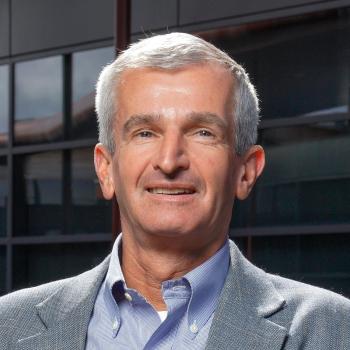
Thomas Söllner is a Full Professor (W3) at Heidelberg University's Biochemistry Center (BZH) within the Faculty of Medicine, a position held since 2005. His research focuses on molecular mechanisms of cellular signal transmission, particularly membrane fusion and synaptic transmission processes.
Educational background:
- Diploma in Biology, Ludwig-Maximilians-University Munich (1987), supervised by Prof. Rudolf Schweyen
- Ph.D. in Biology, Ludwig-Maximilians-University Munich (1991, summa cum laude), supervised by Prof. Walter Neupert
His research program investigates SNARE protein machinery, regulatory factors (synaptotagmin, complexin, Munc18-1), and electrostatic mechanisms in vesicle priming, docking, and fusion. Work integrates biochemical, biophysical, and cell biological approaches to understand spatio-temporal control of cellular signaling.
Recent publications (2012-2019) reveal conserved principles of membrane fusion across biological systems, highlighting roles of phosphorylation, conformational dynamics, and membrane protrusions in regulating neurotransmission. Key trends include structural characterization of SNARE complexes and calcium-independent fusion mechanisms.
Scientific recognition:
- DFG Postdoctoral Fellowship (1991-1993)
- Ph.D. summa cum laude (1991)
As Principal Investigator, he serves as Speaker of DFG Collaborative Research Centre SFB/TRR 83 ("Molecular Architecture of Cellular Functions of Lipid/Protein Assemblies") since 2010 and was Managing Director of BZH (2016-2018). Previous editorial roles include The Journal of Biological Chemistry (Associate Editor 2013-2017, Editorial Board 2007-2012).
He leads a research group at Heidelberg's Biochemistry Center within the SFB/TRR186 consortium on molecular switches, continuing work initiated during his 14-year tenure at Sloan Kettering Institute (1991-2005) where he established his independent research program.