معرفی
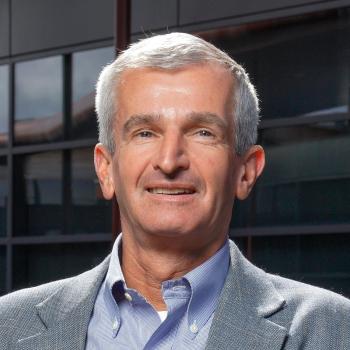
Axel Brunger is a Professor at Stanford University in the Department of Molecular and Cellular Physiology, Photon Science Directorate, Neurology & Neurological Sciences, and Structural Biology (by courtesy). He is an Investigator of the Howard Hughes Medical Institute (HHMI) since 1987 and a member of the National Academy of Sciences (2005) and American Academy of Arts & Sciences (2021). His research focuses on structural biology and biophysics of synaptic proteins, particularly SNAREs, complexin, and synaptotagmin, which mediate neurotransmitter release and membrane fusion.
- Education: Diplom in Physics (University of Hamburg, 1980)
- Ph.D. in Biophysics (Technical University of Munich, 1982)
His groundbreaking work includes pioneering X-ray crystallography tools for structural calculation and cryo-EM studies of synaptic supercomplexes. Recent studies reveal mechanisms of NSF-mediated SNARE disassembly, α-synuclein's physiological role in synaptic vesicle clustering, and synaptic vesicle architecture via cryo-tomography. He discovered novel protein interactions like V-ATPase-synaptophysin and AMPA receptor-PSD networks, with implications for Parkinson's disease and neurotransmission disorders.
His publications span Structural Biology, Neuroscience, Molecular Biophysics, and Biochemistry, with a focus on SNARE Complex Dynamics, Membrane Fusion Mechanisms, and Synaptic Vesicle Biogenesis. Key subfields include Cryo-EM Structural Analysis, Protein-Protein Interactions, Neurodegenerative Disease Models, ATPase Function, Synaptic Transmission, and Phase Separation in Neurons.
- Scientific Awards: Gregori Aminoff Prize (2003), Röntgen Prize (1995), DeLano Award (2011), Carl Hermann Medal (2014), Katz Award (2014), Trueblood Award (2016), and National Academy of Sciences membership (2005).
Brunger mentors postdoctoral and doctoral students, including Liv Jensen, Yousuf Khan, and Jiahao Liang. He contributes to graduate programs in Biophysics, Molecular and Cellular Physiology, Neurosciences, and Structural Biology. His lab develops advanced protocols for studying synaptic vesicle fusion and protein interactions using single-vesicle assays and subtomogram averaging.