Dr Fiona Green is a University Associate Professor in American Literature at the Faculty of English, University of Cambridge, and serves as Director of Studies for Part II of the English Tripos at Jesus College. She holds a BA Hons from Durham University and a PhD from the University of Cambridge. Research interests focus on American poetry and history, emphasizing the interplay between poetry and material culture. Her work explores publication contingencies (particularly magazine formats), built environment representations, and acoustic textures of verse. Central to her scholarship is the meticulous analysis of literary texts as multifaceted historical artifacts. Recent publications highlight intersections of modernist poetry, transatlantic cultural dynamics, and periodical studies. Fiona supervises PhD students in American and modernist poetry, 20th-century periodical culture, and transatlantic modernism, while also teaching the MPhil in English Studies. She has contributed to critical anthologies on Marianne Moore, Elizabeth Bishop, and The New Yorker’s literary influence.
Bryan Alexis is a Professor in Art and Graphic Design at the University of Arkansas - Fort Smith , where he has taught since 2006. His coursework includes graphic design, web design, motion design, creative design, and advertising design. B.A. in Graphic Design from Southern Arkansas University (1995) M.A. in Graphic Design from Northwestern State University of Louisiana (2006) M.F.A. in Visual Design from University of Arkansas (2011) A native of DeLeon, Texas, raised in Louisiana, Bryan is renowned for large-scale mural art, creating over 34 public works in Arkansas and Oklahoma since 2015. His professional experience spans freelance design, art direction, and design education since 1995.
Melanie Magin is a Professor at the Department of Sociology and Political Science, Norwegian University of Science and Technology (NTNU), with a PhD in media studies from Johannes Gutenberg University in Mainz, Germany. Her research explores the intersection of political communication, digital communication (especially social media), and comparative research, focusing on media systems, media quality, and election campaigning. Current role: Professor and Distinguished Lecturer at NTNU Research areas: Media sociology, political communication, social media, comparative media research Projects: Norwegian National Election Study (2025-32), DigiWorld (2021-), CamforS (2019-), ICCS 2027 (2025-30) Her recent publications analyze social media’s role in political mobilization, migration coverage, and algorithmic threats to democracy. She chairs ECREA’s Political Communication Section (2021–2022) and was awarded NTNU’s Merited Lecturer status in 2024. She contributes to projects on media performance, digital citizenship, and inclusive education practices. Scientific Awards: Merited Lecturer, NTNU (2024)
Michelle Amazeen is a Core Faculty member at Boston University's Institute for Global Sustainability (IGS) and serves as Associate Dean of Research and Associate Professor in the Department of Mass Communication, Advertising and Public Relations at the College of Communication. She also directs the Communication Research Center. Her research focuses on mediated persuasion, misinformation dynamics, and strategies to combat disinformation. She employs mixed-methods approaches to inform journalists, policymakers, and educators. Educated at Temple University (PhD in Mass Media and Communication) and the University of Illinois at Urbana-Champaign (MS and BS in Advertising), her work has been funded by organizations including the American Press Institute and the Rita Allen Foundation. Key contributions include co-authoring The Debunking Handbook 2020 and The COVID-19 Vaccine Communication Handbook . Current initiatives involve the Boston University Climate Disinformation Initiative, examining corporate native advertising's impact on climate discourse. Her research bridges theoretical insights with practical applications for fostering public resistance to misinformation in media. Notable grants include support from the Institute for Global Sustainability and the Rafik B. Hariri Institute. She collaborates globally on misinformation projects and advises on vaccine communication strategies. Labs/Teams: Directs the Communication Research Center and participates in interdisciplinary sustainability and media ethics initiatives.
Dr. Troy Gibson is an Associate Professor in the Department of Political Science at the University of Southern Mississippi, where he has taught since 2003. A native Mississippian, he specializes in American Politics and Public Law, with a focus on the role of religion in political outcomes and behavior. His research bridges empirical and theoretical perspectives, examining topics such as religious liberty, moral authority in discourse, and cultural policy debates. PhD in Political Science, University of Georgia (2004) MA in Political Science, University of Georgia (2001) BA in Political Science, University of Southern Mississippi (1999) Dr. Gibson's scholarly contributions span diverse areas including legislative strategies, interest group influence, and the intersection of ethics with political decision-making. His recent 2025 article explores Rousseau's theories in the context of American secularism, while earlier works address concealed-carry laws, civic engagement among youth, and the treatment of evolutionary theory in education standards. These publications (2001–2025) reflect his interdisciplinary approach, integrating political science, economics, and social theory. Mississippi Political Science Association He teaches courses such as "Religion and Politics in America" and "Church and State" (Study Abroad in Rome, Italy). Contact: Liberal Arts Building Room 418, Hattiesburg; email Troy.Gibson@usm.edu ; phone 601.266.4277.
Paula Bela Rosa Luís Lopes is an Associate Professor at Lusófona University, focusing on Integrated Marketing Communication, Social Media, Outdoor Advertising, and Digital Marketing. She holds a PhD in Audiovisual Communication and Advertising from the University of Extremadura (2012) and is pursuing a second doctorate in Marketing, Big Data, and Data Mining at the University of Huelva. Her research involves projects like EPIC-WE and GAMEYES, and she is an integrated member of CICANT - Research Center for Applied Communication, Culture and New Technologies. PhD in Audiovisual Communication and Advertising (University of Extremadura, 2012) Second Doctorate in Progress: Marketing, Big Data, and Data Mining (University of Huelva) Her research explores digital marketing strategies, sustainability in advertising, consumer behavior in social media, and innovative methodologies like Q-Sort and Delphi techniques. Recent publications analyze topics such as Gen Z's response to green advertising, metaverse applications in marketing, and sustainable fashion practices. She has advised multiple master's theses and held leadership roles in academic programs, including directing the Master's in Marketing at ISG (2019-2022) and the Master's in Integrated Communication at INP (2016-2019). She previously coordinated the academic journal IBER and contributed to conferences like ECREA and SOPCOM.
Katerina Tsetsura is Gaylord Family Professor of Public Relations and Strategic Communication at the Gaylord College of Journalism and Mass Communication, University of Oklahoma. She holds affiliate faculty positions across multiple university programs including OADII, ICAST, IREES, SES Multidisciplinary Certificate Program, M.A. in Global Affairs, M.S. in Engineering Leadership and Management, and the Romanoff Center for Russian Studies. Her educational background includes a PhD from Purdue University, an MS from Fort Hays State University, and a Specialist with Diploma from Voronezh State University in Russia. PhD, Purdue University MS, Fort Hays State University Specialist with Diploma, Voronezh State University, Russia Dr. Tsetsura is internationally recognized for her work in global public relations and media transparency. Her research focuses on knowledge societies in transition, global public relations development, public relations ethics, media transparency, public diplomacy, government relations, and community resilience. She has authored over 80 peer-reviewed publications and two major books: 'Transparency, public relations, and the mass media' (2017) and 'Strategic Communications in Russia: Public Relations and Advertising' (2021). Her recent publications (2022-2025) demonstrate a diverse research portfolio spanning renewable energy policy in Native American communities, crisis communication in Eastern Europe, youth information behavior on social media, resistance to conspiracy propaganda, Indigenous Sámi news sources, and Russian political discourse. These works reflect her transdisciplinary approach connecting public relations, political communication, cultural studies, and environmental issues. 2018 PRSA Educator of the Year Recipient Dr. Tsetsura serves as co-PI on the NSF Growing Convergence Research grant (2023-2028, $3.6 million) studying carbon-free hydrogen production and storage, and as senior personnel on the NSF NRT research program DIANA ($3 million, 2025-2030) addressing transdisciplinary graduate education challenges. She has previously served as co-PI on the NSF RANGE project (2022-2025) and consults for the U.S. Department of State and United Nations. She is also a member of the invitation-only Arthur W. Page Society. Her professional service includes leadership roles in academic associations, editorial board memberships for major communication journals, and active participation in the U.S. Commission on Public Relations Education.
Manon Revel is a Postdoctoral Research Scientist at Meta FAIR and a former Postdoctoral Employee Fellow at Harvard's Berkman Klein Center (2023–2024). She holds a PhD in Social and Engineering Systems and Statistics from MIT, alongside degrees from Ecole Centrale Paris and MIT's Technology and Policy program. Her research focuses on computational social choice, collective intelligence, and AI alignment, blending mathematics, political theory, and technology to design democratic decision-making systems. She has pioneered work on liquid democracy, governance frameworks for social media, and ethical AI alignment metrics. Revel has taught at MIT, Notre Dame, and the Kroc Institute for International Peace Studies, and led initiatives like the Future of Social Media reading group at the Institute for Rebooting Social Media. Her interdisciplinary approach addresses challenges in democratic innovation and AI ethics, with notable contributions to Management Science, AAAI, and AAMAS. Education: PhD in Social and Engineering Systems & Statistics, MIT (2023) M.S. in Technology and Policy, MIT B.S./Diplôme d'Ingénieur in Engineering & Applied Mathematics, Ecole Centrale Paris Research Interests: Designing mathematical models for collective decision-making in human and AI systems AI alignment through reward model evaluation and systematic error analysis Governance frameworks for social media and democratic institutions Liquid democracy's epistemic performance and scalability Key Contributions: Revel's work bridges theory and practice, including the SEAL framework for AI alignment, the Democracy Levels framework for ethical AI governance, and empirical studies on liquid democracy's truth-tracking capabilities. Her publications analyze social media regulation, interdisciplinary dialogue in academia, and representative body selection using axiomatic models. Awards & Affiliations: Doctoral Democracy Fellow, Harvard Kennedy School's Ash Center (2021–2023) Adjunct Professor, University of Notre Dame (past) Lead of AI & Democracy research program at Berkman Klein Oral presentation at AAAI-25 for SEAL: Systematic Error Analysis for Value Alignment Labs & Collaborations: Revel collaborates with institutions like the MIT Media Lab, the Responsible AI Institute, and the Center for Strategic and International Studies, focusing on interdisciplinary projects at the intersection of technology, democracy, and ethics.
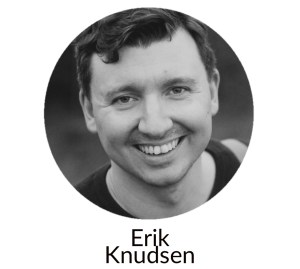
Dr. Erik Knudsen is an Associate Professor at the Department of Information and Media Studies, University of Bergen , specializing in media use and audience research . He leads the NEWSREC project on news recommenders' democratic impact and co-leads a work package at the MediaFutures Research Centre . His research focuses on quantitative audience analysis , media polarization , and trust in journalism . Education : PhD from UiB, Postdoc at DIGSSCORE Research Interests : Selective exposure, affective polarization, media effects, conjoint analysis, political communication, and framing theory Awards : Recipient of the Research Council of Norway's Research projects for young talents fellowship He serves as editor-in-chief of Norsk medietidsskrift and chairs NordMedia23 . His work appears in Journal of Communication , Political Communication , and Digital Journalism , with 2022's Modeling news recommender systems being highlighted. He founded the Norwegian Journalism Panel and leads DIGSSCORE's Political Behavior and Communication Research Group . The summary includes his Ted-talk, PechaKucha presentation, and Forsker Grand Prix participation.
Dr. Oana Cosman is a Lecturer at the University of Regina, Saskatchewan, Canada, with over 15 years of experience in teaching English for Academic Purposes at the university level. She holds a Ph.D. in Written Business Communication and an MA in the Language of Advertising and Media Communication, contributing to her expertise in business discourse and communication. Her research centers on business communication, with a focus on linguistic and cultural aspects such as politeness strategies, Face-Threatening Acts in business correspondence, and cross-cultural variability in professional communication. She has conducted research comparing native and non-native English speakers' communication styles in business contexts. Oana Cosman has designed and delivered specialized courses in Business English, including a business writing course tailored for academic and professional settings. Her academic engagement includes enhancing her knowledge through additional coursework in business communication at Canadian institutions such as the University of Toronto and the University of Regina. Although no publications or research projects are currently listed, her scholarly work during her Ph.D. included multiple articles on business discourse features. She has not received any listed scientific awards or distinctions in the provided text. She has served as a course designer and instructor, demonstrating strong pedagogical and curriculum development skills. While no students are listed, her role implies mentorship and teaching responsibilities at the undergraduate level. There is no mention of lab affiliations or research teams in the available information.
Laura M. Pipe is an Adjunct Assistant Professor in Kinesiology and Director of the University Teaching and Learning Commons (UTLC) at the University of North Carolina at Greensboro. She leads initiatives in teaching innovation, accessibility, and student success, with a focus on decolonial praxis and Indigenous pedagogies. Her work integrates action sports studies, trauma-informed practices, and universal design for learning (UDL). Education: PhD in Kinesiology, UNC-Greensboro MS in Higher Postsecondary Education, Syracuse University Bachelor’s in Journalism/Advertising, Texas Christian University Research interests include decolonial methodologies, Indigenous knowledge systems, and the intersection of physical activity with spatial theory. She co-created the 'Toward a Liberated Learning Spirit (TALLS)' model to foster critical consciousness in education. Teaching spans sport sociology, critical analyses of physical activity, and mixed/qualitative research methods in kinesiology. She advises UNCG’s Native American Student Association (NASA) and serves on committees for accessibility, AI oversight, and equity/diversity initiatives. Certifications include Universal Design for Learning credentials (CAST), Gallup Strengths Coaching, and Harvard’s case-teaching methodology.
Inés María Arranz Rodríguez is a researcher at the School of Communication and Arts, Nebrija University, affiliated with the INNOMEDIA research group dedicated to Media Innovation and Communication. She earned her doctorate from Universidad Complutense de Madrid in 2010 with the thesis 'Del "yupiie" al "single": Evolución social del consumo en España en las últimas décadas,' supervised by Dr. Joaquín Sánchez Herrera and Dr. Luis Angel Sanz de la Tajada. Her research spans Audiovisual Communication, Advertising, Media Economics, and Digital Transformation . She has explored AI's role in education, programmatic advertising models, and media pricing dynamics. Recent work examines urban outdoor advertising strategies , media funding mechanisms , and audience measurement systems . While her 2010 thesis focused on Spain's socio-consumer evolution, recent publications highlight digital integration challenges in advertising curricula and the impact of emerging technologies on communication pedagogy. Her collaborations include contributions to media innovation and audience research projects. Contact: iarranz@nebrija.es
Libe Mimenza Castillo serves as a Lecturer at the University of the Basque Country (UPV/EHU) within the Department of Audiovisual Communication and Advertising, part of the Faculty of Social Sciences and Communication at the Bizkaia campus. She also holds the position of Coordinator researcher at the Basque Media Observatory (Behategia), a prominent research institution focused on Basque language media and communication studies. Dr. Mimenza Castillo earned her International PhD in Social, Political and Cultural Studies following a Degree in Journalism, establishing a strong foundation for her interdisciplinary research approach that bridges media studies, cultural analysis, and social sciences. Her research focuses on the evolving landscape of Basque language media in digital environments, with particular expertise in audience measurement, social media analytics, and media consumption patterns. She has pioneered methodologies for analyzing Basque media presence on platforms like Facebook and Instagram, examining how minority language media adapts to digital transformation. Her work consistently addresses the challenges and opportunities facing Basque-language communication in an increasingly globalized media ecosystem. Analysis of her recent publications (2021-2025) reveals a clear progression from traditional media analysis toward sophisticated digital analytics, with increasing emphasis on data science applications in media research. She has led the production of the annual Euskal Hedabideen Urtekaria (Basque Media Yearbook), establishing longitudinal datasets that track media evolution over time. Her collaborative work with the Basque Media Observatory demonstrates strong institutional partnerships focused on minority language media sustainability. Dr. Mimenza Castillo actively contributes to academic discourse through her role at UPV/EHU and the Basque Media Observatory, where she mentors researchers and contributes to policy discussions regarding minority language media in digital environments. Her work bridges academic research with practical applications for media sustainability. As Coordinator researcher at the Basque Media Observatory, she leads a multidisciplinary team focused on media measurement, audience research, and digital transformation of Basque language media. This research unit has become a central hub for media studies in the Basque Country, producing influential reports that inform both academic and policy discussions.
Univ.-Prof. Dr. Sabine Einwiller is a Professor of Public Relations Research and Director of the Institute of Journalism and Communication Studies at the University of Vienna , Faculty of Social Sciences. Her work focuses on corporate communication, crisis management, employee engagement, CSR reporting, and digital communication strategies. Professorship for Public Relations Research Institute Director Corporate Communication Research Group Her research explores corporate reputation, diversity in marketing, internal communication during crises, and ethical challenges in digital environments. Recent studies address hybrid communication forms (e.g., native advertising), DEI strategies, and employee responses to negative media coverage. She has received awards for academic excellence, including the Emerald Literati Club 2003 Highly Recommended Award , Best Faculty Paper at ICA 2023 , and Emerald Professional Impact Award . Her work bridges theory and practice through collaborations with institutions like Springer VS and Emerald Publishing. She advises on corporate communication trends, particularly in virtual work settings and social media dynamics. Her team investigates how digital technologies reshape organizational transparency and employee acceptance of communication tools.
Arnaud Delannoy is an Assistant Professor of Marketing at EM Normandie since 2016. He holds a PhD in Management Sciences from the University of Rouen-Normandie (2015) focusing on adolescent social identity through luxury brands. Currently, he holds multiple academic leadership roles including Director of Processes & Program Quality, Director of Bachelor Programs, and Academic Director of the M2 Entrepreneurs program. His research focuses on luxury marketing, digital identity construction, and teenage consumer behavior. Notable contributions include studies on cross-platform social media behavior, ethical cosmetics during pandemics, and the impact of Nutri-Score labeling. He has published extensively in journals like Question(s) de Management and Journal of Consumer Behavior , with over 20 academic articles and conference presentations since 2010. Dr. Delannoy has presented at major conferences including the AFM Congress and International Marketing Trends Conference. His work bridges theoretical frameworks with practical insights, addressing contemporary issues like digital transformation's impact on youth behavior and legal risks in e-commerce. He is actively involved in educational innovation, co-authoring chapters on digital transformation in business (2021) and leading pedagogical initiatives like the Extra Mural program (2022). His interdisciplinary approach combines marketing theory with sociological perspectives to understand evolving consumer landscapes.