معرفی
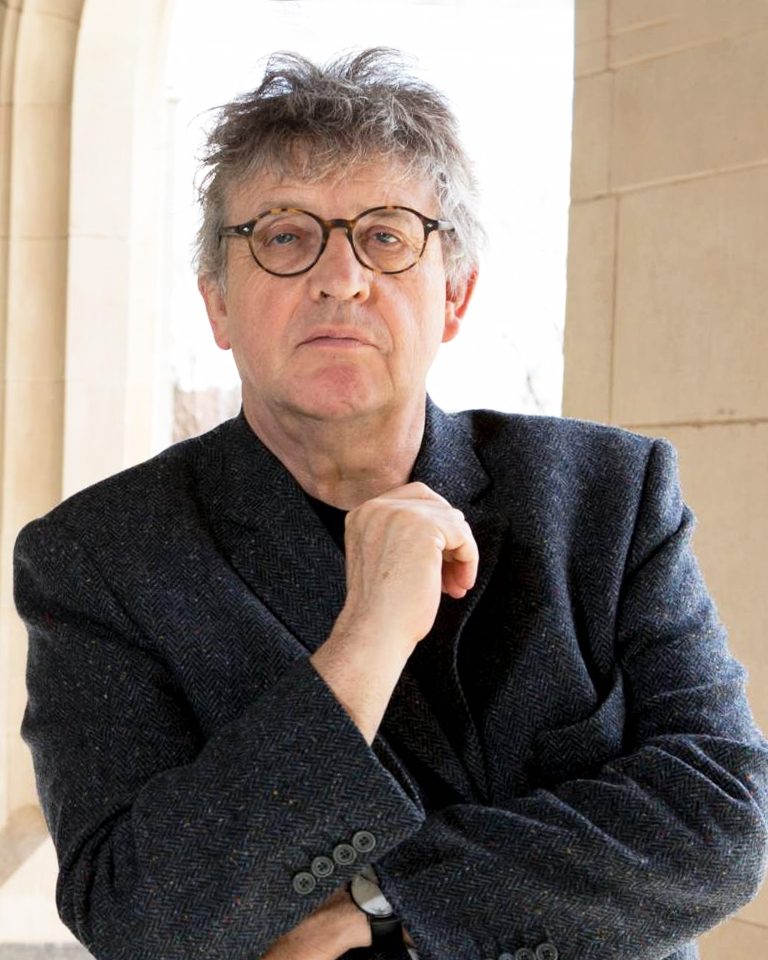
Paul Muldoon is a Visiting Professor at Lancaster University's Department of English and Creative Writing, concurrently serving as the Howard G. B. Clark '21 Professor at Princeton University and Poetry Editor of The New Yorker. He previously held the Professor of Poetry title at the University of Oxford (1999-2004). His affiliations include fellowships at the Royal Society of Literature, the American Academy of Arts and Sciences, and the American Academy of Arts and Letters.
Education: He graduated with a B.A. in Journalism from George Washington University in 1999. His career includes roles as a White House correspondent, CNN special contributor, and host of Fox News' 'Good Stanley Morning' show. He authored 'Media and The New World' in 2010 and has published over thirty poetry collections.
Research Interests: Muldoon’s work spans poetry composition, creative writing pedagogy, and literary journalism. He emphasizes interdisciplinary approaches, blending environmental health (evident in his articles on pest control) with literary critique. His research often explores the intersection of daily life and artistic expression, such as how domestic practices reflect broader societal trends.
Articles Trends: His recent publications address practical topics like environmental hygiene, retirement psychology, and pest management while retaining a literary lens. They highlight actionable strategies for health and sustainability, reflecting his dual focus on academic rigor and public engagement.
- Scientific Awards: Pulitzer Prize for Poetry, T.S. Eliot Prize, Emmy News Awards, and honorary degrees from Georgia State University and the University of Southern Carolina.
Advising & Grants: Though no specific grants are listed, his role at Lancaster involves mentoring PhD students through tutorials and workshops. His professional career includes collaborations with institutions like UNESCO and the Committee to Protect Journalists, underscoring advocacy for media integrity. No lab affiliations are explicitly mentioned, though his research groups at Lancaster may align with creative writing and poetry initiatives.