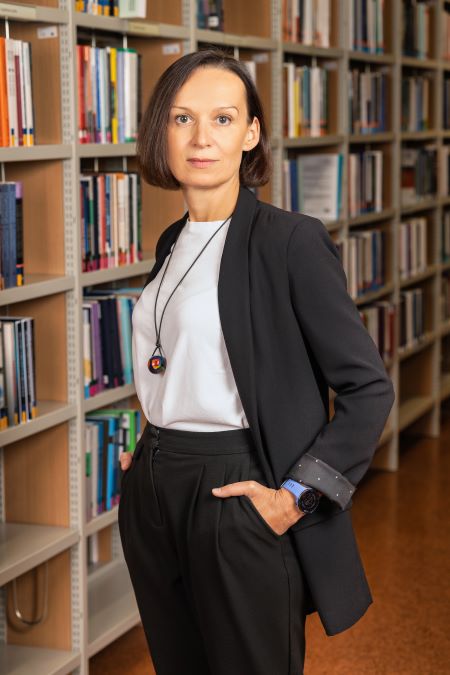
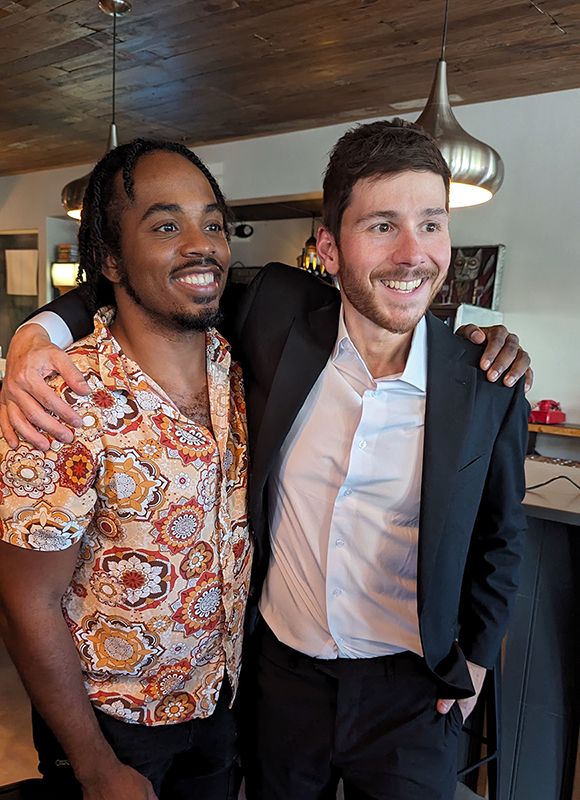
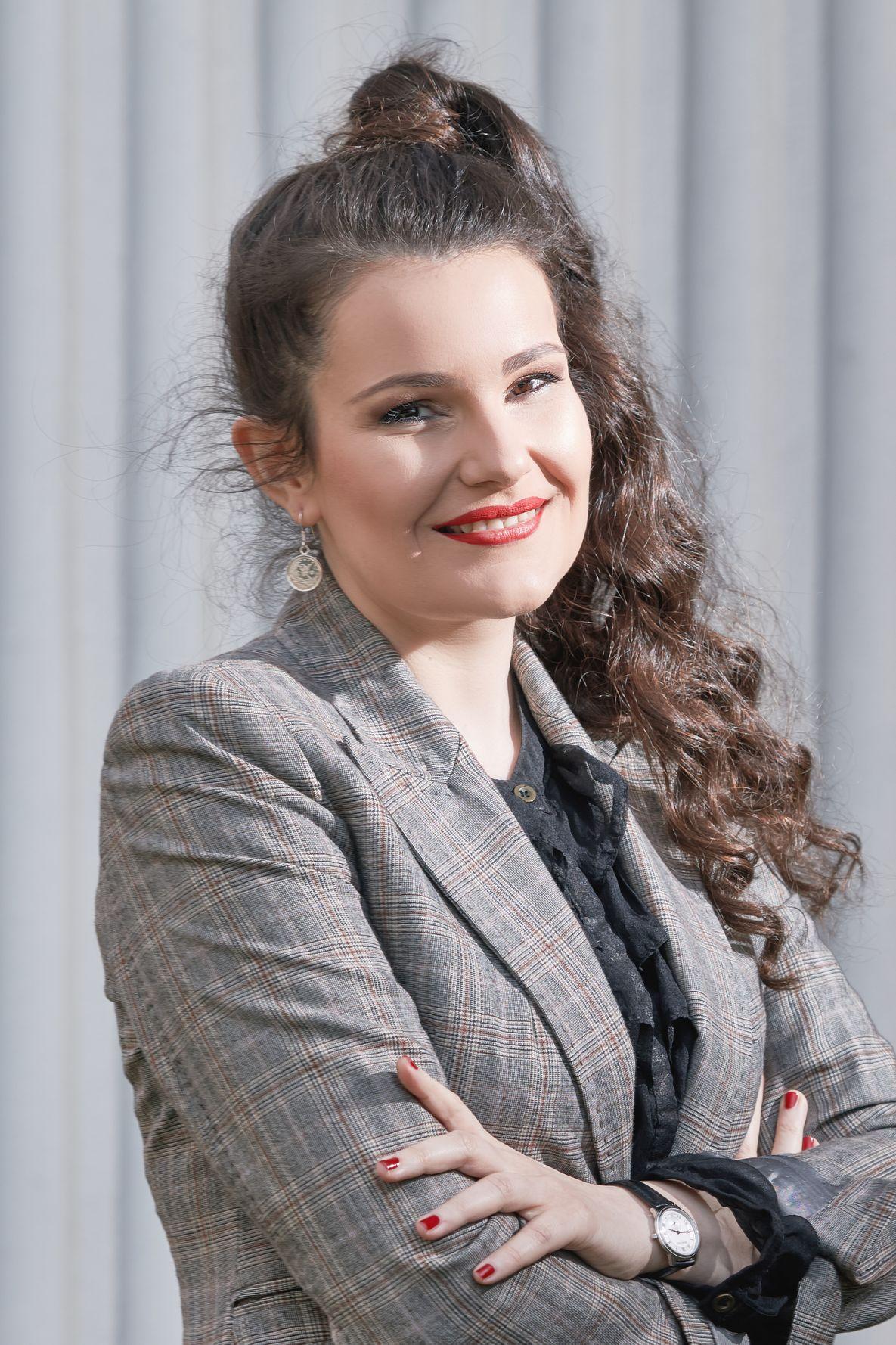
Agnieszka Jagoda is a Professor at the Department of Strategic Management and Logistics at the Wrocław University of Economics – Jelenia Góra Branch. Her research focuses on supply chain management, project teams, cross-organizational collaboration, sustainability, and digitalization in human resources. She supervises doctoral students and actively publishes in areas such as sustainable logistics, environmental behavior, and stakeholder analysis. Her work bridges theoretical frameworks with empirical studies, emphasizing practical implications for business and policy. Key research interests include last-mile delivery sustainability, environmental awareness comparisons across nations, and the integration of digital tools in HR management. Notable projects involve analyzing stakeholder perspectives in circular economy initiatives and examining human flows within supply chains. Her empirical studies often employ mixed-methods approaches, combining qualitative focus groups with quantitative analyses. Consultations are held via MS Teams during summer semesters, reflecting her engagement with modern communication tools. While no awards are explicitly listed, her prolific publication record indicates recognition in academic and practitioner circles.
Rebecca Schaumberg is an Assistant Professor of Organizational Behavior at ESMT Berlin, joining the faculty on July 1, 2025. She is part of a diverse international faculty of 47 members from 18 countries, contributing to ESMT's interdisciplinary and globally engaged research environment. Her research lies at the intersection of psychological theory and business practice, with a focus on self-conscious emotions such as shame, guilt, pride, and embarrassment. These emotions are studied in the context of decision-making, leadership processes, and organizational culture. Her work has been published in leading academic journals including Psychological Science , Academy of Management Journal , and Organizational Behavior and Human Decision Processes . The body of her research, as reflected in the 15 most recent conceptual articles, spans themes in organizational behavior, psychology, leadership, and ethics. Key trends include the influence of emotions on accountability, status dynamics, feedback reception, and ethical behavior within organizations. Her work integrates insights from social and cognitive psychology into management science. Scientific Awards: Teaching Excellence Award at the Wharton School Advising and Teaching: Dr. Schaumberg has been recognized for her excellence in teaching, particularly in negotiation, at the Wharton School. At ESMT, she will teach organizational behavior in the master’s programs. While no formal advisees are listed, her academic mentorship is expected to grow within her new role. Labs and Research Teams: No specific labs or research teams are mentioned in the available text.
Alex Borgella is an Associate Professor of Psychology at Fort Lewis College in Durango, Colorado, where he also leads the Social Perception Experimentation (SPEx) Lab. He holds a Ph.D. in Social Psychology from Tufts University (2017), an M.A. from James Madison University, and a B.A. from the University of West Florida. Prior to joining Fort Lewis College in 2019, he served as a Visiting Assistant Professor at Bates College. Ph.D., Social Psychology, Tufts University, 2017 M.A., Psychological Sciences, James Madison University, 2012 B.A., Psychology, University of West Florida, 2010 Dr. Borgella's research centers on social psychological mechanisms of stereotyping, prejudice, and discrimination. His work explores intergroup interactions, implicit bias, within-group racial bias, and stereotype threat, particularly in understudied populations such as Indigenous communities, people with multiple stigmatized identities, and in contexts like combat sports and social media. He investigates how identity-related humor can reduce intergroup anxiety and how generative AI representations affect psychosocial well-being. His research has been published in journals including the Journal of Experimental Social Psychology , Psychology of Sport and Exercise , and Humor: International Journal of Humor Research , and has been featured in NPR, Psychology Today, VICE, and Gizmodo. His most recent publications show a strong trend in examining subtle forms of bias in dynamic settings—such as UFC refereeing and social media—and in exploring how stereotype threat manifests across diverse identities, including White individuals in rhythmic performance. His 2024 Mamie Phipps Clark Faculty Research Award supports groundbreaking work on text-to-image AI and racial representation. 2024 Mamie Phipps Clark Faculty Research Award (APA and Psi Chi) Featured Scholar, Fort Lewis College Alice Admire Outstanding Teaching Award Ginny Hutchins Teaching Award for New Faculty Best Educator in Durango FLC Achievement Award Dr. Borgella is a dedicated mentor, supervising numerous undergraduate research projects through the SPEx Lab. Many of his students have presented at national conferences and pursued graduate studies. He teaches core courses such as Research Methods, Social Psychology, and the Senior Research Capstone. He is currently securing funding and mentoring students on projects related to AI, social media bias, and intergroup dynamics. His lab, originally founded at Bates College, is now based at Fort Lewis College and actively recruits undergraduates.
John Grout is the David C. Garrett Jr. Professor of Business Administration and Chair of the Technology, Entrepreneurship, and Data Analytics Department at Berry College, within the Campbell School of Business. He previously served as dean of the school and returned to full-time faculty in 2016, continuing his leadership in academic innovation. His research focuses on quality management, particularly mistake-proofing (poka-yoke), lean manufacturing, and the impact of user innovation on supply chains. He has made significant contributions to healthcare process improvement, with publications guiding error reduction in clinical settings. The recent articles reflect a strong trend in applying operational excellence to healthcare systems, integrating concepts from manufacturing into medical process design. His work emphasizes designing systems that prevent errors through structural and procedural safeguards, supported by economic and behavioral models. Scientific Awards: Shingo Prize for Excellence in Manufacturing (2004) for 'The Human Side of Mistake-Proofing' John Grout has advised various organizational improvement initiatives and led the development of Berry College’s Creative Technologies program and the HackBerry Lab makerspace. His grants include work supported by the Agency for Healthcare Research and Quality (AHRQ), resulting in influential publications on healthcare process safety. He has also consulted widely with firms to improve operational reliability. He is actively involved in academic leadership, curriculum development, and cross-disciplinary innovation, particularly in integrating technology and entrepreneurship into undergraduate education.
Maria Rotundo is a Professor of Organizational Behavior and Human Resource Management at the Rotman School of Management, University of Toronto. She serves as the area Coordinator for OBHRM (Organizational Behaviour and Human Resource Management), focusing on research related to discretionary performance behaviors such as cooperation and deviance, with implications for individual and organizational outcomes across cultures. Degrees: PhD, University of Minnesota, United States MIR, University of Toronto, Canada BA, University of Western Ontario, Canada Her research emphasizes leadership styles, organizational behavior dynamics, and the impact of multiple group memberships on workplace performance. She teaches courses in Aligning People and Strategy, Leadership, Human Resource Management, and Research Methods, and is available for supervision of Masters or PhD students as well as industry projects.
Aldijana Bunjak is an Associate Professor at the University of Stavanger, affiliated with the UiS School of Business and Law, Department of Innovation, Management and Marketing. She is actively engaged in research and academic collaboration, with multiple publications in 2024 across leading journals in management, psychology, and organizational behavior. Research Interests: Her work centers on leadership, identity, burnout, workplace well-being, digital innovation, and employee performance. She investigates how identity leadership, authentic leadership, and relational identification influence individual and organizational outcomes. Her research also explores the impact of technostress, job autonomy, and workplace bullying on burnout and turnover, with implications for modern digital work environments. Publication Trends: The recent articles highlight a strong focus on psychological and behavioral aspects of leadership and work life. Themes include identity processes, emotional regulation, digital stress, and innovation. Her work often employs longitudinal and cross-lagged designs, indicating rigorous empirical methodology. Collaborative authorship is common, especially with European scholars in organizational psychology and management. Scientific Awards: No awards mentioned in the provided text. Advising and Grants: There is no explicit mention of students supervised or research grants obtained. However, her active publication record suggests ongoing research projects and likely supervision of graduate students, though not listed. She presents at international conferences, indicating engagement with the scholarly community. Labs and Teams: No specific research labs or teams are mentioned. However, her collaborations with researchers across Europe (e.g., Černe, Balzano, Epitropaki, Van Dick) suggest participation in international research networks focused on leadership, identity, and organizational health.
Dr. Sooyeol Kim is an Assistant Professor in the Department of Management and Organisation at the National University of Singapore's NUS Business School. He holds a Ph.D. from the University of Illinois at Urbana-Champaign, a BA from Michigan State University, and an MA from George Mason University. His research focuses on occupational stress, recovery processes, leader-member dynamics, and workplace inclusion. Key areas include microbreaks' impact on well-being, leadership's role in employee recovery, and the effects of workplace safety and political interactions. His work has been published in top journals like Journal of Applied Psychology and Journal of Organizational Behavior . Education: Ph.D., Human Resources Management, University of Illinois at Urbana-Champaign MA, Industrial and Organisational Psychology, George Mason University BA, Psychology, Michigan State University Research Interests: Occupational stress and recovery mechanisms Leadership and follower dynamics Workplace safety and health anxiety Political behavior in organizational settings Employee well-being and microbreak strategies Publications: Dr. Kim's recent work examines daily experiences of workplace stressors, including customer harassment, safety violations, and political conversations. He emphasizes organizational resources (e.g., health climate, safety training) as critical moderators of negative outcomes. His studies often employ experience sampling methods to capture real-time workplace dynamics, contributing to theories of stress, recovery, and emotional contagion. Awards: None explicitly listed in the provided texts. Advising & Grants: While specific grants are not detailed, his research aligns with funding priorities in occupational health and organizational psychology. Advising records are not provided in the text. Labs/Teams: Affiliated with the Management and Organisation Department's research units at NUS, though specific lab names are not mentioned.
Dr. Madeleine Wyatt is a Reader in Diversity and Inclusion at King’s Business School, King’s College London, and a Leverhulme Research Fellow. Her research focuses on equality, diversity, inclusion, organizational politics, and political leadership. She teaches diversity modules and collaborates with the Global Institute for Women’s Leadership on gender-inclusive executive education. As Chair of the Business School’s Equality, Diversity, and Inclusion committee, she leads the Diversity, Inclusion, and Belonging at Work Hub, supported by The Leverhulme Trust and The Female Lead. Her expertise spans equality and inclusion policies, occupational psychology, and leadership journeys. She holds a PhD in Psychology (2012, City University London), an MSc in Organizational Psychology, and is a Chartered Occupational Psychologist. She serves on committees for the British Psychological Society’s Occupational Psychology Division and Political Psychology Section. Her research outputs include peer-reviewed articles in Harvard Business Review , Leadership Quarterly , and Human Relations , as well as book chapters on work psychology and political psychology. Her grants include projects on digital-age office politics and health-sector inclusion initiatives.
Gerald Eisenkopf is a Professor of Business Administration with a focus on Management of Social Services at the University of Vechta, Germany. He is actively engaged in research and teaching, with a strong emphasis on behavioral and experimental economics applied to leadership, conflict resolution, and education policy. His work bridges economics and management, particularly in nonprofit and public service sectors. His research interests center on behavioral economics, leadership effectiveness, and conflict resolution. Using experimental methodologies—including lab and field experiments—he investigates how economic incentives, leadership styles (e.g., leading by example, punishment), and social dynamics shape decision-making in organizations and educational settings. His work often explores topics such as fairness, peer effects, and communication in social dilemmas. The trends in his recent publications reveal a consistent focus on experimental investigations of leadership and social behavior. His articles span disciplines including economics, management, education, and political economy, with recurring themes in behavioral game theory, incentive design, and organizational behavior. He frequently employs controlled experiments to isolate causal mechanisms in leadership and conflict contexts. Behavioral Mechanisms of Leadership (DFG-funded, since 2018) Behavioral Foundations of Conflict Resolution (DFG-funded, 2014–2017) He has served as a reviewer for numerous high-impact journals such as The Economic Journal , Journal of Economic Behavior and Organization , Education Economics , and Journal of Conflict Resolution , as well as for funding agencies including the German Research Foundation (DFG), Swiss National Science Foundation (SNSF), and Netherlands Organisation for Scientific Research (NWO). Gerald Eisenkopf advises bachelor’s and master’s students, as evidenced by his recurring role in supervising theses. He teaches courses in controlling, social policy, nonprofit management, and quantitative methods. He leads a research team collaborating on projects related to leadership and group behavior, often with colleagues such as Torben Kölpin and Christian Walter. He is a member of academic associations including the Verein für Socialpolitik, Deutscher Hochschulverband, and the Economic Science Association.
Professor Ian Pace is a leading interdisciplinary scholar at City St George's, University of London , where he holds the Professorship of Music, Culture and Society and serves as University Advisor: Interdisciplinarity . His work bridges musicology, sociology, history and cultural studies , with a focus on 20th-century Germany , modernist aesthetics , and critical theories of performance . Positions: Professor of Music, City (2022–present); Former Head of Department, City (2020–21) Education: PhD in Musicology (Cardiff University), Master's Equivalent (Juilliard School), BA (Oxford) Research spans music under fascism , Cold War cultural politics , ethnographic methods , and music's relationship to trauma . His recent articles address Wagner's political legacy , academic mobbing , and decolonizing music education . As a pianist, he premiered over 350 works and leads the City Pierrot Ensemble . He advocates for academic freedom and anti-abuse reforms in music education. Scientific Awards : Senior Fellow, Higher Education Academy (2021). Supervision focuses on historical performance practices , cross-cultural musical identity , and practice-based research in higher education. His blog covers music, politics, and educational critique.
Jakob Stollberger is a Professor in Leadership and Organizational Behavior at Durham University Business School, affiliated with the Department of Management and Marketing and the Centre for Leadership and Followership. His research integrates behavioral science with organizational theory to explore leadership, innovation, and the evolving workplace, particularly in the context of artificial intelligence. His research interests include leadership behaviors , the work-family interface , creativity and innovation , and AI and the future of work . He employs advanced quantitative methods such as experience sampling, multilevel modeling, and latent growth modeling to investigate emotional and behavioral dynamics in organizations. His recent publications span top journals including Organization Science , Journal of Applied Psychology , and Human Relations , with themes centered on emotional complexity, team innovation, and human-AI collaboration. His work has been recognized with the Human Relations Reviewer of the Year 2022 and a shortlisting for the Rosabeth Moss Kanter Award . Human Relations Reviewer of the Year 2022 Award Shortlisted for the Rosabeth Moss Kanter Award for Excellence in Work-Family Research Stollberger has secured external funding from bodies like the ESRC, acts as Associate Editor for Human Relations , and regularly contributes to practitioner outlets such as the Harvard Business Review . He is open to PhD supervision in his areas of expertise and is an invited speaker at academic and professional institutions globally. He is actively involved in the Centre for Leadership and Followership , where he contributes to interdisciplinary research on leadership dynamics and organizational behavior.
Lara Lesch is an academic researcher affiliated with the Faculty of Psychology and Sport Science at Bielefeld University . She serves as an Academic Councillor since March 2025, following a postdoctoral role and research assistantship in the same department from June 2024 to February 2025 and January 2021 to May 2024 respectively. Her academic background includes a Doctorate in Sport Science (Dr. phil.) completed in March 2021, a Master’s degree in Sport Management from Tübingen University (2017-2020), and a Bachelor’s degree in Sport and Sport Science from Mainz University (2013-2017). Academic Councillor, Department of Sport Science, Bielefeld University (2025–present) Post-Doc, Department of Sport Science, Bielefeld University (2024–2025) Research Assistant and Doctoral Student, Department of Sport Science, Bielefeld University (2021–2024) Lesch’s research focuses on gender dynamics in sports leadership , organizational change in sports institutions , and inclusion in both non-profit and commercial sports organizations . Her recent publications emphasize the structural and societal barriers to women’s representation in sports governance, organizational responses to inclusion and diversity mandates, and the evolving competencies required in elite sports coaching. Her work appears in journals such as the European Journal for Sport and Society , where she has contributed empirical analyses on gender diversity and organizational performance. Lesch also investigates the impact of global crises, such as the COVID-19 pandemic , on corporate social responsibility practices within sports entities. Her methodological approach includes both quantitative citation analyses and qualitative assessments of stakeholder experiences in unique settings like prison sports programs . Lesch is actively involved in student academic advising for programs including the 1-Subject Profile "Economy and Society" and the MA program in Organizational Development & Management. She is responsible for the module 61-PW-WAM Scientific Work and Methods , indicating her commitment to academic training and research methodology in sports science education.
Elaine Mosconi is a Full Professor at the Université de Sherbrooke since 2024, with prior roles as Associate Professor (2017-2024) and Visiting Professor at institutions like Université Lumière Lyon 2 and École Nationale Supérieure des Mines de Saint-Étienne. She holds a PhD in Administration from Université Laval (2014), an MSc in Industrial Engineering from Universidade de Sao Paulo (2003), and a BSc in Library & Information Science (1999). Université de Sherbrooke | Full Professor (2024-), Associate Professor (2017-2024) Université Laval | Visiting Scholar (2019-2023) International collaborations in France, Brazil, USA, Sweden Her research focuses on Digital Transformation , Industry 4.0 , and Collaborative Innovation , with emphasis on organizational value creation through technology adoption and information literacy. She has secured over $1,649,623 in grants from NSERC, CRSH, MITACS, and provincial agencies, including a $5M grant for SME digital transformation programs. Recent articles explore plastic waste circular economy , enterprise social media maturity , and Industry 5.0 workforce adaptation . Her work bridges business intelligence with sustainable supply chain practices. Scientific Awards : Dean's Research Award (2024) ASAC Best Paper in Technology & Innovation Management (2022) Multiple Academic Coach/Mentor of the Year (2019-2021) Nominated for Inspiration Award (Quality of Service) (2017-2018) As a conference organizer and track chair for IAMOT, HICSS, and AMCIS, she leads initiatives in digital transformation frameworks. Her pedagogical projects include developing a data literacy assessment tool for business leaders and co-creating a knowledge management framework for decision performance.
Jana Gonnermann-Müller is a research assistant at the Chair of Business Information Systems, Processes and Systems at the University of Potsdam . Holding an M.Sc. in Psychology from Humboldt University of Berlin, her work focuses on human-machine interaction, particularly examining learning, decision-making, and trust in technological collaborations. Degree: Master of Science (M.Sc.) in Psychology Alumni: Humboldt University of Berlin Current Role: Scientific Associate at University of Potsdam Research explores cognitive factors in augmented reality and AI assistance systems , employing experimental designs and eye tracking methodologies. Key projects include investigating visual guidance in AR, comparing AR display types, and developing frameworks for generative AI in education. Publications (2023-2025) demonstrate expertise in digital education , cognitive load optimization , and technology-enhanced learning . Collaborations span institutions like Hong Kong Polytechnic University , University of California, Davis , and Weizenbaum Institute , with corporate consulting on learning technology implementation. Technical focus areas include: Human-System Design Optimization Eye Tracking & Usability Studies AI Recommender Systems Industry 4.0 Implementation Research applications extend to: Secondary Education Technology Assembly Line AR Integration Change Management Systems Maintenance AR Visualization
Laura Crosswell serves as Associate Professor of Health Communication and Director of the Center for Advanced Media Studies at the University of Nevada, Reno's Reynolds School of Journalism and Media Studies. She holds a joint appointment with the university's School of Medicine, reflecting her interdisciplinary approach to health communication research. Crosswell previously taught at the College of Charleston, Louisiana State University, and Arizona State University before joining UNR. Her research focuses on the intersection of consumerism, persuasive texts, and public health messaging, with particular attention to how commercial interests influence health communication. Crosswell frequently employs advanced eye-tracking technology to examine physiological and psychosocial responses to media content, especially in pharmaceutical advertising and public health campaigns. Her book Politics, Propaganda, and Public Health: A Case Study in Health Communication and Public Trust analyzes Merck's Gardasil vaccination campaign, exploring how corporate interests shape public health messaging. Crosswell's recent publications reveal consistent focus on contemporary health communication challenges, particularly surrounding the COVID-19 pandemic, vaccine hesitancy, and environmental health risks. Her work spans multiple disciplines including communication, public health, psychology, and medical education, often employing innovative methodologies like virtual reality simulations and biometric measurement. Recipient of Organizational Behavior Management (OBM) Innovative Research Award, 2023 Co-author of scholarly book on pharmaceutical marketing and public health trust Regular contributor to journals including Critical Public Health , Public Health Perspectives , and Journal of Environmental Studies and Sciences Crosswell has received recognition for her innovative research approaches that bridge communication theory with practical health applications. Her work examining virtual reality applications in healthcare education demonstrates her commitment to developing new methodologies for training healthcare professionals. With numerous forthcoming publications for 2025, she remains an active contributor to the field of health communication research.