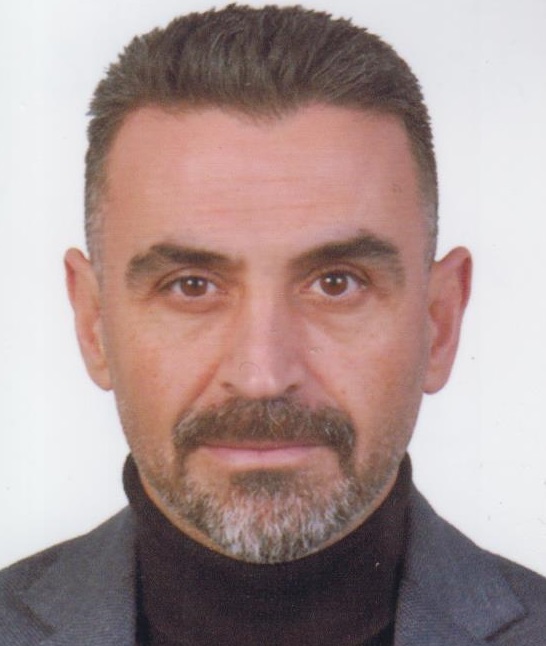
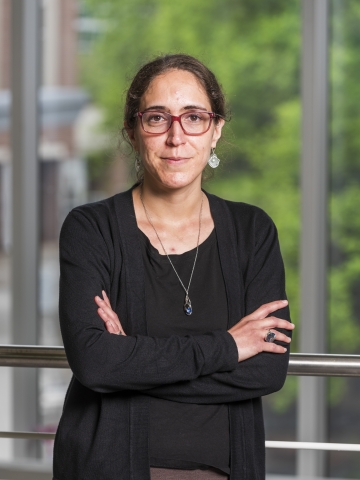
Mehmet Bardakçı is a Professor in the Department of Foreign Languages Education at Gaziantep University's Education Faculty. With a PhD in English Education (2010) and MA in English Teaching (2005) from Turkish universities, he specializes in English Language Teaching (ELT), vocabulary acquisition, and digital pedagogy. His research examines teacher professional development, assessment literacy, and intercultural sensitivity in language learning. Education: PhD (2010), MA (2005), BA (2000) in English Education Leadership: Former Dean Assistant (2018-2020), Department Head (2012-2013), Institute Deputy Director (2015-2018) Research Trends include e-learning models like e-FLIP (2021-2023) and digital education tools. His 21 peer-reviewed articles and 14 book chapters focus on vocabulary depth/breadth, grammar instruction, and teacher-student dynamics. Supervision spans 19 graduate theses on topics ranging from flipped classroom effectiveness to assessment literacy. He collaborates internationally through projects like e-FLIP and ExBEdu , both EU-funded initiatives completed between 2021-2023.
Habibe Aktay serves as a full-time Lecturer in the Department of Business Information Technologies within the Faculty of Economics, Administrative and Social Sciences at Işık University. Her academic profile bridges technological systems and human behavioral factors in organizational contexts, with teaching responsibilities spanning database systems, web programming, and customer relationship management courses delivered in both Turkish and English. Her educational trajectory demonstrates remarkable interdisciplinary breadth: PhD Candidate in Business Administration, Yıldız Technical University (2019-present) Master's in Business Administration (with thesis), Yıldız Technical University (2016-2019) Concurrent undergraduate studies in Arabic Language and Literature, Istanbul University (2022-present) Bachelor's in New Media and Journalism, Istanbul Yeni Yüzyıl University (2015-2017, full scholarship) Bachelor's in Sociology, Anadolu University (2015-2019, open education) Bachelor's in Management Information Systems, European University of Lefke (2007-2012, full scholarship, English-medium) Her research program centers on the confluence of organizational psychology and digital transformation, particularly examining how psychological constructs like intolerance of uncertainty and emotional intelligence influence decision-making in technology-driven business environments. This manifests in her dual focus on financial sector digitalization and cognitive aspects of Industry 4.0 adaptation. Publication analysis (2019-2024) reveals three dominant thematic clusters: bibliometric investigations of psychological constructs, digital transformation applications in finance, and decision-making dynamics under uncertainty. Her work consistently applies psychological frameworks to contemporary business challenges, with increasing emphasis on Industry 4.0 contexts since 2022. Course listings confirm her active role in delivering core information systems curriculum, including Database Systems, Web Design, and Advanced Java programming across multiple academic years and language mediums.
Brigitte Nivet is a Lecturer-researcher at ESC Clermont Business School (School of Management), University of Clermont Auvergne, and an Associate researcher at Cereq. She is affiliated with the Clermont Recherche Management (CleRMa) research center and the Alter-Management, Human Potential and Innovation (AMPHI) Axis. Her research focuses on Small and Medium Enterprises (SMEs) and Human Resources Management, social and managerial innovations, and the future of work. She examines self-managed organizations, workplace regulation processes, and the implementation of HR practices in small businesses. Her work explores the tension between traditional management approaches and innovative organizational models like liberated companies. Nivet's publications demonstrate a consistent focus on how managers develop skills through experiential learning, the challenges of implementing HR systems in SMEs, and the evolving nature of work organization. Her recent work examines regulation processes in managerless organizations and training approaches for developing managerial competencies in complex environments. 2024: Study on regulation processes within self-managed organizations 2024: Pedagogical experiment on training for complexity 2023: Analysis of management continuity despite changing contexts Her research combines qualitative methodologies with practical insights from working with SMEs, contributing to both theoretical understanding and practical applications in organizational management.
Clay Spinuzzi is a Professor in the Department of Rhetoric and Writing at the University of Texas at Austin, affiliated with the College of Liberal Arts. He earned his Ph.D. from Iowa State University in 1999. Education: Ph.D., Iowa State University (1999) His research spans activity theory, genre theory, actor-network theory, workplace studies, qualitative research, and entrepreneurship. He focuses on how individuals coordinate and collaborate in work environments, often analyzing communication practices in startups, coworking spaces, and rural communities. Recent work includes studying the Business Model Canvas in entrepreneurship, 5D Frameworks for community barriers, and Material Engagement Theory in historical contexts. His publications emphasize methodological innovations like fractional objects and project assemblages. He teaches graduate courses such as Designing Text Ecologies and Writing for Entrepreneurs in both the Department of Rhetoric and Writing and the Human Dimensions of Organizations MA program. His blog ( spinuzzi.blogspot.com ) frequently reviews interdisciplinary literature in sociology, cognitive archaeology, and workplace communication.
Ebru Gökdağ is a Professor at Anadolu University’s State Conservatory, Department of Stage Arts, since 2016. She earned her doctorate in Theatre from the University of Nebraska-Lincoln and has held academic positions at Anadolu University since 2002. Doctorate: University of Nebraska-Lincoln (1997-2002) Postgraduate: Texas A&M University-Commerce (1994-2000) Undergraduate: Anadolu University (1989-1993) Her research focuses on Theatre Studies , Gender Dynamics in Performing Arts , and Cultural Representation in Opera . She has explored Sexual Harassment Prevention in theatre environments and Traditional Rituals like Cem Ceremonies. Recent publications examine Opera Cross-Cultural Influence , Gender Equality in Turkish theatre, and Community-Based Performance techniques. She has also presented at conferences in Kazakhstan, Cyprus, and Slovenia. She has advised 8 theses on topics ranging from Augusto Boal’s Methods to Sexual Harassment in Performing Arts and Opera Analysis . She led projects like TÜBİTAK’s Cem Ceremonies Study and multiple Erasmus-funded initiatives. Her career spans roles as Head of Department (2017-2025) and board member in academic councils. She actively participates in international theatre festivals and conferences.
Associate Professor with Habilitation at the School of Engineering, University of Minho , where he also serves as a Senior Researcher at Centro ALGORITMI. Member of both the IEM R&D Group and LPSL R&D Lab. Education: Degree in Production Engineering (1989) - University of Minho MSc in Computer Integrated Manufacturing (1992) - Loughborough University Ph.D. in Scheduling and Process Planning Integration (1997) - University of Nottingham His research spans Lean Approaches across diverse environments including industry, healthcare, construction, offices, and education. Key focus areas include pull flow methods for complex production environments, stable continuous improvement systems , and the integration of Scrum methodology in educational settings. Recent publications show a clear trend toward applying lean principles in retail logistics, healthcare operations, and sustainability frameworks, with increasing emphasis on performance measurement systems and Science-Based Targets. He has authored the book "Continuous Improvement in Organizations" and published over 100 scientific articles with an h-index of 17 and 1131 citations. His current projects include "HOMLean - Hospital Operations Management" and a Smart Retail initiative with Sonae company funded by PRR program. He actively applies his expertise through project-based learning approaches in engineering education, having documented over ten years of experience with PBL at the University of Minho. His work bridges academic research with practical industry applications, particularly in lean manufacturing implementation across various sectors.
Amy Bartels serves as Associate Professor of Management in the College of Business at the University of Nebraska-Lincoln, where she teaches foundational and advanced Organizational Behavior courses including MNGT 360 and MNGT 960. Her academic journey reflects deep institutional roots, having earned all prior degrees at UNL before completing her Ph.D. at Arizona State University. Her educational background encompasses: Ph.D. in Management (Organizational Behavior), Arizona State University Juris Doctorate, University of Nebraska-Lincoln Master of Arts in Higher Educational Administration, University of Nebraska-Lincoln B.A. in History, University of Nebraska-Lincoln Dr. Bartels' research critically examines leadership dynamics across organizational levels, with particular focus on team interactions and the physiological-psychological impacts of workplace stress on employee well-being. Her multi-method approach bridges theoretical frameworks with practical organizational challenges, emphasizing how emotional labor and identity processes shape work outcomes. Analysis of her 15 most recent publications reveals consistent exploration of leader-follower reciprocity, stress spillover mechanisms, and well-being measurement. Key trends include developing psychometric tools for workplace flourishing, investigating emotional contagion in leadership exchanges, and analyzing how side-hustles create unexpected performance benefits in primary roles. Her work frequently appears in premier outlets like Academy of Management Journal and Journal of Applied Psychology . While specific details about student mentorship and research funding remain unreported in available materials, her publication trajectory indicates sustained scholarly productivity with increasing focus on practical applications of organizational behavior principles to contemporary workplace challenges.
Professor Dilek Cetindamar Kozanoglu is a prominent academic at the School of Computer Science , University of Technology Sydney (UTS), holding a formal title of Professor of Contemporary Technology Management . With a distinguished career spanning multiple continents and institutions, she contributes to global research on digital transformations, entrepreneurship, and technology-innovation management. B.S. in Industrial Engineering (Bogazici University) MA in Economics (Bogazici University) Ph.D. in Management (Istanbul Technical University) Entrepreneurship Certificate (Harvard Business School) Regional Entrepreneurship Acceleration Program Certificate (MIT) Her research intersects technology management and entrepreneurship, focusing on digital transformation , startup ecosystems , AI literacy , and gender equality in tech industries . Through empirical studies on Turkish accelerators, Australian digital workplaces, and global technology policies, she develops frameworks for organizational resilience and innovation orchestration. Notable scientific awards include: Turkish Academy of Sciences Encouragement Award (2003) Best Book Award, International Association for Management of Technology (2012) PICMET Fellow Award (2019) She leads UTS initiatives like Techcelerator (2021-2024) and co-directs the iDEAS Research Hub (2025-present), while maintaining affiliations with DigiSAS.Lab and the Centre for Research on Education in a Digital Society.
Lynn Kamerlin is a Professor at the Georgia Institute of Technology and co-leads the Kamerlin Laboratory, which operates across Georgia Tech and Lund University. Her work integrates computational chemistry and biophysics to address fundamental questions in enzyme evolution, catalysis, and protein design. Education MNatSc in Chemistry, University of Birmingham (UK) PhD in Chemistry, University of Birmingham (UK) Her research spans computational biophysics , focusing on mechanistic biochemistry , protein evolution , and enzyme engineering . Key methodologies include machine learning , molecular dynamics simulations , EVB/QM/MM modeling , and natural language models for protein structure prediction. Recent publications highlight trends in AI-driven enzyme design , conformational dynamics , and mechanistic studies of phosphoryl transfer reactions . Tools like WatCon and Q-RepEx demonstrate her commitment to method development in computational biology. Scientific Awards Georgia Research Alliance Eminent Scholar (2022-Present) Wallenberg Scholar (2020-2024) ERC Starting Grant (2012-2017) Wallenberg Academy Fellowship (2014-2019, prolonged 2019-2024) Young Academy of Europe Chair (2014-2015) Fellow of the Royal Society of Chemistry (2017) Her lab collaborates with experimental groups worldwide, leveraging enhanced sampling techniques and structural bioinformatics to engineer enzymes with tailored properties. Grants from the Swedish Research Council and European Research Council underpin her research on enzyme evolution and catalytic mechanisms. Current projects include computational design of thermostable enzymes , allosteric modulators for biomedical targets, and modular protein scaffolds . The lab also investigates non-canonical amino acid incorporation and FAIR data principles in biomolecular simulations.
Jonna Kangas is a Senior University Lecturer in the Department of Education Learning, Culture & Interventions (LECI) at the University of Helsinki. She serves as a Supervisor for the Doctoral Programme in School, Education, Society, and Culture, focusing on participatory and playful learning approaches in early childhood education. Research Interests: Her work centers on Participatory pedagogy Children's rights Play-based learning Teacher professional development Future-focused educational environments Her research output includes studies on collaborative learning, reflective practices, and inclusive pedagogy in early childhood contexts. She has led projects such as Keys to Shared Understanding and 1000+: Varhaiskasvatuksen monimuotokoulutus , emphasizing cultural and linguistic diversity in ECEC.
Thomas Menkhoff is a Professor of Organizational Behaviour and Human Resources (Education) at the Lee Kong Chian School of Business, Singapore Management University (SMU), where he has been a full-time faculty member since 2001. He earned his Ph.D. and M.A. in Sociology and Development Planning from the University of Bielefeld, Germany. His academic journey at SMU includes promotion from Associate Professor (2001–2011) to full Professor (2012–present), with additional roles such as Area Coordinator for OBHR and Curriculum Director for the iLEAP Non-Profit Leadership Programme. Ph.D. in Sociology and Development Planning, University of Bielefeld (1990) M.A. in Sociology and Development Planning, University of Bielefeld (1987) His research centers on entrepreneurial leadership in ethnic Chinese business, knowledge and innovation governance, and technology-enhanced teaching and learning. He explores how digital tools like chatbots, microblogging, and UAVs can transform higher education pedagogy, particularly in experiential and blended learning contexts. His work also investigates innovation in Chinese family businesses, the Belt and Road Initiative, and smart city development. His recent publications reflect a strong trend in educational innovation and knowledge management, with a focus on practical, technology-driven teaching methods. Articles such as 'Assessing the Effectiveness of a Chatbot Workshop' and 'Future-proofing Students with UAV Technology' demonstrate his commitment to integrating emerging technologies into business education. His research also spans cross-cultural leadership, sustainability, and Asian business networks. Notable scientific awards and recognitions include: Winner of SMU's Most Innovative Teacher Award (2009) SMU Faculty/Staff Contribution to Student Life Award (2017) Emerald Literati Network Award for Excellence as Outstanding Reviewer (2012) Multiple nominations for Distinguished and Innovative Teaching Awards Dean's Teaching Honour List (2007) Thomas Menkhoff actively mentors doctoral students, including Norman Buertzle (DBA) and Wong Siew Loong (PhD in Business). He has secured research funding and contributed to curriculum innovation, particularly in global experiential learning and sustainability education. He has also served as a Fellow at SMU Academy and led initiatives in non-profit leadership development. He is involved in research teams and editorial projects focused on smart cities, sustainable urban development, and Chinese business networks. As editor of multiple volumes including 'Living in Smart Cities' and 'China’s Belt and Road Initiative,' he collaborates with scholars across Asia and Europe to advance knowledge on innovation and sustainability.
Davide Nicolini is a Professor of Organization Studies and Director of the IKON Organisation and Work Group at Warwick Business School, University of Warwick. He concurrently serves as a Visiting Professor at BI Norwegian Business School in Oslo. His prior affiliations include faculty positions at the University of Trento (Italy) and a senior social scientist role at the Tavistock Institute of Human Relations in London, where he developed extensive experience in action-learning program design and action-research interventions. Professor Nicolini's research centers on practice-based approaches to understanding organizational phenomena through the lens of everyday work practices. He investigates how knowing, learning, and change emerge in complex environments—particularly healthcare systems—with significant contributions to innovation processes, safety management, and ethical decision-making frameworks. His work bridges theoretical rigor with practical application, employing ethnographic methods to uncover the micro-foundations of organizational life while advancing action-based methodologies for systemic change. His recent scholarly output reveals strong thematic continuity across publications spanning ethics, attention dynamics, and evidence mobilization. Articles like 'What is the right thing to do?' and 'Towards a practice-theoretical view of attention' demonstrate his focus on situated ethical sensemaking and cognitive processes in organizational contexts. The recurring healthcare setting in his work highlights practical relevance, while methodological innovations in video-based research and diffraction approaches showcase theoretical advancement. As Director of the IKON Organisation and Work Group, Professor Nicolini leads a research collective dedicated to exploring practice theory applications in organizational transformation. The group actively engages in collaborative projects that translate theoretical insights into practical interventions, particularly for improving complex systems like healthcare organizations through action-research methodologies.
Professor Jeremy Bagg is Professor of Clinical Microbiology and Head of Glasgow Dental School at the University of Glasgow since January 2005. He also serves as Deputy Head of the School of Medicine, Dentistry & Nursing. With a distinguished career spanning over four decades, Professor Bagg has made significant contributions to oral microbiology, infection control, and public health dentistry. Professor Bagg qualified BDS (Hons) from the University of Edinburgh in 1979 and was awarded a PhD in 1982 for research on bacterial adhesion mechanisms. He served as Lecturer in Oral Medicine & Oral Pathology at Cardiff Dental School from 1983-1991, gaining the FDS diploma and MRCPath in oral microbiology in 1987. Joining the University of Glasgow in 1991 as Lecturer in Oral Microbiology, he was awarded a Personal Professorship in Clinical Microbiology in 1999. His research focuses on the role of oral micro-organisms in systemic disease, oral infections in medically compromised patients, infection control in dental surgery, and public health microbiology. As a member of the Infection & Immunity Research Group, Professor Bagg has co-authored two textbooks and published over 160 papers. His work spans dental microbiology, infection control practices, oral-systemic health connections, and global oral health policy development, with particular expertise in denture microbiology, blood-borne virus management, and the oral health of medically compromised patients. Professor Bagg holds significant leadership positions including Chairman of the National Dental Advisory Committee at the Scottish Government Health Department and Chair of the Steering Group of the Scottish Dental Clinical Effectiveness Programme. He is also a member of the UK Advisory Panel for Health Care Workers Infected with Blood-borne Viruses. In 2004, he was awarded the Fellowship of the Faculty of Public Health for his contribution to public health microbiology. His recent work demonstrates continued excellence across multiple domains including dental infection control, global oral health policy, dental education innovation, and the microbiology of oral diseases. Professor Bagg's research has particular relevance to denture care, blood-borne virus management in dental settings, and the connection between oral health and systemic conditions. Professor Bagg has contributed to major initiatives including the Scottish Oral Health Research Strategy and serves as one of two Scottish representatives on the Oral & Dental Specialty Group of the UK Clinical Research Network. His work has influenced dental practice guidelines and public health policy in Scotland and beyond.
Prof. Dr. Manfred Schoch serves as Professor of Business Informatics at Esslingen University of Applied Sciences' Faculty of Computer Science and Information Technology. He concurrently holds leadership roles at Fraunhofer FIT's Business Informatics branch and directs the FIM Research Institute for Information Management. His career bridges academic research with industrial digital transformation projects across sectors including transportation, finance, and manufacturing. His educational foundation includes: Summa cum laude doctorate from University of Hohenheim focusing on digital workplace communication technologies M.Sc. in Information-Oriented Business Administration and B.Sc. in Business Informatics from University of Augsburg Academic exchange at University of Pittsburgh's Joseph M. Katz Graduate School of Business Prof. Schoch's research centers on three interconnected domains: technology implementation in digital workplaces, strategic IT management and enterprise architecture, and data-driven workflow automation. He employs mixed-method approaches combining quantitative network/survey analysis with qualitative interview techniques to examine technology's organizational impact. Recent work investigates pandemic-driven remote work adaptations, AI integration challenges, and behavior change support systems for workplace stress management. His publication trajectory (2022-2025) reveals intensifying focus on generative AI applications, digital workplace resilience, and ethical technology adoption. Key themes include human-AI collaboration models, technostress mitigation, and CSR-guided digitalization. His work appears in premier venues like European Journal of Information Systems and ICIS proceedings. Professional recognition includes: Hohenheim Teaching Prize (2022) for innovative digital management pedagogy He actively supervises student theses through industry-collaborative projects with companies including DB Fernverkehr and Allianz. His research funding stems from Bavarian consortium initiatives like ForDigitHealth and international partnerships with MIT and Microsoft Research. Current grants focus on sustainable hybrid work models and AI-enhanced decision systems. As FIM Research Institute director, he leads cross-disciplinary teams developing practical digital transformation frameworks. The institute maintains strong industry connections through its Digital Leadership Academy and applied consulting projects addressing real-world challenges in workflow automation and IT-business alignment.
Marcello Pietri is a Researcher (td art. 24 c. 3 lett. A) and Contract Professor at the Department of Engineering Sciences and Methods (DISMI) at the University of Modena and Reggio Emilia. His work focuses on Information Processing Systems, with expertise in IoT, Edge Computing, and Digital Twins. He teaches courses like 'Sistemi Informativi' (Information Systems) for the Engineering Management program, emphasizing database design, SQL, and web application development with Python. His research explores advanced topics including Digital Twin integration in Industry 5.0, Fluid Computing in IoT ecosystems, and Smart City data fusion using 5G MEC architectures. He collaborates with institutions like the DIPI Lab (Distributed and Pervasive Intelligence Group), contributing to projects on telecom security, energy forecasting, and human-centric manufacturing systems. Recent publications highlight innovations in operator digital twins for workplace well-being, distributed data mesh models for IoT-edge-cloud systems, and adaptive monitoring algorithms for large-scale cloud environments. His work bridges theoretical advancements with practical implementations, addressing challenges in scalability, real-time data processing, and interdisciplinary collaboration.