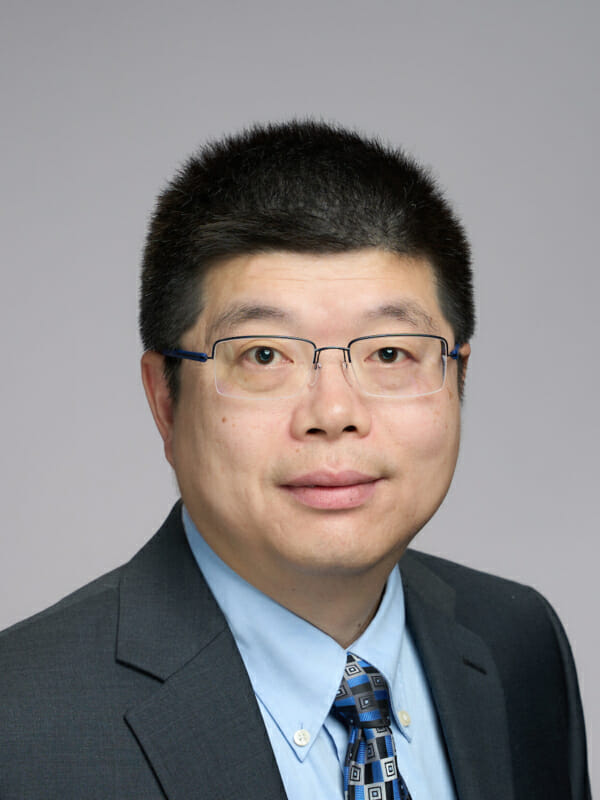
Xiang Zhang is a Professor in the Department of Molecular and Cellular Biology at Baylor College of Medicine (BCM), serving as Director of the Lester and Sue Smith Breast Center and holder of the William T. Butler, M.D., Endowed Chair. He also holds roles as a McNair Scholar and member of the Dan L. Duncan Comprehensive Cancer Center. Zhang’s research focuses on metastasis mechanisms and immunology, particularly in breast cancer bone metastasis. His work bridges tumor cell behavior with the tumor microenvironment, emphasizing spatiotemporal co-evolution and therapeutic development. Education: Ph.D. from Columbia University (2006), Postdoctoral Fellowship at Memorial Sloan Kettering Cancer Center (2011), and B.S. from Fudan University (2000). Honors include the Era of Hope Scholar Award (2016-2021) and NIH Pathway to Independence Award (2010-2014). Research Themes: 1) Breast cancer bone metastasis mechanisms, including niche interactions and osteogenic signaling. 2) Tumor immunology, focusing on immune suppression, myeloid cell dynamics, and therapy resistance. Recent breakthroughs include lipid-driven immune evasion in triple-negative breast cancer and single-cell profiling of metastatic ecosystems. Publications highlight discoveries in bone microenvironmental reprogramming, myeloid-B cell crosstalk, and therapeutic vulnerabilities. His lab actively explores biomarkers for therapy response and novel combination therapies. Grants and Awards: Over $15M in NIH/NCI grants, Department of Defense funding, and foundation support. Notable recognition includes the Michael E. DeBakey Award (2018) and Laura Zisken Prize (2020). Lab Team: Includes postdoctoral researchers (Noa Peled, Xuan Li) and students (Michael Dieffenbach). Current projects investigate lipid metabolism in therapy resistance and systemic immunosuppression mechanisms. Laboratory: Established in 2011, the Zhang Lab employs preclinical models, single-cell analysis, and translational approaches to combat metastasis. Active collaborations include work with the BCM Immunity Center and Stand Up To Cancer initiatives.