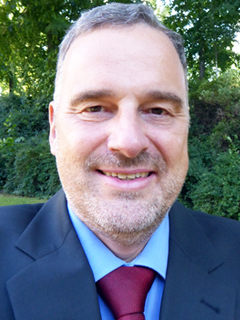
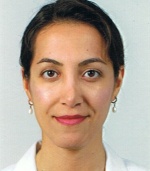
Arjen Boin is a Professor of Public Institutions and Governance at Leiden University's Institute of Political Science. He serves as Director Strategy and Organisation on the Institute Board. Previously, he held roles at Utrecht School of Governance and Louisiana State University. His research focuses on crisis management, institutional resilience, and EU crisis coordination. He has authored influential books like Governing the Pandemic and The Politics of Crisis Management , which won the APSA Herbert A. Simon Award. Boin edits journals like Journal of Contingencies and Crisis Management and advises via Crisisplan BV. His teaching spans BSc and MSc Political Science programs. Education: Previous academic positions imply advanced degrees in political science, though specific education details are not explicitly provided in the text. Research Interests: Crisis management strategies, disaster coordination mechanisms, institutional resilience, and EU transboundary crisis capacities. His work bridges theory and practice, emphasizing policy design and leadership during crises. Recent focus includes pandemic governance and creeping crises. Grants/Awards: APSA Herbert A. Simon Book Award. He collaborates widely, including with the European Societal Security Research Group. PhD supervision areas include crisis management and institutional resilience. Labs/Teams: Affiliated with Leiden University Centre for International Relations and the Quantification, Administrative Capacity, and Democracy (QUAD) research group.
Tal Simons is Professor of Organization Theory in the Department of Organisation and Personnel Management at Rotterdam School of Management (RSM), Erasmus University Rotterdam, and has been an ERIM Fellow since 2019. His research examines organizational responses to societal pressures through institutional and behavioral lenses. Simons' work centers on institutional theory applications in regulatory resistance, ideological dynamics, and organizational authenticity. He investigates how firms navigate social movements, media scrutiny, and moral legitimacy challenges across diverse sectors including tobacco, wine, and contemporary dance. His methodology blends historical analysis with qualitative case studies to uncover patterns in community cohesion, aesthetic innovation, and cross-cultural collaboration. Publication trends reveal an evolution from foundational studies on kibbutzim and Israeli wine industry transformation (1997-2010) toward contemporary analyses of CSR-media relationships, regulatory compliance, and authenticity construction (2015-2024). Recent work emphasizes ideological imperatives in news coverage and moral legitimacy frameworks, while maintaining consistent theoretical grounding in institutional logics and organizational ecology. Professional recognition includes: ERIM Fellow (2019–present) As an active doctoral supervisor, Simons mentors nine PhD candidates across organization theory and behavior domains. His advisees explore cross-cultural collaborations, multi-stakeholder organizing, sustainability-focused community enterprises, and societal change mechanisms. Supervision spans 2015 to present with roles as promotor and committee member, reflecting sustained commitment to developing organizational scholarship through next-generation researchers.
Sharon Clarke is Professor of Organisational Psychology at the University of Manchester, researching safety culture and occupational well-being. As Editor-in-Chief of the Journal of Occupational Health Psychology, she advances research on work-related health. Research examines safety leadership, regulatory culture, and flexible work arrangements. Clarke's work identifies how organizational practices influence safety compliance and employee well-being. Recent publications analyze pandemic safety compliance determinants, flexible work equity issues, and optimal safety leadership profiles. Her research informs organizational risk management through evidence-based interventions. Lifetime Fellowship (European Academy of Occupational Health Psychology) Leads research on regulator-regulatee relationships and advises government agencies on workplace safety. Developed meta-analytic models of safety climate and transformational leadership.
Professor David Sarpong is a leading academic in Strategy and Organisation at Aston Business School, part of Aston University's College of Business and Social Sciences. He currently serves as Head of the Marketing and Entrepreneurship Department and Director of Research for the Marketing and Strategy Subject Group. His research focuses on strategy-as-practice, relationalism, innovation management, and temporality in organizational processes. He holds adjunct roles at KNUST Business School and Bristol Business School, and is actively involved in professional organizations like EURAM and CABS. His work employs qualitative methods including ethnographic interviews and microstoria approaches. Professional Activities: He serves as Editor-in-Chief of the Journal of Strategy and Leadership, and on editorial boards for Technology Analysis & Strategic Management and European Management Journal. His external roles include UK Country Representative for EURAM and Board Membership at The Milestones Trust. He has held prior academic leadership positions at Brunel University London and visiting roles at HSE Moscow and University of KwaZulu-Natal. Research Interests: Prioritizes cross-level management problems using Heideggerian-Wittgensteinian frameworks. Key themes include second-order technology management, business tournament rituals, strategic foresight, and discursive practices in European cosmopolitan marketplaces. Methodologically innovative in combining narratives, digital datasets, and performative routines analysis. Collaborations: Active in global research networks with scholars across Africa, Europe, and Asia. Recent work addresses mining-industry partnerships, gender dynamics in extractive economies, and ethical dimensions of corporate governance. His research outputs number over 110 publications in top journals like Technovation and Journal of Business Research. Awards/Affiliations: Recognized through editorial leadership roles and visiting professorships. His research has policy implications for sustainable development, innovation ecosystems, and organizational resilience in global contexts.
Susan Scott is a Professor of Management and Artificial Intelligence at Imperial College London, holding a joint appointment with the Imperial College Business School and IX, the university’s AI initiative. She previously held academic roles at the London School of Economics and Political Science (LSE), including Professor of Information Systems and Innovation and Faculty Group Lead in the Department of Management. Her research spans Information Systems, Organization Theory, and Technology Management, with a focus on sociomateriality, digital transformation, and ethical innovation. Scott earned a PhD in Management (Information Systems) from the University of Cambridge, an MSc in Information Systems from LSE, and a BA in History and Politics from SOAS, University of London. Her work bridges theoretical and applied domains, addressing challenges in digital accountability, institutional displacement, and the societal impacts of emerging technologies. She has contributed to major initiatives like the SWIFT financial network analysis and explored ethical dimensions of AI and big tech. Her articles critically examine topics such as crowd-based accountability, digital undertows in industry standards, and the material-discursive practices shaping organizational practices. Though no awards are listed, her extensive publications reflect a commitment to rigorous qualitative and mixed-methods research, emphasizing phenomenon-focused theorizing in Information Systems. Scott’s research agenda integrates academic and practical insights, addressing future challenges like AI governance, digital responsibility, and the sociotechnical reconfigurations reshaping institutions and industries.
Dr. Iris Seidemann is a Senior Research Fellow at the Chair of Organization Studies, Department of Social Economics, Faculty of Economics and Social Sciences, University of Hamburg. She joined the chair in October 2019 as a doctoral researcher and has since become a key contributor to research on organizational legitimacy, paradox theory, and grand challenges. Research Interests: Her scholarly focus lies in the critical examination of organizational tensions and paradoxes, particularly in the context of legitimacy repair and societal grand challenges such as climate-induced disasters. She investigates how workforce homogeneity in the public sector emerges and persists, using systematic literature reviews and critical theoretical analysis. Her work challenges the normative assumptions in paradox theory and advocates for more reflexive and context-sensitive approaches in organization studies. Publication Trends: Her recent publications reveal a strong trajectory in critical organization studies, combining institutional theory, paradox research, and public sector governance. She frequently publishes in top-tier outlets like Organization Theory and Public Management Review , and presents at premier conferences including the Academy of Management and EGOS. Her work is characterized by theoretical depth, methodological rigor, and a commitment to responsible research. Scientific Awards: Best Paper in the 83rd AOM Proceedings (2023) Nomination for OMT Responsible Research Award (2023) Nomination for EGOS Best Student Paper Award (2020) Teaching and Advising: Dr. Seidemann teaches courses at both bachelor’s and master’s levels, including Grundkurs Organisation, Qualitative Methods, International Organizations, and Philosophy of Science. While no formal advisees are listed, she contributes to academic training through supervision in research methods and thesis guidance. She has also been involved in projects funded under the CLARE Initiative, indicating active grant engagement. Labs and Teams: She is a core member of the REBUMAA project team at the University of Hamburg, working under the CLARE Initiative. The team focuses on multi-actor dynamics in addressing complex societal challenges, reflecting an interdisciplinary and collaborative research environment.
Ansgar Richter is a Professor of Corporate Strategy, Organisation and Governance at Frankfurt School of Finance & Management, where he currently serves as Dean of Faculty. His academic career spans multiple institutions including EBS Business School, University of Liverpool Management School, Surrey Business School, and Rotterdam School of Management, Erasmus University. Richter has held visiting scholar appointments at UC Berkeley, Stanford University, and INSEAD. Education: PhD in Management from London School of Economics (LSE); MSc in Industrial Relations and Personnel Management from LSE; BA in Philosophy and Economics from Frankfurt and Bochum Universities. Research Focus: Intersections of strategy, organization, and governance, with emphasis on dynamic capabilities, organizational design, incentives, ownership structures, and justice mechanisms. His scholarly work appears in top-tier journals like Strategic Management Journal , Journal of Management , and Leadership Quarterly . Richter's research spans corporate governance, professional service firms, and longitudinal analyses of diversification and performance. He has contributed to executive education programs across automotive, chemical, pharmaceutical, and professional services sectors. Scientific Awards & Service: Five papers in Academy of Management Best Paper Proceedings Editorial Board Member: Journal of Management , Long-Range Planning Former Chair: Management Consulting Division of Academy of Management AACSB/EPSO Peer Reviewer and Mentor Richter combines academic leadership with practical experience from over three years as a management consultant at McKinsey & Company. His work bridges empirical analysis of corporate strategy with normative questions of organizational justice and ethical governance.
Professor Michael Levi is a distinguished academic at Cardiff University's School of Social Sciences, where he holds the position of Professor. He has established an international reputation for excellence in both fundamental and policy-oriented research on money laundering, corruption, cybercrimes, fraud, transnational organised crime and white-collar crimes. Professor Levi's research spans multiple critical areas in criminology, with particular expertise in financial crimes and their societal impacts. His work bridges academic theory with practical policy applications, making significant contributions to both scholarly understanding and real-world crime prevention strategies. He has played an advisory role both internationally (with the European Commission and Parliament, Europol, Council of Europe, UN and World Economic Forum) and nationally (with the UK Home Office and Cabinet Office, and with the Crime Statistics Advisory Committee). His extensive publication record demonstrates consistent engagement with evolving crime patterns, particularly in the digital realm. Recent work shows a strong focus on cybercrime networks, fraud during pandemics, money laundering mechanisms, and the organizational structures of white-collar and corporate crime. His research often employs interdisciplinary approaches, integrating insights from criminology, economics, sociology, and public health perspectives to develop comprehensive understandings of complex financial crimes. Lifetime achievement award from the British Society of Criminology Lifetime achievement award from the European Society of Criminology Lifetime achievement award from the American Society of Criminology Lifetime Tackling Economic Crime Award Al Thani Rule of Law Committee/UNODC Corruption Research and Education prize Professor Levi is available for postgraduate supervision and has contributed significantly to policy development through his advisory roles with major international and national organizations. His research has been instrumental in shaping anti-fraud strategies, money laundering controls, and approaches to combating organized economic crime. He has led numerous research projects examining the economic, financial, and social impacts of organized crime, particularly within the European Union context.
Professor Kleio Akrivou serves as Professor of Business Ethics and Moral Development at Henley Business School, University of Reading, a position she has held since 2008. She also holds multiple leadership roles including Director of the Centre for Business Ethics and Sustainability, Research Ethics Director for Leadership, Organisations, Behaviour and Reputation, and Principles for Responsible Management Education Lead for Henley Business School. As a Senior Fellow of the UK Higher Education Academy, Professor Akrivou contributes significantly to academic leadership and ethical scholarship. Professor Akrivou's educational background spans multiple international institutions, with degrees earned in Cleveland, USA; Strasbourg, France; and Athens, Greece. Her academic journey began with work in economics and management, leading to a PhD in moral human development, followed by advanced studies in classical moral philosophy. She maintains an active scholarly presence as a visiting scholar at the University of Navarra's Institute for Culture and Society in Pamplona, Spain. Her research centers on personalist virtue ethics and transcendental anthropology applied in management contexts, addressing critical issues at the intersection of ethics, economics, and business practice. Professor Akrivou's work spans business ethics, moral education, philosophical and anthropological foundations of ethics, and personalist moral psychology. Her scholarship informs management decision-making processes and contributes to broader discussions about ethics and sustainability in business, education, and society. She has developed frameworks examining moral growth, organizational integrity, and the common good approach to business practices. Analysis of Professor Akrivou's recent publications reveals a consistent focus on developing ethical frameworks grounded in personalist philosophy and virtue ethics. Her work increasingly integrates transcendental anthropology with organizational studies, creating innovative approaches to understanding moral development in business contexts. A notable trend is her development of the inter-processual self theory as a foundation for ethical decision-making and organizational behavior. Her research bridges theoretical philosophical concepts with practical business applications, particularly in sustainability reporting, human resource management, and leadership development. Senior Fellow, UK Higher Education Academy Professor Akrivou has led multiple significant research initiatives including the Henley Business School reports to the United Nations' Principles for Responsible Management Education (PRME) across multiple reporting periods (2015-2023). Her current research projects include 'Futures of Business Education in 2055,' 'Sustainable Development Goal-Related CBES Workshops,' and 'Rethinking Wellbeing: Evaluating the Neoliberalisation of Wellbeing in the Workplace Using Artworks as a Critical Lens.' She has secured funding for projects examining ethics in business education and sustainable development frameworks. As Director of the Centre for Business Ethics and Sustainability, Professor Akrivou leads a multidisciplinary team focused on advancing research and practice in business ethics. Her collaborative work extends to the European Business Ethics Network, Society for Business Ethics, Association of Moral Education, and Academy of Management. She works closely with scholars from the University of Navarra and other international institutions on projects integrating personalist philosophy with business ethics applications.
Prof. Dr. Martin Kloyer leads the Chair of Organisation, Human Resource Management and Innovation Management at the Faculty of Law and Economics, University of Greifswald. His research focuses on organizational structures, innovation networks, and trust dynamics in interorganizational relations. Department: Chair of Organisation, Human Resource Management and Innovation Management Contact: Room 322, Friedrich-Loeffler-Str. 70, Greifswald | kloyerm@uni-greifswald.de Research interests include: Trust and control mechanisms in R&D collaborations Contractual design for innovation partnerships Competency development in organizational networks Franchising network management Technology lifecycle management Selected publications span 2001–2024, covering topics like interorganizational trust, R&D contracting, and franchising networks. No explicit awards or student advisement details appear in available texts.
Rodrigo Silva de Souza is a Senior Lecturer at the University of Roehampton, affiliated with the Faculty of Business and Law and the Centre for Sustainability and Responsible Management. His expertise spans organisational resilience, risk management, and qualitative research methodologies. Qualifications include a PhD, MPhil, MSc, BEng, BA, and Fellowships at the Higher Education Academy (HEA-UK and AFHEA). His doctoral research analyzed risk management challenges in the Brazilian banking sector, aligning with his theoretical and practical experience in institutional risk practices. Research interests focus on organisational and strategic resilience , risk culture , and human interaction with accounting technologies . Key projects include "Building KPIs to Enhance Organisational Resilience: Before and After COVID-19" (CIMA-funded) and "Climate Resilience in UK Firms: Addressing Emerging Risk Imperatives" (CIMA, 2025-2026), reflecting his emphasis on resilience metrics and adaptive governance. Recent publications and funded studies highlight interdisciplinary approaches to risk management, organisational resilience, and compliance dynamics. Themes include comparative analysis of UK and Brazilian banks, post-pandemic adaptation, and innovation in risk trends. Vice-Chancellor’s Teaching Excellence Award (Roehampton Business School, 2019) Fellow of the Higher Education Academy (HEA-UK) Associate Fellow of the Higher Education Academy (AFHEA) Rodrigo has advised PhD students and secured grants from CIMA, UKRI Research England, Santander, and Brazilian agencies (CAPES, FAPESB, CNPq). He co-chaired the IRM Innovation SIG and led workshops on resilience and internal audit. He contributes to academic and industry networks via the Research Incubator Labs (UKRI-funded 2023) to enhance postgraduate research skills and collaborates with international institutions on risk sub-cultures and sustainability frameworks.
Achim Krausert is Associate Professor in Human Resource Management at Warwick Business School, University of Warwick . His research integrates strategic HRM with capital-market perspectives, exploring how workforce data influence investors and how the timing of HR practices shapes organisational outcomes. Education PhD – University of Mannheim MSc Decision Sciences – London School of Economics BSc Industrial Relations and Human Resource Management – London School of Economics Research Interests Professor Krausert’s work centres on strategic human resource management viewed through temporal and financial lenses. He investigates: • how HR practices differ across employee groups (professionals, managers, knowledge workers); • the lag effects and time compression diseconomies that determine when HR investments pay off; and • how capital-market actors—especially securities analysts and investors—interpret and react to signals about workforce quality and HR systems. Comparative perspectives are prominent: he analyses varieties of capitalism and cross-national differences in employment relations to understand why identical HR practices yield divergent outcomes. Publications Overview Across more than a decade of scholarship, Krausert has published in leading journals such as Human Resource Management and Human Resource Management Review . His 2014–2019 output is dominated by studies that link HR decisions to capital-market reactions, leveraging both archival investor data and conceptual modelling. Earlier work (2009–2015) concentrated on performance-management architectures tailored to distinct employee groups and the learning-curve dynamics of training effectiveness. Scientific Awards No awards are explicitly mentioned in the provided text. Advising & Grants No lists of doctoral students or funded projects are supplied in the source material. Labs & Teams No laboratory or research-group affiliations are noted.
Dr Elham Moonesirust is Lecturer in Management Studies and Head of the Business Management Department at the University of Aberdeen’s Business School. A Fellow of the Higher Education Academy (FHEA), she combines extensive industry experience as a project manager and senior market-researcher with an interdisciplinary academic profile spanning statistics, project management and critical management studies. Education BSc in Statistics MSc in Project Management MSc in Management Studies PhD in Management, University of Bath Research Interests Moonesirust’s scholarship is rooted in the interplay between identity and power. Drawing on feminist theory, science & technology studies and critical management studies, she interrogates how organisational and societal structures shape subjectivity, focusing on embodied resistance, paternalism, CSR and the governance of desired identities in contexts ranging from Saudi Arabian leadership to German company towns. Her methodological expertise includes grounded theory, mobile interviewing and qualitative case-study designs, which she applies to reveal the nuanced ways individuals and collectives negotiate control and resistance. Publication Landscape Since 2013 she has produced a steady stream of work exploring identity construction and resistance within corporate and urban settings. The trajectory moves from employee trust in high-commitment systems to the scandals of paternalistic governance, culminating in recent investigations of embodied oppression among Saudi female leaders and place-based identity research methods. Honours & Fellowships Fellow of the Higher Education Academy (FHEA) Teaching & Supervision She coordinates and delivers undergraduate and postgraduate modules including Understanding and Managing Behaviour in Organisations (Aberdeen & Qatar campuses), Research Practice , and the Business Management Dissertation . She has supervised numerous MA, MSc and PhD theses in management studies.
Dr. Hanaa Osman is an academic at Bournemouth University, serving as Interim Head of PAO and Interim Deputy Head of the Department of People and Organisations. She holds a PhD in Hospitality Marketing from Oxford Brookes University and is a Fellow of the Higher Education Academy (HEA). Her research focuses on consumer behavior, gender in tourism, and hospitality management, with a particular interest in cultural and gender dynamics in travel experiences. She has published in top journals such as Psychology & Marketing and Annals of Tourism Research . Expertise includes: Gender and Tourism, Emotional Intelligence in Hospitality, and Muslim Female Travelers. Contributes to UN SDGs: Gender Equality, Reduced Inequalities, Sustainable Cities, and Responsible Consumption. Her teaching spans undergraduate and postgraduate levels, including units like 'Global Hospitality' and 'Food, Culture and Travel'. She actively supervises PhD students researching topics such as Middle Eastern tourism development and emotional labor in hospitality. Grants include a British Academy-funded project on social cohesion among Muslim migrant families (2023) and a study on Western female tourists in Egypt (2019). She also leads outreach activities, including public lectures and media engagements on topics like workplace religious diversity. Dr. Osman’s academic roles include Research Lead for her department and peer review for journals such as International Journal of Tourism Management .
Prof. Dr. Christoph Brast is a full Professor at the Westphalian University of Applied Sciences, Department of Mechanical Engineering Bocholt, where he has served since March 2018. He leads the Industrial Engineering program and teaches courses in business administration, corporate/personnel management, accounting, and leadership. As the responsible lecturer for the Industrial Engineering mentoring program, he develops management competencies. Brast is an active member of the German Society for Human Resource Management (DGFP). He holds a PhD from the University of Münster (dissertation: Post Merger Integration betrieblicher F&E ) and a Diplom-Kaufmann degree from the same institution. Brast's research focuses on organizational dynamics and business strategy. Key areas include: Process optimization : Organizational restructuring and efficiency in corporate environments Employer branding : Strategies to enhance organizational attractiveness and talent retention Risk governance : Compliance frameworks and enterprise risk mitigation Strategic development : Corporate transformation methodologies and change management His empirical investigations bridge theoretical models with practical business applications. Publication analysis reveals consistent focus on human resource innovation, compliance systems, and organizational strategy. Recent works (2010-present) demonstrate empirical rigor in examining employer branding efficacy, compliance architecture, and human capital valuation, with evolving emphasis on digital recruitment and supply chain governance. Professional background includes: 13 years as Academic Council/Senior Council at University of Münster 10 years as Managing Partner at bsls.partner GmbH consultancy Editorial leadership (2006-2018) for Zeitschrift Führung + Organisation Extensive industry consulting in risk management and organizational design