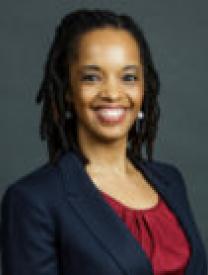
Stephanie Creary is an Assistant Professor of Management at The Wharton School , University of Pennsylvania. She serves as the Faculty Director of the Relationships Across Differences (RADs) Roundtable , a collaborative initiative with Harvard Business School, INSEAD, and NYU Stern. Research Focus: Identity, diversity and inclusion, emotional dynamics, and leadership in diverse organizations. Teaching: Offers courses on leading across cultural and relational differences (MGMT2240, MGMT6240) and advanced organizational effectiveness (MGMT8920). Key Contributions: Conceptualizes DEI work through emotional ambivalence transformation and workplace allyship frameworks (LEAP). Her work appears in top journals like Academy of Management Review , Organization Science , and Harvard Business Review . Scientific Awards: Thinkers50 Radar Class of 2023 NACD Directorship 100 Award Dorothy Harlow/McGraw Hill Best Paper Award (2023) Phillips and Nadkarni Outstanding Paper Award (2022) Multiple Best Reviewer Awards Additional Roles: Visiting Faculty Fellow at Harvard Business School (2022-2024) Host of Knowledge at Wharton Leading Diversity at Work Podcast (4 years)
Leonidas Barbopoulos is a Professor of Finance and Head of the Accounting & Finance group at the University of Edinburgh Business School. He has held visiting positions at NYU Stern, University of Bergamo, Harvard Business School, Mason School of Business, Strome College of Business, Trinity College Dublin, and University of Vienna. His research spans corporate finance, behavioral finance, market microstructure, and monetary policy interactions. Education: BSc (University of Piraeus; LSE), MSc (University of Durham), D.Phil (University of Durham), PgCert (University of Durham) His work focuses on dynamic games in corporate finance, merger economics, investor behavior, and climate-related financial innovations. Recent projects examine how macroeconomic conditions influence corporate control markets and informational asymmetries in financial systems. Barbopoulos has received prestigious awards including the Southwestern Finance Association Best Paper Award in Corporate Finance and the Yuki Arai Faculty Research Prize at NYU. He serves as Associate Editor at the International Review of Financial Analysis and has been a fellow of the UK Higher Education Academy since 2013. His collaborations extend across 12 similar academic profiles, with research fingerprints in 24 topics including mergers, wealth effects, investor behavior, and macroeconomic conditions. He currently leads a project addressing information asymmetry in merger negotiations through earnout financing.
Krzysztof Z Gajos is a Gordon McKay Professor of Computer Science at Harvard University’s Paulson School of Engineering and Applied Sciences. He leads the Intelligent Interactive Systems Group, focusing on human-AI interaction, accessible computing, and behavioral research at scale. His work integrates technical innovation with ethical and societal considerations, emphasizing equity-centered design. Education: Ph.D., University of Washington M.Eng. and B.Sc., Massachusetts Institute of Technology (MIT) Research Interests: His research spans AI for public services , health informatics , design for equity , and behavioral research platforms like LabintheWild.org. He investigates how AI can augment human decision-making while addressing biases and ethical challenges. Recent Trends in Articles: Recent work emphasizes human-AI collaboration in healthcare , explainable AI , and equity-centered design . Key themes include reducing overreliance on AI, improving transparency in algorithmic decisions, and centering marginalized communities in technology development. Scientific Awards: Sloan Fellowship Best Paper Awards at ACM CHI, COMPASS, and IUI Advising & Grants: His federal grants support AI ethics and healthcare projects, though recent terminations have prompted efforts to secure alternative funding. He advises students on projects like AI for humanitarian negotiations and digital phenotyping. Labs & Teams: Leads the Intelligent Interactive Systems Group , collaborating with organizations on AI for social good and accessible technology.
Dr. Robert Lount, Jr. is a Professor in the Management & Human Resources Department at The Ohio State University's Fisher College of Business. His research focuses on optimizing collaboration outcomes through motivation, trust, and negotiation strategies. He holds a PhD from Northwestern University's Kellogg School of Management and has taught at institutions including Kellogg, Cornell’s Johnson School, and INSEAD. Lount specializes in negotiation courses and has been recognized for teaching excellence with the Westerbeck Pace Setter award. His work bridges academic journals and popular media like Harvard Business Review and The New York Times. Education: PhD and MS from Northwestern University, BS in Psychology from Michigan State University. Research emphasizes trust development, conflict resolution, and group dynamics. He contributes to programs like MSCM Mid-Program Experience, integrating negotiations training with healthcare and life sciences applications. Courses include Leadership in Health Sciences, Negotiations, and Advanced Organizational Behavior seminars.
Andrew Green serves as Professor and Metcalf Chair in Environmental Law at the University of Toronto Faculty of Law, where he teaches environmental law, climate change law, administrative law, natural resources law, judicial decision-making, and international trade. His scholarly contributions span multiple legal domains with particular emphasis on the intersection of environmental regulation and administrative governance. Green's research interests encompass Environmental Law , Administrative Law , Climate Change Policy , Judicial Decision-Making , and International Trade Law . His empirical approach to legal scholarship has produced significant insights into how judges make decisions, particularly in administrative contexts, and how trade rules interact with domestic environmental regulations. His work often bridges theoretical legal analysis with practical policy implications. His recent publications reveal a strong focus on Canadian climate policy implementation, judicial behavior in high courts, and the evolving standards of review in administrative law. The research demonstrates increasing interdisciplinary integration, incorporating machine learning approaches to analyze judicial decisions and examining the systemic challenges in environmental governance. His scholarship consistently addresses the tension between regulatory effectiveness and legal accountability. Metcalf Chair in Environmental Law Past co-President of the Society for Empirical Legal Studies Past President of the Canadian Law and Economics Association Former Associate Dean at the Faculty of Law Chair of the University of Toronto Academic Appeals Committee (2009-2018) Before joining the Faculty of Law, Green practiced environmental law in Toronto for six years, handling both litigation (including prosecutions, administrative appeals, and civil actions) and transactional work. His practical experience informs his scholarly work on regulatory design and implementation. His research has influenced policy discussions on climate change, securities regulation, and administrative law reform in Canada.
Pardis Emami-Naeini is an Assistant Professor of Computer Science at Duke University, with joint appointments in the Sanford School of Public Policy and the Department of Electrical and Computer Engineering. She serves as the Director of the Duke Interdisciplinary Security, Privacy, and Interaction Research (InSPIre) lab and is a Duke Science and Technology Scholar. Her interdisciplinary work bridges computer science, public policy, and electrical engineering, with a focus on developing usable privacy and security solutions that empower individuals from diverse sociodemographic backgrounds. Dr. Emami-Naeini earned her Ph.D. in Computer Science from Carnegie Mellon University in 2020, followed by postdoctoral research at the University of Washington (2020-2022). Her research sits at the intersection of security, privacy, and human-computer interaction, with particular expertise in IoT security, technology-enabled abuse, reproductive health privacy, and smart city security. She has published extensively at flagship venues including IEEE S&P, CHI, CSCW, and SOUPS, with her work covered by major media outlets such as Wired and The Wall Street Journal. Her recent publications reveal a clear trajectory toward examining the human dimensions of security and privacy in emerging technologies, from LLM chatbots for mental health to social robots and period-tracking apps in the post-Roe v. Wade landscape. Her work consistently emphasizes the need for privacy-aware design that accounts for diverse user needs and contexts, particularly for vulnerable populations. Google Systems and ML Research Gift Award (2025) Google AI Research Scholar Program Award (2024) Top 5% Instructor in Duke Trinity College (2024) ORAU Ralph E. Powe Junior Faculty Enhancement Award (2023) Duke Science and Technology Scholar (2022) IEEE S&P paper highlighted in IEEE Security and Privacy Magazine (2021) CyLab Presidential Fellowship (2019) Dr. Emami-Naeini actively mentors several Ph.D. students including Jabari Kwesi, Jessie Cao, and Hiba Laabadli, as well as undergraduate and master's students. Her research has influenced key organizations including the National Institute of Standards and Technology (NIST), Consumer Reports, and the World Economic Forum in creating usable security and privacy labels for smart devices. She serves on numerous program committees including USENIX Security and CHI, and has participated in NSF grant review panels, demonstrating her growing leadership in the security and privacy community. Her InSPIre lab conducts user-centered research to uncover security and privacy needs of diverse stakeholders, with a particular focus on marginalized communities. The lab's work spans multiple domains including intimate partner violence, reproductive health, virtual reality, and smart cities, always with a strong emphasis on translating research findings into practical tools and policy recommendations.
Prof. Dr. Dennis Herhausen is a Full Professor of Marketing and Head of the Marketing Department at Vrije Universiteit Amsterdam’s School of Business and Economics. Previously, he held positions as Associate Professor at KEDGE Business School, Visiting Professor at the University of St. Gallen, and Assistant Professor at the University of St. Gallen. His research focuses on digital communication, customer journeys, multichannel management, and social media strategies, with publications in top-tier journals like the Journal of Marketing and Journal of Marketing Research. His work addresses critical issues such as online firestorm mitigation, complaint de-escalation, and gig economy communication. He has been awarded multiple prestigious prizes, including the 2021 CBSIG Consumer Research Award and the 2019 William R. Davidson Award. Education: PhD in Marketing from University of St. Gallen (2011) Teaching: Courses on Customer Experience Management, Survey Research Methods, and Thesis Guidance Research Interests: His work explores digital marketing strategies, customer-centric innovations, and the dynamics of online platforms. Recent studies address topics like business-to-investor marketing signals, privacy orientation measurement, and machine learning biases in marketing. He actively contributes to editorial boards of journals including Journal of Marketing and Journal of Interactive Marketing. Awards: 2021 CBSIG Consumer Research in Practice Award 2021 Retail & Pricing SIG Best Paper Award 2021 SERVSIG Best Services Article Award 2020 William R. Davidson Award Grants & Editorial Work: His research has been funded by national/international grants, and he serves on multiple editorial boards. Notable datasets include studies on online retailer strategies and virtual brand sabotage responses.
Daniel Leunbach is a Senior Lecturer at the School of Business, University of Oslo , specializing in Entrepreneurship . He teaches courses in strategy, innovation management, and entrepreneurship while integrating philosophy and psychology into his research to study decision-making under uncertainty. Ph.D. in Strategy and Entrepreneurship, University of Oslo MSc in Innovation and Entrepreneurship, University of Oslo BSc in Molecular Biology, University of Bergen His research explores the intersection of entrepreneurship theory , philosophy , and psychology , focusing on how entrepreneurs navigate situations where outcome probabilities are impossible to quantify. Recent publications investigate topics such as entrepreneurial imagination through poetry , resource acquisition negotiations , and Wittgensteinian approaches to defining entrepreneurship . Leunbach collaborates with scholars like Truls Erikson and Glenn Roger Kristiansen , publishing in journals such as Academy of Management Review , Scandinavian Journal of Management , and Journal of Business Venturing Design . He is affiliated with the Entrepreneurship (ENT) research group and consults on entrepreneurial decision-making frameworks.
Detlef F. Sprinz is a Senior Scientist at the Potsdam Institute for Climate Impact Research (PIK) and a Professor at the Faculty of Economics and Social Sciences of the University of Potsdam, Germany. During 2024-2025, he leads the project "AMaReNa - A Market for the Restoration of Nature" , focusing on carbon removals. His academic background includes a Ph.D. and M.A. in Political Science from the University of Michigan and an M.A. in Economics from the University of the Saarland. Research Interests: Climate policy at multiple levels, long-term policy design, evaluation of international/national institutions, European/international environmental policy, and modeling political decisions for sustainability. Notable Projects: Tandem Fellowship (2020-2022) for interdisciplinary course development, Visiting Researcher at University of Lund (2022-2023), and coordination of research at the Käte Hamburger Kolleg (2017). Publications emphasize climate cooperation under the Paris Agreement, effectiveness of environmental regimes, and predictive modeling for climate negotiations. His work spans empirical analyses of acid rain regulation, Kyoto Protocol implementation challenges, and bioenergy accounting errors. Scientific Awards & Memberships: Tandem Fellowship (German Stifterverband) Member, European Academy Co-founder, Ecologic Institute Teaching includes courses on global climate governance, political decision modeling, and environmental policy at the University of Michigan, Yale, University of Oslo, and University of Potsdam. He has contributed to IPCC’s Sixth Assessment Report as a Lead Author. Advisory Roles: Chairmanship of the European Environment Agency’s Scientific Committee (2009-2012), Senior Research Fellow at CICERO (2011-2013), and consultancy for governments, corporations, and think tanks.
Gillian Ku is a Professor of Organisational Behaviour at London Business School, where she chairs the Organisational Behaviour Faculty. She holds a BA from Harvard University and a PhD in Management and Organizations from the Kellogg School of Management at Northwestern University. Prior to her academic career, she worked as a financial analyst for Disney’s international video distribution division. Education: BA (Harvard), PhD (Northwestern) Her internationally recognized research spans negotiations, emotionally charged decision-making, and interpersonal relationships. Key areas include auction fever dynamics, perspective-taking in intergroup relations, gender disparities in negotiation contexts, and strategies for workplace diversity. Her work has been published in top-tier journals such as the Journal of Personality and Social Psychology and featured in media outlets including CNN and The New York Times Magazine . The six most recent Think articles highlight her expertise in negotiation tactics, Brexit-related strategic challenges, diversity inclusion, and gender roles in organizational behavior. These works emphasize practical applications for leadership, workplace adaptation, and ethical decision-making frameworks. She teaches negotiations and decision-making courses in London Business School’s full-time MBA and Executive Education programs, and has consulted for global organizations like Diageo, Roche, and Kuwait Petroleum Corporation.
Tara Garnett serves as Director of TABLE, a global knowledge platform for food systems analysis hosted by the Environmental Change Institute within the School of Geography and the Environment at the University of Oxford. TABLE operates as a collaboration between the University of Oxford, Wageningen University & Research, and the Swedish University of Agricultural Sciences, facilitating evidence-based dialogue on sustainable food futures. Her research interrogates the complex intersections between food systems, climate change, public health, and sustainability, with particular focus on livestock as a critical nexus point. Garnett investigates how scientific knowledge is translated across policy, civil society, and industry contexts, emphasizing the diverse values stakeholders bring to food system challenges. Her work consistently advocates for systems-thinking approaches that recognize the interconnected nature of food-related problems. As a fellow of the Oxford Martin School and co-investigator on the Wellcome Trust-funded Livestock, Environment and People (LEAP) project, she contributes to high-impact research at the food-environment-health interface. Her publication portfolio reveals evolving research trajectories from early climate-food connections toward contemporary explorations of alternative proteins, regenerative agriculture, and the political economy of food system transformation. Recognition Oxford Martin School Fellowship Garnett's leadership through TABLE exemplifies her commitment to creating spaces for inclusive, evidence-informed dialogue about building food systems that are sustainable, resilient, and just. Her work consistently bridges academic research and practical application, emphasizing that context-specific solutions and multi-stakeholder engagement are essential for meaningful food system transformation.
Barton Lee is an Assistant Professor (tenure track) and Chair of Political Economy & eDemocracy at the Department of Management, Technology, and Economics (D-MTEC) of ETH Zurich . He holds an Affiliate Fellowship with the Stigler Center at Chicago Booth and was a Junior Research Fellow at Magdalen College, University of Oxford (2021–2022). Dr. Lee earned his PhD in Economics from the University of New South Wales (UNSW) in 2021, following a visiting year at Harvard University (2018–2019). Current Role : Asst. Prof (TT) + Chair, ETH Zurich Affiliations : Stigler Center (Chicago Booth), UNSW Resilient Democracy Lab Research Focus : Political Economics, Applied Theory Dr. Lee investigates democratic fragility through lenses of legislative gridlock , technocratic governance , and populist voter behavior . His work connects economic policy with political institution design , often employing formal modeling and empirical analysis . Notable projects include studies on the feedback loops between polarization and policy failure and adaptive strategies in autocratic regimes . He actively contributes to academic networks via personal website and Google Scholar , and engages in collaborative workshops such as the 2025 IAST/TSE Workshop on Political Economy of Autocratic Rule . Dr. Lee also advocates for academic positions like the Professor of Health Economics role at ETH Zurich. Scientific Awards: Affiliate Fellow, Stigler Center (2021–present) Junior Research Fellow, Magdalen College, Oxford (2021–2022) Dr. Lee's recent work explores intersections between technology , democracy , and economic theory , with active participation in conferences and mentoring networks across Europe and Australia.
Patrick Flynn is the Matthew and Soogi Hong Fellow and Assistant Professor of Management at North Carolina State University's Poole College of Management, Department of Management, Innovation & Entrepreneurship. He holds a Ph.D. in Organizational Behavior and Human Resources from the University of South Carolina and a B.S. in Supply Chain Management from the University of Maryland. His research focuses on dynamic individual and group processes, including event-based adaptation, team citizenship behaviors, and resilience. He teaches courses in people analytics, management consulting practicum, and leadership consulting. Dr. Flynn’s work has been published in top journals such as Journal of Management , Journal of Applied Psychology , and Annual Review of Organizational Psychology . He serves on the editorial board of Group & Organization Management . His research explores transitions, sustainability, and organizational change, with media features in CNBC, MSN, and the Raleigh News & Observer . His academic contributions emphasize practical applications of organizational behavior theories, particularly in post-pandemic workplace dynamics, remote work adaptations, and employee well-being strategies. His recent work addresses collective turnover, trust dynamics, and proactive sustainability approaches in volatile environments.
Dustin Tingley is a Professor of Government at Harvard University and holds a joint appointment at the Harvard Kennedy School of Public Policy . He serves as Interim Vice Provost for Advances in Learning and directs the Data Science and Technology Group and the Harvard Initiative on Learning and Teaching . He earned a PhD in Politics from Princeton and a BA in political science and math from the University of Rochester. Key Roles : Deputy Vice Provost (past), Chair of Harvard's Standing Committee on Climate Education Research Focus : Climate change politics, data science, causal inference, and international political economy His recent work explores the political economy of climate transitions , public opinion on carbon policies , and machine learning applications in social sciences . He co-founded ABLConnect , a repository for active learning pedagogy, and organized conferences on causal mechanisms , teaching with AI , and equitable classrooms . Awards : Gladys M. Kammerer Award (2015) for co-authored book Sailing the Water’s Edge Notable Publications : Uncertain Futures: How to Unlock the Climate Impasse (2023, with Alex Gazmararian) The Political Economy of the Clean Energy Transition (2025)
Roberto M. Fernandez is the William F. Pounds Professor at MIT Sloan School of Management, with over 35 years of experience in academia. He previously held the rank of Full Professor at Stanford University's Graduate School of Business. His expertise spans organizational behavior, social networks, and human resources, with over 60 published articles and research papers. He has been honored with multiple teaching awards including the Jamieson Prize (2009), Frank E. Perkins Award (2011), and MIT Sloan Outstanding Teacher Award (2023-2024). Education: BA in Sociology (Harvard University, magna cum laude), MA and PhD in Organizational Sociology (University of Chicago). Research Interests: Gender disparities in hiring, labor market dynamics, social networks' role in employment, and AI's impact on national security. Executive Education: Leads programs on organizational transformation, AI strategies, and enterprise-wide change management. Co-leads the AI for National Security Program for the U.S. government. International Engagement: Worked with organizations in over 40 countries, including consulting for top executives in industries like automotive, finance, and healthcare. Awards also include election as a Fellow of The American Academy of Political and Social Sciences (2012) and recognition for mentoring through the Committed to Caring Award (2023).