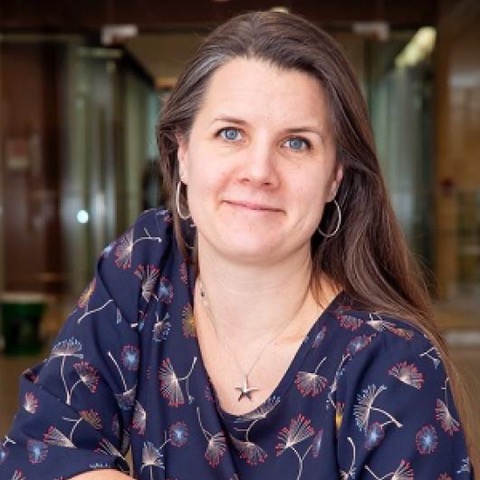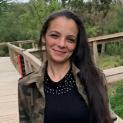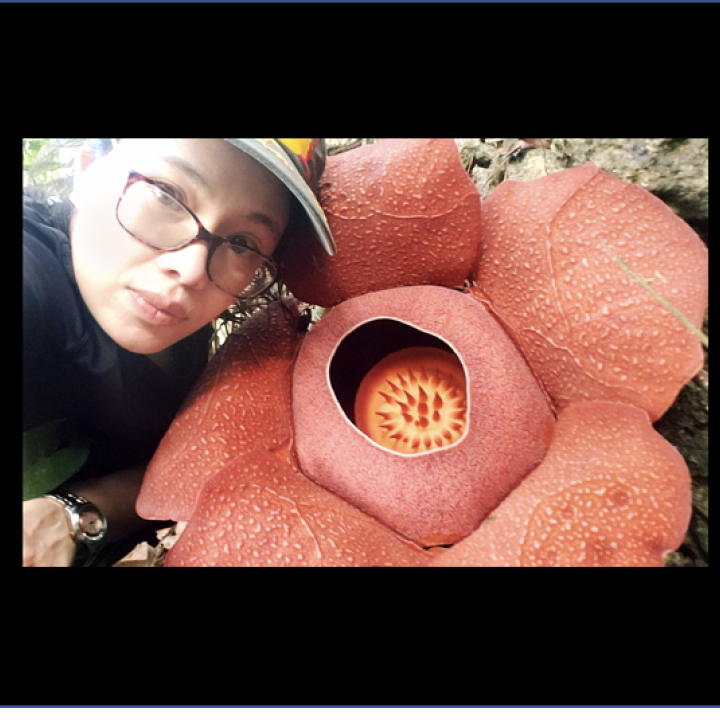
Jeanmaire Molina is an Associate Professor in the Department of Biology at Dyson College of Arts and Sciences, Pace University, New York City. She is a plant evolutionary biologist specializing in parasitic plants, particularly Rafflesia, the world’s largest flower. Her work bridges fundamental evolutionary biology with applied conservation and ethnobotanical research. Education: PhD in Ecology & Evolution, Rutgers University, 2009 BS in Biology, University of the Philippines, 2001 Her research integrates phylogenetics, genomics, metabolomics, and microbial ecology to understand the biology of Rafflesia and its host interactions. She also investigates ethnobotanical uses of medicinal plants and leverages plant phylogeny to predict sources of bioactive compounds. Her work has significant implications for conservation, herbal medicine authentication, and biodiversity education. Recent publications (2014–2025) demonstrate a sustained focus on Rafflesia, including chloroplast genome loss, host metabolite shifts, endophyte development, microbial symbionts, and transcriptome evolution. Her studies increasingly incorporate omics technologies and interdisciplinary approaches, reflecting a trajectory toward integrative plant systems biology. She also contributes to public science through DNA barcoding initiatives and student-involved pharmacovigilance projects. Scientific Awards: Dr. Molina mentors students through independent research and teaches courses such as General Biology, Genetics, Medicinal Botany, and Pharmacology. She has secured significant external funding from the National Science Foundation and the U.S. Botanic Garden for projects on ex situ propagation and host ecology of Rafflesia. She leads research that combines laboratory, computational, and field-based approaches, often involving student collaborators. Her lab focuses on the cryptic biology of parasitic plants and the application of phylogenetic tools to societal challenges in medicine and conservation.