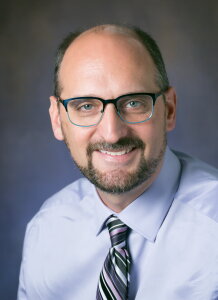
David L. Cooper serves as Associate Professor and Head of the Department of Slavic Languages & Literatures within the School of Literatures, Cultures & Linguistics at the University of Illinois Urbana-Champaign. He maintains additional professorial appointments in the Program in Medieval Studies, European Union Center, Russian, East European and Eurasian Center, Center for Global Studies, and National Center for Supercomputing Applications (NCSA). Cooper's research centers on Czech and Russian literatures with emphases on forgery/mystification, translation history, literary nationalism, and criticism. His work examines how literary hoaxes like the Czech National Revival manuscripts functioned as nation-building tools and analyzes translation's role in cultural exchange across Slavic contexts, particularly during the Romantic era. His 2023-2018 publications reveal consistent engagement with Czech literary forgeries through multiple methodologies: his monograph The Czech Manuscripts provides historical-cultural analysis, while computational approaches appear in co-authored works like the 2023 Oral Tradition article applying entropy metrics to forgery detection. Comparative studies of Czech-Russian literary nationalism form another recurring thread. Scientific Awards: 2019 AATSEEL Book Award, Best Scholarly Translation National Center for Supercomputing Applications, Faculty Fellow 2020 National Council for Eurasian and East European Research, Title VIII National Research Competition Grant Cooper has secured significant research funding including NCSA's Faculty Fellowship (2020) and Title VIII grants, supporting his interdisciplinary work at the intersection of literary studies and computational analysis. As Department Head, he oversees graduate programs though specific advisees aren't documented in source materials. His NCSA affiliation facilitates computational humanities collaborations, exemplified by the 2023 entropy-based forgery analysis. These partnerships enable quantitative approaches to traditional literary questions, particularly regarding oral-formulaic epics and manuscript authenticity verification.