
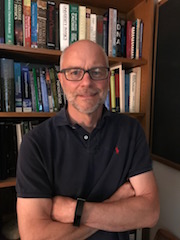
Steven T. Freyمشاهده پروفایل
دانشیار
Steven T. Frey is an Associate Professor of Chemistry at Skidmore College, where he has been a faculty member since 1996. He maintains an active research program within the Chemistry Department and is affiliated with the Environmental Studies program and Periclean Honors Forum. His office is located in CIS 310J, and he can be reached at sfrey@skidmore.edu. Education: B.S. from Ithaca College (1987) Ph.D. from Penn State University (1994) Postdoctoral Fellow at Johns Hopkins University (1994-1996) Research Interests: Dr. Frey's work centers on synthesis and characterization of transition metal complexes mimicking metalloenzyme active sites (focusing on copper/manganese systems) and composite material development through immobilization of metal ions/biomolecules on solid supports. His research bridges inorganic chemistry , bioinorganic modeling , and environmental applications with practical implications for catalysis, optical storage, and pollutant detoxification. Publication Trends: His most recent work (2018) emphasizes crystallographic analysis of transition metal complexes, while earlier publications (2010-2003) demonstrate interdisciplinary reach spanning enzyme immobilization, catalytic hydrolysis mechanisms, and innovative chemistry education methodologies. Collectively, his publications reveal consistent focus on structural inorganic chemistry with growing emphasis on environmental remediation and chemical education . Scientific Awards: No specific awards or fellowships are documented in the provided materials. Advising and Grants: Professor Frey has mentored numerous undergraduate researchers who regularly present at national conferences and co-author publications. His research program is deeply integrated with Skidmore's undergraduate curriculum, though specific grant funding sources are not detailed in the available information. Labs and Teams: The Frey research group operates within Skidmore's Chemistry Department, maintaining collaborations with colleagues like Jerry P. Jasinski and Richard C. Holz. His work shows strong interdisciplinary connections to environmental studies through composite material applications for ecological remediation.

