Fenghua Huمشاهده پروفایل
دانشیار
- Neurodegeneration
- Amyotrophic Lateral Sclerosis (ALS)
- Frontotemporal Lobar Degeneration (FTLD)
- +۴ مورد دیگر
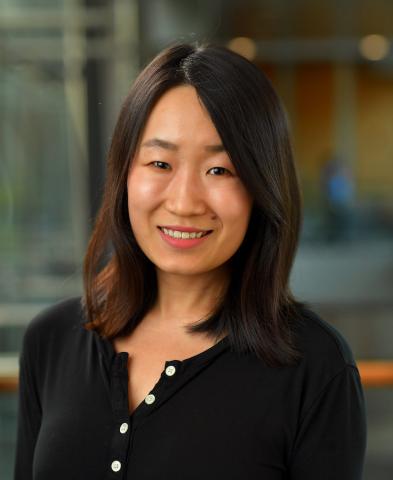
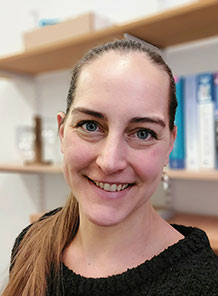
Fenghua Hu is an Associate Professor in the Department of Molecular Biology and Genetics at Cornell University, and a member of the Weill Institute for Cell and Molecular Biology. She holds affiliations with the Biochemistry, Molecular, and Cell Biology (BMCB), Genetics, Genomics and Development (GGD), and Biological and Biomedical Sciences (BBS) graduate programs. Dr. Hu earned her B.S. in Biochemistry from Peking University (1997) and her Ph.D. from Baylor College of Medicine (2002), followed by postdoctoral training at Yale University. Her research focuses on molecular mechanisms of neurodegenerative diseases, particularly ALS and FTLD, with emphasis on progranulin, TMEM106B, C9orf72, and TDP-43. Her lab investigates lysosomal dysfunction links to neurodegeneration, exploring therapeutic avenues for these diseases. Key findings include the role of progranulin in lysosomal pathways and TMEM106B in myelination and inflammation. Dr. Hu has been recognized with awards such as the Rosalinde and Arthur Gilbert Foundation/AFAR New Investigator Award (2010), Platform Speaker Award (2001), and the Trentin Award for Scholastic Excellence (1998). She teaches BIOMG 6360: Functional Organization of Eukaryotic Cells and actively collaborates with interdisciplinary teams in neuroscience and cell biology. Her lab’s work spans from basic molecular mechanisms to translational research, with recent studies highlighting TMEM106B’s role in SARS-CoV-2 cell entry and C9ORF72’s regulation of inflammation. Ongoing projects address lysosomal dysfunction in aging and neurodegeneration, leveraging mouse models and biochemical approaches.