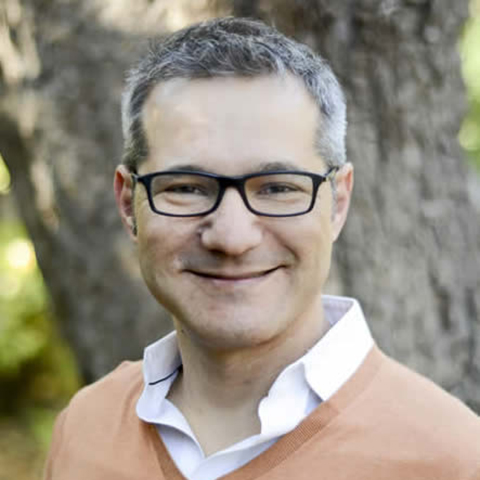
Wes Hartmann is the John G. McCoy-Banc One Professor of Marketing at the Stanford Graduate School of Business. His research focuses on the intersection of marketing, economics, and policy, with emphasis on pricing strategies, brand advertising, social interactions, and conservation. He has advised numerous PhD students who have secured academic and industry positions globally. Key research interests include understanding frequency in brand advertising, preference externality estimators, and the economics of harm reduction through conservation experiments. Hartmann’s work bridges theoretical econometric models with real-world applications, such as dynamic pricing in retail and the impact of digital cinema on market dynamics. His publications have been recognized with prestigious awards, including finalist nominations for the John D.C. Little Award and the Paul Green Award. Notable contributions include groundbreaking studies on Super Bowl advertising effectiveness and the implications of social networks on consumer behavior. Hartmann’s advising record spans over 15 students, many of whom have secured tenured positions or roles at top institutions like Harvard, Columbia, and NYU. His research collaborations include projects on conservation field experiments, internet vs. TV advertising efficacy, and the role of social interactions in targeted marketing.
Florian Zettelmeyer is the Nancy L. Ertle Professor of Marketing at Northwestern University's Kellogg School of Management and Faculty Director of the Program on Data Analytics at Kellogg. He also serves as a senior science leader at Amazon, leading the Advertising Economics organization. His research focuses on marketing analytics, digital advertising, and the economic implications of artificial intelligence in business. PhD in Management Science from MIT (1996) Vordiplom in Business Engineering from University of Karlsruhe (1992) MS in Economics from University of Warwick (1991) Professor Zettelmeyer specializes in analyzing how analytics and AI transform firms, with notable work on advertising measurement, pricing strategies, and consumer decision-making in automotive markets. His publications span journals like Marketing Science, Management Science, and American Economic Review, emphasizing empirical validation through field experiments. He has received prestigious awards including the John D.C. Little Award (twice), Sales SIG Excellence in Research Award, and multiple teaching honors such as the Sidney J. Levy Teaching Award and L. G. Lavengood Outstanding Professor of the Year Award. His research frequently appears in top-tier journals and working paper series.
Professor Markus Dertwinkel-Kalt holds the Chair of Economics with a focus on Behavioral and Digital Economics at the University of Münster, School of Business and Economics. Previously, he was a Full Professor at the University of Konstanz and an Assistant Professor at Frankfurt School of Finance & Management. His research spans behavioral economics, industrial organization, energy policy, and climate finance, with a methodological focus on theory and experimental methods. Education: PhD (2015) in Economics from Heinrich-Heine University Düsseldorf, advised by Hans-Theo Normann; M.Sc. Mathematics (2011), B.Sc. Mathematics (2009) from the same university. Additional studies include a B.A. in Philosophy (2013) and minor in Physics. Research focuses on behavioral aspects of energy policy, digital markets, consumer decision-making under salience effects, and climate finance mechanisms. Notable projects include analyzing energy price caps' moral hazard effects, loot box demand drivers, and designing climate transition labels for financial products. He leads DFG-funded projects on corporate attention allocation and financial product design exploiting limited attention. Awards include the 2024 SBE Research Prize and recognition in the 2023 WiWo Ranking of top young German economists. He serves as Director of Sustainability and Ethics Committee Chair at the University of Münster, and holds affiliations with the Max Planck Institute and CESifo. Teaching spans behavioral economics, digital economics, and climate policy at both undergraduate and graduate levels. Supervises PhD students through the MEP Doctoral Seminar and collaborates on interdisciplinary research teams involving institutions like Ruhr University Bochum and the DLR.
Xuanming Su is the Murrel J. Ades Professor of Operations, Information and Decisions at the Wharton School, University of Pennsylvania. His research focuses on decision processes, omnichannel retail operations, strategic consumer behavior, and supply chain management with behavioral economics perspectives. Key research areas include game theory, bounded rationality, intertemporal pricing, and healthcare operations optimization Teaches OIDD2900 (Decision Processes) and OIDD9400 (Operations Mgmt) His work spans theoretical and applied domains, from modeling consumer stockpiling behavior to optimizing omnichannel retail strategies. Recent research examines social comparison effects in service operations and self-order technologies in multi-channel environments. Scientific awards include: Best Paper Award (Management Science, 2020 & Finalist 2019) NSF CAREER Award (2008-2013) MSOM Young Scholar Prize (2014) Wickham Skinner Early Career Award (2008) A specialist in strategic pricing and consumer behavior modeling, Prof. Su has published extensively in top journals while maintaining active research collaborations in operations management and behavioral economics domains.
James Dana is a Professor of Economics and Strategy at Northeastern University, holding a joint appointment in the Department of Economics (College of Social Sciences and Humanities) and the D’Amore-McKim School of Business. He specializes in industrial organization, competitive strategy, and operations management, with a focus on pricing under uncertainty, revenue management, and market structure impacts. Dana earned a PhD in Economics from MIT and a BA from Yale University. His career includes prior roles as an Associate Professor at Northwestern University’s Kellogg School of Management and an Assistant Professor at Dartmouth College. He has conducted research on bundling strategies, airline industry dynamics, and pricing mechanisms, addressing topics like demand uncertainty and price discrimination. His work bridges theoretical economic models with practical business applications, particularly in revenue optimization and competitive strategy. Education: PhD (Economics, MIT), BA (Economics, Yale University). Research Interests: Industrial organization, pricing strategies under uncertainty, product bundling, revenue management, market structure effects, and strategic differentiation. His studies often explore how firms leverage pricing mechanisms to navigate demand volatility and competitive pressures. Professional Experience: Prior to Northeastern, he held tenure at Kellogg School of Management and Dartmouth College. He spent a sabbatical at Yale University’s School of Management in 2022-23. Contact: j.dana@northeastern.edu | 617-373-7517 | Office: 306 Lake Hall, 43 Leon Street, Boston.
János Flesch is an Associate Professor in the Department of Quantitative Economics at the School of Business and Economics, Maastricht University, a position he has held since 2017 after serving as Assistant Professor (2007-2016) and Postdoctoral researcher (1998-2002) at the same institution. His academic credentials include: PhD in Mathematics, Maastricht University (1994-1998). Dissertation: "Stochastic games with the average reward". Supervisors: Frank Thuijsman and Koos Vrieze. Dr. Flesch's research centers on dynamic games of infinite duration with mathematical rigor, spanning applications in economics, computer science, descriptive set theory, and biology. Key focus areas: Stochastic and Blackwell games Equilibrium analysis in infinite horizon settings Payoff structure theory Behavioral strategy foundations His 2022-2025 publications reveal consistent advancement in minmax value regularity, shift-invariant payoff equilibria, superfair stochastic games, and economic applications like intertemporal price discrimination. Foundational work on finitely additive strategies and competitive search games demonstrates interdisciplinary reach across mathematical theory and practical economics. No scientific awards are documented in the provided text. Regarding academic mentorship and funding: Advisees: No students listed Grants: No funding sources specified Research infrastructure details (labs/teams) are absent from the source material.
Keith Ericson is a Professor of Markets, Public Policy, and Law at Boston University's Questrom School of Business, where he holds the position of Dean's Research Scholar. His office is located in the Rafik B. Hariri Building at 595 Commonwealth Avenue, Boston. With a robust research profile focusing on the intersection of behavioral economics and health policy, Ericson has established himself as a leading scholar in understanding consumer decision-making in health insurance markets and healthcare systems. PhD, Harvard University, 2011 AM, Harvard University, 2008 BA, Williams College, 2004 Professor Ericson's research centers on behavioral economics applied to health policy, with particular expertise in health insurance markets, consumer choice architecture, and healthcare system design. His work investigates how individuals make decisions regarding health insurance enrollment, how organizational structures affect healthcare delivery, and how behavioral interventions can improve health outcomes. His research often combines theoretical modeling with empirical analysis of large-scale administrative datasets to provide policy-relevant insights. Analysis of Ericson's publication record reveals a consistent focus on understanding decision-making in healthcare markets, particularly examining how consumers interact with health insurance systems. His work spans both theoretical contributions to behavioral economics and practical applications to healthcare policy design. A recurring theme is examining how default options, information presentation, and market structure influence consumer choices in health insurance contexts, with significant implications for policy design and implementation. Through his Google Scholar profile, Ericson demonstrates substantial academic impact with thousands of citations and a strong h-index, reflecting the significance and reach of his contributions to the field of health economics and behavioral public policy. Professor Ericson maintains an active research agenda with numerous collaborators across institutions, as evidenced by his extensive publication record in top economics and policy journals. His work often involves interdisciplinary collaborations with researchers in medicine, public health, and psychology, reflecting the complex nature of healthcare decision-making.
Dr. David Hardisty is an Associate Professor and SMEV Chair of Marketing & Behavioral Science at the Sauder School of Business , University of British Columbia. His research focuses on consumer behavior in sustainability and financial decision-making, with notable work on behavioral nudges, intertemporal choices, and environmental policy. He co-founded the Decision Insights for Business and Society (DIBS) group and the Interdisciplinary Biodiversity Solutions (IBioS) research cluster. In a recent seminar, he discussed a longitudinal study on household laundry behaviors, revealing that environmental benefit nudges and multiple behavior requests yield stronger energy efficiency outcomes. His research integrates behavioral science with real-world applications, addressing climate change mitigation and consumer psychology challenges. Key research themes include: Behavioral interventions for sustainable choices Temporal decision-making and patience Marketing strategies for environmental and financial contexts Cross-cultural mental accounting His work spans academic and applied domains, with studies on charity dynamics, gig economy biases, and policy design. He has collaborated on projects like parking compliance signs and energy label effectiveness, emphasizing practical solutions to global challenges.
Francesc Dilmé is a tenured Associate Professor at the University of Bonn's Department of Economics, affiliated with the Institute of Microeconomics, ECONtribute, and CRC TR 224 EPoS. His research focuses on Microeconomic Theory with emphasis on game-theoretic models of communication, bargaining, and reputation dynamics. He serves on the Board of Editors for the American Economic Review and co-organizes the European Economic Theory Conference (EETC) and Christmas Microeconomic Theory Conference in Bonn (CriMicTheConBon). His research centers on strategic interactions in dynamic environments, particularly examining information transmission in markets through cheap talk, bargaining with private information, and reputation formation. His work bridges theoretical rigor with practical applications in market design and contract theory, often employing equilibrium refinements to analyze sequential stability and robust information transmission. Key contributions include characterizing consistent assessments in signaling games and modeling residual deterrence mechanisms. Dilmé's recent publications reveal a strong focus on dynamic game theory applications across economics journals including Econometrica, Review of Economic Studies, and American Economic Review. His work demonstrates consistent innovation in modeling communication under conflict of interest, bargaining with imperfect information, and reputation building through costly adjustments, establishing him as a leading scholar in microeconomic theory. Scientific recognition includes: ERC Starting Grant (Information Transmission in Markets, 2021-2026) His research is supported by significant funding from the ERC grant, enabling exploration of information transmission mechanisms in markets. Dilmé actively contributes to academic service through editorial work and conference organization, fostering theoretical economics research communities. His collaborations with scholars like Daniel Garrett and Fei Li demonstrate interdisciplinary engagement within microeconomic theory. As part of the Institute of Microeconomics and CRC TR 224 EPoS at the University of Bonn, Dilmé operates within a collaborative research ecosystem focused on empirical and theoretical economics. His work intersects with the university's ECONtribute initiative, contributing to Bonn's prominence in economic research.
Timothy J. Richards is the Marvin and June Morrison Endowed Chair of Agribusiness and Professor at the Morrison School of Agribusiness within the W. P. Carey School of Business at Arizona State University. He also serves as a Senior Global Futures Scientist at ASU's Global Futures Scientists and Scholars program. With an academic career spanning over three decades at ASU, Richards has established himself as a leading scholar in agricultural economics and food supply chain management, publishing over 140 articles in top economics, supply chain management, marketing, and agricultural economics journals. His educational background includes: Ph.D. in Agricultural Economics from Stanford University (1994) M.S. from Stanford University (1989) B.S. in Economics and Finance from the University of British Columbia (1988) Professor Richards' research focuses on food supply chains, empirical industrial organization, quantitative marketing, data analytics, retailing strategy, agricultural labor, and food policy. His work combines rigorous economic analysis with practical applications in the food industry. He has published extensively in prestigious journals including the Review of Economics and Statistics, Management Science, Manufacturing and Services Operations Management, Production Operations Management, and the American Journal of Agricultural Economics. His research often employs sophisticated econometric techniques to analyze large datasets from the food retailing industry, examining topics ranging from food waste and sharing economy applications to supermarket competition, pricing strategies, and the impacts of immigration policy on farm labor markets. Professor Richards has received sixteen Article of the Year awards throughout his distinguished career. His scholarly contributions have been recognized with the AJAE Outstanding Article Award, Atlas Award, and CJAE Outstanding Article Award. He has served as co-editor of the American Journal of Agricultural Economics and is currently co-editor of the European Review of Agricultural Economics, demonstrating his significant influence in the field of agricultural economics. He has secured substantial research funding from various sources including USDA-NIFA, Cornell University, and industry partners. His grant portfolio demonstrates expertise in food retail economics, consumer behavior, supply chain management, and agricultural policy. Professor Richards has conducted extensive consulting work for major food industry clients including Walmart, Kroger, SuperValu, Hormel, Sara Lee, JBS Swift, and Foster Farms. His teaching portfolio includes Managerial Economics, Strategic Pricing for Retailers, and Risk Management and Insurance, with current course offerings including AGB 481 Strategic Pricing in Food Markets and BUS 434 Business Risk Management at both undergraduate and graduate levels.
Linh T. Tô is an Assistant Professor of Economics at Boston University, currently on leave as a Visiting Assistant Professor at Stanford University. Her research focuses on labor economics with an emphasis on gender inequality and methodological advancements in empirical work. She employs a mix of quasi-experimental, structural, and experimental methods to analyze labor market dynamics, policy impacts, and behavioral economic phenomena. Her work bridges theoretical frameworks with practical policy implications, particularly in understanding worker preferences, employer practices, and consumer behavior. Key research areas include labor supply dynamics, wage differentials, workplace flexibility pricing, and the gender wage gap. She has developed methodological tools such as Bayesian Adaptive Choice Experiments (BACE) and contributed to econometric techniques addressing measurement unit sensitivity. Tô collaborates extensively with scholars like Marshall Drake, Neil Thakral, and Hannah Illing, producing influential papers on topics ranging from anticipation effects in consumption to hiring practices influencing gender disparities. Her academic contributions are reflected in journals such as the American Economic Review and the American Economic Association's Papers & Proceedings. She maintains an active GitHub presence, sharing packages like bace and tregs that facilitate reproducible research in economics. Tô holds a Ph.D. in Economics and actively participates in policy discussions through conference presentations and collaborative projects.
Gea M. LEE is a Full-time Faculty and Associate Professor of Economics at the School of Economics, Singapore Management University (SMU). She holds a Ph.D. in Economics from Columbia University (2003) and specializes in Applied Microeconomics, with core research interests in Industrial Organization and International Trade. Ph.D. in Economics, Columbia University, 2003 M.Phil. in Economics, Columbia University, 1999 M.A. in Economics, Korea University, 1992 B.A. in Economics, Korea University, 1990 Her research focuses on strategic interactions in markets, trade policy, subsidies, and pricing dynamics. She explores how firms compete through advertising, R&D, and pricing strategies, and how governments regulate trade and innovation. Her work often employs theoretical modeling and empirical analysis to understand market efficiency and policy implications. Recent publications (2020–2023) highlight her focus on R&D subsidies in Korea, infrastructure investment, consumer search behavior, and international trade rules. These works reflect a consistent engagement with real-world policy issues through rigorous economic analysis. She has published in leading journals including Research Policy , Journal of International Economics , Economics Letters , and Games and Economic Behavior . Her research is frequently co-authored with prominent economists such as Kyle Bagwell and Yumi Koh. Gea M. LEE advises graduate students in economics and is actively involved in academic research. She maintains a research website and has previously shared insights through a Korean blog. No formal scientific awards are mentioned in the provided text.
Professor Eduardo Zambrano of the Department of Economics at California Polytechnic State University (Cal Poly) is a leading academic in Welfare Economics, Human Development measurement, Game Theory, and Political Economy. His research has been presented at over 25 international conferences and 25 university seminars globally. He serves on the Editorial Board of the Latin American Economic Review and has consulted for the United Nations Development Programme on human development indices redesign. Recipient of a three-year Economics NSF grant (2023) for econometrics of inequality-sensitive treatment effects Expertise spans Game Theory , Decision Theory , and General Equilibrium Theory His publications cover Human Development Index methodology, energy policy measurement, organ allocation mechanisms , and monetary economics . While no formal awards are documented, his research has established him as a key international contributor to welfare economics and social choice theory.
Michael Siegenthaler is an Adjunct Professor and Head of the Research Division Swiss Labor Market at the KOF Swiss Economic Institute, which is part of the Department of Management, Technology, and Economics at ETH Zurich. He serves as an associate editor at the Journal of Labor Economics, a Research Affiliate of the Immigration Policy Lab at ETH Zurich and Stanford University, and a Research Fellow of the Institute of Labor Economics (IZA) and the Rockwool Foundation Berlin. His educational background includes a Ph.D. in Economics from ETH Zurich (2010-2014), an M.Sc. in Economics from the University of Bern (2008-2010), and a B.A. in History from the University of Bern (2005-2009). He was also a Visiting Scholar at the University of California, Berkeley (2015-2016). Professor Siegenthaler's research centers on labor economics and migration, specifically examining how policies and economic conditions shape firms' demand for workers. His methodological approach combines innovative data sources with rigorous empirical techniques to study minimum wage effects, immigration restrictions, short-time work policies, and exchange rate fluctuations. His work on the Swiss 'job miracle' phenomenon has provided valuable insights into labor market dynamics and structural changes. His publication record reveals a consistent focus on labor market institutions and policies, with recent work examining minimum wage pass-through, immigration effects on firms, and hiring discrimination. His research often leverages unique Swiss policy contexts and data sources, making significant contributions to both theoretical understanding and policy-relevant insights in labor economics. As Head of the Swiss Labor Market division at KOF, Professor Siegenthaler is actively involved in economic forecasting and policy analysis for Switzerland. His work bridges academic research and practical policy applications, addressing critical issues in labor market design and economic policy.
Professor Wenlan Qian serves as Director of the Institute of Real Estate & Urban Studies and holds the Ng Teng Fong Chair Professorship at the National University of Singapore Business School. Her academic appointments include Professor of Finance and Real Estate, with expertise spanning household finance, real estate economics, and the economics of information in financial markets. Professor Qian's research focuses on three central themes: household finance, real estate economics, and the economics of information in financial markets. She examines how policy programs, market frictions, and behavioral factors impact household consumption and debt behavior. Her work on housing markets investigates how personal preferences and market conditions affect house purchase decisions. Additionally, she studies how information is produced and disseminated in financial markets, with particular attention to interactions between different types of informed investors. Professor Qian's recent publications demonstrate a consistent focus on household financial behavior using high-frequency transaction data. Her work spans real estate economics, consumer finance, and information economics, often employing quasi-natural experiments and innovative datasets. She has published in top-tier journals including the American Economic Review, Journal of Financial Economics, and Management Science, with research that bridges theoretical finance and practical policy implications. As an educator, Professor Qian teaches Investment Analysis and Portfolio Management at the undergraduate level and Finance Theory for PhD students. She places strong emphasis on critical thinking, effective communication, and preparing students for careers in Asia's financial markets. She actively advises students at all levels, from undergraduate theses to PhD dissertations, with several collaborative projects resulting in publications in top finance journals.