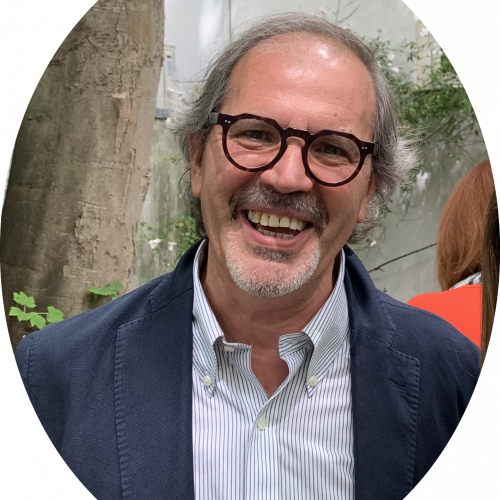
Roberto Dolciمشاهده پروفایل
دانشیار
Roberto Dolci is an Associate Professor in the Department of Italian Language, Literature, and Arts in the World (LILAIM) at the University of Rome 'Foro Italico'. He teaches in several academic programs including Italian Language and Culture in the Digital World (LiCIMoD), Italian as a Foreign Language (ITAS), Italian Food Management and Culture, and the PhD program in Linguistic, Philological, and Artistic-Literary Studies. He is also a Visiting Scholar at the John D. Calandra Italian American Institute, CUNY, New York, USA. His research centers on educational linguistics and glottodidactics, with a focus on language teaching methodologies, linguistic and educational policies, and the global promotion of the Italian language. He investigates how language instruction serves as a tool for cultural diplomacy and engages with the dynamics of the Italian diaspora worldwide. His work also integrates digital technologies into language pedagogy, particularly within digital humanities frameworks. The recent publications highlight his interest in the institutionalization of Italian language education in international contexts, especially in the United States through the AP Program, and the sociolinguistic analysis of Italian’s vitality across global communities. These works reflect a strong interdisciplinary trend combining policy analysis, language teaching, and diaspora studies. Associate Director, TILCA (Teaching Italian Language and Culture Annual) Associate Editor, MOSAIC (Journal for Language Teachers) Roberto Dolci advises academic programs and contributes to curriculum development in Italian language teaching at undergraduate and graduate levels. He is involved in research initiatives related to language policy and digital tools in education, though specific grant details are not mentioned. His collaborations with CUNY underscore international academic engagement and cross-institutional scholarly work. He is affiliated with the Department of Italian Language, Literature, and Arts in the World (LILAIM), where he leads courses in glottodidactics, intercultural communication, and linguistic skills for teaching Italian as a second language. His academic team likely includes graduate students and researchers focused on language education and policy, though specific lab structures are not detailed.