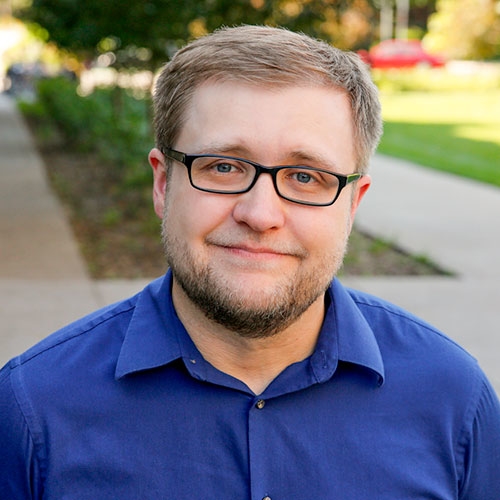
Carol J. Smith is an Adjunct Instructor at Carnegie Mellon University's Human-Computer Interaction Institute (HCII) and a Research Scientist at the Software Engineering Institute (SEI). She focuses on improving the design of AI/ML systems through UX and HCI methods to build trustworthy technologies. Her work emphasizes ethical AI, user trust, and human-AI collaboration. Research Interests: Trustworthy AI systems Ethical design of AI User experience (UX) in AI development Bias mitigation in machine learning Human-AI teaming frameworks Awards: 2023: Listed among 100 Brilliant Women in AI Ethics™ 2021–2025: ACM Distinguished Speaker Labs/Teams: Software Engineering Institute (SEI) HCII's AI Ethics and Trustworthiness Research Group
Meltem ACAR GÜVENDİR is an Associate Professor in the Department of Educational Sciences at Trakya University's Faculty of Education. She holds a PhD in Measurement and Evaluation in Education from Ankara University (2013) and has conducted postdoctoral research at the University of California, Los Angeles (UCLA). Her research focuses on large-scale educational assessment, including analyses of PISA, TIMSS, and OBBS datasets using hierarchical linear modeling. She specializes in value-added assessment, meta-analyses of study abroad impacts, and psychometric evaluation of educational policies. Academic roles include serving as Head of the Measurement and Evaluation Commission (since 2018) and Deputy Head of the Department of Educational Sciences (2016–2018). She co-edits the International Journal of Assessment Tools in Education and has contributed to over 60 peer-reviewed articles and book chapters. Her work explores student achievement predictors, test anxiety measurement, and international student integration. Key projects include a TÜBİTAK-funded study on scale development processes and participation in the EU-funded CA19103 initiative addressing LGBTI+ inequalities. She has supervised numerous research projects and delivered keynotes on educational measurement methodologies.
Soyeon Ahn is a full-time Professor in the Department of Education and Psychological Studies at the University of Miami's School of Education and Human Development. Her academic profile demonstrates active research leadership in health communication, educational assessment, and psychometrics, with recent publications spanning 2024-2025. Contact details include email s.ahn@miami.edu, phone (305)284-2929, and ORCiD 0000-0003-2581-306X. Research interests focus on Health Belief Model applications in social media health campaigns, fairness evaluation of high-stakes educational exams, and eHealth interventions for obesity management. She investigates how content creator characteristics (e.g., race, occupation) affect user engagement with health messages, examines psychometric validation of assessment tools via Rasch modeling, and explores generative AI's pedagogical impact. Her work integrates intersectionality frameworks to address health disparities in clinical settings. Recent publications reveal strong interdisciplinary trends connecting public health, education, and technology. Key themes include methodological rigor in meta-analyses of occupational cancer studies, social media's role in vaccine behavior change, and AI literacy training for educators. Her findings consistently emphasize practical implications: optimizing health messaging through HBM constructs, addressing test bias in educational equity, and leveraging technology for behavior intervention. The 2024-2025 output shows increasing focus on real-world application of measurement theory.
Gabriel Cipriano is a Visiting Professor in the Department of Social Research Methods at the School of Sociology and Public Policy (ESPP), Iscte – Instituto Universitário de Lisboa, and a researcher at CIES-Iscte (Center for Research and Studies in Sociology). He is currently a PhD Scholarship Holder, with a doctorate in School Administration and Management Policies expected in 2025. Educational Background: PhD in School Administration and Management Policies, Iscte (2025) Postgraduate in Data Analysis in Social Sciences, Iscte (2022) Master’s in School Administration, Iscte (2019) Bachelor’s in Teaching in Music Education, ESELx (2007) His research centers on educational assessment, learning evaluation, research data management in social sciences, and public education policy evaluation. He investigates school administration policies, mobility policies, and the impact of crises—particularly the COVID-19 pandemic—on assessment systems. His work emphasizes equity, digital transformation, and teacher professional development. The trends in his scholarly publications reflect a strong focus on the transformation of educational assessment during and after the pandemic, the integration of technology (including AI), and teacher beliefs. His recent work explores the readiness of national systems for digital assessment, the ethical and practical implications of AI in classrooms, and the perceptions of school leaders regarding policy changes. Scientific Awards: No awards explicitly mentioned. Research and Advising: Gabriel is actively involved in research projects such as the Research Data Management Center for the Social Sciences and Humanities (RDMC-SSH) and Re.Data , focusing on infrastructure for SSH data. He has worked under the supervision of Susana da Cruz Martins on pandemic-related assessment impacts. While no formal students are listed, his role suggests potential mentoring within research teams. Labs and Research Groups: He is affiliated with CIES-Iscte, a leading sociology research center, contributing to projects on educational policy and data governance.
Susan Harkness Regli, PhD, serves as Human Factors Scientist for the University of Pennsylvania Health System and is a founder of Penn Medicine’s Center for Applied Health Informatics, driving innovation at the intersection of human factors engineering and healthcare delivery. Her research program focuses on critical healthcare challenges through: Human-Computer Interaction in clinical environments Patient safety systems design Clinical decision support optimization Healthcare applications of AI and machine learning Natural language processing for medical data Human factors in sepsis management and insulin safety Analysis of her 2009-2023 publications reveals consistent emphasis on real-world healthcare human factors, with recent work addressing sepsis diagnosis workflows, insulin pen safety protocols, and augmented reality applications. Her scholarship demonstrates methodological diversity spanning qualitative clinician interviews, heuristic evaluations, and quality improvement projects focused on error prevention in high-stakes medical environments. As co-founder of Penn Medicine’s Center for Applied Health Informatics, Dr. Regli leads strategic initiatives that bridge human factors science with clinical informatics to develop practical solutions for healthcare delivery systems, fostering collaborations between engineers, clinicians, and data scientists to enhance patient safety through technology design.
Jan Stake is a Professor of Terahertz Electronics and head of the Terahertz and Millimeter-Wave Laboratory at Chalmers University of Technology. He holds a MSc (1994) and PhD (1999) in electrical engineering and microwave electronics from Chalmers. His research focuses on terahertz technology for space missions, climate science, and industrial applications. Key projects include developing THz components for the Jupiter Icy Moons Explorer (Juice) and MetOp satellites, and creating sensors for pharmaceutical manufacturing. He has authored 388+ publications, served as Editor-in-Chief of IEEE Transactions on Terahertz Science and Technology , and is an IRMMW-THz board member. Current work emphasizes integrated THz components for space science and wireless communication. Awards include visiting research fellowships at the UK’s National Physical Laboratory (2023). Teaching includes semiconductor physics and microwave engineering, with a weekly journal club for PhD students. Research Interests: Terahertz fundamental science and applications Space instrumentation (e.g., SWI instrument for Juice mission) Climate monitoring via atmospheric THz measurements Graphene-based THz detectors and amplifiers THz radar systems for industrial process monitoring Recent Work Trends: Recent articles (2023–2025) emphasize high-precision quantum-cascade lasers , antenna alignment optimization , industrial THz sensing systems , and space-borne receiver reliability . Key themes include improving THz component integration, enhancing spectral resolution for molecular analysis, and advancing THz applications in manufacturing and environmental science. Awards & Roles: Editor-in-Chief, IEEE Transactions on Terahertz Science and Technology (2016–2018) Chair, IEEE THz Best Paper Award Committee (2019–2021) Elected IRMMW-THz Board Member (2017–2024) Visiting Research Fellow, UK National Physical Laboratory (2023) Grants & Collaborations: Active in EU and industry partnerships for space instrumentation (e.g., Juice mission) and pharmaceutical sensing. Lab develops THz components with companies in aerospace and medical sectors. Labs/Teams: Leads the Terahertz and Millimeter-Wave Laboratory, collaborating with National Physical Laboratory (UK) and ESA on space instrument development.
Brian Fisher is a Professor at Simon Fraser University's School of Interactive Arts and Technology, where he leads the Interaction Science Research Group. He holds affiliate positions at the University of British Columbia and serves as Associate Director for the Media And Graphics Interdisciplinary Centre (MAGIC). His research investigates human reasoning in responsive environments through cognitive science approaches, developing visualization systems that support individual and distributed cognition. Fisher's work spans personalized health, aircraft safety analysis, space object classification, and emergency management. His teaching integrates perceptual, cognitive, and social science knowledge into design education. He actively participates in science policy through organizations including NSERC, Defence R&D Canada, EUREKA Eurostars, and IEEE committees. Fisher has been recognized as a Fellow of the Psychonomics Society and chaired major conferences including IEEE VIS 2019. His research is characterized by strong interdisciplinary collaboration and real-world applications in high-stakes decision domains.
Annette Mercer is an Associate Professor in the Medicine, Nursing and Health Sciences department at Monash University. She holds an Education Portfolio focusing on medical education and clinical training. Her research expertise contributes to UN Sustainable Development Goals related to health equity and quality education. Research Interests: Her work focuses on medical student selection processes, rural healthcare workforce strategies, and interprofessional clinical education. Key areas include the impact of student backgrounds on career choices, validity of admissions testing (e.g., UMAT), and supervisor training methods. Recent Research Trends: Recent publications (2017-2018) emphasize improving medical education systems through evidence-based approaches to student selection, clinical training, and addressing healthcare disparities in underserved regions. Her work bridges educational policy with practical workforce development needs. Professional Contributions: Presented at the 2016 OTTAWA Conference alongside collaborators like Prof. Hay and Dr. Puddey. Active in peer-reviewed journals including Medical Teacher , BMC Medical Education , and Advances in Health Sciences Education .
Tonya J. Balch is a Professor in the Department of Applied Clinical and Educational Sciences at the Bayh College of Education, Indiana State University. She holds a Ph.D. in Educational Administration from the same institution and is actively engaged in teaching, research, and administrative leadership, currently serving as Interim Director since August 2024. Her work bridges counselor education, school leadership, and systemic student support. Dr. Balch earned her academic degrees from Indiana State University: Ph.D. in Educational Administration (2008), M.A. in School Counseling (2001), and B.S. in Physics (1989). Her educational background reflects a unique interdisciplinary foundation that informs her holistic approach to student development and educational leadership. Her research and professional interests center on school counseling, educational leadership, Professional Development Schools (PDS), student mental health, dropout prevention, and trauma-informed practices. She emphasizes collaboration between counselors and administrators, advocating for systemic models that support student wellness and academic success. Her work often integrates social justice, advocacy, and intercultural competence into educational frameworks. The recent publications and presentations highlight a consistent focus on team-based approaches in schools, transitions, mental health integration, and counselor preparation. The articles reflect a trajectory from foundational work on counseling skills and leadership to contemporary issues like anxiety, grief, and equity in student support systems. Provost’s Award for Excellence in Student Learning Assessment and Improvement (2023) Holmstedt Distinguished Professorship (2016) Indiana Counseling Association President's Award (2013) Exemplary Counselor Educator (2011) Trailblazer Award (2009) Distinguished Service Award (2006) Dr. Balch has been instrumental in securing major grants, including a $200,000 Lilly Endowment grant to enhance school counselor preparation and a $20,000 planning grant for comprehensive counseling initiatives. She has advised and consulted with numerous school districts and organizations, including the Indiana Youth Institute, Vigo County School Corporation, and Greencastle School Corporation. Her service extends to university committees, community boards, and national professional associations, reflecting a deep commitment to educational improvement and student well-being. She is actively involved in professional development through presentations at national conferences such as NAPDS and ATE, and she contributes to public scholarship via blog posts and technical reports. Her leadership in Counselor Day on Campus and other initiatives underscores her dedication to building strong educational communities.
Jason Giersch serves as Associate Professor in the Department of Political Science and Public Administration at the University of North Carolina at Charlotte within the College of Humanities & Earth and Social Sciences. He concurrently holds the position of associate director for the university's Public Policy program. His research centers on education policy with concentrated expertise in school choice mechanisms, high-stakes testing implications, segregation dynamics, and teacher quality assessment. Complementing this, he investigates how political ideology filters individuals' interpretations of messages across diverse contexts including media and political communication. His methodological approach integrates quantitative analysis with experimental designs, bridging political science, public administration, and educational research frameworks. Recent publications demonstrate persistent focus on educational inequality through race, gender, and socioeconomic lenses. His work critically examines charter school impacts, segregation patterns, and policy effects on student outcomes while incorporating international comparisons from Finland, Sweden, and Kenya alongside U.S.-centric analyses. Dr. Giersch actively engages with academic communities through board service for the North Carolina Association for Research in Education and North Carolina Political Science Association. He collaborates with UNC Charlotte's Center for Racial Equity in Education (CREED), notably contributing to discussions on school segregation. Prior to his university appointment, he accumulated practical experience teaching across public, private, and charter high schools plus college-level instruction in Pennsylvania and Nairobi, Kenya—providing applied perspective to his scholarly work.
Meredith Richards is an Associate Professor of Education Policy and Leadership at Southern Methodist University's Simmons School of Education and Human Development. She holds a Ph.D. in Educational Policy from the University of Texas at Austin and completed an IES Post-doctoral Fellowship in Education Policy and Methods at the University of Pennsylvania. Her academic background also includes a B.A. in Cognitive Science from the University of Virginia and an M.A. in Industrial/Organizational Psychology from George Mason University. At SMU, she teaches doctoral coursework in educational research methods. Dr. Richards' research focuses on understanding educational inequities through the lens of policy and geography. Her work examines how school choice, accountability, and student assignment policies affect equity and stratification in schools, with particular attention to how educational boundaries function within metropolitan contexts. She employs diverse quantitative methods, including geospatial analysis, to investigate how boundary 'gerrymandering' contributes to segregation. Her recent research includes studies on urban school closures, the suburbanization of segregation, magnet school effects, and income inequality's impact on educational outcomes. Dr. Richards' publication record demonstrates consistent contributions to top education journals including the American Educational Research Journal, Review of Educational Research, Teachers College Record, and Peabody Journal of Education. Her work combines methodological rigor with practical relevance, aiming to provide actionable research for policymakers seeking to balance equity imperatives with other educational demands. She has received competitive funding including a Spencer grant for her research on urban school closures. American Educational Research Association Division L Dissertation of the Year Award, Runner Up (for geospatial analysis of school attendance zones) Dr. Richards serves as a vital contributor to the field through her research on educational boundaries and equity. Her work bridges methodological innovation with policy relevance, examining how spatial and administrative boundaries create and maintain educational inequalities. She has developed expertise in applying geospatial techniques to educational policy questions, creating new pathways for understanding the geographic dimensions of educational equity. Her research program demonstrates sustained commitment to uncovering the structural mechanisms behind educational stratification while providing evidence-based guidance for policy solutions.
Wayne Au serves as Dean and Professor at the University of Washington Bothell's School of Educational Studies, where he leads critical initiatives in educational equity and social justice. His academic foundation includes a Ph.D. in Curriculum & Instruction from the University of Wisconsin, complemented by teaching certifications and a Liberal Studies BA from The Evergreen State College. Dr. Au's research centers on dismantling systemic racism through critical examinations of high-stakes testing, curriculum theory, and educational policy. His work reveals how standardized assessments perpetuate white supremacy while advocating for transformative approaches in social studies education. Key contributions include co-editing Teaching for Black Lives and Rethinking Ethnic Studies , which have reshaped K-12 curricula nationwide. His 15 most recent publications (2016-2021) demonstrate consistent focus on racial justice in education, with recurring themes of anti-racist assessment practices, critical curriculum development, and teacher activism against white supremacy. The body of work shows increasing engagement with Black Lives Matter movement applications in schools and historical analysis of testing's racist origins. Distinguished K-12 Educational Leader Award (2019) Foreword INDIES Gold Winner for Rethinking Ethnic Studies (2019) William H. Watkins Award for Scholar Activism (2017) University of Washington Distinguished Teaching Award (2015) Au actively mentors through M.Ed. programs including Critical Educational Change and Leadership (CECL) and Educating for Critical Race Theory (E-CRiT). His editorial leadership with Rethinking Schools connects academic research to classroom practice, while collaborations with organizations like the National Council for Social Studies amplify policy impact. Current projects focus on implementing ethnic studies frameworks despite political resistance, as documented in his 2020 Conversation article about California's vetoed requirements.
Professor Maurice R. Dyson is a scholar, attorney, and policy expert at Suffolk University Law School , with affiliations spanning Columbia University, Southern Methodist University, and international institutions. He specializes in Education Law , Artificial Intelligence , and Civil Rights , focusing on systemic inequality, algorithmic bias, and legal reform. Dyson's career bridges mergers and acquisitions practice with pro bono litigation , including a landmark $14 billion school finance judgment in New York City. Harlan Fiske Stone Scholar, Columbia Law School King's Crown Scholar, Columbia College His research explores AI's racial justice implications , constitutional law , and criminal justice reform , particularly in pre-sentencing algorithms and bias amplification. Articles highlight intersections between technology , equity , and legal frameworks . Scientific awards include the King's Crown Award , Kluge Award , and C. Clyde Ferguson Jr. Keynote . Dyson co-founded the Crawford Legal Institute Mentorship Bond (CLIMB) program, recognized by the White House and California State Bar , addressing the school-to-prison pipeline through mentorship and equity initiatives.
Jennifer Randall is the Dunn Family Endowed Professor of Psychometrics and Test Development at the Marsal Family School of Education, University of Michigan. She also serves as the founding President of the Center for Measurement Justice, advocating for antiracist and justice-oriented assessment practices. Her career began as a secondary history teacher in public schools, where she recognized systemic harms of traditional assessments on marginalized students, particularly Black, Brown, and Indigenous communities. She holds a bachelor’s (1996) and master’s (1999) from Duke University and a doctoral degree from Emory University (2007). Dr. Randall’s education includes: Bachelor’s degree, Duke University (1996) Master’s degree, Duke University (1999) Doctoral degree, Emory University (2007) Her research interests are centered on disrupting white supremacist structures in assessment and fostering justice-oriented, antiracist practices. She focuses on redefining constructs in educational measurement to explicitly value sociocultural identities, particularly of Black, Brown, and Indigenous students. Key areas include equitable assessment design, dismantling anti-Black practices in literacy testing, and ensuring marginalized communities are prioritized in all stages of assessment development—from construct articulation to score administration. She also investigates the intersection of education policy, fairness in testing, and strategies to increase diversity in educational measurement programs. Her recent articles emphasize antiracist frameworks in assessment, recruitment of underrepresented students, and classical test theory critiques. They highlight her advocacy for inclusive testing practices and systemic change in educational measurements. Dr. Randall has not listed any scientific awards in the provided information. She is actively involved in grants such as the National Assessment of Educational Progress (NAEP) Technical Support Award (Jun 2024–Feb 2025) and Increasing Access in the Educational Measurement Field (Sep 2023–Aug 2025), which focus on equitable recruitment and institutional reform. She collaborates with students, parents, and teachers to translate their needs into culturally affirming assessment experiences. She leads the Center for Measurement Justice, a key lab/organization, and engages in state/national committees promoting antiracist assessment policies.
Richard N. Landers is the John P. Campbell Distinguished Professor of Industrial-Organizational Psychology at the University of Minnesota, where he leads the TNTLAB (Testing New Technologies in Learning, Assessment and Behavior). His research focuses on applying innovative technologies—including artificial intelligence, gamification, and virtual reality—to enhance psychometric assessment, employee selection, adult learning, and research methodology in organizational contexts. He serves as associate editor for the International Journal of Selection and Assessment and holds editorial roles in several other journals. Research Interests : Integration of AI in workplace assessment, gamification of training systems, virtual reality applications, and psychometric validation of technology-driven methods Key Contributions : Development of the Work-Related Social Media Questionnaire (WSMQ) and the Cambridge Handbook of Technology and Employee Behavior His work has been published in American Psychologist , Journal of Applied Psychology , and Psychological Methods , with interdisciplinary impact in Computers in Human Behavior . He maintains industry connections through Landers Workforce Science LLC and Aon's scientific advisory board, while also creating educational tools like the Web Scraping of Psychological Data tutorial and Online Automated Statistics Tutor . Scientific Recognition : Fellow of three major psychological societies Training : Mentors Ph.D. and undergraduate students in I-O psychology and technology applications