معرفی
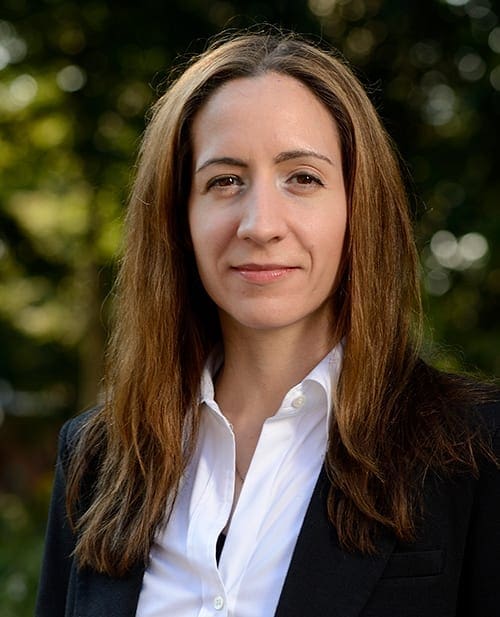
Meredith Richards is an Associate Professor of Education Policy and Leadership at Southern Methodist University's Simmons School of Education and Human Development. She holds a Ph.D. in Educational Policy from the University of Texas at Austin and completed an IES Post-doctoral Fellowship in Education Policy and Methods at the University of Pennsylvania. Her academic background also includes a B.A. in Cognitive Science from the University of Virginia and an M.A. in Industrial/Organizational Psychology from George Mason University. At SMU, she teaches doctoral coursework in educational research methods.
Dr. Richards' research focuses on understanding educational inequities through the lens of policy and geography. Her work examines how school choice, accountability, and student assignment policies affect equity and stratification in schools, with particular attention to how educational boundaries function within metropolitan contexts. She employs diverse quantitative methods, including geospatial analysis, to investigate how boundary 'gerrymandering' contributes to segregation. Her recent research includes studies on urban school closures, the suburbanization of segregation, magnet school effects, and income inequality's impact on educational outcomes.
Dr. Richards' publication record demonstrates consistent contributions to top education journals including the American Educational Research Journal, Review of Educational Research, Teachers College Record, and Peabody Journal of Education. Her work combines methodological rigor with practical relevance, aiming to provide actionable research for policymakers seeking to balance equity imperatives with other educational demands. She has received competitive funding including a Spencer grant for her research on urban school closures.
- American Educational Research Association Division L Dissertation of the Year Award, Runner Up (for geospatial analysis of school attendance zones)
Dr. Richards serves as a vital contributor to the field through her research on educational boundaries and equity. Her work bridges methodological innovation with policy relevance, examining how spatial and administrative boundaries create and maintain educational inequalities. She has developed expertise in applying geospatial techniques to educational policy questions, creating new pathways for understanding the geographic dimensions of educational equity. Her research program demonstrates sustained commitment to uncovering the structural mechanisms behind educational stratification while providing evidence-based guidance for policy solutions.