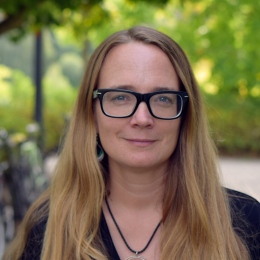
Andrea Voyer is a Professor of Sociology at Stockholm University , focusing on social norms, boundaries, and their role in shaping social inequality , particularly in the context of immigrant integration , class disparities, and ethnic inequality. She employs both qualitative and computational methods , including large-scale text analysis and cultural theory, to explore these themes. Her research has received funding from Riksbankens Jubileumsfond , the Swedish Research Council , the National Science Foundation (USA) , and the Russell Sage Foundation . Voyer serves as a program coordinator for master's programs in sociology and applied social research, and leads the department's research groups in qualitative methods , computational sociology , and cultural sociology . She is also an editorial board member for Sociological Theory and American Journal of Cultural Sociology , and contributes to public discourse on immigration, segregation, and social norms. Her recent publications highlight the use of computational techniques to analyze immigrant incorporation through shifts in mainstream discourse, the cultural processes of inequality during the COVID-19 pandemic , and the evolving role of class distinction-making in etiquette literature. These works bridge cultural theory with empirical analysis, offering actionable insights for addressing social inequality.
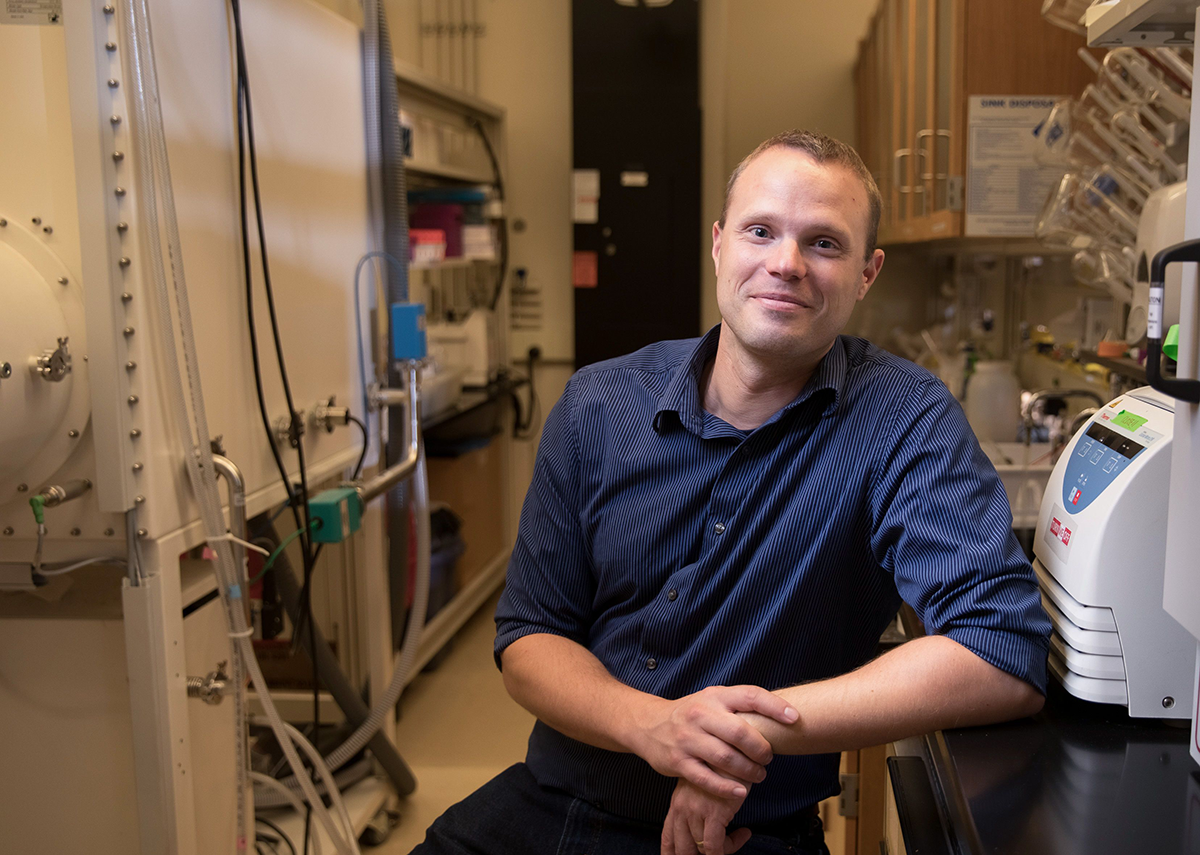
Russell Epstein is a Professor and Director of Graduate Studies in the Department of Psychology at the University of Pennsylvania. He is affiliated with the Center for Cognitive Neuroscience and Goddard Labs. His research focuses on neural mechanisms underlying visual scene perception, spatial navigation, and memory. Epstein holds a BA in Physics from the University of Chicago and a PhD in Applied Mathematics from Harvard University. Epstein’s research interests include high-level vision, spatial cognition, and the neural basis of environmental representations. His lab uses functional MRI and cognitive neuroscience techniques to study how scenes, objects, landmarks, and spaces are encoded in brain systems such as the parahippocampal place area and retrosplenial cortex. Recent work explores cognitive maps, grid-like neural representations, and the role of multisensory cues in navigation. His articles emphasize spatial navigation strategies, hierarchical cognitive maps, and the interplay between perception and memory. Notable contributions include investigations into hippocampal spatial metrics, olfactory navigation, and the neural underpinnings of environmental learning. Epstein teaches courses on cognitive neuroscience, including PSYC 149 and PSYC 600. He advises two graduate students in Psychology and has no listed scientific awards. His work is supported by grants (unspecified) and conducted within collaborative teams at the Center for Cognitive Neuroscience. Epstein’s research extends to labs focused on spatial cognition and neuroimaging, advancing understanding of how humans mentally map environments through visual and sensory integration.
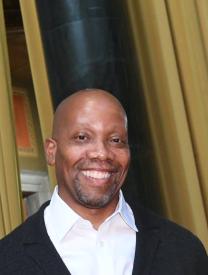
Panos Ipeirotis is a Professor at the Leonard N. Stern School of Business at New York University, affiliated with the Department of Technology, Operations, and Statistics. He also serves as the George A. Kellner Faculty Fellow and is associated with the Center for Data Science and Computer Science departments at NYU. PhD in Computer Science (Columbia University, 2004) MSc in Computer Science (Columbia University, 2001) BSc in Computer Engineering & Informatics (University of Patras, 1999) His research spans crowdsourcing, machine learning, human-AI collaboration, online labor markets, and social media analytics. He pioneered human-machine loop systems that combine human and machine intelligence to achieve superior outcomes. His work has applications in data quality assurance, visual media search (e.g., Google Project Glass), and economic valuation of user-generated content. Recent publications focus on algorithmic fairness in hiring systems, occupational segregation analysis, and theoretical advancements in crowdsourcing consensus mechanisms. Earlier work includes foundational studies on data quality in crowdsourcing platforms, economic impacts of product reviews, and query optimization for text-centric tasks. 2015 Lagrange Prize in Complex Systems NSF CAREER Award SIGKDD Test of Time Award (2020) Multiple Best Paper awards (WWW 2011, KDD 2008, SIGMOD 2006) He has received significant grants, including a $1.5 million Google Research Grant (2013) for integrating crowdsourcing with machine learning algorithms. His work bridges computer science, economics, and social psychology, with implications for policy-making and business strategy.
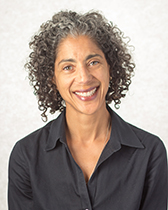
Christopher J. Palmer is an Associate Professor of Finance at the MIT Sloan School of Management, specializing in financial decision-making, credit markets, and policy interventions. His research focuses on how individuals and institutions respond to economic upheavals in areas like bankruptcy, retirement savings, and real estate. He holds a PhD in Economics from MIT and a BA in Economics and Mathematics from Brigham Young University. Palmer’s work has been published in top journals such as the American Economic Review , Journal of Finance , and Review of Financial Studies . He explores topics including racial disparities in bankruptcy outcomes, consumer payment behavior, and the effects of quantitative easing. His research is supported by affiliations with the National Bureau of Economic Research (NBER) and the Jameel Poverty Action Lab (J-PAL). Key honors include the 2022 Jamieson Prize and the 2019 Society for Financial Studies Best Paper Award. Palmer has contributed to public debates on policy issues like rent control and retirement savings through media outlets such as The New York Times , Bloomberg , and Vox .
Bradley D. Olsen is a full professor in the Department of Chemical Engineering at the Massachusetts Institute of Technology (MIT), where he leads research at the intersection of polymer science, soft matter physics, and bioengineering. His work focuses on designing materials for critical applications in biotechnology, hemostasis, and sustainable polymer development while advancing fundamental understanding of polymer network mechanics and self-assembly. Education: Ph.D. in Chemical Engineering, University of California Berkeley (2007) S.B. in Chemical Engineering, Massachusetts Institute of Technology (2003) Olsen's research spans protein-based materials, block copolymer phase behavior, and mechanochemical hydrogels. He has pioneered methods for quantifying polymer network topology, developing hemostatic nanoparticles, and creating bio-inspired materials for selective biomolecular transport and medical applications. His recent publications emphasize data-driven approaches to polymer characterization and educational outreach in materials science. Scientific Awards: American Physical Society (APS) Fellow (2023) Fulbright Amazonia Scholar (2023) Alexander and I. Michael Kasser Chair in Chemical Engineering (2021) ACS Macro Letters Young Investigator Award (2021) MIT Committed to Caring Honor (2019) AIChE Owens Corning Early Career Award (2019) APS Dillon Medal (2018) Kavli Emerging Leader in Chemistry (2017) ACS Polymer Division Fellow (2016) Camille Dreyfus-Teacher Scholar (2015) Alfred P. Sloan Research Fellow (2014) NSF Career Grant (2013) NIH Postdoctoral Fellowship (2008-2009) Hertz Fellow (2003-2007) Barry M. Goldwater Scholarship (2002) Olsen has received significant grant support including NSF Career (2013) and AFOSR (2012) awards. His teaching activities include innovative international outreach like the 2025 soccer-themed science camp in Brazil. The Olsen Group at MIT explores advanced materials with applications ranging from trauma care to sustainable polymers.
Emilio A. Parrado is the Dorothy Swaine Thomas Professor of Sociology at the University of Pennsylvania's School of Arts & Sciences and Director of the Population Studies Center. His research focuses on migration dynamics, particularly Hispanic populations in the U.S., international migration patterns, and social/demographic changes in Latin America. He combines quantitative and qualitative methods, including original survey and ethnographic data. Education: Ph.D. (Sociology, University of Chicago, 1997), M.A. (Sociology, University of Chicago, 1994), B.A. (Sociology, University of Buenos Aires, 1988). Key research areas include: Migrant health risks and transnational mobility (e.g., HIV/STI patterns at the U.S.-Mexico border) Gendered impacts of migration on labor markets and family structures Demographic transitions and social inequality in Latin America, including post-pandemic labor market shifts in Argentina Recent work emphasizes deportation effects on mental health, regional migration trends to Buenos Aires, and the intersection of immigration policy with fertility and urban development. His Migrante Project focuses on Mexico-U.S. border health observatories. Awards: None explicitly listed. Active in grants related to migrant health and labor studies. Labs/Teams: Leads the Population Studies Center and collaborates with the Latin American and Latino Studies Program at UPenn.
Stephen Billings is an Associate Professor of Finance at the Leeds School of Business, University of Colorado Boulder, where he holds the Global Real Estate Capital Markets Chair position. He serves as the faculty director of the MS in Real Estate program and research director for the CU Real Estate Center. His work spans multiple research centers including the Center for Research on Consumer Financial Decision Making and the Michael A. Klump Center for Real Estate. Billings received his PhD in Economics from the University of Colorado, a MS in urban planning from the University of North Carolina, and a BS in economics from Georgetown University. Prior to joining CU Boulder in 2016, he was faculty at the University of North Carolina Charlotte with appointments in both economics and public policy, where he also served as faculty director for the real estate center. His research focuses on the intersection of housing, schools, neighborhoods and crime, addressing critical policy issues including the impact of public investment in light-rail transit on neighborhoods, school segregation's influence on academic achievement and crime, neighborhood gentrification causes, lead-based paint in low-income housing, and the effects of sea level rise and natural disasters on neighborhood sorting and household finances. Billings employs sophisticated analysis of large micro-datasets with studies based on data and policies in Charlotte, NC and Denver, CO. His work connects urban economics with public policy, demonstrating how neighborhood environments shape individual outcomes across multiple dimensions. Billings' recent publication record demonstrates a consistent focus on neighborhood effects, school choice impacts, crime economics, and housing market dynamics. His work frequently examines the intersection of race, housing, and economic outcomes, with particular attention to policy implications. He has developed innovative methodological approaches to studying residential amenities and neighborhood spillovers, with increasing attention to climate change impacts on housing markets. His research appears in top journals including The Quarterly Journal of Economics, American Economic Review: Insights, and Journal of Urban Economics. As an educator, Billings teaches undergraduate and masters classes in real estate finance and economics, as well as doctoral and masters level courses on cost-benefit analysis and statistical methods. He has extensive consulting experience conducting economic impact studies, including assessments of North Carolina's public higher education system, affordable housing needs in Colorado communities, and the economic effects of marijuana legalization on property markets. His practical policy work complements his academic research, creating a bridge between theoretical insights and real-world applications. Billings leads significant research initiatives through the CU Real Estate Center, where he directs studies examining the impact of business improvement districts and other urban development policies. His work bridges academic research with practical policy applications, making substantial contributions to our understanding of how housing, education, and neighborhood environments shape individual outcomes and community development. His December 2023 memo on the HUD Officer Next Door Program exemplifies his engagement with current housing policy issues.
Clio Andris is an Associate Professor at Georgia Tech, jointly appointed in the School of City and Regional Planning and the School of Interactive Computing. She directs the Friendly Cities Lab, focusing on mathematical models of social networks applied to urban planning, transportation, and geography. Her work integrates spatial analysis with visualization, emphasizing interdisciplinary collaboration. Education and Career: Andris earned a PhD in Urban Information Systems from MIT (2011), where she was an NDSEG Fellow. She held postdoctoral positions at Singapore-MIT Alliance for Research and Technology and the Santa Fe Institute. Prior to Georgia Tech, she was a faculty member at Penn State’s Department of Geography, affiliated with the GeoVISTA Center. Research Focus: Her research bridges social networks, geovisualization, and urban informatics. Key areas include spatial social network analysis, GIS applications for urban policy, and the impact of digital tools on civic engagement. She has developed innovative visual analytics tools like SNoMaN and ROBIN to democratize spatial data exploration. Awards: She received the NSF CAREER Award (2021) and NDSEG Fellowship (2011). Her lab is affiliated with the Center for Spatial Planning Analytics and Visualization (CSPAV) and the Information Visualization Lab. Labs and Collaborations: The Friendly Cities Lab focuses on socially just urban design through computational methods. Her work addresses issues like food security networks, pandemic impacts on biodiversity, and community mapping for activism. Grants and Outreach: Her NSF-funded projects emphasize public good applications, such as real-time pandemic risk communication and educational tools for migration data. She actively collaborates with non-profits and policymakers to translate research into actionable urban strategies.
Lance Freeman is the Penn Integrates Knowledge (PIK) Professor of City and Regional Planning and Sociology at the University of Pennsylvania's School of Arts & Sciences. His research focuses on neighborhood dynamics, gentrification, urban poverty, housing policy, and the interplay between the built environment and public health. He holds a Ph.D. in City and Regional Planning from the University of North Carolina at Chapel Hill (1997), an MRP in Regional Planning (1991), and a B.S. in Business Administration from SUNY Buffalo (1987). Prior to academia, he worked at Mathematica Policy Research and as a City Planner at the New York City Housing Authority. Freeman teaches courses on urban planning theory, quantitative methods, and community development at Columbia University and the University of Delaware. His research interests include understanding neighborhood change, leveraging social media and technology for urban analysis, and promoting equitable urban development. Key publications include There Goes the Hood: Views of Gentrification from the Ground Up (2006), A Haven and a Hell: The Ghetto in Black America (2019), and co-authored Planning and Control of Land Development (2020). He has contributed to debates on inclusionary zoning, racial equity planning, and the impacts of urban policies on marginalized communities. Freeman's work intersects urban sociology, policy analysis, and spatial demography. His recent studies explore gentrification migration patterns, the role of social media in neighborhood change, and historical segregation dynamics. He advocates for evidence-based planning to address urban inequality and spatial injustice.
Xiaoyue Shan is an Assistant Professor of Economics at the National University of Singapore (NUS), located at 1 Arts Link, AS2 #05-36. She holds a Ph.D. in Economics from the University of Zurich (2021) and previously conducted postdoctoral research at the Wharton School of the University of Pennsylvania. Her research focuses on labor economics, behavioral/experimental economics, and gender economics, employing experimental and quasi-experimental methods to study topics like gender disparities, discrimination, social interactions, and skill development. Her work explores how peer groups influence personality traits (e.g., conscientiousness, competitiveness), discrimination mechanisms in labor markets, and the impact of policies on gender dynamics. Notable studies include examining sequential spillover effects in resume evaluations and analyzing pension systems' effects on child investment in China. Teaching interests align with her research, emphasizing behavioral and experimental economics. She is reachable at x.shan@nus.edu.sg .
Sean F. Reardon is the Professor of Poverty and Inequality in Education and a Senior Fellow at the Stanford Institute for Economic Policy Research (SIEPR) at Stanford University . He also holds a Professor (by courtesy) of Sociology . His work focuses on social and educational inequality, including residential and school segregation, racial/ethnic and socioeconomic disparities in academic achievement, and causal inference methods. Education: Ed.D., Harvard University, Educational Administration, Planning, and Social Policy (1997) M.Ed., Harvard University, Educational Administration, Planning and Social Policy (1992) M.A., University of Notre Dame, International Peace Studies (1991) B.A., University of Notre Dame, Program of Liberal Studies; Minor in Honors Mathematics (1986) Research Interests center on the causes and patterns of educational and racial inequality, the effects of school integration policies, and income inequality's social consequences. His Stanford Educational Opportunity Research Lab analyzes achievement gaps and segregation trends across U.S. school districts using large-scale datasets. Recent Publications highlight cross-national achievement gap comparisons, pandemic recovery disparities, and methodological advancements in segregation measurement. His work often integrates Data Sciences and Sociology to address policy-relevant questions. Awards Elected Member, American Academy of Arts and Sciences Elected Member, National Academy of Education Advising includes mentoring Doctoral Students like Tyler McDaniel and Postdoctoral Researchers like Farah Mallah. His Stanford Interdisciplinary Doctoral Training Program in Quantitative Education Policy Analysis (2009–2021) trained future scholars in rigorous policy methods.
Laura Vaughan is Professor of Urban Form and Society and Director of the Space Syntax Lab at The Bartlett School of Architecture, University College London. Her research examines the relationship between urban form and society using space syntax methodologies, addressing critical urban challenges including spatial inequalities, health disparities, poverty, housing, and socioeconomic vitality. She maintains active policy engagement through memberships in the West Yorkshire Scientific Advisory Group and as Chair of the International Space Syntax Executive Committee. Education includes: Doctor of Philosophy, University of London (1995-1999) Master of Science, University of London (1992-1994) Bachelor of Design, Bezalel Academy of Arts and Design (1985-1989) Her research integrates space syntax methodology with urban geography and architecture to analyze how spatial configurations influence social patterns. Key interests include the historical evolution of urban segregation mechanisms, morphological predictors of community vitality, and geospatial determinants of public health outcomes. She maintains cross-disciplinary collaborations spanning public health, history, anthropology, and urban planning. Publication trends show consistent focus on urban morphology's societal impacts, with recent work emphasizing longitudinal health studies, historical cartography, and high street resilience. Methodological innovations include developing individual-level environmental exposure metrics and integrating geospatial analysis with cohort studies. Research consistently demonstrates how spatial configurations mediate social processes across temporal scales. Scientific recognition includes: Fellow of the Royal Geographical Society (elected 2005) Fellow of the Royal Historical Society (elected 2015) As Director of the Space Syntax Lab, she leads research on socio-spatial systems and advises PhD students. She teaches the 'Urban Form and Society' module in the MSc/MRes Space Syntax program, exploring urban design's relationship with crime, health, and inequality. Her pedagogical approach emphasizes integrating research with design practice and historical analysis.
Mary Pattillo serves as the Harold Washington Professor of Sociology and Chair of the Department of Black Studies at Northwestern University's Weinberg College of Arts and Sciences, with additional affiliation at the Institute for Policy Research. Her work centers on Chicago's urban landscape as a critical site for examining systemic racism and inequality. Her academic foundation includes a PhD in Sociology from the University of Chicago (1997) and a BA in Urban Studies from Columbia University (1991), establishing her expertise in urban analysis and racial dynamics. Pattillo's research agenda prioritizes race and ethnicity, urban sociology, and inequality through the lens of Black communities, with particular focus on housing, criminal legal systems, and the Black middle class. Her ethnographic approach reveals how spatial dynamics shape life outcomes, as demonstrated in her influential books Black Picket Fences (1999) and Black on the Block (2007), which introduced the pivotal "middlemen/middlewomen" framework for understanding professional Black roles in mediating inequality. Current work advances the "Black Advantage Vision" paradigm to reframe racial inequality research. Her publication trajectory shows deepening engagement with structural racism across multiple domains: from early neighborhood ethnographies to contemporary analyses of monetary sanctions and placemaking. This evolution reflects an interdisciplinary expansion into criminology, policy studies, and cultural sociology while maintaining core commitments to urban inequality and Black community resilience. Major recognitions include: Election to the American Academy of Arts and Sciences (2020) Robert E. Park Award for Best Book (2008) Oliver Cromwell Cox Best Book Award (2000) Fulbright Scholar designation (2019-2020) Weinberg College Community Building Award (2018) Outstanding Academic Book Award (2000) Pattillo actively mentors students through courses like Urban Ethnography and Sociology of Housing while leading significant research initiatives on school choice and criminal legal sanctions. Her community impact extends through board service at the W.T. Grant Foundation and Chicago Appleseed Center, plus founding Urban Prep Academies. Current projects examining Black safety in Chicago demonstrate her sustained commitment to community-engaged scholarship addressing urgent urban challenges.
Luca Peretti is an Associate Professor in Electric Machines and Drives at KTH Royal Institute of Technology, affiliated with the School of Electrical Engineering and Computer Science and the Department of Electrical Engineering, Division of Electric Power and Energy Systems. He works as a researcher in the EMD (Electric Machines and Drives) group and serves as Partner Director for KTH's strategic partnership with ABB. Education: M.Sc. in Electronic Engineering (2005) from University of Udine, Ph.D. from University of Padova (2008) Professional Experience: Postdoc at University of Padova (2009-2010), Principal Scientist at ABB Corporate Research (2010-2018), Associate Professor at KTH (2018-present) His research focuses on: Automatic parameter estimation in electric machines Multiphase drive systems Sensorless control algorithms Loss segregation in drive systems Condition monitoring of industrial and transportation applications Recent publications demonstrate expertise in variable phase-pole machines, harmonic plane decomposition, predictive control algorithms, and advanced modeling of permanent magnet motors. Key application areas include transportation electrification, wind energy systems, and industrial drive technologies. Scientific roles include: Associate Editor, IET Electric Power Applications Journal (2019-present) Theme Co-Leader, Swedish Electromobility Center (2020-present) Member, IEEE (2021-present) and IET (2006-present) He leads the strategic partnership with ABB and contributes to doctoral program committees at University of Padova.
Annie S. Adamian serves as an Associate Professor in the School of Education at California State University, Chico since 2016, with her office located in THMA 437. Her contact details include phone (530-898-4154) and email (aadamian@csuchico.edu). Her academic credentials feature: Ed.D. in International & Multicultural Education (Human Rights Education emphasis), University of San Francisco, 2016 M.A. in Curriculum & Instruction, California State University, Chico, 2010 Single Subject Teaching Credential, California State University, Chico, 2001 B.S. in Geosciences (Science Education concentration), California State University, Chico, 2000 A.A. & A.S. in General Education, Pasadena City College, 1997 Dr. Adamian's research interrogates race evasiveness through the lens of educational equity, examining how teacher/student agency and healing-centered practices can transform relationships and outcomes for oppressed communities. Her work integrates critical race theory with human rights frameworks to challenge systemic inequities across educational settings. Recent publications (2021-2024) reveal consistent focus on dismantling racial hierarchies in diverse contexts—from science classrooms to cafeteria dynamics—with recurring themes of community building, whiteness deconstruction, and participatory action research methodologies. Her scholarship bridges theoretical rigor with practical classroom applications for racial justice.