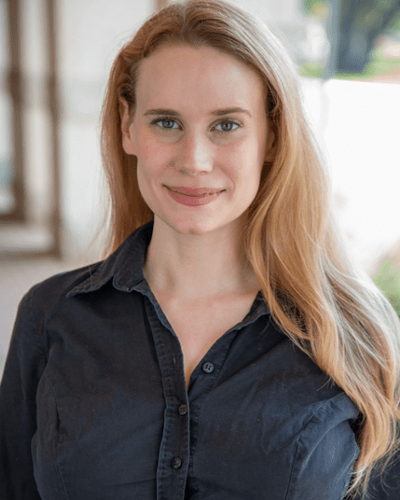
Kimberly Fonzo is an Associate Professor at the University of Texas at San Antonio in the Department of English within the College of Liberal and Fine Arts. Her work bridges late medieval authorship, prophetic traditions, and performance studies, with a focus on how medieval authors constructed prophetic identities and how these were later reinterpreted as 'retrospective prophecy.' Her research also explores representations of the devil in texts by medieval holy women and within medieval drama. Education Ph.D. in English Literature, University of Illinois, Urbana-Champaign M.A. in English Literature, University of Illinois, Urbana-Champaign B.A. in Theatre and English Literature, Hanover College Fonzo's scholarly contributions include the book Retrospective Prophecy and Medieval English Authorship (2022, 2025) and numerous peer-reviewed articles examining intersections of authority, gender, and apocalyptic themes in medieval texts. She also brings practical experience as a former actress and director to her pedagogy. Her teaching portfolio spans undergraduate and graduate courses in medieval literature, Chaucer, acting, and drama studies, including study abroad programs in Urbino focusing on Boccaccio and Chaucer.
Flavia Albarello is an Associate Professor in Social Psychology at the Department of Developmental and Social Psychology, Sapienza University of Rome. She previously held post-doctoral positions at the Alma Mater Studiorum University of Bologna from 2009 to 2019, and served as an Assistant Professor (RTD-B) at Sapienza University of Rome from 2020-2023. She has extensive international collaboration experience, having worked with researchers from institutions including Claremont Graduate University, Durham University, Oxford University, and Utrecht University. PhD in Social, Educational, and Organizational Psychology, Alma Mater Studiorum University of Bologna (2005-2008) MSc in Psychology, Alma Mater Studiorum University of Bologna (1998-2003, magna cum laude) Visiting PhD student, Catholic University of Louvain (2005-2006) Visiting postgraduate student, Leiden University (2004-2005) Dr. Albarello's research focuses on social psychological determinants of prejudice, particularly regarding migration and intergroup relations. Her work examines dehumanization processes, social identity development in adolescence, linguistic discrimination, and the psychological mechanisms underlying prejudice toward immigrants. She investigates how factors such as need for cognitive closure, cultural tightness-looseness, and multiple categorization influence intergroup attitudes. Her research integrates developmental, social, and cognitive perspectives to understand prejudice formation and reduction strategies, with particular attention to adolescent populations and classroom contexts. Her recent publications reveal a strong focus on prejudice toward immigrants, examining how pandemic-related threats, cognitive closure, and cultural tightness influence attitudes. She has conducted longitudinal studies on identity development in adolescence and its relationship to prejudice, and has explored how language reflects and reinforces intergroup biases. Her work consistently applies social identity theory and cognitive approaches to understand prejudice mechanisms across different contexts. Italian National Scientific Habilitation (ASN, I band, 2023) Italian National Scientific Habilitation (ASN, II band, 2019) Best Doctoral Dissertation in Social Psychology Award, Italian Association of Psychology (2008) EASP Seedcorn Grant for research on prejudice toward migrants (2018) Multiple research grants from Sapienza University of Rome (2021-2024) Dr. Albarello has supervised numerous bachelor's theses at Sapienza University of Rome and previously at the University of Bologna and University of Ferrara. She serves as Principal Investigator or co-investigator on multiple research projects, including Sapienza Ateneo Projects on organizational forgiveness climate, ambition and conspicuous consumption, and women's leadership. She is also involved in international research collaborations including Erasmus+ projects focused on migrant integration and youth identity development. As an active member of editorial boards for journals including Adolescents (MDPI) and Psychology Hub, she contributes significantly to the academic community through peer review and scholarly leadership.
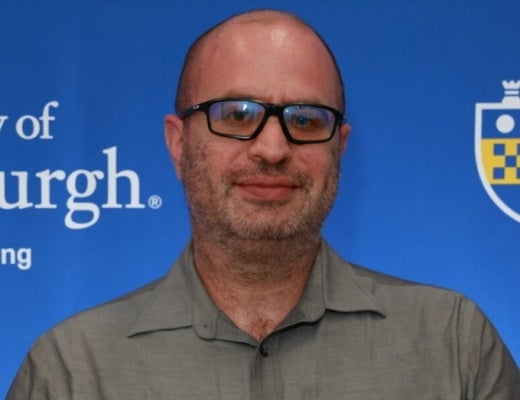
Dr. Daniel Wilkenfeld is an Associate Professor at the University of Pittsburgh School of Nursing with a joint appointment in the Department of History and Philosophy of Science. He is a permanent fellow at the Center for Philosophy of Science and the Center for Bioethics and Health Law. Primary Roles: Faculty in Nursing Ethics, Philosophy of Science, and Disability Ethics Key Affiliations: Center for Philosophy of Science, Center for Bioethics and Health Law, LEND Program Dr. Wilkenfeld’s research spans philosophical foundations of scientific understanding, bioethics, and disability ethics. His work bridges empirical psychology with philosophical inquiry, examining metaphorical understanding, informed consent, and ethical frameworks for autism research. Recent publications focus on contextualism in disability ethics, transformative healthcare research, and cross-cultural wisdom perception. His empirical collaborations include psychology departments at UC Berkeley and Pittsburgh. Scientific Awards: Teaching as Learning Award (2023) Social Justice Certificate (2022) Presidential Fellowship (The Ohio State University, 2006-2007, 2010-2011) Gail Kennedy Memorial Award (Amherst College, 2006) Dr. Wilkenfeld has served as a reviewer for over 20 journals and conferences and leads the Evaluation Steering Committee at Pitt’s School of Nursing. He contributed to curriculum design for ethics modules and graduate courses.
Raffaella Rossi serves as Full Professor of Animal Nutrition and Feeding (AGR/18) at the Department of Veterinary Medicine and Animal Sciences, University of Milan. Her institutional roles include: Director of the Specialization School in Swine Pathology Head of Quality Assurance for the Animal Production Sciences and Technologies Degree Program Coordinator of the Sensory Laboratory at the Zootechnical Center Instructor for courses: "Nutrition and Immunity", "Nutrition and Sensory Analysis", and "Nutrition and Quality of Meat and Meat Products" Her educational background comprises: Doctor of Animal Production Sciences PhD in Animal Nutrition and Dietetics She graduated from the University of Milan's Faculty of Veterinary Medicine. Her research focuses on sustainable nutritional strategies in livestock production to enhance animal health and welfare while improving the nutritional, technological, and sensory properties of meat products. Through her coordination of the Sensory Laboratory, she advances methodologies for evaluating meat quality attributes. Professor Rossi actively contributes to the field through numerous international publications, though specific award details are not provided in available sources.
Florian Ehmele is a Researcher at the Institute of Meteorology and Climate Research Troposphärenforschung (IMKTRO) at the Karlsruhe Institute of Technology (KIT), Germany. He has held research positions at KIT since 2013, including his current role as Research Associate since 2025, following project management work at UBIMET GmbH (2023-2025). Education: Diploma in Meteorology, Karlsruhe Institute of Technology (2007-2013) PhD in Meteorology, Karlsruhe Institute of Technology (2014-2017) Ehmele's research centers on extreme weather events, particularly heavy precipitation and floods, using statistical methods and stochastic simulations to analyze long-term variations and climate change impacts. His work integrates climate modeling with renewable energy systems and hydrological risk assessment, emphasizing practical applications for disaster management and climate adaptation strategies. His publication record shows consistent focus on Central European flood events (2021), Western Mediterranean extreme precipitation (2018), and Iberian drought patterns. He leverages large regional climate model ensembles to quantify hydrological extremes, with increasing emphasis on multi-disciplinary impact assessments and future climate projections. Ehmele contributes to major initiatives including RegIKlim (current), SCENIC, and FloRis flood risk projects. He has taught graduate-level data analysis and undergraduate meteorological practicums at KIT since 2012, demonstrating commitment to academic training alongside research.
Bradley A. Saville is a Professor in the Department of Chemical Engineering and Applied Chemistry at the University of Toronto's Faculty of Applied Science and Engineering. Holding a B.Sc. and Ph.D. from the University of Alberta and registered as a Professional Engineer (P.Eng.), he serves as Management Co-Chair of Occupational Health and Safety and Principal Investigator of the Bioprocess Engineering Lab and BioZone Centre for Applied Bioscience and Bioengineering. His research spans biofuels, bioproducts, and enzyme technology with strong emphasis on sustainability metrics. His educational background includes undergraduate and doctoral degrees from the University of Alberta. Research interests focus on biofuels and bioenergy (ethanol, biodiesel, renewable jet fuel), bioproducts development from biomass, enzyme applications in industrial processes, life cycle assessment , and technoeconomic analysis . He investigates biomass pretreatment, enzymatic hydrolysis, bioseparations, and therapeutic applications of prebiotics, with significant work on carbon intensity reduction through carbon capture integration. Recent publications (2015-2019) demonstrate consistent focus on life cycle assessment and technoeconomic modeling of biofuel systems, hydrogen production pathways, and prebiotic applications. Key trends include comparative analysis of modeling frameworks (GREET vs. GHGenius), hydrogen production from diverse feedstocks, renewable jet fuel economics, and human health impacts of oligosaccharides. Collaborative work with Heather MacLean dominates transportation and biofuel studies, while recent therapeutic research involves his spouse Sandra Saville. Professor Saville actively mentors graduate students through the Bioprocess Engineering Lab and BioZone, with current projects on life cycle assessment of biofuels, carbon capture integration, and prebiotic health applications. His research integrates process engineering with environmental and economic analysis to advance sustainable bioproduct commercialization. He maintains leadership roles as Management Co-Chair of Occupational Health and Safety and is affiliated with Professional Engineers of Ontario (PEO) and Ontario Society of Professional Engineers (OSPE). Laboratory facilities include the Bioprocess Engineering Lab specializing in high-solids enzymatic hydrolysis and biomass conversion, operating within the BioZone interdisciplinary research centre focused on applied bioscience solutions.
Michelle Jurkovich is an Associate Professor in the Department of Political Science at the McCormack Graduate School of Policy and Global Studies, University of Massachusetts Boston, specializing in food security, global governance, and ethics. Her work critically examines accountability mechanisms in international hunger response systems. Education: Ph.D. in Political Science from George Washington University MA from California State University, Los Angeles B.A. from California State University, Fresno (Smittcamp Family Honors College) Research Interests: Dr. Jurkovich investigates the intersection of food security, economic rights, and ethical frameworks within global governance structures. Her scholarship analyzes how international organizations and NGOs navigate blame attribution in humanitarian crises, emphasizing power dynamics in advocacy networks and policy formulation for hunger eradication. Publications: Her research consistently addresses food security governance, with publications exploring ethical dimensions of international aid, institutional accountability, and the political economy of hunger. Her 2020 monograph establishes foundational analysis of advocacy networks' role in shaping global hunger narratives and policy responses. Scientific Awards and Fellowships: Kluge Fellow at the Library of Congress Visiting Scholar in the Global Food Ethics and Policy Program at Johns Hopkins University Visiting Fellow at the Edmond J. Safra Center for Ethics at Harvard University AAAS Science and Technology fellow at the U.S. Agency for International Development (USAID) Postdoctoral fellow at the Watson Institute of International and Public Affairs at Brown University Advising and Grants: No information available regarding graduate student advising or externally funded research grants.
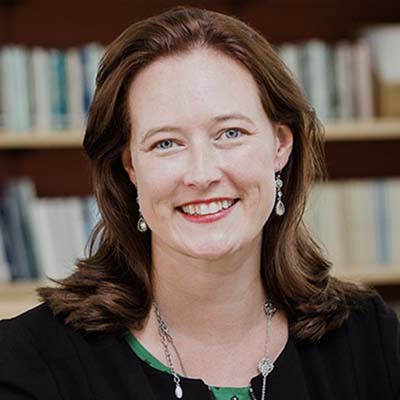
Dr. Sharon Nichols is a Professor and Chair of the Department of Educational Psychology at the University of Texas at San Antonio (UTSA), where she directs the Urban Education Institute. Her work bridges educational psychology and policy analysis, focusing on accountability systems' impact on teaching, learning, and youth development. She has authored over three dozen publications and co-authored the influential book Collateral Damage: How High-Stakes Testing Corrupts America's Schools (2007). Ph.D. in Educational Psychology, University of Arizona (2003) M.A. in Educational Psychology, University of Arizona (1997) B.A. in Psychology, Bucknell University (1991) Her research explores high-stakes testing's consequences, student motivation dynamics, and educational policy reform. Google Scholar data reveals consistent scholarship on testing accountability (2012-2025), AP course equity (2024-2025), and autism inclusivity in education (2025). She advocates for policy-informed research through her role as inaugural co-editor of the Division 15 journal Educational Psychology for Policy and Practice . Scientific Recognition : Fellow, American Psychological Association Division 15 (2020) Hall of Fame Inductee, Bucknell University Softball (Pitching) (2001) As a past Vice President of APA Division 15 and director of UTSA's Urban Education Institute, Dr. Nichols influences national educational discourse. Her teaching spans undergraduate/graduate courses in learning theory, motivation, research methods, and assessment.
Ellen Ashmore Marsh is a Researcher in the Department of Applied Mathematics and Theoretical Physics (DAMTP) at the University of Cambridge, Faculty of Mathematics. Her work applies mathematical and statistical modeling to public health and food safety challenges, particularly within New Zealand's regulatory framework. Her research spans epidemiology , food safety , and toxicology , with expertise in source attribution of foodborne illnesses, mycotoxin surveillance, and risk assessment of chemical contaminants. She employs advanced statistical methods to analyze campylobacteriosis outbreaks, fumonisins in maize products, and heavy metal exposure in dietary contexts, collaborating extensively with New Zealand's Ministry for Primary Industries and ESR (Institute of Environmental Science and Research). Dr. Marsh's publication record (2012-2021) shows a clear evolution from materials science toward public health applications, with 9 of 10 recent works focused on New Zealand food safety issues including pathogen source tracking, mycotoxin monitoring, and contaminant risk assessments in rice, cereals, and children's products. No major scientific awards are documented in available sources. Her research is primarily funded through government commissions from New Zealand Food Safety and the Ministry for Primary Industries, indicating active policy-relevant work, though specific graduate student mentorship is not publicly listed. Dr. Marsh contributes to Cambridge's applied mathematics research ecosystem through specialized statistical modeling for food safety regulation, maintaining strong operational ties with New Zealand's public health infrastructure.
Dr. T. J. Gabriel is an Associate Professor of Management at the Mike Cottrell College of Business , University of North Georgia. He has been recognized for excellence in teaching, research, and service, including the Anderson Professor award (2014-16) and the Literati Network Awards for Excellence (2010). His work bridges academia and industry, with a focus on operations, leadership, and pedagogy. Ph.D., Management, Clemson University, 2007 M.S., Management, Georgia Institute of Technology, 1988 B.S., Management Engineering, Grove City College, 1986 Dr. Gabriel's research spans Operations Management , Supply Chain Management , and Organizational Development . He explores collaborative engagement models, leadership philosophies, and pedagogical innovations. His publications include studies on military leadership, manufacturing complexity, and experiential learning. His recent articles emphasize leadership development , educational strategies , and organizational dynamics . Key themes include military-inspired leadership frameworks, application of systems design to manufacturing, and experiential learning methodologies. Collaborative research with Dr. Mark Jordan highlights his interdisciplinary approach. Anderson Professor (2014-16) Literati Network Outstanding Paper Award (2010) Dr. Gabriel has held operational roles in the southeastern U.S. and held leadership positions at UNG, including Graduate Committee Chair. His industry experience informs his teaching in operations management, business statistics, and advanced management topics.
Marco Fantuzzi is Professor of Classics in the School of Arts, Humanities, and Social Sciences at the University of Roehampton, London. Previously, he held significant academic positions including Professor of Ancient Greek Literature at the University of Macerata, Associate Professor of Ancient Greek Literature at the University of Florence, and Lecturer in Ancient Greek Literature at the University of Trento. He also served as Visiting Professor of Greek at Columbia University for a semester each year from 2006 to 2015. His educational background includes a BA in Classics from the University of Bologna (1979) and graduate studies at the University of Pisa (1984-1986) supported by a Fellowship for Graduate Studies. Fantuzzi has held numerous prestigious fellowships including at the Institute for Advanced Study, Princeton, the University of Cincinnati, Wolfson College Cambridge, and King's College London. Professor Fantuzzi's research centers on Ancient Greek literature with particular expertise in Hellenistic poetry, bucolic poetry, epic poetry, and Greek tragedy. His scholarship often examines intertextuality, literary criticism, and philological approaches to classical texts. He has made significant contributions to the study of Theocritus, Apollonius Rhodius, and the Rhesus attributed to Euripides, with a particular focus on how ancient authors engaged with and transformed earlier traditions. His recent publications demonstrate continued exploration of pastoral poetry, the representation of eros in bucolic literature, and the reception of Homeric themes in later Greek literature. Fantuzzi's work frequently bridges literary analysis with historical and cultural contexts, revealing nuanced understandings of ancient literary production and reception. Fellowship at Seeger Center for Hellenic Studies, Princeton University Alexander S. Onassis Scholarship for Foreigners European Research Council Scholarship Loeb Classical Foundation Award for commentary on Rhesus Major Research Grant from Italian Ministry of Education and Research (2001-2007) Professor Fantuzzi serves as external evaluator for major research grant applications for Greek and Dutch funding bodies and as permanent referee for ANVUR (National Agency for the Evaluation of the University System and Research) in Italy. He is actively involved in editorial work, serving on the boards of Bryn Mawr Classical Review, Seminari Romani di Cultura Greca, and Materiali e discussioni per l'analisi dei testi classici, and has co-edited significant scholarly volumes including A Companion to Greek and Latin Pastoral and The Greek Epic Cycle and its Ancient Reception .
Jeff Morris is a Part-Time Lecturer in the Philosophy Department at Redeemer University . He also serves as a theologian for the Reformation Study Centre , developing theological materials for international audiences. Education: PhD in progress (University of Aberdeen), MA in Philosophy and Apologetics (Lincoln Christian University), MTS (Tyndale University), Graduate Certificate in Christian Apologetics (Biola University). His research focuses on the intersection of philosophy and theology , emphasizing analytic theology , systematic theology , and attributes of God . His recent publications and talks explore divine omnipresence , Biblical interpretation , and the relationship between Christianity and science . He actively contributes to apologetics through articles and lectures. Jeff is a member of the Evangelical Philosophical Society , Society of Christian Philosophers , and other academic communities.
Daniel Wilson is Professor of Infectious Disease Genomics at the University of Oxford and Director of Studies in Data Science in the Department for Continuing Education. He is a Fellow of St. Cross College and leads a research group at the Big Data Institute within the Nuffield Department of Population Health. His work is supported by the Wellcome Trust and Robertson Foundation, with collaborations including the Modernising Medical Microbiology consortium and Oxford's Department of Statistics. Education includes: BA in Biological Sciences from St. John's College, Oxford (2002) DPhil in Population Genetics from University of Oxford (2005) Postdoctoral research at University of Chicago and Lancaster University Wilson's research integrates genomic epidemiology, pathogen evolution, and machine learning to study infectious diseases. His interests focus on bacterial/viral genomics, genetic susceptibility, and developing statistical methods for analyzing pathogen transmission and antimicrobial resistance. Key themes include the evolution of virulence, host-pathogen coevolution, and applications of whole-genome sequencing in public health. Publications demonstrate strong emphasis on genomic epidemiology of bacterial pathogens (e.g., Staphylococcus , TB, meningococcus), COVID-19 host genetics, and development of novel statistical methods for genetic association studies. Recent work shows increasing focus on machine learning applications for source attribution of infections and antibiotic resistance prediction. Scientific awards include: PLoS Computational Biology Research Prize (2017) Head of Nuffield Department Public Engagement Prize (2015) North Senior Scholarship (2004) Wilson welcomes graduate students for part-time DPhil programs and leads multidisciplinary teams at the Big Data Institute. His group focuses on population genomics of pathogens and hosts, supported by major grants including Wellcome Trust and Robertson Foundation fellowships. Current work involves developing statistical frameworks for bacterial GWAS and transmission modeling.
Gesa Ruge is a Senior Lecturer at Central Queensland University's School of Engineering and Technology. With over 25 years of industry experience in built environment sectors, she specializes in sustainable development, construction management, and pedagogical innovation. Her research bridges industry-government collaboration and educational frameworks for future-ready graduates. Education : The University of Western Australia, Curtin University, Charles Sturt University, University of Canberra Her research focuses on sustainable construction management , curriculum and pedagogy development , and environmental management . She advocates for constructive alignment, reflective practice, and scaffolded assessment to enhance graduate employability and institutional capacity. Gesa’s recent publications emphasize sustainability integration in tertiary education, holistic building lifecycle analysis, and skill development frameworks. Key trends include graduate employability, environmental policy, and authentic learning models. Scientific Awards : STLHE Educational Developers Caucus research grant (2018-2019), TEQSA national award for best research paper (2017), Fellow of HERDSA (2015), Fellow of Australian Institute of Building (2014), University of Canberra Vice Chancellor’s Citation (2013) She supervises research candidates in Engineering Practice and Education , Environmental Management , and Construction Management . Her work spans cross-institutional and international collaborations, with a focus on advancing academic-industry capabilities.
Özgür Davras is an Associate Professor at the Faculty of Economics and Administrative Sciences, Department of Tourism Management. His educational background includes a Licentiate in Tourism Management from Mediterranean University (1998), a Master's in Tourism and Hotel Management from Akdeniz University (2013), and a Doctorate in Tourism Management from Mediterranean University (2017). His research focuses on tourism dynamics, including consumer behavior in hospitality, destination management, service quality optimization, and crisis management in tourism. Key areas include adventure tourism, gastronomy festivals, pandemic impacts on hospitality, and cultural tourism economics. Davras has led two major research projects: (1) Elektronik Ağızdan Ağıza İletişimin Turistik Satın Alma Davranışına Etkileri (2021-2022), examining electronic word-of-mouth in tourism decisions, and (2) Isparta Yerel Ekonomik Kalkınma Vizyonu 2018 (2018-2019), analyzing tourism's role in regional development. He has supervised four graduate students on topics ranging from destination branding to pandemic-era tourism behavior. His recent publications emphasize asymmetric service impacts, pandemic recovery strategies, and experiential factors in adventure/cultural tourism. Methodologically, he frequently employs structural equation modeling, market segmentation, and three-factor theory frameworks.