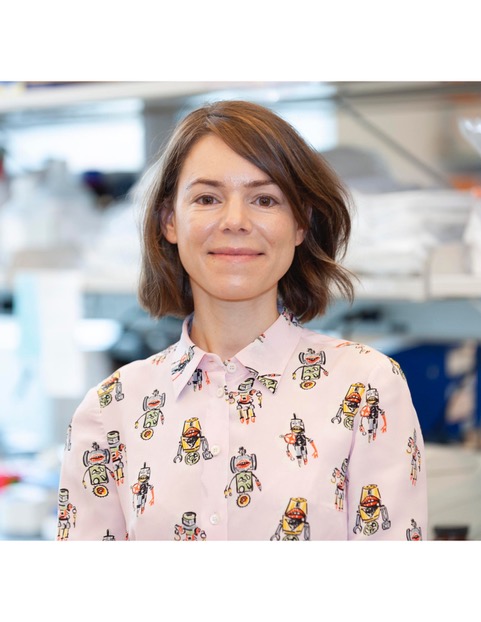
Corinne Nielsen is an Associate Professor in the Department of Biological Sciences within the College of Arts and Sciences at Ohio University. She leads the Nielsen Lab, where her research focuses on the genetic and molecular mechanisms underlying neurovascular development and disease, particularly brain arteriovenous malformations (AVMs). Her work integrates mouse genetics, molecular biology, and advanced imaging to explore endothelial-pericyte interactions, Notch signaling, and vascular remodeling. Education: Ph.D., Harvard University Her research interests lie at the intersection of developmental biology, neuroscience, and vascular biology. She investigates how the nervous and vascular systems co-develop and influence each other, with a focus on pathological conditions such as AVMs, where abnormal connections between arteries and veins disrupt brain function. Her lab studies cellular and molecular dysregulation in these diseases using genetically engineered mouse models. The recent publications highlight a strong trajectory in understanding Rbpj and Notch signaling in cerebrovascular development and disease. The work spans from basic developmental mechanisms to pathological remodeling in AVMs, with increasing focus on immune cell involvement and metabolic aspects. Emerging themes include endothelial-pericyte communication, macropinocytosis in tumor metabolism, and cross-organ vascular regulation. Scientific Awards: No awards listed in the provided text. Dr. Nielsen actively mentors graduate students and researchers in her lab, contributing to training the next generation of scientists in molecular and cellular neuroscience. While specific grants are not mentioned, her sustained publication record in high-impact journals suggests active external funding. Her collaborative work with institutions beyond Ohio University indicates a strong national research network. Labs and Research Teams: She directs the Nielsen Lab, based in Irvine Hall (rooms 303/316) on the Athens Campus. The lab employs a multidisciplinary approach combining genetics, cell biology, and imaging to study neurovascular biology. Current projects involve Rbpj-deficient models, pericyte dynamics, and endothelial signaling in both developmental and pathological contexts.