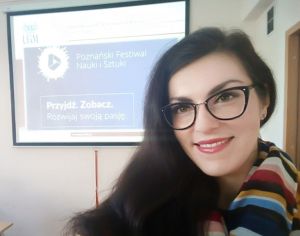
Katarzyna Burzyńska is an Assistant Professor at the Faculty of English, Adam Mickiewicz University. Holding degrees including a D.Litt. in Literature (2023), her academic work bridges Shakespeare studies, literature-philosophy intersections, and translation studies. PhD in English (2014) and D.Litt. in Literature (2023) from UAM Principal investigator for NCN-funded project on pregnancy in Early Modern drama Active in international Shakespearean organizations (ESRA, BSA, Société Française Shakespeare) Her research explores existentialism, gender dynamics, and ethical frameworks in Renaissance texts, with a focus on pregnancy phenomenology, maternal identity, and over-reacher characters. Recent publications include 2024 analyses of Pericles and Renaissance literature through trans studies lenses. Key awards include: 2016 Adam Mickiewicz University Rector's Award for Teaching Excellence 2019 Best poster award at University of Warwick conference 2020 Polish Ministerial Scholarship for Distinguished Young Researchers Burzyńska has presented at 15+ international conferences since 2011, spanning topics from Shakespearean mythologies to early modern memory studies, and coordinates academic programs like the 2017 ESRA conference in Gdańsk.
Marion Paggetti is a Researcher-lecturer at Institut Agro Dijon, affiliated with the Vocational training and apprenticeships (FoAP) school and the Digital Innovation Laboratory for Businesses and Learning to Support Territorial Competitiveness (LINEACT). She is actively engaged in research on activity analysis, psychomotor therapy, and professional learning, with a focus on body-dominant inquiry and learning processes in human interaction professions. Her educational background includes: PhD in Educational and training sciences, CIRNEF (EA 7454), University of Caen-Normandie, 2020. Dissertation: "The psychomotor therapists' 'body-dominant inquiry'. Adjustment activity and learning the work" Psychomotor therapist qualification, Sorbonne-Université, 2015 Dr. Paggetti's research focuses on the analysis of adaptive, "body-dominant" activity in professions addressed to others, particularly in psychomotor therapy. She examines how professionals adjust their activities through bodily engagement with clients/patients. Her work also explores pedagogical and learning activities mediated by new technologies in higher education, especially in engineering schools. She investigates how professional experience is constructed through activity coupling between subjects, with particular attention to the micro-adjustments that occur in human interaction professions. Her recent publications demonstrate a consistent focus on activity analysis methodology, particularly the "micrological" approach to studying professional work. She frequently examines how professionals in human interaction fields (like psychomotor therapists, shepherds, and other care professionals) develop expertise through bodily engagement with their work. Her research bridges educational sciences, work analysis, and professional didactics, with increasing attention to digital technologies in professional learning contexts. Dr. Paggetti is actively involved in scientific communities, serving as a member of the Scientific Council of SNUP-Respir Formation. While specific awards aren't documented in the provided materials, her extensive publication record in reputable journals demonstrates recognition within her academic community. She currently supervises PhD candidate A. HELL, whose research examines "Learning and pedagogical uses of AI in the context of active pedagogy in engineering schools" (defense expected in 2027). Her research is supported through programs like JENII (2021-2025) and CAIRO Confluences, which focus on integrating digital technologies into professional education and active learning pedagogies. As part of LINEACT (Digital Innovation Laboratory for Businesses and Learning to Support Territorial Competitiveness), Dr. Paggetti contributes to research on how digital innovation can support professional learning and business competitiveness. Her work within this laboratory connects theoretical activity analysis with practical applications for professional development in various sectors.
Nils Ehrenberg is a Postdoctoral Researcher at Aalto University’s School of Arts, Design and Architecture , specifically within the Department of Design . He is affiliated with the Encore research group and contributes to projects like CAPE and SMARTUP , focusing on civic agency, digitalization of domestic spaces, and power dynamics. Research Themes: Ethics in design and technology, smart home systems, participatory design, digital citizenship, and power structures in technological contexts. Publications highlight his interdisciplinary work at the intersection of smart technologies, human-computer interaction, and ethical design. His 2025–2024 articles explore surveillance consequences, convenience in smart homes, and civic engagement. 2023–2022 contributions expand into digital literacy, participatory design in public services, and unintended technological control. Scientific Collaborations include co-authoring with researchers like Antti Pirinen, Clarice Bleil de Souza, and Tomi Kokkonen across diverse projects.
Dr. Merijn Bruijnes is an Assistant Professor at Utrecht University School of Governance , affiliated with the Public Governance and Management department. His interdisciplinary work bridges psychology , computer science , and governance to address societal challenges in AI adoption. Research Themes: Governing the Digital Society : Focuses on AI integration in law enforcement (e.g., police operations) and public administration. Human-Centered Artificial Intelligence : Develops conversational agents for healthcare (diabetes support) and social robotics (e.g., eating companions). Key Projects: Artificial Social Agent Evaluation Instrument (Open Science Foundation) We\Visit platform for remote hospital visits (collaboration with TU Delft) Lilobot : Cognitive agent for child helpline counselor training Academic Impact: Published in top journals like Nature Scientific Reports and Frontiers in Computer Science Presented at international conferences (IVA2018, ACM Intelligent Virtual Agents) Recipient of Best Paper Award (IVA2018 conference) Contact: m.bruijnes@uu.nl
Tim G. J. Rudner is a Faculty Fellow at New York University , an AI Fellow at the Georgetown Center for Security & Emerging Technology (CSET) , and an incoming Junior Research Fellow at Trinity College, University of Cambridge . He holds a PhD in computer science from the University of Oxford (advised by Yee Whye Teh and Yarin Gal), a master’s in statistics from Oxford, and a bachelor’s in mathematics and economics from Yale University . Rudner’s research focuses on robust and transparent machine learning models for safety-critical and high-stakes applications. His work spans probabilistic machine learning , uncertainty quantification , generative LLMs , Bayesian neural networks , AI safety , and biomedical discovery . He has developed methods like group-aware priors for subpopulation robustness, function-space regularization techniques, and uncertainty-aware fine-tuning approaches. His recent publications include work on 2025 papers about AI governance frameworks, 2024 studies on robust generative models and uncertainty quantification, and influential studies on vision-language control and diabetic retinopathy detection . His research has been recognized with awards such as the AISTATS Notable Paper Award and the GenAI4DM Outstanding Paper Award . Scientific Awards: 2024 Rising Star in Generative AI Qualcomm Innovation Fellow Rhodes Scholar AISTATS Notable Paper Award (2024) GenAI4DM Outstanding Paper Award (2024) Grants: $30,000 Apple Seed Grant (2024) $700,000 Foundational Research Grant to improve LLM trustworthiness (2024) Rudner actively mentors first-generation low-income students and collaborates with institutions like University of Oxford , Yale University , and New York University . His work bridges theoretical advancements with real-world deployment challenges, emphasizing reliable uncertainty estimation and robust generalization in high-stakes domains.
Dr. Ruud Hortensius is a tenured Associate Professor at the Department of Social, Health and Organisational Psychology , Faculty of Social and Behavioural Sciences, Utrecht University . He is a social neuroscientist and interdisciplinary researcher combining psychology, AI, and social neuroscience to study human-AI interaction dynamics. Education: PhD in Affective & Social Neuroscience (Cum Laude), Tilburg University (2016) MSc in Neuroscience & Cognition, Utrecht University (2011) BSc in Psychology (Cum Laude) with Cognitive Neuroscience major, Utrecht University (2008) Research Focus: Investigates social cognition during long-term human-AI interactions, particularly within family contexts. Develops innovative neurocognition-at-home methods and mobile labs to study real-world social dynamics with AI. His work spans empathy, emotion perception, reward systems, and social dynamics. Selected Grants & Awards: ERC Starting Grant (2023) NWO NGF AiNed XS Europe Grant (2024) Association for Psychological Science Rising Star (2023) Labs & Collaborations: Leads the Human+ lab, collaborating with Utrecht's Relationship Lab , Human-centered AI Focus Area , Human-AI Alliance , and Embodied AI Initiative . Coordinates the AI Helpdesk public engagement platform and initiated an artist-in-residency project with Merel Bekking.
Dorthe Brogård Kristensen is an Associate Professor at the University of Southern Denmark , affiliated with the Department of Marketing & Management . Her work bridges medical anthropology and consumer culture , focusing on intersections of health, body and identity , and medical pluralism , with a regional focus on Chilean and Danish societies . She leads projects on AI in healthcare and digital fitness culture , contributing to debates on self-tracking technologies and health branding . Education : Ph.D. in Anthropology (University of Copenhagen) Key Collaborations : Interdisciplinary teams in Denmark and Chile Her research examines medical decision-making , technological affordances , and consumer strategies for health , with recent publications analyzing AI's impact on radiology and ethical implications of health data . She has presented at conferences on digital health and consumer culture , and her teaching includes medical anthropology and market ethnography at master's and Ph.D. levels.
Louise Barrett is a Full Professor and Chair of the Psychology Department at the University of Lethbridge, holding a prestigious Canada Research Chair (Tier 1) in Cognition, Evolution and Behaviour since 2012. She leads the Behaviour and Evolution Research Group with extensive international collaborations across South Africa, Germany, and the United States. Her educational background includes a PhD in Anthropology from University College London (1995), followed by academic positions at the University of Liverpool (1995-1999), University of Natal (1997-1999), University of Central Lancashire (2006), and University of Lethbridge (2007-present). She was promoted to Full Professor in 2009. Barrett's research centers on comparative psychology and social cognition , specifically examining cognitive adaptations in primate group-living through the lens of embodied and extended cognition. Her work spans: Embodied cognition frameworks in primate behavior Vervet monkey socioecology in South African field sites Thermoregulation and social dynamics Network analysis of primate social structures Evolutionary psychology of human cognition Her recent publications reveal strong interdisciplinary trends bridging cognitive science, primatology, and ecological psychology, with increasing focus on network dynamics, embodied cognition applications to AI, and socioecological factors in primate behavior. Over 60% of her 2020-2025 publications involve field studies on vervet monkeys at Samara Game Reserve. Canada Research Chair (Tier 1) in Cognition, Evolution and Behaviour Barrett actively mentors 9 PhD students and 5 MSc students while supervising numerous NSERC-funded research assistants. Her lab hosts weekly Stats workshops and Reading Groups, maintaining strong connections with South African collaborators at University of the Witwatersrand and University of South Africa. Current major grants support vervet monkey research at Samara Game Reserve through NSERC CRC allocations and international fellowships. The Behaviour and Evolution Research Group operates from Samara Game Reserve field sites and maintains active collaborations with Max Planck Institutes, University of Göttingen, and University of Wisconsin-Madison, focusing on cross-species comparisons of social cognition and movement ecology.
Antonino Furnari is a tenure-track Assistant Professor at the University of Catania's Department of Mathematics and Computer Science, where he is a member of the Image Processing Laboratory (IPLAB). His research focuses on egocentric vision, investigating how intelligent systems can perceive, understand, and anticipate human actions and interactions from an embodied, first-person viewpoint to enable assistive technologies on wearable devices. Dr. Furnari teaches a Bachelor course on Computer Programming and a Master course on Fundamentals of Data Analysis at the University of Catania. He has supervised more than 30 bachelor and master theses and is currently supervising 8 PhD students. His research has resulted in numerous publications in top-tier computer vision and artificial intelligence conferences and journals. His research interests span multiple areas within computer vision and artificial intelligence, with a strong focus on egocentric vision , human action recognition , procedural understanding , and assistive technologies . His work often involves developing novel deep learning approaches for analyzing first-person video data, with applications in industrial settings, kitchen environments, and cultural sites. He has been instrumental in creating important datasets in the field, including EPIC-KITCHENS and MECCANO. Dr. Furnari serves in prestigious editorial roles, including as an Associate Editor for IEEE Transactions on Pattern Analysis and Machine Intelligence (TPAMI) and as an Area Chair for WACV 2026. He also served as publicity co-chair for ICCV 2025, one of the top conferences in computer vision. His research has been widely recognized in the computer vision community, with numerous publications at top venues including CVPR, ECCV, NeurIPS, and IJCV. His work focuses on advancing the state-of-the-art in egocentric vision, with particular emphasis on action anticipation, procedural understanding, and developing practical applications for assistive technologies.
Ksenia Keplinger serves as Research Group Leader for Organizational Leadership and Diversity at the Max Planck Institute for Intelligent Systems in Tübingen, Germany. Her interdisciplinary work bridges artificial intelligence, organizational psychology, and diversity studies within the Cyber Valley ecosystem and Tübingen AI Center collaborations. Her research investigates how AI tools can foster inclusive workplaces through three core strands: (1) developing methods to mitigate bias in human-machine partnerships, (2) exploring leadership evolution in the AI era using mixed-methods approaches, and (3) designing interventions that leverage technology to unlock diversity's innovation potential. Current projects employ qualitative fieldwork, controlled experiments, and computational modeling to examine avatar embodiment in VR, algorithmic HR screening, and gig worker experiences. Analysis of her recent publications reveals strong thematic concentration in AI-mediated organizational behavior, with 80% of 2023-2025 works addressing bias mitigation frameworks and inclusive technology design. Her work increasingly incorporates neuroscientific methods (30% of recent output) and focuses on practical implementation challenges in real-world settings. Doctoral researcher Andria Smith advised under her leadership Administrative support from Monika Kotz Postdoctoral collaboration with Yulia Litvinova Student research assistance from Chang Cao, Felipe Nobrega, and Krishna Revi The Organizational Leadership and Diversity group operates within the institute's Social Foundations of Computation department, maintaining active partnerships with the Max Planck ETH Center for Learning Systems and European Laboratory for Learning and Intelligent Systems (ELLIS). Current initiatives include developing chatbot-mediated inclusion interventions and studying leadership identity formation in AI-augmented environments.
Fatemeh Moradi is an Associate Professor at the Department of Informatics , Umeå University, Sweden. She serves as the coordinator for the HCIUX Master's Program and conducts research at the intersection of human-computer interaction, design thinking, and societal impact. Current research focuses on: • Human-Computer Interaction (HCI) • Digital Archive Design • Workplace Activeness • Public Health Technology • Spatial Interaction Systems Her work addresses critical design challenges in creating inclusive digital heritage systems for Indigenous communities and developing interactive solutions to combat workplace sedentariness. She actively contributes to the UmArts Art & AI research project (2023-2028) and previously worked on the Sámi heritage archives digitization (2018-2020). Contact: fatemeh.moradi@umu.se | Office: MIT-huset, Umeå University
Kasper Støy is a Professor in Robotics and Embodied Artificial Intelligence at the IT University of Copenhagen, specializing in distributed control of multi-robot systems and modular robotics. He has published over 95 works and authored the MIT Press book Self-Reconfigurable Robots: An Introduction . As co-founder of Universal Robots, he bridges academic research with industrial applications. M.Sc. in Computer Science & Physics, University of Aarhus (1999) Ph.D. in Computer Systems Engineering, University of Southern Denmark (2003) His research focuses on: Modular Robotics Bio-Inspired Robotics Human-Robot Interaction Embodied Artificial Intelligence Self-Reconfigurable Systems Recent publications address anxiety-reducing pocket robots, tactile comfort systems, and origami-inspired mechanical designs. He has won awards including the 2017 GECCO Virtual Creatures Competition. 2017: GECCO Virtual Creatures Competition Active in academic service, he chaired recruitment committees for Statistics and Machine Learning positions. Collaborations span European Commission projects like MUHMI-MOZART and BIG-MAP.
Prof. Dr. hab. Andrzej Derdziuk, Ph.D., is a Polish Capuchin friar and professor at the John Paul II Catholic University of Lublin since 1996. Specializing in Moral Theology, Bioethics, and Theology of Consecrated Life , he has supervised 30 doctoral and 221 master's theses while serving in various academic and ecclesiastical roles including Rector of the Capuchin Major Seminary (1996-2006), Vice-Rector for Research (2012-2015), and current parish director in Poczekajka. A prolific author with 31 books and over 250 scholarly articles, his work bridges historical theological frameworks with contemporary ethical challenges.
Ari Happonen is an Associate Professor at LUT University's School of Engineering Sciences in Lappeenranta, Finland, with a research focus spanning Computer networks and communications , Operations research , Information Systems , Computer Science , and Technology management . His work demonstrates interdisciplinary expertise through collaborations with institutions across 15 countries. Recent publications highlight his contributions to AI applications in environmental monitoring (2025) Generative AI for educational frameworks (2025) Wind energy system design (2024) Gender inclusivity in technical education (2024) Smart waste management solutions (2024) Contact: Ari.Happonen@lut.fi
Alexandra Nilles is an Assistant Professor of Computer Science at Western Washington University since Fall 2024. Previously, she was a Postdoctoral Associate at Cornell University's Collective Embodied Intelligence (CEI) Lab from 2021-2024, where she worked under Prof. Kirstin Petersen. Her research focuses on sustainable robotics, distributed AI, and embodied intelligence for environmental applications. Education: PhD in Computer Science (2020) from University of Illinois at Urbana-Champaign, advised by Dr. Steven LaValle; BS in Engineering Physics from Colorado School of Mines. Her work develops minimalist mobile robot systems that leverage embodied intelligence and environmental interactions to reduce resource demands (battery, sensors, communication) while maintaining provable performance guarantees. Applications include under-canopy forestry monitoring, micro-scale medical agents, and carbon-capture auditing. She has published in venues such as ICRA, IROS, IJRR, and WAFR, often addressing scalability challenges in chaotic or constrained environments. Key methodologies span formalized planning algorithms, human-in-the-loop control interfaces, and inflatable soft robotics for collectives. Awards: Cyber-Physical Systems Rising Star (2023) Microsoft Future Leader in Robotics and AI (2023) Nilles received NSF support for robotic mouse toy development during her PhD and served as interim PI for Cornell's CEI Lab through the NSF Career-Life Balance Program. She actively participates in interdisciplinary workshops connecting math, art, and robotics.