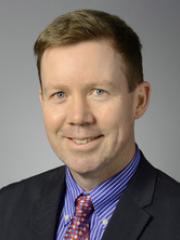
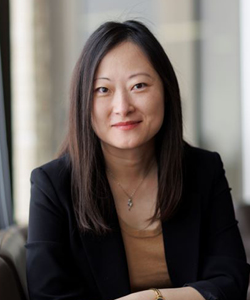
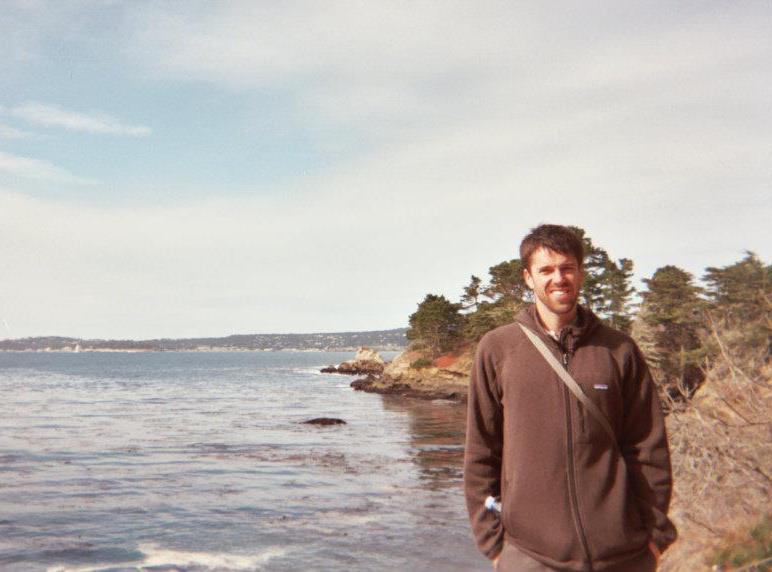
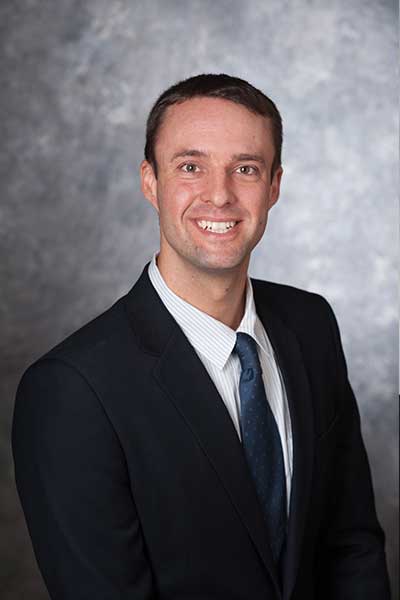
Professor Danny Campbell is affiliated with the University of Stirling in the Department of Economics. His research focuses on discrete choice experiments, environmental valuation, health economics, and consumer behavior. Research Themes: Cultural Heritage, Environmental Change, Global Food Security, Health & Behaviour Current research explores spatial heterogeneity in willingness-to-pay, attribute non-attendance in decision-making, and policy applications of choice modeling. Recent publications analyze wine attribute valuation, aquatic food demand in China, and environmental economics tools. He has contributed to methodological advancements in discrete choice experiments, including satisficing behavior, position bias, and spatial error modeling. Contact: danny.campbell@stir.ac.uk
Professor Anthony Smith is Director of the Centre for Online Health (COH) at The University of Queensland’s Faculty of Health, Medicine and Behavioural Sciences and Adjunct Professor at the University of Southern Denmark. With 25+ years in telehealth research, he focuses on scalable virtual care models, Indigenous health equity, and workforce training. His leadership includes editorship of the Journal of Telemedicine and Telecare and chairing the International Conference on Successes and Failures in Telehealth. Research Interests: Smith’s work spans telehealth feasibility, consumer engagement, and technology-supported care in underserved populations. Key projects include telehealth integration in aged care, First Nations health services, and telementoring for rural practitioners. His research prioritizes sustainable, community-led health solutions. Publication Trends: Recent articles (2024–2025) emphasize telehealth accessibility, trust validation in chronic disease management, and economic evaluations of remote care. Methodologies include systematic reviews, mixed-methods studies, and cross-sectional surveys, reflecting a focus on evidence-based service optimization. Awards: Public Engagement Award (UQ, 2024) Top Researcher in Medical Informatics (2023) Excellence in Indigenous Engagement (2021) Spirit of Reconciliation Award (2021) Advising & Grants: Supervises PhD candidates in telehealth equity and service implementation. Secured funding from the Commonwealth Department of Health, CRC for Developing Northern Australia, and Queensland Health for projects like DementiaECHO and palliative care telehealth. Major grants include: Expanding Palliative Care ECHO (2023–2026, $2.1M) Health-e-Regions telehealth expansion (2023–2025) Labs & Teams: Leads the COH, collaborating with Queensland Digital Health Centre and First Nations communities. Partners with clinical teams across 35+ schools for Indigenous child health screening and international groups for pediatric telehealth innovation.
Thomas J. Hope is a Professor of Cell and Developmental Biology, Obstetrics and Gynecology, and Biomedical Engineering at Northwestern University's Feinberg School of Medicine and McCormick School of Engineering. His research focuses on HIV Cellular Virology, utilizing cell biology approaches to study HIV transmission and prevention. He leads the Hope Lab, which has pioneered imaging techniques for visualizing HIV interactions with cells and tissues. PhD: University of California, Berkeley (1988) Postdoctoral Fellow: University of California, San Francisco (1992) Dr. Hope's research centers on HIV Cellular Virology, with emphasis on the cell biology of HIV transmission. His lab has developed advanced imaging techniques for fluorescent labeling of HIV particles and viral proteins, enabling researchers to track virions and infected cells from tissue culture to whole animal models. His work spans from virus entry and assembly to defining the earliest steps of sexual transmission of HIV, with recent expansion into HIV-related mucosal immunology and prevention science. The Hope Lab uses imaging-based tools to define viral and host factors during HIV transmission in physiologically relevant contexts. Analysis of Dr. Hope's recent publications reveals a strong focus on HIV transmission mechanisms, particularly through mucosal tissues, with increasing attention to SARS-CoV-2 research since the pandemic. His work combines advanced imaging techniques with molecular and cell biology approaches, with significant emphasis on developing prevention strategies including vaccine and microbicide research. The research shows progression from fundamental HIV cell biology to applied prevention science, with growing collaboration across disciplines including immunology, microbiome research, and medical imaging. A Wannabe Photographers 30 Year Journey to Image HIV / Keynote Speaker, Cold Spring Harbor Laboratory (CSHL) (2022) Dr. Hope serves in multiple editorial and advisory capacities including as Section Editor for PloS Pathogens (2011-Present), former Editor-in-Chief of AIDS Research and Human Retroviruses (2009-2020), and member of amfAR Scientific Advisory Committee (1999-Present). His research has secured significant funding, including a $17 million NIH grant for HIV prevention research focused on developing an implantable drug delivery system. He co-chairs the AIDS Panel for the U.S.-Japan Cooperative Medical Science Program and participates in the Organizing Committee for Emerging Infectious Diseases of the Pacific Rim. The Hope Lab utilizes imaging-based tools to define key viral and host players during HIV transmission in physiologically relevant contexts. The lab's approach enables direct visualization of HIV/SIV particles, mucosal tissue barriers, host target or effector cells, and infected cells. This work supports in vivo PK/PD studies using systemic and topical PrEP approaches, providing unique insights into the space and time of the earliest events of HIV transmission and prevention.
John Rose is a Professor and Neil Smith Research Chair in Sustainable Transport Futures at the University of Sydney's Institute of Transport and Logistics Studies. He holds a BEc(Hons) from the University of Sydney and a PhD in Transport Economics under Prof. David Hensher. Previously, he directed the Institute for Choice (UniSA) and co-founded BIDA (UTS), leading to $3.4M in grants and $9M in industry contracts. His research focuses on discrete choice models, sustainable transport policy, and behavioral economics applications in transport, health, and environmental domains. Education: BEc(Hons) in Economics/Econometrics (University of Sydney), PhD in Transport Economics (University of Sydney). Research interests include experimental design optimization, transport crowding valuation, and circular economy transitions for ports. He co-developed the Ngene software for experimental design and advises companies like CaPPRe. Recent grants include ARC-funded projects on utility theory and external validity in choice experiments. Research highlights include over 300 peer-reviewed publications and roles as editor for Transportation and Journal of Choice Modelling . Current projects explore sustainable transport pathways, carbon footprint reduction, and freight logistics resilience. His work bridges academia and industry, emphasizing evidence-based policy for transport decarbonization.
Peter Moffatt is a Professor of Econometrics in the School of Economics at the University of East Anglia. He is affiliated with the Norwich Institute for Healthy Aging, Centre for Behavioural and Experimental Social Science, Applied Econometrics and Finance, and Behavioural Economics research groups. His work focuses on Experimetrics—the econometric analysis of experimental economic data—and spans risk attitude modeling, financial econometrics, and consumer behavior. Dr. Moffatt has authored the 2015 textbook Experimetrics and delivered global Masterclasses on the subject. His research interests include risk preference analysis, bank borrower repayment dynamics, and consumer theory. Notable projects include a 2002–2005 Leverhulme Trust-funded study on experimental methods in economics. He advises PhD students on topics like econometric modeling of experimental data and discrete choice models. Key collaborations span international institutions, with recent work addressing volatility in energy and stock markets, pandemic impacts on financial systems, and gender differences in gambling behavior. Awards and fellowships are not explicitly noted, but his contributions to econometric methodology are widely recognized. Dr. Moffatt’s expertise includes advanced statistical techniques such as GARCH modeling, copula methods, and hurdle models, applied to diverse fields like credit risk assessment, public policy evaluation, and behavioral experiments.
Professor Adrian Barnett is a Professor in the School of Public Health & Social Work at Queensland University of Technology (QUT). He holds a BSc in Statistics from University College London (1994) and a PhD in Mathematics from the University of Queensland (2002). His research focuses on meta-research, research funding, data sharing, and improving the value of health and medical research. He is the past president of the Statistical Society of Australia and current president of the Association for Interdisciplinary Meta-Research and Open Science (AIMOS). His work emphasizes reducing research waste and enhancing research integrity through methodological improvements, policy analysis, and evidence-based practices. He has authored or co-authored over 40 peer-reviewed articles, with recent contributions addressing statistical methodologies, clinical prediction models, and pandemic-related healthcare challenges. Barnett’s leadership includes advocating for open science, transparent reporting, and ethical research practices. He currently oversees the Australian Centre for Health Services and Innovation and is actively involved in supervising postgraduate students across Honours, Masters, and PhD programs.
Yuanyuan Gu is an Associate Professor at Macquarie University's Centre for the Health Economy. His expertise spans health economics, aging, choice modeling, and econometrics, with a focus on preferences and decision-making in healthcare systems. He leads the health preference research stream and advises on health technology assessments. He has secured over A$14 million in funding, including a Marie Skłodowska-Curie Fellowship. Education: PhD in Economics (UNSW, 2011), MCom (Hons) in Economics (UNSW), BSc in Statistics (Fudan University). Research Interests include improving healthcare quality through preference analysis, cost-effectiveness studies, and policy-relevant research. Recent projects address aged care financing, patient preferences for treatments, and precision medicine applications. Key Awards: MQBS Research Impact Prize (2023, 2025), Centre for Health Economy Publication Prize (2023). Advising & Grants: Supervises 6 current PhD students (e.g., Zobaida Ahmed Piu on oral contraceptives, Han Cheng on income inequality and health) and advises on PBAC evaluations. Active in editorial roles for PharmacoEconomics and Journal of Hospital Management and Health Policy . Labs/Teams: Collaborates on projects like sensory support interventions for dementia patients and outcomes-based care evaluations for vulnerable populations.
Yang Yang is an Associate Professor at the Johnson Shoyama Graduate School of Public Policy, University of Saskatchewan, specializing in consumer behavior and food policy research. Her work examines how cultural values and communication strategies influence public acceptance of novel food technologies and Arctic food systems. Her academic credentials include: PhD in Agricultural Economics, University of Saskatchewan M.Sc. in Finance, Umeå University, Sweden M.Sc. in Economics, Dalarna University, Sweden B.Sc. in Economics, Tianjin University of Finance and Economics, China Yang's research program investigates consumer and farmer decision-making through experimental economics methodologies. She employs discrete choice experiments to analyze how narratives, cultural worldviews, and information framing affect responses to food technologies like gene editing and nanotechnology. Her work bridges agricultural economics with behavioral science, emphasizing heterogeneous consumer responses and the role of storytelling in science communication. This research has direct applications for food policy design, marketing strategies, and sustainable food system development. Analysis of her 2018-2020 publications reveals an evolving focus from technical assessments of consumer acceptance toward understanding communication mechanisms. Early work examined nanotechnology and biotechnology acceptance, while recent studies emphasize narrative framing effects and cultural value influences. A consistent thread is the investigation of Arctic food systems, where she explores certification impacts and indigenous knowledge integration. She received the Richardson-Applebaum Scholarship for Best PhD Dissertation (2018) and has secured research funding through collaborations with: Agriculture and Agri-Food Canada Arctic Council Northern Foods Yang actively mentors graduate students and teaches courses in resource economics and statistics. She is currently accepting MPP and PhD students for 2026 in food policy, experimental economics, and science communication. Her collaborative work with Drs. Jill Hobbs and David Natcher forms a core research team addressing socio-economic dimensions of food innovation, particularly in northern and indigenous contexts.
Vernon L. Smith is the George L. Argyros Endowed Chair in Finance and Economics at Chapman University, with joint appointments in the Argyros College of Business and Economics and Fowler School of Law. He founded and directs Chapman's Economic Science Institute. Smith completed his BS in electrical engineering at Caltech (1949), MA in economics at University of Kansas (1952), and PhD in economics at Harvard (1955). His pioneering research in experimental economics examines market mechanisms, human exchange behavior, and institutional design. Key domains include: Design of efficient markets for electricity, water, and emissions trading Behavioral foundations of property rights and exchange Neuroeconomic basis of decision-making Housing market bubbles and financial crises Adam Smith's moral philosophy applied to modern economics His 375+ publications demonstrate consistent focus on experimental validation of economic theories, with recent work analyzing policy impacts and market stability. Honors include: Nobel Prize in Economics (2002) National Academy of Sciences membership (1995) Doti-Spogli Free Enterprise Award (2023) Experimental economics laboratories named in his honor at Purdue University and University of Alaska Anchorage Smith has advised governments worldwide on market liberalization, served on editorial boards of 8 major economics journals, and held leadership roles in multiple economic associations including presidency of the Economic Science Association.
Reinhard Hössinger is an Associate Professor at the Institute of Transport Studies, Department of Landscape, Water and Infrastructure, University of Natural Resources and Life Sciences, Vienna (BOKU). With a habilitation in Travel Behaviour Research completed in 2021, he has established himself as a leading researcher in transportation planning, active mobility, and child mobility behavior. Hössinger earned his PhD at BOKU (2004-2008) focusing on "Analysis of Attitudes towards Transport Policies and their Change in different Stakeholder Groups," following his Biology studies at the University of Vienna (1992-1999) with a focus on ecology and environmental economics. His academic journey began with a diploma thesis on "Implementation deficits in Vienna's transport policy from a social science perspective." His research interests span Travel Behaviour Research , Transportation Planning , Active Mobility (particularly children's mobility), Environmental Economics , Mobility Marketing , and Transport Policy . Hössinger employs empirical surveys and advanced statistical models including discrete choice models, structural equation models, and nonlinear equation systems to investigate travel behavior and attitudes to mobility. Hössinger's recent publications (2020-2024) reveal a strong focus on children's mobility, active transportation, and the relationship between transport and well-being. His work increasingly examines physiological responses to active travel, children's perspectives on urban mobility, and the connection between transport choices and physical/mental well-being. The TRA:WELL project represents a significant portion of his recent work, exploring transport and wellbeing through multiple methodological approaches including discrete choice experiments. Staatspreis Mobilität (Austrian State Award for Mobility) for Projekt: UNTERWEGS (2015) 1st poster award for scientific quality and innovation at the 14th Austrian Climate Day (2013) LIST Förderungspreis für Beiträge zur Verbesserung der innerstädtischen Verkehrs- und Parkraumsituation (2011) Hössinger has supervised multiple theses and has been involved in numerous research projects focusing on transport behavior, mobility marketing, and sustainable transport solutions. His work bridges academic research with practical applications in transport planning, particularly through participatory planning approaches and dialogue marketing strategies. While specific lab affiliations aren't detailed in the available information, his research appears to be conducted through the Institute of Transport Studies at BOKU, with collaborations across multiple institutions as evidenced by his extensive conference presentations.
Dr Stephanie Mathieson is a Senior Research Fellow at Sydney Musculoskeletal Health, a flagship research group within the University of Sydney’s Faculty of Medicine and Health. She is based at the Kolling Institute at Royal North Shore Hospital. Her work focuses on reducing low-value care for musculoskeletal conditions, particularly spinal pain and sciatica, and has influenced over 11 international clinical guidelines. She holds an NHMRC Early Career Fellowship (2019–2022) and has contributed to studies on opioid deprescribing, gabapentinoid use, and healthcare policy. Education: PhD. She supervises Higher Degree Research students, including Justin Cheng (Evidence-based guideline for deprescribing gabapentinoids) and Charlotte Johnstone (Pain and pelvic exenteration surgery outcomes). Research Interests: Reducing inappropriate pharmacological treatments for musculoskeletal conditions Opioid and gabapentinoid deprescribing strategies Clinical guideline development and implementation Health literacy and patient beliefs in pain management Systematic reviews and meta-analyses Health policy and healthcare expenditure Scientific Contributions: Over 30 peer-reviewed articles in leading journals like the New England Journal of Medicine, BMJ, and Annals of Internal Medicine. Her research spans behavioral nudging interventions, infodemiology studies on social media, and guideline adherence mechanisms. Awards and Grants: NHMRC Early Career Fellowship (2019–2022), FMH Showcase Travel Award 2023, and participation in multiple funded projects including the 2023 Restructuring Musculoskeletal Health Services grant. Professional Engagement: Serves on committees for the Australian Pain Society, ANMUSC Network, and ACI Musculoskeletal Network. Active in national/international conferences and co-developed the BacKS survey tool to assess patient knowledge about low back pain. Future Work: Expanding deprescribing research into other medications, investigating virtual care models, and enhancing primary care pain management strategies through guideline implementation.
Robert Bray is an Associate Professor of Operations Management at the Kellogg School of Management, Northwestern University, where he has held the Donald P. Jacobs Scholar position since 2012. He holds a B.S. in Industrial Engineering and Operations Research from UC Berkeley (2006) and a Ph.D. in Business Administration from Stanford University (2012). His research focuses on dynamic programming, supply chain management, and empirical operations, with notable contributions to understanding the bullwhip effect, supply chain proximity, and inventory dynamics. He has served as an associate editor for Operations Research , Manufacturing & Service Operations Management , and Management Science . His work has received multiple recognitions, including the MSOM Meritorious Service Award and finalist nominations for top operations journals. He teaches advanced courses on dynamic program estimation and operations analytics. Research interests span empirical operations management, with particular emphasis on supply chain coordination, inventory control, and the application of econometric methods to operations problems. His recent work explores the interplay between operational transparency and customer satisfaction, as well as the impact of AI in educational settings. He has published over 20 peer-reviewed articles in top journals like Operations Research and Management Science , addressing topics ranging from judicial process optimization to automotive supply chain quality. Dr. Bray's academic service includes refereeing for leading journals and participation in initiatives such as the Chicago-Argonne Initiative for Computational Economics. His professional experience includes roles as a lecturer at Stanford and consulting engagements with firms like Intel and Restoration Hardware. His research consistently bridges theoretical rigor with practical applications, offering actionable insights for operational efficiency and strategic decision-making.
Dr. Jos Runhaar is an Assistant Professor at the Department of General Practice, Erasmus MC, Rotterdam, Netherlands. He is a leading researcher in the field of musculoskeletal diseases, with a primary focus on the prevention and early diagnosis of osteoarthritis. He leads a dynamic research group involving 12 PhD students, research assistants, and clinician-researchers, and maintains a strong national and international scientific network. His research interests center on improving the management of musculoskeletal disorders in primary care settings, particularly among general practitioners and physiotherapists. He aims to shift treatment paradigms toward earlier intervention and primary prevention of osteoarthritis. His work integrates epidemiological methods, clinical diagnostics, and patient-centered outcomes to enhance early detection and effective conservative management. The recent publications highlight a strong trend in clinical and epidemiological research on osteoarthritis, with specific emphasis on knee and hip osteoarthritis, causal relationships (e.g., obesity and OA), exercise interventions, patient preferences, and imaging-based risk prediction. His research employs advanced methodologies such as Mendelian randomization, causal mediation analysis, discrete choice experiments, and large-scale meta-analyses. Dr. Runhaar has been recognized with several prestigious scientific awards, including: Rising Star Award for Clinical Research (OARSI, 2023) FOREUM Clinical Research Award (2022) European League Against Rheumatology Training Bursary (2018) Honorary Research Fellow (2018) ISMRM Trainee Stipend (2017) IWOAI Young Investigator Award (2017) He has secured over €1.5 million in research funding as principal applicant from major organizations such as ZonMw, EULAR, ISAKOS, OARSI, and the Dutch Arthritis Society. He actively supervises multiple PhD students and contributes to academic governance through roles on scientific committees including OARSI’s Research & Training Committee (Chair), Ethics & Governance Committee, and the Scientific Advisory Board for the Dutch Arthritis Society. He also participates in international thesis assessment committees. Dr. Runhaar’s research is conducted within a collaborative framework involving multiple institutions, as evidenced by his involvement in the World COACH consortium and other international networks. His group focuses on translating research findings into clinical practice in primary care and rehabilitation settings.
Wayne Taylor is a Clinical Professor at the Cox School of Business , Southern Methodist University (SMU) , with a focus on marketing analytics and data-driven strategies. He earned his PhD from UCLA's Anderson School of Management and a Bachelor of Science in Hotel Administration from Cornell University . Before academia, he worked as a Senior Manager of Marketing Analytics for Las Vegas Sands and in revenue management for Taj Mahal Casino Resort and Marriott International. Education PhD, University of California, Los Angeles (UCLA) Bachelor of Science, Hotel Administration, Cornell University His research spans Bayesian Methods , Loyalty Programs , and Database Marketing , with publications analyzing CRM models, competitor-based targeting, and socio-political activism in brand marketing. Key areas include casino industry dynamics, customer behavior modeling, and digital transformation in marketing. Recent co-authored works explore sports betting legalization , DEI brand activism , and privacy regulation impacts , reflecting his interest in policy and technology intersections with marketing. He teaches courses like Applied Predictive Analytics and Data-Driven Marketing , emphasizing quantitative approaches.
Oliver Meixner is an Associate Professor at the Institute of Marketing and Innovation within the Department for Economics and Social Sciences at the University of Natural Resources and Life Sciences, Vienna (BOKU) . His work focuses on agricultural economics, sustainable marketing, and consumer behavior in food systems. Key Research Areas: Sustainable agriculture and food economics Consumer behavior and market research Innovation and digital transformation in agrifood Notable Contributions: Developed methodologies for AHP group decisions and fuzzy priority aggregation Evaluated eco-label effectiveness and food waste reduction strategies Assessed EU rural development programs' impact on agricultural competitiveness Publications & Projects (2016-2024) show a consistent focus on: Food labeling and consumer trust Sustainability assessments in agribusiness Digital transformation in food networks Climate crisis impact on consumer behavior Innovative marketing models for agrifood chains Scientific Recognition Award of Excellence (ISAHP 2020) Most Innovative Idea Award (ISAHP 2016) Literati Network Outstanding Paper (2013) Advising spans 123 theses including topics on: Consumer preferences for eco-labels Acceptance of alternative proteins Digital food shopping behavior Payment willingness for sustainable products