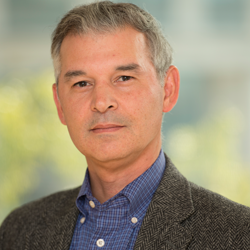
Daniel Billettمشاهده پروفایل
پژوهشگر ارشد
Daniel Billett is a space physicist specializing in magnetosphere-thermosphere-ionosphere coupling dynamics, currently holding the prestigious ESA Living Planet Fellowship. His research leverages the Super Dual Auroral Radar Network (SuperDARN) alongside Fabry-Perot Interferometers, Incoherent Scatter Radars, and all-sky imagers to investigate energy transfer during space weather events. His educational foundation includes: PhD in Space Physics from Lancaster University (2016-2019), thesis: "The great space weather washing machine: Examining the dynamics of high-latitude ionosphere-thermosphere coupling" PGCE in post-compulsory education from Cardiff University (2015-2016) MPhys in Astrophysics from Aberystwyth University (2011-2015) Billett's research centers on quantifying energy pathways between solar wind drivers and Earth's upper atmosphere, with particular focus on aurorally driven conductivity enhancements and thermospheric wind dynamics . His work examines how geomagnetic storms redistribute energy through frictional heating and Poynting flux, addressing critical questions about atmospheric responses to charged particle bombardment and implications for space weather forecasting. Analysis of his 15 most recent publications reveals consistent emphasis on ion-neutral coupling mechanisms, with recurring methodological themes in multi-instrument validation (SuperDARN with satellite data), high-resolution mapping techniques, and quantification of under-sampled energy transfer scales. Key topical threads include GNSS scintillation during cusp events, thermospheric responses to extreme storms like the 2022 Starlink incident, and turbulence characterization around auroral arcs. His scientific recognition includes: ESA Living Planet Fellowship (2021) JSPS Fellowship for Research in Japan (2019) Lancaster University Dean's Award for PhD excellence (2018) Billett has secured competitive research funding through major international fellowships, with the ESA Living Planet Fellowship supporting his current work on global thermospheric responses. His publications demonstrate extensive collaboration across North American, European, and Japanese institutions, reflecting deep integration within the space physics community. He contributes to infrastructure development through projects like Borealis radar systems and pyDARN software, enhancing community-wide observational capabilities. As a core SuperDARN collaboration member, Billett participates in global networks of radar facilities and complementary instrumentation teams. His recent work with the 2022 Starlink storm response highlights growing focus on space weather impacts on commercial space assets, indicating strategic expansion toward applied space climate research while maintaining fundamental ionospheric physics investigations.