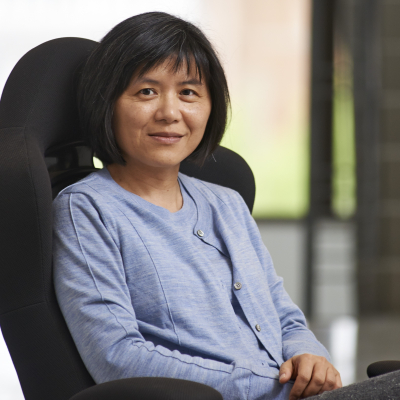
Professor Yen-Fen Tseng is a sociologist at the National Taiwan University's Department of Sociology, specializing in migration studies with a focus on Asia. Her research examines skilled migration patterns, migration policies, and transnational mobility, particularly involving Taiwan's connections with global cities like Tokyo, Hong Kong, and Shanghai. She holds a Ph.D. in Sociology from UCLA (1994) following M.A. (1989) and B.A. (1984) degrees from National Taiwan University. Her work critically analyzes how migration policies interact with migrants' lived experiences, emphasizing gaps between official regulations and practical realities. Key research themes include: Skilled labor mobility across East Asia Policy frameworks governing guest workers and dual citizenship Urbanization dynamics in global cities Cross-border career development strategies Recent publications explore topics such as Taiwanese migrants' settlement intentions in Tokyo/Hong Kong (2023), Japan's corporate talent challenges (2021), and migration policy paradoxes in Taiwan (forthcoming 2025). Her work often bridges sociological theory with policy analysis, contributing to both academic discourse and practical governance strategies. Her research has consistently addressed migration's geopolitical dimensions, including the impact of Sino-Taiwan relations on mobility patterns and the evolving social identities of Hong Kong immigrants in Taiwan. She has also examined historical migration phenomena like 1990s Taiwanese immigrant entrepreneurship in Los Angeles.
Dr. Yu-Wen Chen is a Full Professor at the Department of Social Work, National Taiwan University, where she has served since 1996. She holds a Ph.D. in Social Work from Washington University in St. Louis (1996) and specializes in youth welfare, quantitative research methods, and social policy analysis. Her research focuses on disadvantaged populations, particularly children and adolescents facing economic hardship, mental health challenges, and social inequality. Professor Chen leads research on child well-being measurement, adolescent mental health interventions, and cross-cultural social policy comparisons. Her recent work examines COVID-19 impacts on vulnerable children and international adoption practices. She employs advanced statistical methods in large-scale studies across 35 countries and advises Taiwanese government ministries on child protection policies. Her publication corpus reveals strong thematic continuity in youth development research, with recent expansion into pandemic-related well-being studies and AI applications for social policy. She maintains active collaborations with NGOs including World Vision and the Taipei Women's Rescue Foundation, serving on their governing boards to translate research into practice. Professor Chen has received multiple awards for teaching excellence and research impact, though specific honors are not enumerated in available materials. Her advisory roles include formal appointments with Taiwan's Ministry of Education and Health and Social Welfare, shaping national policies on child welfare and poverty alleviation.
Mao-wei Lo is an Assistant Professor at the College of Law, National Taiwan University. He holds a J.S.D. and J.S.M. from Stanford Law School (2024 and 2019, respectively) and an LL.M. and LL.B. from National Taiwan University (2015 and 2012). His academic career includes teaching and research roles at Stanford University and prior experience as a senior legal officer at Taiwan's Mainland Affairs Council. Dr. Lo's educational background includes: J.S.D. in Law, Stanford Law School (2024) J.S.M. in Law, Stanford Law School (2019) LL.M. in Law, National Taiwan University Law School (2015) LL.B. in Law, National Taiwan University Law School (2012) Professor Lo's research focuses on international economic law, particularly WTO law and international investment law and arbitration. He also explores public international law and cross-strait relations, with an emphasis on empirical legal studies. His work often addresses contemporary challenges such as forced labor in global supply chains, pandemic-related regulatory measures, and the impact of geopolitical tensions on international legal frameworks. Lo's recent publications demonstrate a strong engagement with the intersection of international trade, investment law, and geopolitical issues. His work frequently examines Taiwan's unique position in international law, including its investment treaties and cross-strait relations. A notable trend is the application of empirical methods to analyze international legal instruments and their real-world implications, particularly in the context of China's economic policies and the Belt and Road Initiative. His scholarly contributions have been recognized with several awards: MOST Humanities and Social Sciences Overseas Talent Cultivation Program (2023) Hungdah Chiu Memorial Prize for International Law (2022) Levin Center Public Interest Summer Fellowship, Stanford Law School (2021) Salzburg Cutler Fellow in International Law, Stanford Law School (2021) John Hart Ely Prize for Outstanding Performance, Stanford Law School (2019) Franklin Family Fellowship, Stanford Law School (2018) Ministry of Education Overseas Study Scholarship (International Organizations and International Law) (2016) National Taiwan University Student Altruism Award (2015) While there is no explicit information on student advising, Dr. Lo's research has been supported by competitive grants and fellowships. Key projects include: WTO Chairs Programme (WCP) Phase III: Junior Research Fellow (2022-2025), funded by the World Trade Organization. Researcher at Stanford Center for Ocean Solutions (2021-2023).
Professor Ming-sho Ho is a distinguished scholar in the Department of Sociology at National Taiwan University's College of Social Sciences, specializing in social movements, political sociology, labor sociology, and environmental sociology. With a Ph.D. from National Taiwan University (2000) and extensive academic experience including positions at National Sun Yat-sen University and Nanhua University, he has established himself as a leading authority on social movements in Taiwan and East Asia. National Taiwan University (2009-present) National Sun Yat-sen University (2008-2009) University of Nanhua (2001-2008) Professor Ho's research interests span social movements, political sociology, labor sociology, and environmental sociology, with particular focus on Taiwan's democratization process, labor movements, and comparative studies of social movements across East Asia. His work often examines the relationship between civil society and state institutions, with special attention to Taiwan's unique political context and its relationship with mainland China. His publication record reveals a consistent scholarly trajectory examining social movements in Taiwan, with increasing attention to comparative perspectives, particularly with Hong Kong. His recent work shows a sophisticated integration of theoretical frameworks with empirical research on protest movements, labor issues, and environmental activism. The thematic evolution demonstrates growing international recognition of his expertise, with increasing publications in English-language journals and presses that reach global scholarly audiences. Academia Sinica Humanities and Social Sciences Academic Book Award (2019) Harvard-Yenching Institute Visiting Scholar Fellowship (2018-2019) Outstanding Research Award from Ministry of Science and Technology (2015, 2020) National Science Council Wu Dayou Memorial Award (2008) Fulbright Postdoctoral Research Fellowship (2004-2005) Professor Ho has directed numerous research projects funded by Taiwan's Ministry of Science and Technology, focusing on social movements, labor issues, and environmental politics. He has served in various editorial capacities including on the editorial board of China Quarterly and as Associate Editorial Board member of International Journal of Taiwan Studies. His professional service extends to leadership roles in the Taiwan Sociological Association and advisory positions with government agencies focused on social science research and education policy. He maintains active research collaborations through positions such as Adjunct Senior Research Fellow at the China Policy Centre, University of Nottingham, and through his involvement with the Carnegie Foundation for International Peace Civic Research Network. His work bridges academic research with practical policy considerations, particularly regarding civil society development and democratic consolidation in Taiwan.
WEN-CHEN SHIH is a Professor in the Department of International Business at National Chengchi University’s College of Commerce. Since 2004, she has held academic appointments at NCCU, advancing from Associate Professor to full Professor, and is recognized for her expertise in international economic and trade law, international environmental law, and climate change governance. Education: She earned her LL.B. from National Taiwan University (1993), followed by an LL.M. (1995) and Ph.D. in Law (1999) from the University of London, United Kingdom. Research Interests: Her scholarly work centers on the intersection of international trade law and environmental policy. Key themes include: Carbon pricing mechanisms and carbon border adjustment measures Emissions trading systems and their WTO compatibility Climate finance and governance under bilateral and multilateral frameworks Trade-environment linkages, particularly under GATT/WTO rules Legal design of energy and carbon taxation Comparative marine environmental law Research Output & Trends: Over two decades, Professor Shih has produced a prolific body of work analyzing the legal dimensions of global climate governance and trade regulation. Her recent publications (2022) focus on global carbon pricing trends and legislative exemptions within Taiwan’s emerging climate policy framework. Earlier works delve into emissions trading system linkages via free trade agreements, governance challenges in climate finance, and the legal nature of traded emission units under WTO law. Scientific Awards: 資深優良教師(20年), 國立政治大學 (2019) 教學優良教師獎(專業課程), 國立政治大學 (2017, 2013) 資深優良教師(10年), 國立政治大學 (2009) 商學院教學特優, 政大商學院 (2007, 2005) 商學院教學優良, 政大商學院 (2006) Grants & Projects: Professor Shih has continuously served as Principal Investigator on numerous multi-year projects funded by Taiwan’s National Science and Technology Council (NSTC). Ongoing and recent projects include: Carbon Border Adjustment Measures and Carbon/Climate Clubs: Friend or Foe to the WTO? (2022–2026) Market Mechanisms under the Paris Agreement: Stalled or Seeking New Paths? (2020–2023) Legal Issues in De-linking Emissions Trading Systems (2019–2021) Market-based Measures for Aviation & Maritime Emissions Reduction (2017–2020) Climate Change Financial Mechanisms and Governance (2010–2016) Reforming International Monetary Fund Governance (2010–2011) WTO and Animal Welfare Law (2011–2013) Academic Environment: Based in the Department of International Business within NCCU’s College of Commerce, Professor Shih contributes to interdisciplinary research bridging law, economics, and environmental policy. Her office is located on campus with telephone extension 81020, and she remains actively engaged in both scholarly publication and policy-oriented research.
Wei-Chieh Su is a full Professor in the Department of International Business at National Chengchi University (NCCU), College of Commerce, Taiwan. Since 2013 he has progressed from Assistant Professor to Associate Professor and, since August 2021, to full Professor. In parallel, since September 2023 he serves as Associate Executive Director of the Sinyi School at NCCU. Education Ph.D. in Business Administration, The University of Texas at Dallas, USA (2013) M.B.A., Department of Business Management, National Cheng Kung University, Taiwan (2006) B.B.A., Department of International Trade, National Chengchi University, Taiwan (2004) Research Interests Su’s scholarship lies at the intersection of corporate social responsibility (CSR) , business ethics , and international strategic management . His work examines how non-market strategies—such as CSR signaling, sustainability reporting, and corporate philanthropy—shape firm value, stakeholder perceptions, and governance outcomes across developed and emerging economies. A particular focus is placed on East-Asian contexts, where institutional transitions and family ownership create unique strategic contingencies. Methodologically, he integrates multi-level governance perspectives, drawing on agency theory, upper-echelons theory, and stakeholder theory to explore antecedents and consequences of CSR decoupling, gender diversity in top management, tax-haven utilization, and cross-border growth strategies of multinational enterprises. Publication Trends Across more than thirty SSCI/TSSCI publications since 2008, Su’s recent articles (2020-2025) exhibit a clear trajectory toward environmental, social, and governance (ESG) themes, investigating how board governance moderates the carbon-emissions–forecast-error nexus and how comparative governance structures influence corporate misconduct in Japan. Earlier work (2013-2019) concentrated on strategic CSR, family-firm risk-taking, and the signaling value of CSR in emerging markets. His handbook chapter (2024) consolidates insights on the antecedents and governance implications of corporate philanthropy. Scientific Awards & Honors National Chengchi University Chair Professor (2025, 2023, 2022) NSTC Research Award (2024, 2023, 2022, 2021, 2020, 2019, 2018, 2017) 10-Year Senior Excellent Teacher Award, NCCU (2023) National Chengchi University Excellent Research Award (2016-2022) Wu Ta-You Memorial Award, Ministry of Science and Technology (2015) Mr. Lü Feng-Chang Memorial Award, Chinese Management Science Society (2019) Grants & Collaborative Projects Since 2014 Su has been Principal Investigator (PI) or co-PI on over twenty large-scale grants funded by Taiwan’s National Science and Technology Council (NSTC), cumulatively exceeding NT$25 million. Ongoing flagship projects include: Evolution, Future Trends, and Value of ESG (2022-2025, 3-phase) Non-market Issues and Strategic Alliances (2023-2026, 3-phase) Taiwan ESG Index Measurement and Forecasting (2021-2024, 2-phase) He also participates in the FinTech Innovation Operations Research Center and Open Securities projects, exploring blockchain-enabled securities innovation. Laboratories & Teams At NCCU, Su leads a dynamic research group focusing on CSR, sustainability, and international business strategy. While formal laboratory names are not specified, his team integrates doctoral and master-level researchers in data analytics, survey design, and qualitative case studies, producing policy-relevant outputs for Taiwanese regulators and industry associations.
Chia-Wen Lee is a distinguished Professor at the Law School within the College of Social Sciences at National Cheng Kung University (NCKU). She holds a Juris Doctor degree from Indiana University Bloomington and has established herself as a leading scholar in criminal law and procedure with a focus on gender perspectives and human rights. Her academic career spans over two decades, during which she has taught numerous courses including Criminal Procedure Law, Criminology, and Special Topics in Criminal Law and Legal Sociology. Member of the Judicial Yuan Judges Review Committee (2024-2026) Member of the Editorial Board of NTU Law Review (2022-present) Director of Taiwan Alliance to Abolish the Death Penalty (2018-2021) Director of Women's New Knowledge Foundation (2017-2019) Professor Lee earned her Juris Doctor from Indiana University Bloomington, building on her earlier legal education in Taiwan. Her academic journey has been marked by a consistent focus on the intersection of law, society, and justice, particularly examining how criminal justice systems impact marginalized groups and how legal narratives shape our understanding of crime and punishment. Professor Lee's research centers on three interconnected areas: Criminal Procedure Law, Criminal Law and Sociology of Law, and American Feminist Jurisprudence. Her work critically examines how legal procedures affect substantive justice outcomes, particularly for vulnerable populations. She has made significant contributions to understanding sexual violence within legal frameworks, advocating for 'only yes means yes' affirmative consent models. Her scholarship on the death penalty in Taiwan explores both its legal frameworks and its social and cultural dimensions, situating Taiwan's experience within global abolition movements. Recent work has focused on constitutional court decisions related to criminal procedure, demonstrating her ability to bridge theoretical scholarship with practical legal reform. Professor Lee's recent scholarly output reveals a consistent focus on constitutional challenges to criminal procedure, victim rights, and death penalty jurisprudence. Her work shows increasing engagement with constitutional court decisions, particularly examining how Taiwan's Constitutional Court is reshaping criminal justice through innovative interpretations. A notable trend is her attention to vulnerable populations within the criminal justice system—victims, sexual assault survivors, and defendants facing capital punishment. Her interdisciplinary approach combines legal analysis with insights from sociology, gender studies, and narrative theory, creating a distinctive scholarly voice that bridges academic rigor with practical legal reform. Outstanding Teacher of National Cheng Kung University (2011) Multiple Annual Research Awards from NCKU College of Social Sciences (2005-2007) NCKU College of Social Sciences Outstanding Teacher Award (2007) James J. Robinson Fellowship in Graduate Legal Studies (USA, 1999) Scholarship from Austrian Ministry for Science and Transport (1996-1997) Professor Lee has supervised over twenty master's theses on diverse topics in criminal law and procedure, with a particular emphasis on judicial reform, victim rights, and gender issues in criminal justice. Her students have examined topics ranging from judicial personnel review systems to the application of restorative justice in domestic violence cases. Beyond formal supervision, she has served as a thesis committee member for numerous students across Taiwan's top law schools, including National Taiwan University, National Chengchi University, and National Sun Yat-sen University. Her commitment to judicial reform extends to multiple research grants from Taiwan's National Science Council, including major projects on 'Punishment and Moral Outrage' and 'Emotions and Criminal Law.' Professor Lee is deeply involved in several key legal reform initiatives through her leadership roles in the Taiwan Alliance to Abolish the Death Penalty and the Women's New Knowledge Foundation. She has been instrumental in shaping Taiwan's approach to sexual violence law reform, particularly through her work with the Women's New Knowledge Foundation on amending sexual assault provisions. Her influence extends to judicial training through her frequent presentations at the Judicial Academy, where she has educated judges on topics ranging from death penalty sentencing to handling sexual assault cases. She maintains active scholarly networks through her editorial role at the NTU Law Review and her participation in international academic conferences on criminal justice reform.
Kuan-Ling Shen is a Full-time Professor at the College of Law, National Taiwan University, with a focus on civil procedural law, arbitration law, and judicial reforms in Taiwan. She earned her LL.B., LL.M., and Dr. jur. from NTU and Heidelberg University, respectively. Research interests include civil procedure law, non-contentious civil law, arbitration law, compulsory enforcement law, bankruptcy law, alternative dispute resolution (ADR), family proceedings law, labor law, and comparative legal studies. She received the Senior Fulbright Research Grant in 2013–2014, served as Vice Dean & Director of the Graduate Institute of Interdisciplinary Legal Studies (2017–2019), and is a board member of the Research Foundation of Civil Procedure Law. Her awards include the Dr. Ta-Yu Wu’s Memorial Award from the National Science Council of Taiwan, the Yueh-Sheng Weng Legal Courses Chair Professorship (2019), and the NTU Outstanding Social Service Award (2021).
Professor Ding Renfang is a full-time faculty member in the Department of Political Science at National Cheng Kung University (NCKU), affiliated with the College of Social Sciences. He holds the academic rank of Professor and has served in multiple administrative roles, including Vice Dean of the College of Social Sciences (2018), Director of the Institute of Political Science and Economics (2001-2004), and Director of the Journalism Center (2000-2001). He has also held leadership positions such as Dean of Kunshan University of Science and Technology International College (2014-2016) and Director of the Center for Public Affairs at NCKU (2006-2012). His educational background includes a PhD in Public Policy from the University of Pittsburgh (1992), an M.A. in Political Science from National Taiwan University (1986), and a B.A. in Political Science from the same institution (1981). His research focuses on local governance, comparative politics, political economy, and public policy, with significant contributions to studies on Taiwan's political systems and cross-strait relations. Administrative and public service roles include advisory roles in Tainan City Government, including Deputy Convener of the Social Welfare Group (Sustainable Development Committee), advisor to the Urban Development Bureau, and member of the Executive Yuan Human Rights Promotion Committee (2008-2009). He has also served as an adjunct professor at Sun Yat-sen University and Open University’s Public Administration Department. Professor Ding has supervised numerous postgraduate students and authored/co-authored books such as Government and Enterprise and Authoritarian Corporatism: Theory, Development, and Transformation . His awarded research includes grants from the National Science Council and other institutions. His academic contributions span over 30 publications, including peer-reviewed journal articles and conference presentations on topics like governance structures in China, cross-strait relations, and democratic transitions in Taiwan. He has also led research projects on topics such as government restructuring, pension policies, and community development.
Lin Yuanze is a Professor and Department Head at the Department of Philosophy, Faculty of Arts, National Chengchi University. He also serves as Director of the Center for Research on Chinese Cultural Subjectivity. His academic work bridges German classical philosophy, ethics, and Chinese philosophy. Education: Tunghai University (BA), National Central University (MA), Free University of Berlin (PhD) Lin's research focuses on Habermas' philosophy, German classical linguistics, and ethical frameworks. He explores communicative rationality, compares Chinese philosophy with Western theories, and applies these concepts to modern societal challenges. His work spans applied ethics, Confucian post-conventional ethics, and linguistic typology. Lin's recent publications analyze medical humanities, Confucian ethics, and Mead's theories in communicative communities. His research integrates Wundt's language origins with Chinese character analysis to decode thought patterns. Scientific Awards: 2018 Academia Sinica Humanities and Social Sciences Academic Book Award 2018 Ministry of Science and Technology Outstanding Research Award 2018 Distinguished Professor, National Chengchi University 2018 Academic Research Excellence Award 2017 Academic Research Excellence Award 2013 Excellent Tutor 2013 Senior and Excellent Teachers 2018 Ministry of Science and Technology Research Award Lin leads the Comparative Studies of Chinese Linguistic Typology group, advancing interdisciplinary research on Chinese cultural subjectivity. His work has shaped discourse on ethical frameworks and linguistic philosophy in East-West comparative studies.
Wen-Chen Chang is a Distinguished Professor at National Taiwan University College of Law and a Joint-Appointment Professor at National Yang Ming Chiao Tung University School of Law . She holds an LLM and JSD from Yale University . Educational Background: LLM, JSD (Yale) Her research spans Comparative Constitutional Law , Asian Constitutionalism , International Human Rights , and Law and Society disciplines. She specializes in regulatory theory, public law, and environmental law intersections. Wen-Chen Chang has published extensively in comparative constitutional studies, with coedited volumes on Constitutionalism in Asia (2014), Asian Courts in Context (2015), and a forthcoming work on Gender, Sexuality and Constitutionalism in Asia (2023). Her work bridges theoretical analysis with empirical case studies across legal systems. Scientific Awards Excellence in English Teaching Award (2021, National Taiwan University) Outstanding Research Award (2015, Taiwan’s Ministry of Science and Technology) She actively contributes to academic governance as a member of editorial boards for the International Journal of Constitutional Law , Cambridge Journal of Global Constitutionalism , Asian Journal of Comparative Law , and Asian Journal of Law and Society .
Chao-Ju Chen is a Professor at National Taiwan University College of Law and Director of the Center for Human Rights and Jurisprudence. She served as Hauser Global Professor at New York University School of Law in 2022. She holds an S.J.D. and LL.M. from the University of Michigan Law School, and LL.B. and LL.M. degrees from National Taiwan University. Her research examines intersections of equality, feminism, legal history, and legal mobilization, focusing on: Transformations of male dominance and feminist legal reform myths Legal Orientalism and feminist legal mobilization dynamics Marital supremacy consolidation through analysis of choice, consent, and inequality Intersectional discrimination against single people and single equality Her publications demonstrate consistent focus on feminist legal theory, marriage equality critiques, intersectional discrimination, and socio-legal analysis of family systems. Recent works highlight emerging themes of singlehood rights, indigenous identity, and postcolonial legal frameworks. Awards & Honors: National Taiwan University Social Service Excellence Award (2020) Ministry of Science and Technology Outstanding Research Award (2016) Academia Sinica Young Scholar Research Award (2014) Two National Taiwan University Teaching Excellence Awards (2014, 2006) National Science Council Wu Ta-You Memorial Award (2008) National Science Council Young Scholar Grant (2007) As Project Director of the Taiwan Database for Empirical Legal Studies (funded by National Science and Technology Council), she leads initiatives promoting empirical legal research. She has secured multiple grants including: Building Taiwan Database for Empirical Legal Studies (2021-2025) Maternal protection systems research (2013-2015) Feminist legal history projects She directs the Center for Human Rights and Jurisprudence and practices engaged scholarship through feminist advocacy and constitutional democracy initiatives.
Ryan Shuwei Hsu is an Associate Professor at the Department of Business Administration, College of Commerce, National Chengchi University , where he has served since February 2022. His research focuses on organizational behavior, Chinese cultural influences on workplace dynamics, and qualitative methodologies. Education: PhD in Business Administration from National Taiwan University (2015) Research Interests: Identity and recognition, work motivation, face theory, and cultural impacts on management His recent work examines cultural frameworks in healthcare satisfaction ( Health Communication , 2024), employee creativity mechanisms ( Journal of Applied Psychology , 2022), and liminality in organizational transitions (Academy of Management, 2023). Publications span cross-cultural P-E fit models (2015), startup work design (2021), and hospitality worker motivation (2018). Key Awards: National Science and Technology Council Research Award (2023) Wu Ta-You Memorial Award (2020) Current projects include: The Aesthetic Shift in Virtuous Leadership (NSF-funded, 2025-2028) and Workplace Small Talk in Chinese Culture (2022-2025). He teaches courses on organizational behavior and HR research methods.
Hsiao-Wen Wang is a Professor and Department Head in the Department of Law and Institute of Technology Law at National Cheng Kung University's College of Social Sciences. A distinguished legal scholar with a Doctor of Law from the University of Frankfurt, Germany, she specializes in Criminal Law and Jurisprudence with particular expertise in German-Taiwanese legal comparisons. Education: Bachelor of Laws (National Taiwan University), Master of Laws (National Chengchi University), PhD in Law (University of Frankfurt, Germany) Current Position: Professor and Department Head, Department of Law and Institute of Technology Law Prior Academic Positions: Associate Professor (2008-2015), Assistant Professor (2004-2008) Professor Wang's research focuses on Criminal Law theory, Jurisprudence, and comparative legal studies between German and Taiwanese systems. Her work explores fundamental concepts in criminal responsibility, functionalist approaches to criminal law, and the philosophical foundations of punishment. She has made significant contributions to understanding comparative criminal law systems, particularly in areas such as criminal participation, omission crimes, and the conceptual framework of property crimes. Her scholarship demonstrates a distinctive integration of German legal theory with Taiwanese legal practice. Her publication record shows consistent scholarly output primarily in Criminal Law, with notable emphasis on theoretical frameworks and comparative analysis. The most recent works focus on corporate criminal compliance, functionalist approaches to criminal law, and detailed examinations of specific criminal offenses including bribery, embezzlement, and fraud. Her research demonstrates a clear trajectory from foundational criminal law theory toward practical applications in contemporary legal challenges. National Cheng Kung University College of Social Sciences Development World-Class University and Top Research Center Project Award (2009) National Science Council Short-term Overseas Research Grant (2012) Friedrich-Ebert-Stiftung PhD Scholarship recipient Professor Wang actively supervises graduate students and has served on numerous thesis committees. She holds significant administrative roles including Deputy Director of Research and Development, Deputy Director of the Academic Integrity Promotion Office, and various committee memberships. Her scholarly impact extends through extensive participation in international academic forums, particularly the Deutsch-Taiwanesisches Strafrechtsforum (German-Taiwanese Criminal Law Forum), where she has presented on topics ranging from life protection in criminal law to cross-strait judicial assistance. She maintains strong academic ties with German legal scholars and frequently serves as a translator for German legal academics visiting Taiwan.
Cai Yijia serves as Professor at Fu Jen Catholic University, specializing in the intersection of psychology, anthropology, and religious studies with emphasis on cultural subjectivity. Her academic credentials include: Ph.D. in Religious Studies from Rice University, USA Master of Psychology from Duquesne University, USA Master of Psychology from National Taiwan University Bachelor of Psychology from National Taiwan University Her research investigates psychological and anthropological dimensions of religious phenomena, particularly focusing on religion-mental health interfaces and cross-cultural religious disorders. Teaching encompasses religious psychology, anthropological approaches to religion, and interfaith dialogue frameworks. Her scholarly work bridges empirical psychological methods with qualitative religious studies to analyze how religious experiences manifest in mental health contexts across diverse cultural frameworks.