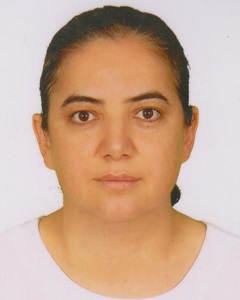
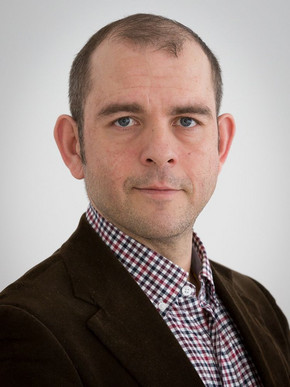
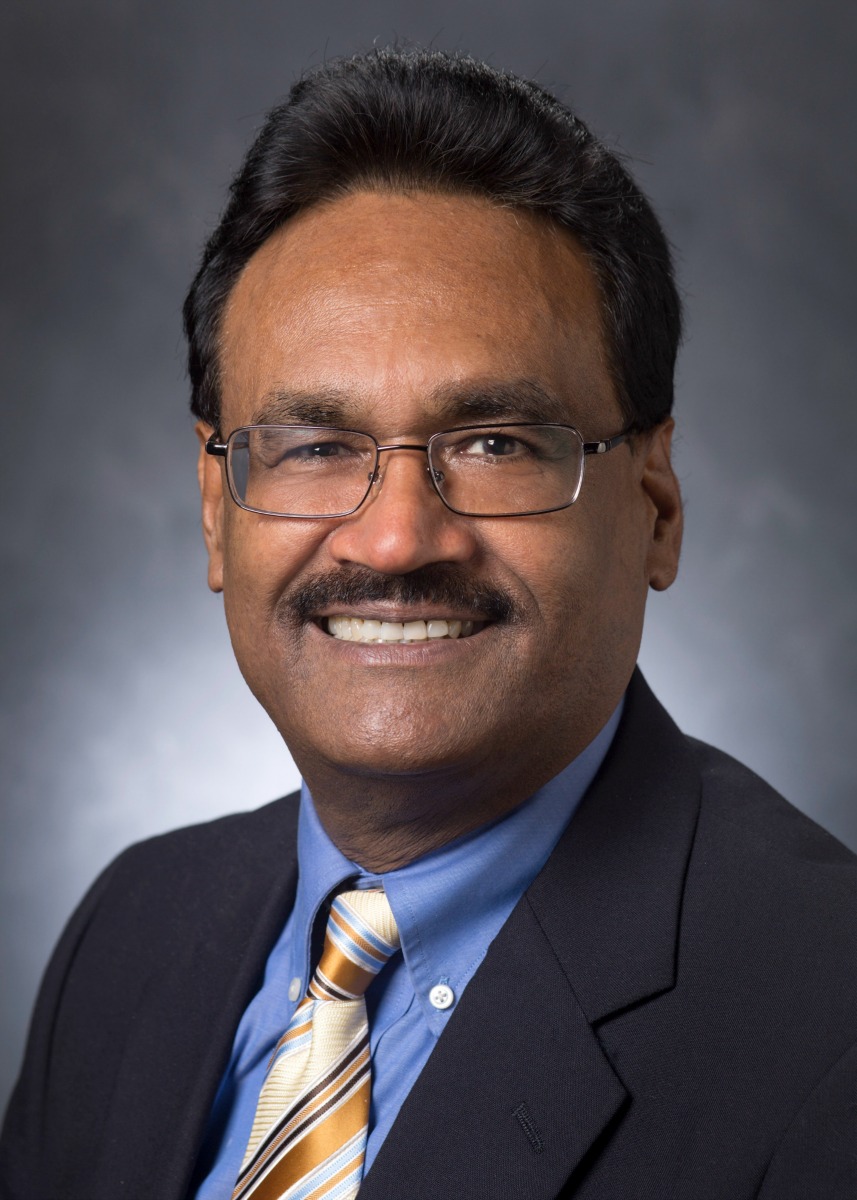
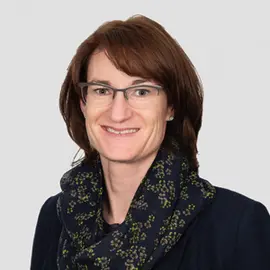
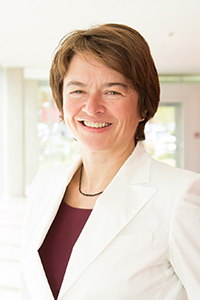
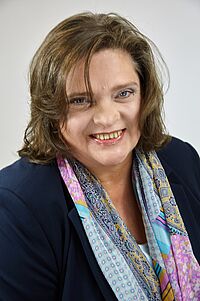
Kadir Kaan GÖNCÜ is a full-time Lecturer at Edirne Vocational School of Social Sciences, Trakya University, where he has been employed since January 2013. He holds a PhD in Business Administration (2022) and dual bachelor's degrees in Physics (2000) and Business Administration (2008) from Trakya University, complemented by a Master's in Business Administration (2010) from the same institution. His research centers on supply chain optimization , sustainability in logistics , and operational decision-making , with methodological expertise in: Multi-criteria techniques (DEMATEL, ANP, SWARA) Performance benchmarking (DEA) Route optimization algorithms Qualitative and quantitative supply chain analysis Recent scholarly work demonstrates strong thematic cohesion in: Healthcare logistics (33% of publications) Sustainable operations (27%) Decision-model applications (20%) Logistics education/technology adoption (13%) Tourism/trade logistics (7%) He teaches undergraduate courses including Basic Principles of Logistics , Logistics Sectoral Computer Package Programs , and Production Management .
Neslihan Bolat Bozaslan is an Associate Professor at Gaziantep University, Faculty of Arts and Sciences, Department of Atatürk's Principles and Revolutionary History. She has been actively publishing since 2013, focusing on Ottoman military logistics, wartime disease control, and early Republican political structures. Academic Lineage : Ph.D. in Atatürk's Principles and History of Revolution (2017, Selçuk University) Research Themes : Intersections of military, medical, and political history in late Ottoman and early Republican Turkey Key Contributions : Pioneering studies on Yemen campaigns, 7th Corps operations, and institutional history of Turk Ocakları Her recent works explore Ottoman maritime law, parliamentary leadership under Atatürk, and post-WWI electoral dynamics. With 7 book chapters and 10 refereed articles, she combines archival analysis with multidisciplinary approaches. Scientific Recognition : UASEB Incentive Award (2018) Editorial roles in international history journals (2023-2024) Prof. Bolat Bozaslan's teaching spans from the Tanzimat reforms to contemporary historical methodologies, and she has served as a thesis advisor for advanced historical research projects.
Andreas Mild serves as Associate Professor and Deputy Head of Institute at the Institute for Production Management within the Department of Information Systems and Operations Management at Vienna University of Economics and Business (WU). His academic career spans over two decades with continuous research and teaching activities at WU, where he completed both his doctoral and habilitation degrees in Social Science and Economics. Dr. Mild's research focuses on quantitative approaches to business problems, particularly in new product development, revenue management, and decision support systems. His work bridges theoretical models with practical applications, especially in retailing and e-commerce contexts. Recent research has increasingly focused on the intersection of data science, artificial intelligence, and operations management, with significant contributions to understanding e-grocery operations and prediction markets. His publication record shows consistent scholarly output across top journals in operations research and management science, with recent work concentrating on food waste reduction in e-grocery systems, consumer preference modeling, and efficient last-mile delivery solutions. These publications demonstrate his ability to address contemporary challenges in retail operations through rigorous quantitative methods. Among his notable recognitions are the VHB Best Paper Award (2008) and multiple finalist positions for prestigious awards including the INFORMS Society for Marketing Science Practice Prize (2005, 2006) and the Franz Edelman Award for Achievement in Operations Research (2006). Dr. Mild maintains an active research agenda with current projects exploring the potential of Large Language Models for HR documentation (2025) and automated job description generation (2024), demonstrating his ability to adapt research focus to emerging technological trends while maintaining core expertise in decision support systems. His international teaching experience across Europe, Asia, and Australia reflects a global perspective in his academic work. His research activities are closely tied to practical business applications, with collaborations spanning multiple institutions and industries, particularly in the retail and logistics sectors where his work on e-grocery operations has gained significant attention.
Rakesh Singh is a Professor in the Department of Food Science & Technology at the University of Georgia's College of Agricultural & Environmental Sciences . His research focuses on emerging food processing technologies for safety and quality enhancement. Email: rsingh@uga.edu Phone: 706-542-1084 Address: Food Science Building, 100 Cedar St., Athens, GA 30602 Research Interests include value-added food processing using UV/H 2 O 2 for aflatoxin decontamination , high-pressure processing , atmospheric cold plasma , and radio frequency heating for food safety. His work also explores physical, microbiological, and chemical characterization of food products during processing. Academic Contributions include co-authoring the textbook Fundamentals of Food Engineering (4th edition, 2018) and teaching courses like FDST 3910/8910: Food Science Internship and FDST7020E: Integration of Multidisciplinary Topics in Foods .
Prof. Dr. Maike Scherrer is a Professor at the Zurich University of Applied Sciences (ZHAW) School of Engineering, where she leads research in sustainable mobility and supply chain management. Her work focuses on developing innovative solutions for sustainable and circular supply chains, urban logistics, and resilient transportation systems. She directs multiple research projects including Sustainable and Circular Supply Chains for the MEM-industry and the Sustainable Mobility Lab, collaborating with industry partners to address critical challenges in sustainable logistics and mobility. Prof. Scherrer's research spans several key areas in sustainable operations and supply chain management. Her work in sustainable supply chains examines how to achieve net-zero emissions through circular economy principles and systemic approaches. In urban logistics, she develops innovative concepts like Smart Urban Multihub systems to reduce freight traffic and improve city livability. Her research on supply chain resilience investigates how to design networks that can withstand disruptions while maintaining mission-critical supplies. She also explores the electrification of freight fleets and temperature-controlled supply chains to reduce environmental impacts. Her recent publications demonstrate a strong focus on applying operations research and systems thinking to sustainability challenges. Key trends include using agent-based modeling to assess circular economy supply chains, developing optimization approaches for resilient networks, and examining the spatial aspects of pharmaceutical supply chains. Her work bridges theoretical frameworks with practical applications, particularly in the Swiss context but with implications for global supply chain sustainability. Prof. Scherrer leads multiple significant research projects including Sustainable and Circular Supply Chains for the MEM-industry (ongoing), Techno-Economic Grid Connection Optimization for Electric Freight Fleets (ongoing), and Designing and simulating resilient supply chain networks (ongoing). She serves as Deputy Project Leader for the Sustainable Mobility Lab and has completed notable projects such as User-based redistribution for free-floating car sharing and Predictive replenishment of urban distribution centres. Her research group operates within the Sustainable Mobility research focus at ZHAW's School of Engineering, collaborating with industry partners across multiple sectors including manufacturing, pharmaceuticals, and urban transportation. The team applies interdisciplinary approaches combining operations research, systems analysis, and sustainability science to develop practical solutions for complex mobility and logistics challenges.
Xu Sun is a Postdoctoral Fellow at the Department of Industrial Engineering, UiT The Arctic University of Norway, Campus Narvik. His research bridges logistics, sustainability, and digital innovation within Industry 4.0/5.0 frameworks, with a focus on practical applications in Norwegian contexts including electric vehicle infrastructure and pandemic response. His research portfolio spans Reverse Logistics, Sustainable Logistics, Closed-Loop Supply Chains, Digital Twins, and Industry 5.0 integration. Key themes include applying generative AI to logistics network design, optimizing charging infrastructure for electric trucks, and developing digital twins for circular economy systems. His work emphasizes multi-objective decision-making to balance environmental, social, and economic sustainability in logistics operations. Analysis of Xu Sun's publication trends reveals a strategic shift toward human-centric digital solutions in logistics. Recent works integrate generative AI, digital twins, and simulation to address Industry 5.0 challenges, with notable emphasis on electric mobility infrastructure (2024-2025) and pandemic-related logistics (2021-2022). His research consistently employs case studies from Norway, demonstrating practical applicability while advancing theoretical models for sustainable supply chains. No scientific awards were documented in the source material. While specific student advising details are absent from the profile, Xu Sun's collaborative publication record indicates active mentorship within research teams. His projects frequently involve multi-institutional partnerships and industry engagement, though explicit grant information is not provided in the available text. Xu Sun contributes to the ArcLog research group's Intelligent Manufacturing and Logistics team and leads the 'Industry 5.0 enabled Smart Logistics' project. His work leverages tools like AnyLogic simulation and digital twin technology to develop human-centered logistics solutions, with physical operations based in Campus Narvik office D2150.
Olivier Rouaud is a Full Professor at Oniris in the Department of Food Processing, Management and Sustainable Development. He leads the OSE research team within the GEPEA laboratory (Génie des Procédés Environnement Agroalimentaire) and has been with Oniris since 2004, progressing from lecturer to his current position. His academic journey began with a doctorate in Thermal Engineering, Energy, and Process Engineering from the University of Nantes in 2002. Professor Rouaud's research focuses on heat and mass transfer in food engineering, with particular expertise in microwave heating, ohmic heating, electrohydrodynamics (EHD) drying, and food freezing technologies. He combines experimental approaches with numerical modeling to develop solutions that improve energy efficiency in food processing while maintaining or enhancing product quality. His work addresses practical challenges in thermal treatment processes for the food industry. His recent publications (2023-2025) show continued innovation in thermal processing, with significant contributions to understanding dielectric properties of foods, optimizing ohmic heating applications for baking, and developing phase change materials for cold chain applications. These works reflect his consistent focus on bridging fundamental thermal science with practical food engineering solutions. Professor Rouaud has received recognition including the Novatlante price in 2004 and has built a substantial research impact with 106 publications totaling over 36,000 reads and 1,876 citations on ResearchGate. He actively supervises graduate students, having guided approximately twenty Master's interns and ten doctoral students. His teaching responsibilities include applied thermodynamics, energy efficiency, heat transfer, electrothermal processes, and numerical simulation, closely aligning with his research expertise. As leader of the OSE research team, Professor Rouaud oversees projects investigating innovative thermal processing technologies, with ongoing work in microwave-assisted freezing, ohmic heating applications, and electrohydrodynamic enhancement of heat transfer processes for food systems.
Prof. Dr. Regina Schreiber is a Professor and Vice President for Research and Transfer at Kempten University of Applied Sciences , affiliated with the Faculty of Mechanical Engineering and Competence Center for Applied Research in Food and Packaging Technology . She serves as Institute Management and Scientific Management, while also holding the role of Practical Officer for Food and Packaging Technology and Process Engineering and Sustainability bachelor programs. Primary Research Areas: Food Technology Project Management Product Life Cycle Engineering Additive Manufacturing Recent Publications focus on additive manufacturing with polymer powders, sustainable packaging solutions, and e-commerce logistics for perishable goods. Her work includes patents like the Dosierspender (EP3844094) for precision food dispensing systems. Contact : Office: Room S1.01 Email: regina.schreiber@hs-kempten.de
Dr. Naeimeh Jafarifar is a Lecturer at Robert Gordon University's Scott Sutherland School of Architecture, specializing in sustainable construction and structural engineering. She is affiliated with the Sustainable Housing Research Group and contributes to research in Environment, Energy & Sustainability themes. Her educational background includes: BSc in Civil Engineering from Sharif University of Technology (1995-1999) MSc in Civil and Structural Engineering (Hydraulic Structures) from University of Tehran (2000-2002) PhD in Structural Engineering from University of Sheffield (2007-2012) Dr. Jafarifar's research focuses on low carbon construction, reuse of recycled and waste materials in construction, composite materials and their structural performance, numerical and experimental modeling of structures, and circular economy for construction. Her work bridges theoretical research with practical applications, particularly in developing sustainable building solutions that address environmental challenges while maintaining structural integrity. She has extensive industry experience, having worked for 8 years as a chartered structural consultant on major infrastructure projects before transitioning to academia. Her recent publications demonstrate a strong trend toward sustainable construction materials, with particular emphasis on rubberized concrete systems, water management in buildings, and low-carbon building technologies. Her research spans both theoretical modeling and experimental validation, with an increasing focus on practical applications for sustainable development in the construction industry. Dr. Jafarifar has received notable recognition including: Fellow of Higher Education Academy (FHEA), UK (2019) Member, International Committee of Large Dams, ICOLD (2004) Chartered Engineer, Iran Construction Engineering Organisation (IRCEO) (2002) She actively supervises PhD students, with one current student researching efficient water management in buildings for sustainability in India. Her current research projects include 'Upcycling plastic waste into reusable building insulation modules' and 'Low-carbon, seismic-resistant building solution for developing densely-populated smart city; Istanbul.' Dr. Jafarifar also serves as Stage Manager for Built Environment Courses, School's Inclusion Coordinator, and various module coordinator roles at RGU. Dr. Jafarifar leads research within the Sustainable Housing Research Group at RGU, where her team explores innovative approaches to sustainable construction, including the use of recycled materials, low-carbon building techniques, and circular economy principles in the construction industry.
Professor Quoc Chi Nguyen serves as Vice Dean of the Faculty of Mechanical Engineering at Ho Chi Minh City University of Technology, Vietnam. He also holds the position of Head of the Department of Mechatronics since 2018. With a strong academic background including a Ph.D. from Pusan National University, Korea, and a Marie Curie FP7 postdoctoral fellowship at Tel Aviv University, Professor Nguyen has established himself as a leading researcher in control engineering and robotics. Professor Nguyen's educational journey began with a B.S. in Mechanical Engineering from Ho Chi Minh City University of Technology in 2002, followed by an M.S. in Cybernetics from the same institution in 2006. He completed his Ph.D. in Mechanical Engineering at Pusan National University, Korea, in 2012, and then pursued postdoctoral research at Tel Aviv University from 2013-2014. His research expertise spans Robotics , Crane Control , Vibration Control , Nonlinear Analysis , Dynamic Analysis , and Advanced Control Theory . Professor Nguyen's work focuses on developing innovative control algorithms for flexible structures, industrial automation systems, and mechatronic applications. His recent publications demonstrate a strong emphasis on practical industrial applications of control theory, including robotics integration, computer vision systems, and energy-efficient pneumatic systems. With 58 publications that have accumulated 32,041 reads and 782 citations, Professor Nguyen has established a significant research impact. His publication trend shows consistent productivity with recent work extending to projected 2025 publications, indicating an active and ongoing research program. The breadth of his work spans from fundamental control theory to practical industrial applications across multiple sectors including manufacturing, agriculture, and logistics. Marie Curie FP7 Postdoctoral Fellowship Professor Nguyen currently leads research activities through his lab at Ho Chi Minh City University of Technology. His leadership roles as Vice Dean and Department Head provide substantial resources and opportunities for research collaboration. With numerous co-authors and international connections, particularly stemming from his time at Tel Aviv University, he maintains an active global research network that benefits his students and colleagues.
Julien Lépine is an Associate Professor in the Department of Operations and Decision Systems at Université Laval's Faculty of Business Administration. His research integrates mechanical engineering and sustainability, focusing on: Road transport dynamics and vehicle efficiency Advanced packaging solutions for logistics and food security Hydrogen energy systems and decarbonization technologies Experimental methods for friction and material testing He holds a Ph.D. in Mechanical Engineering from Victoria University, complemented by Master's and Bachelor's degrees from the University of Sherbrooke. Recent publications demonstrate strong emphasis on sustainable transport, including hydrogen fuel production, pavement-vehicle interactions, and policy analysis for electric vehicle adoption. He actively supervises graduate students and contributes to governmental research projects, such as those for Quebec's Ministry of Transport.
Neil Hernández-Gress is an active Researcher at Tecnológico de Monterrey's Institute for the Future of Education with significant affiliations in Educational Technology and Computer Sciences. His expertise spans data science applications across education, health, finance, and humanitarian logistics, supported by a PhD in Automation and Industrial Computing from Institut National Polytechnique de Toulouse and an Electronics Systems Engineer degree from Tecnológico de Monterrey. His research focuses on applied data science with emphasis on Educational analytics for student retention and performance Machine learning implementations in public health and environmental monitoring Financial risk modeling and fraud detection Humanitarian supply chain optimization during crises Innovation systems for academic administration His publication trends show increasing interdisciplinary work connecting quantum computing with educational data (2025), sustainable resource management, and gender-focused financial inclusion. Scientific recognition includes: Mexican Researcher Certification - Level 1 Development of 20+ Academic and Executive Education Programs at Tecnológico de Monterrey (2000) His administrative expertise covers academic program development, research strategy, international programs, and innovation systems with fluency in Spanish, English, and French. He actively contributes to UN Sustainable Development Goals including Quality Education, Good Health, Gender Equality, and Industry Innovation.
Eike Kaim serves as a Professor in the Professorship for Wine & Beverage Business Administration within the Department of Wine & Beverage Business at Hochschule Geisenheim University. His academic work focuses on the intersection of business administration and horticultural science, particularly in wine and beverage markets. Professor Kaim's research interests span multiple domains including wine business economics, consumer behavior in horticulture, supply chain management for fresh produce, and sustainable agricultural marketing. His work often examines the relationship between production practices and market outcomes, with particular attention to consumer preferences and ethical consumption patterns. He has conducted extensive research on berry markets across Europe, irrigation practices in asparagus cultivation, and consumer typologies in the ornamental plant market. His publication record shows a strong focus on practical applications of economic principles to horticultural production and marketing. The research trends indicate a consistent interest in understanding market dynamics, consumer behavior, and supply chain optimization within specialized agricultural sectors. His work bridges academic research with practical industry applications, particularly in the German and European contexts. Professor Kaim received the TASPO-Award 2010 in the Young Scientist category. His research has been supported by various projects including EU-funded initiatives such as the EUberry project focusing on competitiveness and marketing strategies for sustainable berries. He has presented his research at numerous international conferences including the ISHS Symposia on Horticultural Economics, the International Berry School, and various German horticultural conferences. His work demonstrates strong engagement with both academic and industry stakeholders in the horticultural sector.
Professor Judith Kreyenschmidt serves as Deputy Head of the Department of Fresh Produce Logistics and holds the Professorship for Quality & Processing Fresh Produce at Hochschule Geisenheim University. Her research focuses on critical aspects of food supply chain management, particularly in perishable food products. Her research interests span across Food Logistics, Cold Chain Management, Food Safety, Sustainable Packaging, and Food Waste Reduction. She has developed expertise in intelligent packaging systems, temperature monitoring technologies, and microbial growth modeling to improve food quality and safety throughout supply chains. Her work bridges engineering principles with practical food industry applications, emphasizing sustainability and resource efficiency. Professor Kreyenschmidt's publication record demonstrates consistent contributions to advancing cold chain management practices, with recent work focusing on IoT-based temperature monitoring, intelligent packaging solutions, and sustainable packaging materials. She has explored applications across various food products including fresh produce, meat products, and ready-to-eat foods. She actively participates in national and international conferences, presenting on topics related to innovative packaging solutions, cold chain optimization, and food waste reduction strategies. Her work has practical implications for improving food safety, reducing waste, and enhancing sustainability in food supply chains globally. Professor Kreyenschmidt collaborates extensively with industry partners and international researchers, particularly on projects addressing food waste reduction and sustainable packaging solutions. Her work demonstrates strong interdisciplinary connections between food science, engineering, and sustainability principles.