معرفی
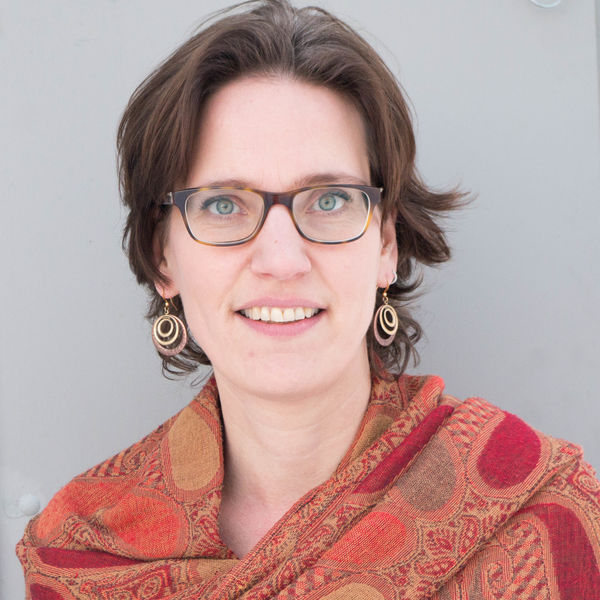
Dr. Katja Wezel serves as a Research Fellow at the Institute for Economic and Social History, University of Göttingen, where she leads the research project "At the Crossroads of Modernity: Double-Entry Accounting, Business, and Cultural Practices of Jews in Imperial Russia's Western Borderlands" funded by the Lower Saxony Ministry of Science and Culture. Previously, she held positions including DAAD Visiting Assistant Professor at the University of Pittsburgh and Research Assistant for the "Cosmopolitan City" project at Göttingen.
Her academic background includes:
- Master's degree in History and English from Heidelberg University, Aberystwyth University (Wales), and European University at St. Petersburg (1999-2004)
- Doctorate from Heidelberg University (2011) on "History as a Political Issue: Latvia and the Reappraisal of the Past after the Dictatorship"
- Second State Examination for Secondary School Teaching in History and English (2011)
Dr. Wezel specializes in the economic and social history of Imperial Russia's western provinces, with particular focus on Baltic Jewish communities' integration into capitalist systems. Her research examines how double-entry bookkeeping spread among Jewish merchants in 18th-19th century Latvia, Lithuania, and Ukraine, analyzing customs records, commercial court files, and accounting manuals to reveal connections between Jewish business practices and German-speaking commercial cultures. She employs spatial history and digital methodologies to investigate nationalism, ethnic conflicts, and memory politics in Baltic contexts.
Her scholarly contributions are recognized through significant awards including:
- Feodor Lynen Fellowship (Alexander von Humboldt Foundation, 2021-2023)
- Imre Kertész Kolleg Fellowship (Jena, 2021)
- Multiple DAAD research grants (2005-2018)
- Heinrich Böll Foundation doctoral scholarship (2005-2008)
- Federal Foundation for SED Dictatorship publication grant (2015)
As an active member of the Baltic Historical Commission (BHK) Board, Association for the Advancement of Baltic Studies, and Association of Eastern European Historians (VOH), she contributes to transnational scholarly networks. Her current research involves collaboration with the University of Haifa, examining how Jewish cultural practices intersected with German business traditions in Imperial Russia's borderlands.