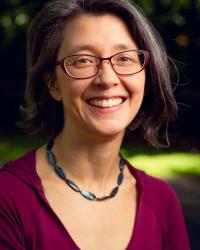
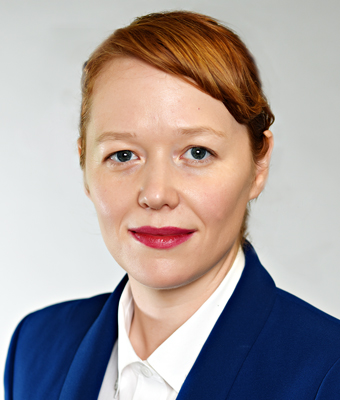
Sasha Su-Ling Welland is Chair & Professor in Gender, Women & Sexuality Studies at the University of Washington, with an adjunct role in Anthropology and affiliation in China Studies. She holds a PhD (2006) and MA (1998) in Anthropology from UC Santa Cruz, and a BA (1991) in Ethnic Studies from Stanford University. Her research focuses on transnational visual culture, women of color, ecocriticism, and post-socialist gender dynamics. Current work explores embodied ecologies, nuclear colonialism, and racial capitalism in the Anthropocene. Welland’s scholarship bridges art, ethnography, and public scholarship. Her book Experimental Beijing (2018) won major prizes for its analysis of gender in Chinese contemporary art. Recent research intertwines military/medical histories with environmental justice in St. Louis. She curates feminist art exhibits in Asia and serves on the Journal of Visual Culture editorial board. Her awards include the 2019 Francis L.K. Hsu Book Prize and 2020 Joseph Levenson Prize. She advises graduate students and leads lab teams investigating transnational feminisms and environmental humanities. Resources include her CV and online office hours via the department’s website.
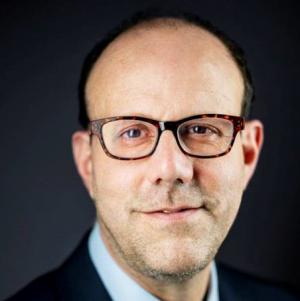
Michael Kremer is a University Professor in Economics at the University of Chicago, holding positions in the Kenneth C. Griffin Department of Economics, the College, and the Harris School of Public Policy. He is the 2019 Nobel Laureate in Economic Sciences for pioneering experimental methods to address global poverty. Kremer earned his Ph.D. from Harvard University in 1992 and has been affiliated with the University of Chicago since 2020. His research focuses on development economics, field experiments, and policies impacting education, health, water, and agriculture in developing countries. He directs the Development Innovation Lab and leads the Development Economics Center at Chicago, emphasizing evidence-based solutions to poverty. Kremer’s work combines rigorous academic inquiry with practical policy applications, bridging theoretical economics and real-world interventions. Awarded the MacArthur Fellowship in 1997 and a Fellow of the American Academy of Arts and Sciences since 2003, Kremer’s contributions have shaped modern development economics. He has collaborated extensively with institutions worldwide, advocating for randomized controlled trials (RCTs) to evaluate social programs. His interdisciplinary approach integrates insights from economics, public policy, and experimental methods, fostering global partnerships to combat poverty effectively.
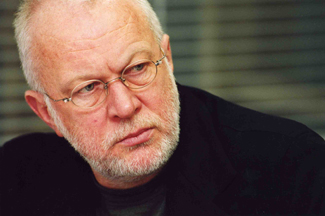
Robert Kaufman is a Professor of Comparative Literature at the University of California, Berkeley. He holds a B.A. (1979), J.D. (1982), and Ph.D. (1995) from UC Berkeley. Prior to academia, he practiced labor and employment law. His career includes positions at McGill University, Stanford University (where he was an Assistant Professor of English and affiliated with German Studies and Modern Thought & Literature), and visiting roles at the University of Chicago and UC Berkeley. He has held fellowships including Stanford Humanities Center, Hellman Family, and Institute of International Studies. He co-chairs Berkeley's Program in Critical Theory. His research focuses on 20th-21st century American poetry, Latin American poetry, Romantic-era poetics, Frankfurt School Critical Theory, and aesthetic philosophy. Key projects include Negative Romanticism: Adornian Aesthetics in Keats, Shelley, and Modern Poetry , and studies on César Vallejo, Paul Celan, and Robert Duncan. His work bridges Marxist theory, lyric form, and sociopolitical critique. Kaufman's essays analyze Adorno's influence on modern poetry, the ethics of lyric form, and intersections between poetry and democracy. His recent work engages postmodernism's aftermath and contemporary political crises. He frequently collaborates on translation projects and public humanities initiatives, including events on Paul Celan's centenary.
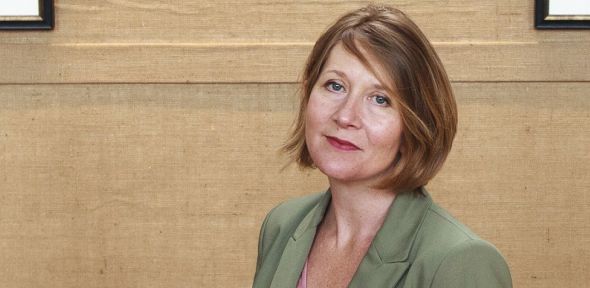
Professor Emma Widdis is a leading scholar at the Faculty of Modern and Medieval Languages and Linguistics at the University of Cambridge, specializing in the intersection of Soviet cinema, ideology, and cultural geography. Her work explores the reeducation of sensory perception through film, early Soviet urban spaces, and the construction of subjectivity via cinematic techniques. Teaches 20th-century Russian/Soviet literature, cinema, and film theory Focuses on sensory engagement, political avant-garde, and urban spatial representation Supervisor for MPhil and PhD students in Slavonic Studies Her recent book Socialist Senses (2017) examines how cinema shaped Soviet perceptions of reality. Her publications span topics like silence in sound film, set design materiality, and costume symbolism in early Soviet cinema. While no formal scientific awards are listed, her research has been supported through institutional grants and collaborations with centers like CRASSH and Cambridge Language Sciences.
Beth Piatote is an Associate Professor of English and Comparative Literature at the University of California, Berkeley. She holds a PhD in Modern Thought and Literature from Stanford University and is an enrolled member of the Confederated Tribes of the Colville Reservation (Nez Perce). Her work bridges scholarly and creative realms, focusing on Indigenous literature, law, language revitalization, and cultural studies. Education: PhD in Modern Thought and Literature (Stanford University). Research interests include Native American legal systems, Nez Perce language preservation, global Indigenous literatures, and creative writing. She co-founded and chairs Berkeley’s Designated Emphasis in Indigenous Language Revitalization and directs the Arts Research Center, where she leads the Indigenous Poetics Lab. Her publications include Domestic Subjects: Gender, Citizenship, and Law in Native American Literature (2013) and the short story collection The Beadworkers (2019), which received multiple literary recognitions. Her plays Antíkoni and Tricksters, Unite! explore Indigenous narratives through performance. Awards include MLA honorable mentions, PEN/Bingham Prize longlistings, and a 2020 Playwrights Retreat win. Current projects involve a scholarly monograph on sensory representations of Indigenous law and creative works in poetry and essays.
K. Michael Hays is the Eliot Noyes Professor of Architectural Theory at Harvard University's Graduate School of Design (GSD) and Co-Director of the Master in Design Studies program. He has been a faculty member since 1988, specializing in architectural history and theory. His research focuses on European modernism, critical theory, and contemporary architectural practice, with notable contributions to the field through writings on figures like Mies van der Rohe and Peter Eisenman. Education: He holds a Bachelor of Architecture (1976) from Georgia Institute of Technology, a Master of Architecture in Advanced Studies (1979) from MIT, and a PhD in History, Theory, and Criticism of Architecture and Art (1990) from MIT. Research Interests: Hays is renowned for founding the journal Assemblage , a pivotal forum for architectural theory. His work bridges historical analysis and contemporary practice, emphasizing theoretical frameworks for understanding modernism and its evolution. He has curated exhibitions at institutions like the Whitney Museum of American Art (as its first Adjunct Curator from 2000–2009). Publications: His authored and edited works include Architecture's Desire , Inscriptions: Architecture Before Speech , and critical studies on architects such as Buckminster Fuller and Diller + Scofidio. These publications explore themes of representation, modernist aesthetics, and interdisciplinary design. Awards and Roles: While no specific awards are listed, his academic leadership roles include Chair of the GSD PhD Committee (1995–2005) and Director of Advanced Independent Study Programs. He has also served on editorial boards for journals like Assemblage and Thresholds . Labs and Collaborations: Hays collaborates with academic and institutional partners, notably through curatorial projects and his role in shaping the GSD's theoretical curriculum. His influence extends to both pedagogical innovation and scholarly discourse in architectural education.
David Glovsky serves as Assistant Professor of History and African and African American Studies within Harvard University's Faculty of Arts and Sciences, focusing on 19th-20th century West Africa with regional expertise in Senegal, Gambia, Guinea-Bissau, and Guinea. His research examines borderlands through lenses of mobility, citizenship, and alternative geographies, challenging state-imposed borders with community-driven spatial narratives. His educational foundation includes a B.A. in History and Human Geography from Dartmouth College and a Ph.D. in African History from Michigan State University. Prior academic appointments include the Department of Africana Studies at University at Albany and the Department of History at Boston University, following Peace Corps service in southern Senegal that redirected his career from sports media into academia. Glovsky's research program centers on social justice-oriented historical narratives of marginalized West African communities, particularly Fulbe populations. His work synthesizes oral histories and archival research across six nations to analyze how borderland residents construct fluid geographies that transcend colonial/postcolonial boundaries. Key themes include migration as resistance , gendered border experiences , and Islam's role in transnational community formation , with methodological innovation in spatial history and decolonial approaches. Analysis of his nine recent publications (2019-2023) reveals consistent engagement with West African borderland resilience , demonstrating how communities maintain cross-border networks despite state fragmentation. His work bridges historical scholarship and contemporary migration debates , employing interdisciplinary frameworks from anthropology, geography, and postcolonial theory to document alternative spatial organizations that challenge Western cartographic traditions. ACLS Fellowship supporting book project Borderlanders: Popular Geographies, Mobility, and Belonging in West Africa Glovsky actively mentors graduate students interested in African history, emphasizing pathways for underrepresented scholars into U.S. academia. His research has received competitive external funding including the ACLS Fellowship, while his collaborative work on the NEH ‘Ajamī Project advanced accessibility of Pulaar manuscripts through digitization and multilingual translation. He maintains strong community ties with West African scholars and institutions, particularly in Senegambia. Though not leading a formal laboratory, Glovsky collaborates with international research teams across West Africa on borderland studies and manuscript preservation, working closely with scholars in Kolda (Senegal), Dakar, and Guinea-Bissau to document community histories through participatory methodologies.
LK Bertram is an Associate Professor in the Department of History at the University of Toronto, specializing in 19th-century North American history with a focus on migration, gender, sexuality, and colonialism. Her work bridges academic research and public engagement, particularly through social media algorithms (TikTok, Instagram) for combating digital disinformation. Clio Prize-winning author (2020) 2022 SSHRC Insight Grant recipient Public history campaign curator (9 million+ views) Her research spans colonial institutions, sex work economies, and material culture, with publications on Icelandic diaspora, Arctic militarization, and immigrant food traditions. She teaches courses like HIS199 History and Social Media and HIS417 Histories of Sex Work , emphasizing hands-on learning via exhibitions and artifact workshops. Recent projects explore how social media algorithms can amplify quality historical data, including the viral @socialforscholars initiative. Her work connects historical narratives to contemporary debates on disinformation, cultural appropriation, and legal frameworks.
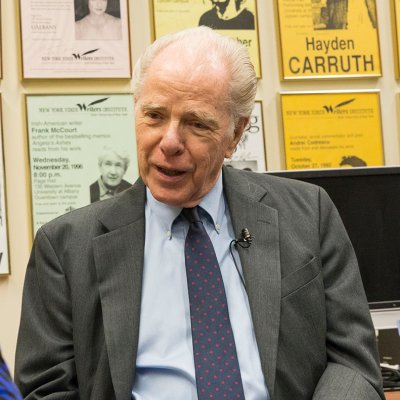
William Kennedy is a Professor in the English Department at the University at Albany, State University of New York. For over 40 years, he has crafted a body of literature centered on Albany, New York, creating what is known as the "Albany Cycle" of novels. His work has established Albany as a significant place in American literature, comparable to Joyce's Dublin and Bellow's Chicago. His educational background includes a BA from Siena College, following attendance at Public School 20 and Christian Brother's Academy. Professor Kennedy's creative work focuses on American fiction, particularly historical and urban narratives rooted in Albany's cultural and political landscape. His writing explores machine politics, family sagas, and the interplay between individual lives and historical events, rendering Albany's "outcasts and machine politicians, lowlifes and swells" with profound humanity. His narratives transform the city into a mythic capital of national memory. His publications consistently draw from Albany's history, with recurring themes of political corruption, redemption, and the resilience of marginalized communities. The "Albany Cycle" demonstrates his mastery in blending local history with universal human struggles across multiple literary forms. William Kennedy's distinguished honors include: John D. and Catherine T. MacArthur Foundation Fellowship Election to the American Academy of Arts and Letters National Endowment for the Arts Fellowship Regents Medal of Excellence from SUNY Governor's Arts Award Commander of the Order of Arts and Letters in France Election to the American Academy of Arts and Sciences As an educator, Kennedy taught creative writing and journalism at the University at Albany from 1974-1982 and Cornell University in 1982-83. His MacArthur Fellowship directly funded the creation of the New York State Writers Institute at Albany, with matching funds from the university and legislative support from Governor Cuomo. He has served on the New York State Council for the Humanities board and the Academy of Motion Picture Arts and Sciences. William Kennedy co-founded the New York State Writers Institute in 1984, which has grown into a major literary hub conducting statewide cultural and educational activities. The Institute remains central to his legacy, fostering literary arts through readings, workshops, and educational programs across New York.
Dr. Joshua Savala is an Associate Professor of History at the University of Texas at El Paso (UTEP), part of the College of Liberal Arts. He holds a PhD from Cornell University (2019) and previously taught at Rollins College in Florida. His research focuses on Latin American social movements, transnational histories of the Pacific, and labor solidarity in the Andean and Southern Cone regions. Key areas of expertise include maritime workers, anarchism, public health epidemics, and border studies. Education: PhD in History, Cornell University (2019) MA in History, Cornell University (2015) MA in History, Tufts University (2012) BA in History and Sociology, University of California, Davis (2007) Research Interests: His groundbreaking work examines collaborative relationships between Peruvians and Chileans in the 19th and early 20th centuries, including studies on cholera epidemics, anarchist networks, and cross-border solidarity. Recent projects investigate cooperative urban planning on the U.S.-Mexico border and disaster responses in Valparaíso. Publications: Includes the award-winning book Beyond Patriotic Phobias (2022) and articles in Hispanic American Historical Review and Journal of Social History . His Spanish translation Más allá de la guerra (2024) is a binational publication with universities in Peru and Chile. Awards: Best Book (Social Sciences) on the Southern Cone (Honorable Mention), 2023 Flora Tristán Book Prize (Honorable Mention), 2023 José María Arguedas Prize, 2020 Teaching: Teaches courses on Modern Latin America, Pacific World histories, and borderland studies. Recent courses include Studies in Latin American History and South America Since 1810 . Labs/Teams: Engaged with UTEP's Borderlands Digital Humanities Center and the Institute of Oral History, emphasizing collaborative interdisciplinary projects.
Monika Gabryś-Sławińska is a Professor at the Department of Polish Literary History , part of the Faculty of Languages, Literatures and Cultures at the University of Maria Curie-Skłodowska (UMCS). Her research spans 19th- and 20th-century Polish literature , focusing on Stefan Żeromski , historical journalism , text editing , voice emission , and museology . MA in Polish Philology (1998, UMCS) PhD in Literary Studies (2007, UMCS) Habilitation in Literary Studies (2016, UMCS) Her research interests include political commentary in historical press , media's role in cultural identity , and sociolinguistic trends . She has edited over 29 academic volumes and authored 5 monographs. Scientific awards: Bronze Cross of Merit KEN Medals (Bronze, Silver) 8 Rector's Awards (UMCS) Lublin Mayor's Medal (2019) She has participated in 5 research grants , organized 35 academic conferences , and contributed extensively to Annales UMCS as a scientific editor.
Max Planck Institute for Empirical AestheticsGermany
Jan Jokisch is a Researcher and PhD student at the Max Planck Institute for Empirical Aesthetics in Frankfurt am Main, Germany, affiliated with the Heisenberg research group. His academic background includes a Master's in Comparative Literature from Johannes Gutenberg University Mainz and the University of Massachusetts Amherst, and a Bachelor's in Comparative Literature and Philosophy from Mainz. He has lectured in German language and literature at Argentine universities and served as a translator for the DEFA Film Library. His research focuses on drama history, quantitative and digital literary studies, and methodologies in the humanities, with current collaboration on the DFG-funded 'Forager Folklore Database (FFDB)' project. Education highlights include a thesis on 'Epistemological Horror in Literature' (2021) and a BA thesis reinterpreting Shklovsky's literary theory through Heidegger's phenomenology (2018). Jokisch has been recognized with DAAD scholarships (2019, 2021) and the Gutenberg Lehrkolleg Award (2018). He has authored and edited conference proceedings, including works on distant reading methodologies and interdisciplinary language studies. His academic work bridges computational analysis with traditional humanities, emphasizing the role of technology in literary research. Collaborations and editorial roles reflect his commitment to fostering international student scholarship and innovative research practices.
Rachel Morley is an Associate Professor at the School of Slavonic and East European Studies (SSEES), University College London. She holds a BA in French Language and Literature from the University of Oxford (1992), followed by BA, MA, and PhD degrees from UCL (1999, 2001, 2011). Her roles include Academic Director of Education and Student Experience at SSEES (2022–2027) and Co-Convenor of the UCL SSEES Cinema Research Group. Dr. Morley's research focuses on Cinema studies Cultural studies Feminist and queer theory Literary studies with emphasis on Soviet/Russian cinema, gender representation, and film historiography. She held a Leverhulme Trust Research Fellowship (2020–2022) for her project on female subjectivity in contemporary Russian cinema. Her teaching spans Russian cinema, poetry, language, and translation. Past roles include Postgraduate Teaching Assistant at SSEES (1999–2009) and lecturer at the University of Cambridge (2006, 2008). She has also supported international students as SSEES International and Affiliate Tutor (2014–2018). Key Achievements: Leverhulme Trust Research Fellowship Fellow of the Higher Education Academy (2016) Her work bridges film, literature, and cultural history, emphasizing underrepresented narratives and feminist perspectives in Russian and Soviet cinema.
Dr. Patrick van Rossem is an Associate Professor of Modern and Contemporary Art at the Department of History and Art History within the Faculty of Humanities at Utrecht University (The Netherlands). He has been serving as Head of the Art History department since May 2022 and has coordinated various Master and Bachelor programs in Art History since 2008. His educational background includes Art History (Humanities) and Media and Communication (Social Sciences) from Ghent University, and a Curating program at Goldsmith College, University of London. He earned his Ph.D. in Art History in 2006 from Ghent University with a dissertation on artist-audience relations in the second half of the 20th century. Dr. van Rossem's research focuses on post-1960s art, with particular emphasis on artists' audience relations, the representation of audiences, and the performative turn. His teaching covers similar areas including post-1960s art, audiences for art, curating, and art mediation and education. His scholarly work demonstrates a consistent exploration of how artists engage with their audiences, the changing nature of art viewership, and the performative aspects of contemporary art practices. His recent publications span topics from art vandalism in digital contexts to historical analyses of museum visitors in the 19th century, showing the breadth of his research interests that bridge contemporary art theory with historical perspectives on art reception. Dr. van Rossem has been actively involved in academic service, including editorial work for Stedelijk Studies journal and organizing conferences such as 'Keeping silent, listening, speaking up: voice and silence in audience-response to arts and literature.' He has delivered numerous invited talks at institutions including the Stedelijk Museum Amsterdam and has participated in international conferences on contemporary art, audience studies, and art history methodologies.
Professor Agnieszka Zabłocka-Kos is a faculty member at the Institute of Art History, University of Wrocław, specializing in Central European architectural history and urbanism. Her work focuses on 19th-20th century architecture, with particular emphasis on Wrocław/Breslau, including post-war reconstruction, national identity construction, and sacred space design. Professor, University of Wrocław Specialist in 19th-20th century Central European architecture Director of postdoctoral internships (NCN FUGA III) Recipient of multiple Rector's awards for research and teaching Research Themes: Urban development in Central Europe, political architecture in Poland/Germany, sacred architecture of the 19th century, post-war modernism, industrial architecture revitalization. Her students have produced award-winning theses on topics like Wrocław urban blocks, Silesian architects, and post-industrial adaptations. Scientific Contributions: Notable works include the edited volume Architecture in the 'long' 19th century (2019), multiple articles on Breslau's architectural conflicts, and international projects on Central European sacred architecture. She has supervised 33 master's and 5 doctoral theses, with several student works published as books. Dettloff Prize for dissertation (1992) Rector's awards for research and didactic achievements International projects with universities in Berlin, Freiburg, and Leipzig Advisor for Wrocław's Monument Office and City Development Bureau Her teaching integrates interdisciplinary approaches, linking art history with political, economic, and social contexts. She promotes student research popularization through conferences, exhibitions, and publications.