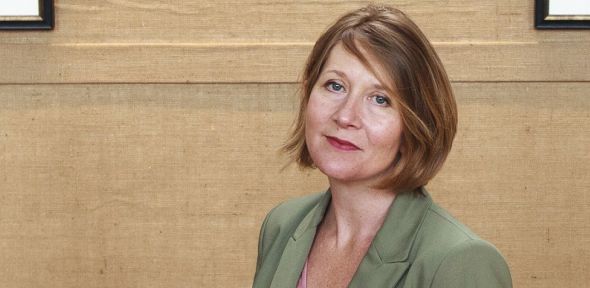
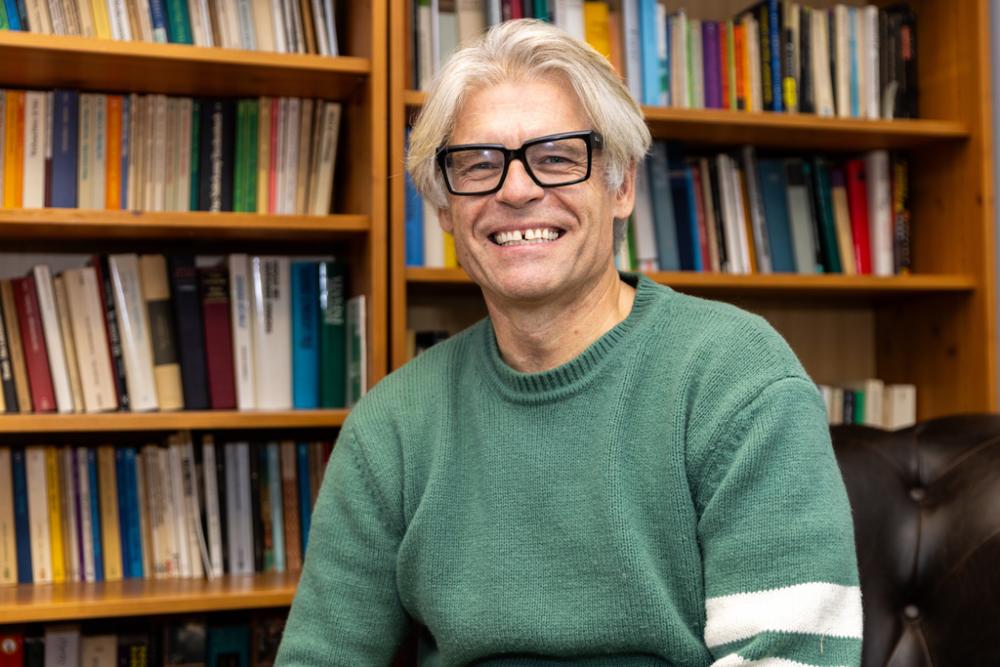
Professor Emma Widdis is a leading scholar at the Faculty of Modern and Medieval Languages and Linguistics at the University of Cambridge, specializing in the intersection of Soviet cinema, ideology, and cultural geography. Her work explores the reeducation of sensory perception through film, early Soviet urban spaces, and the construction of subjectivity via cinematic techniques. Teaches 20th-century Russian/Soviet literature, cinema, and film theory Focuses on sensory engagement, political avant-garde, and urban spatial representation Supervisor for MPhil and PhD students in Slavonic Studies Her recent book Socialist Senses (2017) examines how cinema shaped Soviet perceptions of reality. Her publications span topics like silence in sound film, set design materiality, and costume symbolism in early Soviet cinema. While no formal scientific awards are listed, her research has been supported through institutional grants and collaborations with centers like CRASSH and Cambridge Language Sciences.
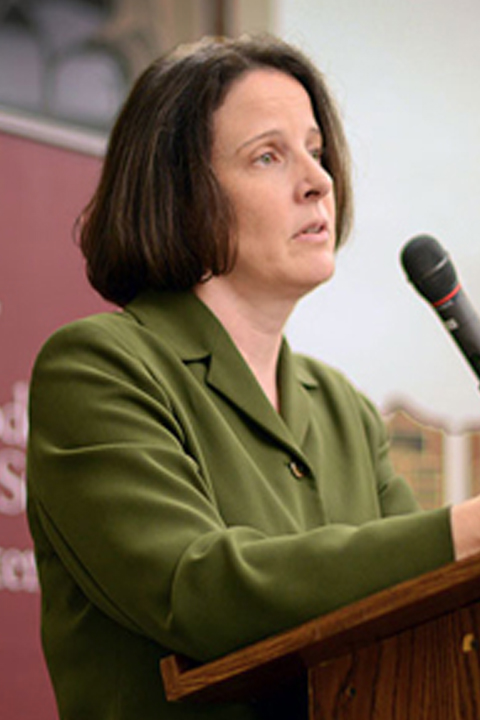
Alaina Lemon is a Professor of Anthropology at the University of Michigan, affiliated with the College of Literature, Science, and the Arts (LSA). She serves as Director of Undergraduate Studies in Anthropology and holds affiliations with the Center for Russian, East European, and Eurasian Studies (CREES), the Weiser Center for Europe and Eurasia, and the Interdepartmental Program in Anthropology and History. Her research focuses on socio-cultural anthropology, performance studies, and visual culture, with expertise in Russia, the Romani diaspora, and post-Socialist states. Education: BA in Anthropology (University of Wisconsin, 1987), MA (University of Chicago, 1988), and PhD (University of Chicago, 1996). Notable awards include the Wayne S. Vucinich Book Prize (2001), Heldt Book Prize (2001), and a 2023 visiting scholar position at the École des Hautes Études en Sciences Sociales (Paris). Her work bridges historical and contemporary issues, exploring themes like phatic labor, media infrastructures, and affective politics. Recent projects include editing the documentary Tremors (2023) and researching Soviet-era moral projects through studies of Moscow’s Metro and canine-human interactions. Lemon’s interdisciplinary approach integrates performance studies, linguistic anthropology, and critical race theory to analyze cultural dynamics in transitional societies. Grants include a 2019-2024 University of Michigan Office of Research grant for film collaboration and a 2002-2003 International Research and Exchanges Board fellowship. She has authored influential books such as Between Two Fires (2000) and Technologies for Intuition (2017), and her films document Romani experiences and urban cultural phenomena.
Rachel Morley is an Associate Professor at the School of Slavonic and East European Studies (SSEES), University College London. She holds a BA in French Language and Literature from the University of Oxford (1992), followed by BA, MA, and PhD degrees from UCL (1999, 2001, 2011). Her roles include Academic Director of Education and Student Experience at SSEES (2022–2027) and Co-Convenor of the UCL SSEES Cinema Research Group. Dr. Morley's research focuses on Cinema studies Cultural studies Feminist and queer theory Literary studies with emphasis on Soviet/Russian cinema, gender representation, and film historiography. She held a Leverhulme Trust Research Fellowship (2020–2022) for her project on female subjectivity in contemporary Russian cinema. Her teaching spans Russian cinema, poetry, language, and translation. Past roles include Postgraduate Teaching Assistant at SSEES (1999–2009) and lecturer at the University of Cambridge (2006, 2008). She has also supported international students as SSEES International and Affiliate Tutor (2014–2018). Key Achievements: Leverhulme Trust Research Fellowship Fellow of the Higher Education Academy (2016) Her work bridges film, literature, and cultural history, emphasizing underrepresented narratives and feminist perspectives in Russian and Soviet cinema.
Elizabeth Blake is an Associate Professor of Russian and Division Coordinator in the Department of Languages, Literatures and Cultures at Saint Louis University's College of Arts and Sciences. Her research focuses on 19th-century Russian literature, particularly Dostoevsky and Tolstoy, with emphases on empire studies, exile cultures, and religious dialogues between Russian Orthodoxy and Polish/French Catholicism. She has published two major books: *Dostoevsky and the Catholic Underground* (2014) and *Travels from Dostoevsky’s Siberia* (2019). Her work bridges literary analysis with historical context, examining themes like human rights, cultural mobility, and gender roles. Blake teaches courses ranging from language proficiency to advanced topics in Russian literature and cinema, including *Russian and Soviet Cinema* and *Dostoevsky Through the Centuries*. She has received numerous grants including Mellon and Fulbright-Hays awards for research in Russia and Poland. Her academic career includes extensive reviews for journals like *Slavic Review* and *Canadian Slavonic Papers*, alongside professional involvement with organizations such as the North American Dostoevsky Society. Blake’s teaching excellence is recognized through awards like the Spirit of the Billiken Award (2016), reflecting her impact on both scholarship and student mentorship.
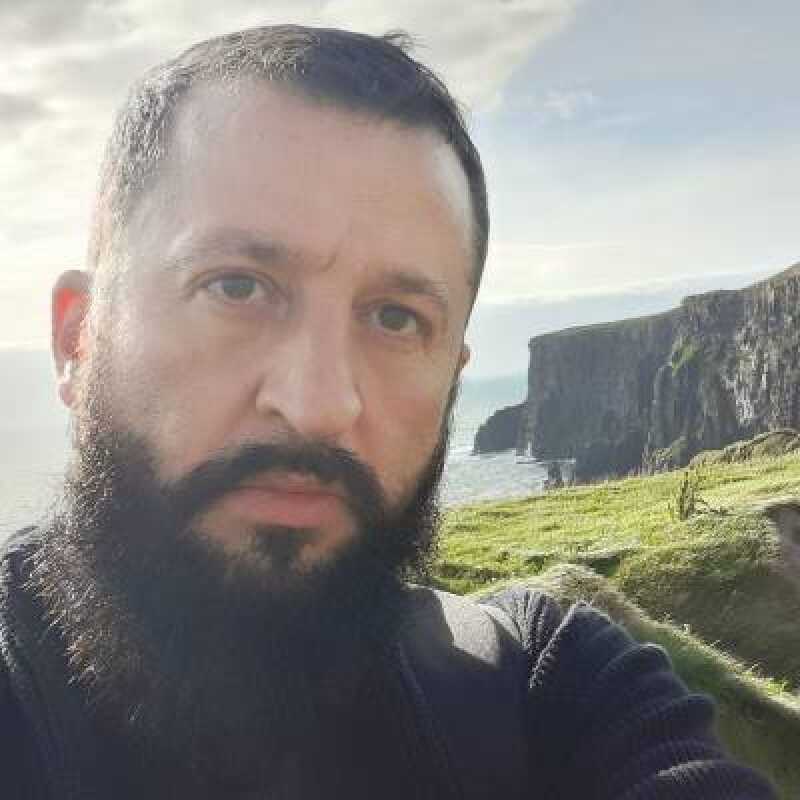
Dr Maurizio Cinquegrani is a Senior Lecturer in Film and Equity, Diversity and Inclusion Lead at the University of Kent's School of Arts. He holds a PhD from King's College London and has held roles including Head of Film and Media, School Director of Graduate Studies, and Deputy Dean (Student Experience). His research focuses on film's relationship with space, memory, and historical events, particularly the Holocaust and Cold War. He is a Fellow of the Royal Geographical Society (2018-2023). Education: PhD in Film Studies (King's College London, 2010), MA in Contemporary Cinema Cultures (King's College London), BA in Film Studies (University of Bologna). Research interests include cinematic geographies, urban space representation, and documentary film. His notable works include Of Empire and the City: Remapping Early British Cinema (2014), Journey to Poland: Documentary Landscapes of the Holocaust (2018), and Film, Hot War Traces and Cold War Spaces (2022). He has also produced essay films such as Aran Diary (2023) and Formosa 228 (2024). Professional activities include editorial roles for Immagine. Note di Storia del Cinema and AHRC-funded research projects. He supervises doctoral students in film history, documentary cinema, and spatial memory studies. Key awards include the Royal Geographical Society Fellowship. His teaching emphasizes research-led learning and has been influenced by his extensive international collaborations, including visiting roles at Taipei National University of the Arts and Poznań University of Technology.
Auritro Majumder is Associate Professor of English at the University of Houston's College of Liberal Arts and Social Sciences, holding a courtesy appointment in the India Studies Program. His academic profile spans literary scholarship, critical theory, and intellectual history with a focus on non-Western perspectives. His educational background includes a Ph.D. in English from Syracuse University (2014), a Certificate in Critical Theory from Cornell University (2012), an M.A. (First Class) in English from Jadavpur University (2009), and a B.A. (First Class Honours) in English from Jadavpur University (2007). Majumder's research centers on peripheral internationalism and decolonial knowledge production , examining literary traditions across India, the Soviet Union, China, Latin America, and the United States. His work bridges literary theory , critical race studies , and global political movements , with particular emphasis on Bengali literature, caste-race intersections, and South-South cultural networks. His monograph Insurgent Imaginations: World Literature and the Periphery (Cambridge University Press, 2020) redefines world literature through non-Western frameworks. Analysis of his 15 most recent publications reveals consistent engagement with decolonial aesthetics , transnational solidarity , and subaltern epistemologies . His scholarship demonstrates interdisciplinary reach spanning literary studies, political theory, film criticism, and comparative intellectual history, with increasing focus on contemporary debates around planetary consciousness and peripheral modernities. His scientific recognition includes: Project Completion Grant, CLASS (2019) William Lee Pryor College Professorship (2018-2019) Research Progress Grant (2017) CLASS Research Funds (2016) New Faculty Summer Research Grant (2015) Majumder actively contributes to academic service as Executive Committee member of the Modern Language Association’s South Asian and South Asian Diasporic Language, Literature and Culture Forum, editorial board member for Mediations , jurist for the National Endowment for the Humanities, and reviewer for multiple international journals. He has lectured globally across North America, South Asia, Europe, and Brazil. His teaching portfolio includes courses on postcolonial literature, modern Indian literature, and graduate seminars in postcolonial theory. Current projects include a monograph titled The Global South in Literature and Theory and a co-edited anthology Cultures of the Cold War in South Asia .
Matthew Charles is a Senior Lecturer in Cultural and Critical Theory at the University of Westminster's School of Humanities, where he has taught since 2010. He serves as Senior Tutor for the School of Humanities and is a Senior Fellow of The Higher Education Academy. His academic journey includes previous positions at Kingston University's Centre for Modern European Philosophy and Middlesex University's Department of Philosophy. Charles earned his BA and MA in Philosophy and Literature from the University of Warwick and completed his PhD at Middlesex University's Centre for Research in Modern European Philosophy (CRMEP). His scholarly trajectory reflects deep engagement with Critical Theory, particularly the work of Walter Benjamin and the Frankfurt School. His research bridges philosophical inquiry with educational practice, focusing on how Benjamin's thought informs contemporary pedagogical theory and resistance to neoliberal tendencies in higher education. Charles' extensive publication record reveals a consistent exploration of Walter Benjamin across multiple dimensions. His work demonstrates how Benjamin's early writings on youth and education connect to his later materialist historical concepts. A dominant theme across his scholarship is the application of Benjamin's critical theory to contemporary educational challenges, particularly in developing radical approaches to teaching and learning within the current academic landscape. His research shows particular concern with the impact of market-driven reforms on higher education, as evidenced by his influential 2018 article 'Teaching, In Spite of Excellence: Recovering a Practice of Teaching-led Research.' As an academic leader, Charles has served as Course Leader for the MA in Cultural and Critical Studies at Westminster and as External Examiner for various MA programs at the University of Brighton and University of Nottingham. He has supervised multiple PhD students to completion on topics related to modernist literature and philosophy, and has examined doctoral work at several institutions. He actively participates in the Institute for Modern and Contemporary Culture and Literary Studies research groups at Westminster, maintaining an influential presence in critical theory circles through his website benjaminpedagogy.wordpress.com and ongoing conference participation.
Anna Abrahams is a Senior Programmer Artist Film and Artistic XR at Eye Filmmuseum in Amsterdam and teaches Moving Image at the Royal Academy of Art, The Hague, within the Photography department. She has been active in experimental film since 1989 as a co-founder of Rongwrong, an independent production foundation. Education: Studied film theory at the University of Amsterdam. Her research and practice focus on experimental film, virtual reality (XR), and moving image art. She bridges traditional film techniques (35mm, 16mm) with digital innovations, emphasizing immersive storytelling and artistic exploration of landscapes, urban spaces, and sociocultural themes. The films she has directed or co-directed, spanning 1995–2022, explore topics like psychogeography, counterculture, and digital experimentation. Her 2022 VR work Angels of Amsterdam highlights her engagement with extended reality technologies. As a co-author, she contributed to publications including Warhol Films , mm2. Experimental Film in the Netherlands , and film³ [kyü-bik film] , documenting avant-garde film practices and theoretical frameworks.
Steven Lee is an Associate Professor at the University of California, Berkeley, affiliated with the Department of Slavic Languages and Literatures. He is a leading scholar in comparative ethnic studies, Soviet/post-Soviet studies, and 20th-21st century American literature, with a focus on transnational intellectual networks and revolutionary cultural movements. His work bridges Asian American, African American, and Slavic literary traditions while exploring intersections between global communism and cultural production. Lee’s research interests include the far left and far right ideologies in Northeast Asia during WWII, their influence on Asian American literature, and the role of manifestos as lived experiences. His current book project examines ideological imprints on Asian Anglophone writing. He is also affiliated with the Asian American Research Center, the Center for Korean Studies, and the Center for Race and Gender at Berkeley. His seminal work, The Ethnic Avant-Garde: Minority Cultures and World Revolution (2015), won the MLA’s Scaglione Prize, and he co-edited the award-winning Comintern Aesthetics (2020). Recent publications explore topics like Viktor Tsoi’s cultural impact, the Popular Front in Asian American writing, and transnational revolutionary manifestos. Lee’s research integrates methodologies from postcolonial theory, comparative literature, and political history. His sabbatical in AY 2024-25 focuses on finalizing his current manuscript while continuing to advise students through scheduled appointments.
Paul C. Adams is a Professor in the Department of Geography and the Environment at the University of Texas at Austin's College of Liberal Arts, where he has served as Director of the Urban Studies Program since 2003. His interdisciplinary work bridges geography, media studies, and communication, with a focus on digital media's sociospatial implications. Adams earned his Bachelor of Environmental Design from the University of Colorado-Boulder (1984) followed by an M.S. (1990) and Ph.D. (1993) in geography from the University of Wisconsin-Madison. His academic journey reflects a deep commitment to understanding spatial dimensions of human experience. His research explores geographical communications , place imagery in media , and digital disentanglement , with recent work examining geopolitical discourse, climate change communication, and refugee spatial experiences. As founder of the Association of American Geographers' Media Geography Specialty Group (now "Media and Communication"), he pioneered frameworks for analyzing how media shapes place perception and political subjectivity. Analysis of his 2021-2025 publications reveals three dominant trajectories: (1) Digital media's intimate politics through entanglement/disentanglement lenses, (2) Geopolitical discourse analysis applied to climate change and US-China relations, and (3) Spatial dimensions of forced migration and cultural landscape transformation. These intersect with subfields including media geography, political ecology, and digital humanities. Key honors include: Fulbright Research Fellowship to the University of Bergen (2010) Fulbright Fellowship to McGill University/University of Montreal (2001) Ander Visiting Professorship at Karlstad University (2016-2017) Adams teaches foundational courses including GRG 305 (This Human World) and URB 315 (Urban Studies Research Methods), alongside specialized seminars in media geography and political geography. His research has secured major funding including the Research Council of Norway's ViSmedia project (2015-2020), for which he held an Associate Professor II appointment at the University of Bergen. He leads the Media Geography Specialty Group and maintains active collaborations with scholars across Poland, Sweden, and Norway, driving international research on digital place-making and geopolitical discourse through collective publications and interdisciplinary projects.
Evgeny Dobrenko is a Full Professor at the Department of Linguistics and Comparative Cultural Studies at Ca' Foscari University of Venice. His research focuses on Soviet and Stalinist cultural history, with a particular emphasis on Socialist Realism, multinational literature, and the aesthetics of political regimes. He has held editorial roles in over 20 international journals, including Slavic Literatures and Novoe Literaturnoe Obozrenie . His recent work explores the cultural dynamics of Stalinism, the Soviet literary canon, and the global reception of Eastern European literature. Dobrenko is fluent in Russian and English and has contributed to editorial boards worldwide. His research projects include Aesthetics of Stalinism and Literary Pax Sovietica , examining Soviet cultural imperialism and the institutionalization of literature. He has published extensively on topics such as late Stalinist cinema, Soviet literary policy, and the historiography of socialist realism. His 2020 monograph Late Stalinism: The Aesthetics of Politics analyzes the interplay between cultural production and political power in the Soviet Union. Prof. Dobrenko actively participates in international peer-review panels for institutions like the European Research Council and the British Academy. His work bridges Slavic studies with comparative cultural frameworks, offering critical insights into the intersections of literature, power, and ideology in 20th-century Eastern Europe.
Marie Kondrat is an Assistant Professor in the French Department at the University of Lausanne (UNIL), Faculty of Arts, appointed with conditional pre-tenure status beginning August 1, 2023. Her appointment reflects her international academic profile developed through teaching and research in the United States, France, and Switzerland. Her research focuses on theories of the image , the dynamic relationship between literary theory and cinema , and conceptual transfers between literary studies and other disciplines, particularly through translation. Her work spans 20th and 21st century literature across French, English, Italian, and Soviet linguistic traditions. At UNIL, she leads the “History and Current Events of Criticism” module and is responsible for theoretical instruction in the new MA specialization program in Comparative Literature (CIEL—Interdisciplinary Center for the Study of Literature). Her current research project, INVUES: image, literature, theory (2024–2027) , has been awarded funding under the FPFS Monique de Meuron Program for young academics, underscoring her emerging leadership in interdisciplinary literary studies. Her doctoral thesis, "Le Hors-champ: extensions de lieu," was recognized with two major awards: Latsis Prize (2022) Barbour Prize for Literary and Aesthetic Criticism Marie Kondrat has no listed advisees at this time. She does not appear to be involved in part-time teaching, nor is there any indication of retirement or prior staff status. No publications or email contact details are currently available in the provided text.
Pedro Sangro Colón serves as both Vice-Rector of Research and Degrees and Titular Professor of Language and Audiovisual Narrative at the Pontifical University of Salamanca's Faculty of Communication since 2008. His academic home is firmly rooted in the Audiovisual Communication and Advertising department where he has established himself as a leading scholar in film theory and audiovisual narrative. Dr. Sangro Colón earned his doctorate from Universidad Complutense de Madrid with his thesis "El concepto de 'montaje cinematográfico': una revisión de su formulación teórica" (2000), supervised by Dr. Manuel Alonso Erausquin. His research interests span cinematic montage theory, Spanish cinema history (particularly during the Francoist period and democratic transition), audiovisual narrative structures, documentary film analysis, and the intersection of cinema with psychoanalysis. His work demonstrates a consistent focus on how film constructs meaning through editing techniques and narrative frameworks. An analysis of his 15 most recent publications reveals a scholarly trajectory deeply engaged with Spanish cinematic history and theoretical film studies. His work frequently examines how film represents historical memory, particularly regarding Spain's transition from dictatorship to democracy, with special attention to montage techniques as tools for constructing historical narratives. More recently, he has expanded his scope to include contemporary media phenomena like the Marvel Cinematic Universe, analyzing how superhero films represent national security apparatuses and historical trauma. His extensive publication record includes numerous books, articles, and book chapters, with notable works such as "Escenas de cine, Guión y análisis" (2017), "La estética televisiva en las series contemporáneas" (2018), and "El clasicismo en el cine Una mirada Intergeneracional" (2015). His research demonstrates both theoretical sophistication and practical application to screenwriting and television production. As Vice-Rector of Research and Degrees, Dr. Sangro Colón oversees academic programs and research initiatives at the university. His leadership role complements his scholarly work by providing institutional perspective on academic innovation and research management. His recent publication "Introducción: la innovación en la Universidad Pontificia de Salamanca" (2021) reflects his engagement with contemporary challenges in higher education. His academic collaborations are extensive, with frequent co-authorship with colleagues like Juan Medina-Contreras and Miguel Ángel Huerta. His work appears in both Spanish and international journals, demonstrating his ability to engage with global film scholarship while maintaining a strong focus on Spanish and Latin American cinematic traditions.
Carsten Strathausen is a Professor of German and English at the University of Missouri's College of Arts and Science. He holds appointments in both the Departments of German and English, bridging interdisciplinary research and teaching. His work spans literary theory, visual culture, digital humanities, and bioaesthetics, with a focus on Kafka adaptations and evolutionary theory's influence on aesthetics. Research Interests: Dr. Strathausen’s interdisciplinary research explores the interplay of science, art, and media. Central themes include the word-image relationship in literature, posthumanism, and the digital humanities. His current projects include a global database analyzing Kafka adaptations (Adapting Kafka) and a monograph on Kafka’s adaptations through evolutionary and media frameworks. Earlier works like Bioaesthetics and The Look of Things established his reputation in interdisciplinary cultural studies. Teaching: In German studies, he teaches graduate seminars on 20th-century literature and Kafka. In English, he offers courses on contemporary literary theory, posthumanism, and digital humanities. He also mentors undergraduate and graduate students in digital humanities research. Collaborations: Collaborations include work with Dr. Verena Kick on the Adapting Kafka project. His research often intersects with film, visual arts, and science studies, reflecting his commitment to cross-disciplinary inquiry.
Daniel Schwartz is an Associate Professor at McGill University , specializing in Russian and German Cinemas. His work bridges sound studies, urban studies, and documentary film, with a focus on early 20th-century cinematic experiments and their intersections with music, mass spectacle, and radio. He has published extensively in journals like Cinema Journal , Slavic Review , and Studies in Russian and Soviet Cinema . Research Focus: Sonic dimensions of silent cinema, urban modernity, Soviet/Russian film Contact: daniel.schwartz2@mcgill.ca | 680 Sherbrooke St. West, Montreal, QC His 2024 book City Symphonies: Sound and the Composition of Urban Modernity, 1913-1931 challenges assumptions about silent films through archival and interdisciplinary analysis. Recent articles explore topics like Dinara Asanova's documentaries, Sergei Loznitsa's archival practices, and the geopolitics of post-Soviet cinematic borders.