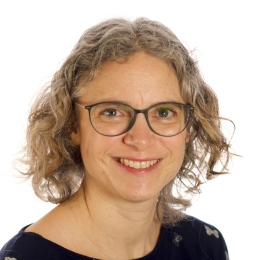
Erin Siostrom is a Lecturer in the School of Education and Tertiary Access at the University of the Sunshine Coast, Queensland, Australia. She coordinates STEM enabling courses for the Tertiary Preparation Pathway (TPP) and teaches Senior Secondary Science methods for Initial Teacher Education programs. Her academic appointments include teaching Statistics (TPP105), Biology (TPP109), and Senior Science pedagogy courses (EDU760/353, EDU761/355, EDU375/794). Her educational background includes a Master of Education from Queensland University of Technology (QUT), Graduate Certificate in Biostatistics from University of Queensland (UQ), and dual Bachelor degrees in Education and Science from University of the Sunshine Coast (USC). Siostrom's research centers on STEM education pathways with specialized focus on career changers entering teaching. Her work examines motivational drivers, structural barriers, and policy implications through the lens of Margaret Archer's social realist theories. Key investigations include teacher shortage solutions, non-traditional entrant experiences, and equity issues in STEM participation. Recent publications demonstrate methodological diversity spanning Best-Worst Scaling analyses, scoping reviews, and qualitative explorations of career decision-making processes. Her publication trajectory reveals consistent focus on STEM teacher recruitment challenges, with recent 2024-2025 works expanding into academic wellbeing methodologies and curriculum equity frameworks. The research demonstrates strong policy relevance through collaborations with RUN (Regional Universities Network) and practical applications in teacher education. Associate Fellow of Higher Education Academy (AFHEA) Regional Universities Network (RUN) Learning and Teaching Award 2023 As an active researcher and educator, Siostrom serves as curriculum steward for STEM pathways while contributing to national discourse through media engagements including The Conversation and Sunshine Coast News. Her work with career changers informs practical recruitment strategies through partnerships with education departments and teacher unions. Current projects examine breathing room methodologies in academia and cross-cultural curriculum comparisons between Australian and international science education frameworks.