معرفی
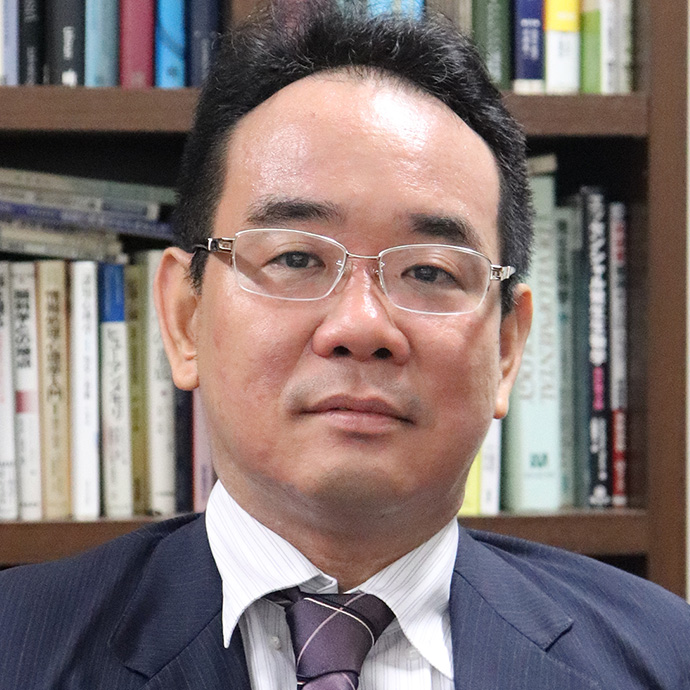
Masatoshi Ohki is a Professor at Waseda University's Faculty of Law, specializing in Labor Law with a particular focus on Italian legal systems. He holds a Ph.D. in Law from Waseda University and maintains an active research career with international collaborations, including a current visiting scholar position at the University of Florence Department of Legal Sciences since March 2025.
His academic journey includes:
- Professor at Waseda University Faculty of Law (2019-present)
- Associate Professor at Waseda University Faculty of Law (2018-2019)
- Positions at Himeji Dokkyo University Faculty of Law (2006-2018)
Professor Ohki's research centers on comparative labor law, particularly examining the intersection of Japanese and Italian legal frameworks. His work explores critical issues including labor contract theory, equal pay principles, protection of atypical workers, and the relationship between labor law and economic law. He has made significant contributions to understanding how different legal systems address worker protections, with special attention to how Italian law handles fixed-term contracts, discrimination, and the evolving concept of employment relationships in the digital age.
His scholarly output reveals a consistent focus on comparative analysis between Japanese and Italian labor systems, with particular attention to equal treatment principles, contract theory, and regulatory frameworks for non-traditional employment. Recent work has expanded to address emerging challenges like AI in HR technology and the legal implications of telework.
His notable recognitions include:
- The 31st Okinaga Prize (2017.03, Labor Issues Research Center, Public Interest Foundation)
- Japan Labor Law Association Encouragement Award (October 2011)
Professor Ohki has led and participated in numerous research projects funded by the Japan Society for the Promotion of Science, including comprehensive studies on labor and employment law relationships with competition law, cross-disciplinary studies of law in data-driven societies, and research on equal pay principles. His scholarly contributions extend to multiple publications, including books, casebooks, and significant academic articles that bridge Japanese and European legal perspectives.