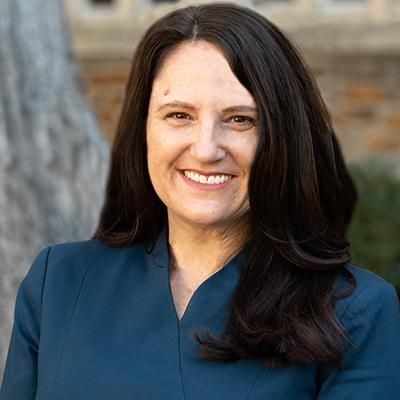
Karen Hampson is a Senior Lecturer in Optometry at the University of Manchester, serving as the first-year Optics Theme Lead. Her research focuses on adaptive optics systems for vision science, particularly using retinal imaging technology for early diagnosis of neurodegenerative and psychiatric diseases. She is a member of the Consortium for Vision and Oculomics in Psychiatry and co-founder of the European Adaptive Optics Summer School. Education: MPhys (Swansea University, 2000), PhD in Physics (Imperial College London, 2004), Post-Graduate Certificate in Higher Education Practice, and SEDA Professional Development Award. She trained in Transactional Analysis Psychotherapy and mental health first aid. Research interests include adaptive optics applications across vision science, microscopy, and astronomy. She led an EPSRC-funded project on pre-symptomatic disease diagnosis via ocular biomarkers. Key roles include Chair of Optica’s Applications of Visual Science Technical Group (2021–2024) and Associate Editor for Frontiers in Ophthalmology. Teaching contributions include senior laboratory roles at Oxford’s Physics Department and tutorial leadership at Corpus Christie College. Her work aligns with UN SDG targets for health and innovation.
Dr. Darren Elliott-Smith serves as Senior Lecturer in Film & Gender Studies within the Communications, Media and Culture department at the University of Stirling's Faculty of Arts and Humanities. He currently teaches across all levels in film, television and gender studies, and holds the position of Programme Director for the MLitt/MSc (Applied) in Gender Studies. His research focuses primarily on representations of queerness, gender, sexuality and psychoanalysis in horror film and television. This work extends to curation theory in film and visual art programming, cult and experimental film studies, adaptation studies, and queer theory. His scholarly output includes a monograph, numerous journal articles, and significant contributions to edited collections across multiple academic presses. Elliott-Smith's research output demonstrates a consistent focus on queer perspectives within horror media, with particular attention to marginalized identities and alternative cinematic narratives. His work bridges theoretical analysis with practical applications through videographic film projects and video essays. Tutor of the Year 2018 (University of Hertfordshire) Professionally, he maintains active roles as Fellow of the Higher Education Academy and Founding Member of BAFTSS Horror Studies Special Interest Group. His industry experience includes previous work as Film Curator and Programmer for the BFI, Mainline Pictures, The Odyssey Cinema, and as Film Manager for the Film Education Consortium for Hertfordshire (2007-2010). He is also recognized online as the Queer Horror Doctor through his digital presence. His academic journey includes a BA (Hons) in Communication Studies from the University of Sunderland, an MA in the History of Film and Visual Media from Birkbeck College, University of London, and a PhD in 'New Queer Horror in Film and Television' completed at Royal Holloway, University of London in 2013 under the supervision of Prof. Mandy Merck.
Jens Krause is a Professor and Head of Department at the Leibniz Institute of Freshwater Ecology and Inland Fisheries (IGB) in Berlin, leading the Research Group on Mechanisms and Functions of Group-Living. He holds a full professorship in Fish Ecology at Humboldt-Universität zu Berlin, Faculty of Life Sciences, Thaer-Institute, and since 2018 has been an Adjunct Professor at Technical University Berlin within the Excellence Cluster 'Science of Intelligence'. His research is centered on collective intelligence, social networks, decision-making, and behavioural ecology in fish and other animals. Full Professor in Fish Ecology, Humboldt-Universität zu Berlin Adjunct Professor at Technical University Berlin (since 2018) Head of Department, IGB Berlin PhD, University of Cambridge Diploma, Free University Berlin His work integrates experimental biology, network analysis, and biomimetic robotics to understand how animals make collective decisions. His expertise spans animal behaviour, evolution, and ecological physiology, with a strong focus on group-living dynamics. Recent research explores group hunting, predator evasion, social foraging, and the impact of environmental stressors on collective behaviour. The analysis of his recent publications reveals a strong trend in understanding collective behaviour in fish, including escape waves, social foraging, group hunting in marlins and sailfish, and the use of robotic agents to study social integration. His interdisciplinary approach combines marine biology, physics, robotics, and data science to uncover the mechanisms behind collective intelligence in both animal and human systems. Editorial Board, Behavioral Ecology Editorial Board, Fish and Fisheries Executive Board, Excellence Cluster 'Science of Intelligence' Advisory Board, Bimini Biological Field Station Foundation He advises numerous PhD students and postdoctoral researchers, and leads major research projects, including 'Developing exploration behaviour' funded by the Excellence Cluster. His work has been supported by extensive collaborations across Europe and North America, and he frequently publishes in top-tier journals such as Nature , Science Advances , Proceedings of the Royal Society , and Current Biology . His lab employs cutting-edge methods including automated tracking, social network analysis, and interactive robotics to study animal groups. His research group, 'Mechanisms and Functions of Group-Living', is embedded within the Excellence Cluster 'Science of Intelligence', where they investigate collective cognition, social information use, and the role of individual differences in group performance. The team combines field studies with laboratory experiments and computational modelling to understand the evolution and function of collective behaviour across species.
Megan Carey is a Researcher at the Champalimaud Foundation , leading the Carey Lab . Her research focuses on understanding how cellular and synaptic mechanisms in the cerebellum influence motor behavior and learning. Key projects include studies on cerebellar neural circuits, locomotor adaptation, and sensory-motor integration. Her recent work highlights cross-species comparisons (mice and flies), zebrafish visual system neurobiology, and pharmacological modulation of motor learning. The lab employs genetic perturbations, optogenetics, and behavioral analysis to dissect neural circuit dynamics. Notable collaborators include senior scientists, postdoctoral researchers, and PhD students. The lab's publications span high-impact journals like J. Neurosci. , eLife , and Neuron , with funding from HHMI and NIH.
Yingying Wang is an Assistant Professor in the Computing and Software department at McMaster University , where she joined in January 2022. Her research focuses on generating expressive animations for AR/VR applications and games through interdisciplinary approaches combining Computer Graphics , Artificial Intelligence , and Human Behavior Analysis . Education : Bachelor and Master degrees from Nanjing University , Ph.D. from University of California, Davis (2017) Her research explores: Generative models for human motion style transfer Physics-based motion simulation Audio-driven character synthesis Dance choreography for virtual characters Cartoon animation perception Conversational character gesture synthesis Markerless hand motion capture Recent publications focus on 3D hand pose estimation , motion style transfer , gesture-locomotion coordination , and personality perception in virtual agents . Key methodologies include deep learning , multimodal data analysis , and real-time animation systems . Scientific contributions recognized through: $240,000 Labarge Catalyst Grant in Mobility in Aging (interdisciplinary team award) US Patent 10,796,482 (3D hand pose estimation) US Patent 9,811,937 (gesture-locomotion coordination) Teaching includes graduate and undergraduate courses in Computer Animation (CAS 737), Computer Graphics (COMPSCI 3GC3/SFWRENG 3GC3), and Software Development (COMPSCI 2ME3). Research group actively recruits Ph.D. and Master's students in graphics + deep learning domains.
Aleksandar Mihajlovic is a researcher and Art Director at Singidunum University, Serbia. With a doctoral degree in Contemporary Business Decision-Making (2022), a master's in Business Economics (2014), and a bachelor's in Computer Graphics and Design (2008), he combines academic rigor with creative leadership in the university's marketing strategy. Doctoral studies: Contemporary Business Decision-Making, Singidunum University (2022) Master studies: Business Economics, Singidunum University (2008–2014) Undergraduate: Computer Graphics and Design, Faculty of Informatics and Management (2005–2008) High school: Robotics and Flexible Production Systems Technician, Polytechnic Academy (1995–1999) His research spans visual communication , digital marketing , and artificial intelligence applications in creative industries. Key contributions include Co-authoring 11 academic papers (2015–2025) on topics like Instagram ad effectiveness, techno-feudalism, and responsive logo design. Developing the scientific research portal 'Singipedia' and international magazine 'SingiLogos'. Participating in 7 global projects including Erasmus+ and TEMPUS initiatives. His scientific awards include the JISA Discobolos Special Award (2010), IT Globus Award (2010), and Grafima Fair Special Award (2025). He serves on the organizing committee for conferences like Sinteza and Sitcon , and has judged marketing competitions while volunteering for NGOs like the City Organization of the Deaf of Belgrade.
Elizabeth J. Marsh is a Professor of Psychology and Neuroscience at Duke University and a Faculty Network Member of the Duke Institute for Brain Sciences . Her work bridges cognitive psychology, neuroscience, and education, with a focus on memory accuracy, misinformation, and aging. Education: Ph.D., Stanford University (1999) B.A., Drew University (1994) Research Interests: Marsh investigates how memory can be both accurate and erroneous, exploring questions like why people misremember facts, how fiction influences memory, and how aging affects decision-making and belief formation. Her work intersects with social psychology , developmental psychology , and educational psychology . Scientific Awards: Langford Lecture Award (2010) Grants & Funding: Aging and Finding Information: Using Google vs. Relying on Other People (2015–2025) Effects of Aging on Episodic Memory-Dependent Decision Making (2018–2025) When are pictures worth a thousand words? Debunking misinformation with images (2022–2023) Advancing Artificial Intelligence for the Naval Domain (2018–2023) Leveraging Older Adults' Social Goals to Improve Memory and Strategy Use (2018–2020) Exploring the potential of essay testing for improving memory and learning (2013–2019) Courses Taught: PSY 990: Special Readings in Psychology PSY 765S: Psychology and Neuroscience Grant Writing PSY 755: Research Practicum PSY 724S: Survey of Current Topics in Psychology and Neuroscience II PSY 723S: Survey of Current Topics in Psychology and Neuroscience I PSY 102: Cognitive Psychology: Introduction and Survey NEUROSCI 755: Interdisciplinary Program in Cognitive Neuroscience (IPCN) Independent Research Rotation
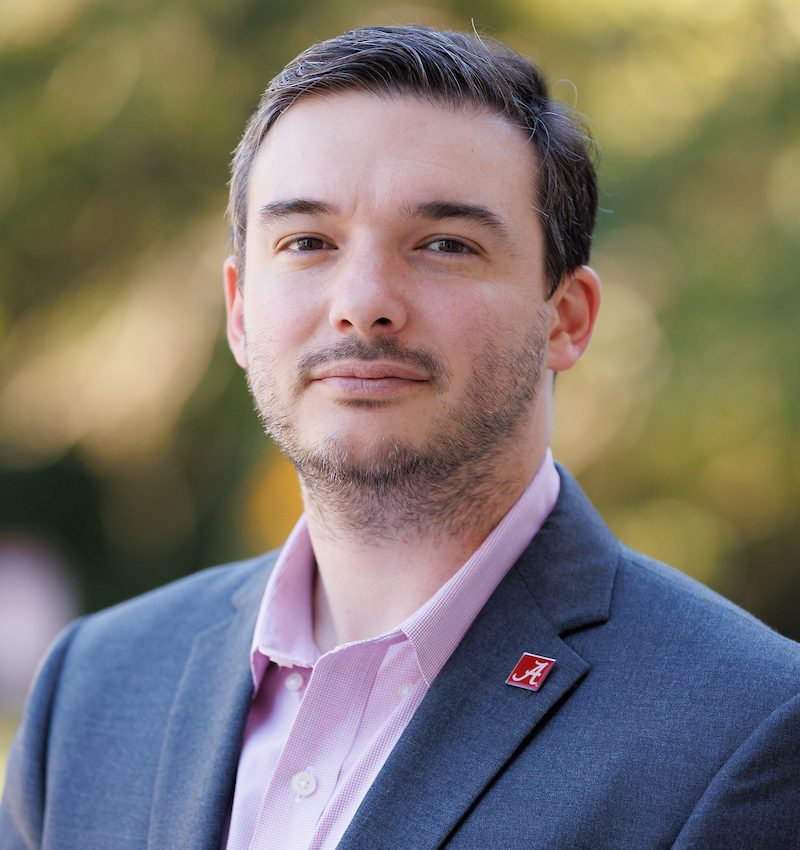
Dr. Patrick Shane Crawford serves as Assistant Professor in the Department of Civil, Construction and Environmental Engineering at the University of Alabama's College of Engineering. Affiliated with the Center for Sustainable Infrastructure and Alabama Water Institute, his research focuses on enhancing community resilience to tornadoes, floods, and hurricanes through interdisciplinary engineering approaches integrating social science and policy perspectives. His educational background includes: B.S. in Civil Engineering (2012, University of Alabama) M.S. in Civil Engineering (2014, University of Alabama) Ph.D. in Civil Engineering (2018, University of Alabama) Dr. Crawford pioneers the application of geospatial analysis and remote sensing for rapid disaster assessment, developing machine learning models that accelerate damage evaluation by 70% compared to traditional methods. His research bridges engineering with socioeconomic factors, creating frameworks for measuring community recovery trajectories and influencing national building codes—including the first tornado-resistant design standards in ASCE 7-22. Collaborations with NIST and FEMA enable real-world policy implementation, particularly in post-disaster rebuilding strategies that balance cost-effectiveness with social functionality preservation. Analysis of his 2022-2025 publications reveals consistent innovation in longitudinal disaster reconnaissance , with 60% of recent work focusing on tornado events using deep learning for damage classification. Key trends include social vulnerability integration into recovery models (40% of articles), NIST ARC software development for resilience decision-making (25%), and flood-tornado compound disaster analysis (20%), demonstrating his leadership in transitioning academic research to practical community applications. Active in federal partnerships, Dr. Crawford's 2025 feature Confident but Exposed: How Prepared Are U.S. Homeowners for Extreme Weather? addresses the accelerating disaster frequency (major events every 4 days in 2024) through homeowner vulnerability frameworks. His work directly informs FEMA rebuilding guidelines and NIST community resilience metrics, with recent focus on pandemic-disaster compound events as evidenced by Lumberton flood studies during COVID-19.
Griseldis Kirsch is a researcher at the School of Languages, Cultures and Linguistics (LAC) at SOAS University of London. Her work focuses on Japanese media and popular culture, with particular emphasis on gender, transnationalism, and identity politics. She has edited and contributed to key publications such as the Handbook of Japanese Media and Popular Culture in Transition (2022) and Assembling Japan: Modernity, Technology and Global Culture (2015). Her research spans visual culture, historical memory, and media's role in constructing national identities. Recent articles examine topics ranging from imperial nostalgia in Japanese television to the representation of cultural otherness and gender dynamics in propaganda films. She has supervised or collaborated on theses exploring single motherhood, anime music, and Korean-Japanese media remakes. Notable trends in her publications include critiques of Japanese nationalism, analysis of transpacific cultural flows, and investigations into minority representations. Her work bridges film studies, anthropology, and cross-cultural communication, often addressing tensions between local and global influences in media. Current affiliations include contributions to the JAPAN DOCUMENTS publication series and ongoing scholarly engagement with Japanese television dramas, anime, and their socio-political implications.
Chang-kyu Kwon serves as an Assistant Professor in the Department of Education Policy, Organization & Leadership within the College of Education at the University of Illinois, Urbana-Champaign. His academic journey includes a Ph.D. in Learning, Leadership & Organization Development from the University of Georgia (2019), an M.A. in Organizational Behavior & Evaluation from Claremont Graduate University (2015), and a B.A. in Education from Korea University (2013). Professor Kwon's research is fundamentally informed by critical systems thinking with a focus on diversity, inclusion, and the role of learning in promoting whole-person inclusion. He investigates leadership and organizing principles that cultivate 'safe to be vulnerable' learning spaces where individuals across power divides can collaborate and develop as teams, organizations, and communities. His work critically examines ableism and disability inclusion in educational and workplace settings, with international recognition for his scholarship and advocacy in countries including South Korea, Japan, Peru, and Taiwan. Currently, he leads a U.S.-based project focused on promoting disability employment in small- and medium-sized manufacturing contexts. His scholarly output demonstrates a clear trajectory toward increasingly impactful work at the intersection of critical human resource development, disability studies, and transformative learning. The publications reveal a progression from foundational theoretical work to applied research with practical implications for organizational change, particularly in creating inclusive environments for people with disabilities. His recent work shows growing emphasis on generative pedagogy, dialogic organization development, and the practical application of critical HRD principles in real-world settings. Early Career Scholar Award, Academy of Human Resource Development (2025) Richard A. Swanson Research Excellence Award, Academy of Human Resource Development (2022) Cutting Edge Award, Academy of Human Resource Development (2019) Professor Kwon teaches courses in diversity, adult learning, leadership, and organization development, with a focus on helping students develop an adaptive learning mindset to strengthen relationships and lead inclusively. His EPOL 470 course covers principles of human resource education, while EPOL 474 examines diversity in workplace environments and strategies for harnessing the power of diversity and inclusion. His teaching philosophy emphasizes genuine humility and curiosity as essential components of effective leadership in global workforce contexts. His research is characterized by a strong commitment to bridging theory and practice, with particular attention to the practical implementation of critical ideas in organizational settings.
Karl Farrow is a Senior Lecturer at the Faculty of Sciences , KU Leuven , affiliated with the Department of Biology and the Animal Physiology and Neurobiology unit. He is also a member of the VIB-KU Leuven Center for Neuro Electronics Research Flanders (NERF) and the KU Leuven Brain Institute . Dr. Farrow's research focuses on neurobiology and visual processing , particularly the role of retinal ganglion cells and neural circuits in the superior colliculus . His work explores direction selectivity, motion perception, and adaptive mechanisms in visual systems under varying ambient conditions. His recent projects include dissecting the neural basis of threat responses in the superior colliculus, studying evolutionary influences on innate behavior circuits, and developing tools like a single-objective light sheet microscope for 3D tissue analysis. Collaborative efforts involve synaptic transmission studies in amyloid-beta precursor protein interactions.
Jason Smith is a Postdoctoral Scholar at Northwestern University , affiliated with the Interactive Audio Lab . He earned his PhD in Music Technology from the Georgia Institute of Technology . Research Focus Human-AI collaboration in creative domains Interactive music systems AI-driven accessibility solutions Creative autonomy and neural audio generation Recommender systems for music libraries Publication Trends His work spans 2019–2025, emphasizing AI applications in music education, accessibility (especially for blind/visually impaired users), and immersive environments like AI holodecks. Key methodologies include co-design, hybrid recommendation algorithms, and automated creativity assessment. Lab Affiliation He contributes to the Interactive Audio Lab, exploring intersections of sound, code, and AI.
Mercè Oliva is an Associate Professor at the Department of Communication, Pompeu Fabra University (UPF), Barcelona. She serves as Director of the B.A. Programme in Audiovisual Communication and Coordinator of the MEDIUM Research Group. Her academic background includes a PhD in Social Communication (2010) and a Bachelor's in Audiovisual Communication (2002) from UPF. Research Focus: Television and Reality TV Celebrity and Media Culture Neoliberalism and Political Communication Video Games as Cultural Artifacts Her recent publications analyze: Visual motifs in political coverage (handshakes, hugs, kisses) Citizens' responses to neoliberal resilience narratives Celebrity tax evasion cases (e.g., Cristiano Ronaldo) Video game cover art as neoliberal propaganda Working-class stereotypes in Spanish media ('chonis', 'canis') Key collaborations include co-PI roles in projects like 'Heroes of the Crisis' (2015-2019) and 'Redistributive Imaginaries' (2022-2025), funded by Spain's Ministry of Economy and AEI/NextGenerationEU.
Mostafa Ammar is a Regents' Professor and Interim Chair at the School of Computer Science , Georgia Institute of Technology. He holds a Ph.D. from the University of Waterloo and degrees (S.B., S.M.) from MIT. His career spans academia, industry collaboration, and leadership in networking research. Research Interests : Network architectures, protocols, and services; multicast communication; multimedia streaming; content distribution networks; disruption-tolerant networks; mobile cloud computing; network virtualization; HTTP adaptive streaming; video quality of experience (QoE); encrypted traffic analysis; vehicular networks; peer-to-peer systems; overlay networks. Funding : Supported by NSF, DARPA, AFOSR, CISCO, IBM, Intel, BellSouth, Sprint, and others. His research focuses on video QoE estimation using network measurements, mobile cloud computing , and network agility through virtualization. Recent work includes machine learning approaches for encrypted traffic analysis and scalable techniques for network performance. Key scientific awards include: IBM Faculty Partnership Award (1996), Best Paper at WWW '98, IEEE Fellow (2002), ACM Fellow (2003), GT Outstanding Doctoral Thesis Advisor (2006), IEEE TCCC Service Award (2010), ACM Mobihoc Best Paper (2012), College of Computing Awards (2015, 2018), IFIP Best Paper (2018), and multiple teaching excellence awards (2013-2017, 2022 CIOS Award). Dr. Ammar has advised 39 PhD students , many of whom hold prominent positions at institutions like UC Santa Barbara, Emory University, and companies including Google, Microsoft, and Facebook. His editorial leadership includes Editor-in-Chief of IEEE/ACM Transactions on Networking (1999-2003) and roles in conference committees.
Marta Severo is a Lecturer at University of Paris Nanterre in the Department of Information, Communication, Digital Media within the Faculty of Humanities and Social Sciences. She also maintains significant research affiliations with University of Lille where she has directed multiple projects including the PEPS Digital Routes Project (2015-2016). Her academic profile is characterized by interdisciplinary research at the intersection of digital technologies and cultural heritage. Her research focuses on digital representations of cultural heritage, particularly intangible cultural heritage (ICH) and cultural itineraries like the Via Francigena. She investigates how digital methods can be used to study, represent, and safeguard cultural heritage through social media analysis, network mapping, and participatory platforms. Her work examines the relationship between amateurs and institutions in knowledge production, with special attention to Wikipedia as a citizen science tool. Her publication portfolio demonstrates consistent scholarly output with significant contributions to understanding digital representations of cultural routes, stakeholder networks along heritage paths, and participatory approaches to cultural heritage management. Her research shows a clear trajectory from methodological development in digital humanities to applied studies of specific heritage contexts. Humboldt Research Fellowship for Experienced Researchers (2023-2025) for project on ethics of digital participation IUF project funding for 'Data in action' research on research trajectories of implication NEST project (Marie Skłodowska-Curie RISE Action Programme) visiting fellowship at UC Berkeley (2022) As a research leader, Marta Severo has directed multiple significant projects including the ANR COLLABORA project (construction of an observatory of cultural contributory devices), the Wikipatrimoine project (exploring collaborative management of cultural heritage), and the ICH Observatory project (mapping digital networks of ICH stakeholders in France). Her work demonstrates strong commitment to interdisciplinary collaboration across computer science, social sciences, and heritage management. She frequently partners with European institutions including the European Association of Via Francigena Routes and has presented at numerous international conferences on cultural heritage and digital methods.