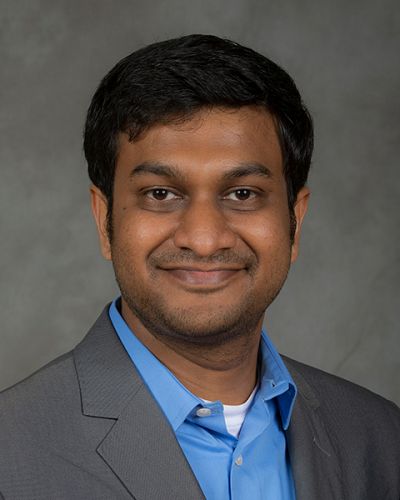
Bruce D. Weinberg is a Professor and Head of the Marketing Department at the Isenberg School of Management, University of Massachusetts Amherst. He holds a PhD from MIT Sloan School of Management (1993), an MBA from Boston University (1985), and a BA from Boston University College of Arts & Sciences (1981). His academic roles include leadership positions at Bentley University (2007–2011 as Chair of Marketing) and Boston University (1992–2000). His research focuses on customer experience design, social media strategy, innovative technology, and consumer behavior. Notable contributions include work on big data applications in marketing and premarket forecasting of new products. His awards include the MSI/H. Paul Root Award (1997) and the Broderick Prize for Teaching Excellence (1996). Publications span topics like digital marketing strategies, social media mix management, and the impact of technology on consumer decision-making. He actively consults with organizations like Verizon and General Motors and serves as an expert witness in legal cases. His teaching spans marketing fundamentals, business analytics, and thriving in life through optimal performance design.
Maximilian Beichert is an Assistant Professor at Bocconi University, where he conducts research at the intersection of quantitative marketing and information systems. Prior to this, he was a Postdoctoral Researcher at HEC Paris and earned his PhD from the University of Mannheim. His work focuses on influencer marketing, the creator economy, and social influence in digital environments. His research interests include: Empirical Modeling of Marketing Phenomena Large-scale Field Experiments Creator Economy Dynamics Sales-driven Influencer Marketing Digital Marketing and Social Media Analytics Beichert's publications appear in top-tier journals such as the Journal of Marketing and MIT Sloan Management Review . His recent work explores influencer ROI, value chains in the creator economy, and algorithmic selection models. Themes across his research include monetization strategies, gender equity, sustainability, and ethical considerations in digital influence. He frequently presents at leading business schools worldwide, including Columbia, INSEAD, and Copenhagen Business School. His scientific awards include: 2025 Don Lehmann Award (AMA) 2024 AMA/MSI H. Paul Root Award Finalist, 2024 Shelby D. Hunt/Harold H. Maynard Award 2024 Best Dissertation Award (German Association for Direct Selling) 2024 Stiftung Marketing Award (University of Mannheim) Runner-Up, EMAC/Enginius Doctoral Dissertation Competition (2024) 2023 CDSB Doctoral Student Awards for Best Teacher and Best Paper (GESS, University of Mannheim) Best Student Paper Award, WISE 2022 Maximilian actively contributes to academic service as co-chair of the Creator Economy Retreat and the EMAC Creator Economy Special Interest Group. He is also a co-chair of the 'Digital Marketing, Social Media, and Online Platforms' track at the 2026 AMA Winter Academic Conference. He regularly reviews for scholarly journals. His research is supported by industry collaborations with organizations such as CreatorIQ and Typology, which have enabled large-scale field experiments using data from YouTube, Instagram, and TikTok. He has advised or collaborated with multiple researchers and is involved in projects examining influencer lifetime value, gender pay gaps, and ethical challenges like sharenting. He is affiliated with the following institutions: PhD: University of Mannheim Postdoctoral Researcher: HEC Paris Current Faculty: Bocconi University
Verena Schoenmueller is an Assistant Professor in the Department of Marketing at ESADE Business School, Ramon Llull University. Her research sits at the intersection of digital marketing, consumer behavior, and social media dynamics, with a focus on authenticity, polarization, and user-generated content. Her primary research interests include: Digital and Social Media Marketing Consumer Behavior in Online Environments Brand Authenticity and Trust Political and Preference Polarization Online Reviews and Sentiment Analysis Subscription Service Dynamics Dr. Schoenmueller’s recent publications explore the spread of fake news, the behavioral consequences of deplatforming, and the psychological underpinnings of extreme online reviews. Her work frequently appears in top marketing journals such as the Journal of Marketing Research and Marketing Science , and she regularly presents at leading conferences including EMAC and ISMS. The overarching trend in her research is understanding how digital platforms shape consumer cognition, emotion, and decision-making in increasingly polarized environments. She earned her PhD in Business Administration from the University of Basel, a Master in Business Administration from ESSEC, and completed her undergraduate studies in Business and Economics at the University of Mannheim. While no formal list of advisees is provided, her role as a Contracted Doctoral Professor indicates active involvement in PhD-level teaching and supervision. She has not received any explicitly mentioned scientific awards. There is no indication of part-time status or retirement. Her research has implications for brand strategy, platform governance, and public policy around digital misinformation and consumer protection.
Jason J. Jung is a Professor in the Department of Computer Engineering at Chung-Ang University, Seoul, Korea. His academic work focuses on knowledge engineering , social media analytics , and data mining within the Knowledge Engineering Laboratory. Research Interests : Computer Science, Social Knowledge, Data Modeling, Sentiment Analysis Projects : IoT-based cultural systems, real-time social event detection, transmedia storytelling models The 15 most recent publications (2014-2018) demonstrate expertise in social network analysis , multimodal data processing , and context-aware systems applied to urban services, cultural tourism, and digital storytelling. Key trends include real-time analytics , trust modeling , and collaborative frameworks for O2O services. Professional activities include editorial contributions, invited talks, and patent developments. Students at all levels (PhD/MSc/BSc) conduct research under his supervision at the Knowledge Engineering Laboratory. Personal interests include travel, film, painting, literature, and music.
David Mullich is an Adjunct Professor in the Entertainment Design department at ArtCenter College of Design, where he teaches foundational and advanced game design courses. He is also a seasoned video game designer and producer with extensive industry experience at Activision, Disney, Cyberdreams, EduWare, 3DO, and Spin Master. Mullich currently serves as Development Director at Say Games and is a co-creator of the Boy Scouts of America Game Design Merit Badge. He is a board member of the International Game Developers Association (IGDA) Los Angeles chapter and a recognized expert in gamification. Adjunct Professor, ArtCenter College of Design Development Director, Say Games Co-Creator, Game Design Merit Badge (Boy Scouts of America) Board Member, IGDA Los Angeles David Mullich's research and professional interests center on game design, gamification, game education, and the societal impact of games. He explores how games foster resilience, productivity, and social connection, particularly in challenging contexts such as war and labor struggles. His work emphasizes ethical game development, inclusive design, and the educational potential of interactive media. He is deeply engaged in understanding the cultural narratives embedded in games and how they reflect and shape human experiences. The recent articles reflect a strong thematic focus on the intersection of games with culture, history, and social issues. Mullich analyzes games as tools for emotional resilience, cultural preservation, and social commentary. His writings delve into labor practices in the industry, diversity in game content, and the psychological benefits of play. He also shares practical insights on game pitch design and virtual world creation, demonstrating a blend of theoretical and applied expertise. Rated 14th 'Gamification Guru' at 2014 Gamification World Congress Winner of Electronic Games Magazine’s Best Science-Fiction/Fantasy Game of the Year award David Mullich mentors emerging game developers through his teaching, public speaking, and involvement with IGDA. He has advised students through workshops and career panels at institutions like CSULA and GDC. His professional work includes consulting and production roles across major studios, contributing to both commercial success and educational outreach. While specific grant details are not mentioned, his initiatives like the Game Design Merit Badge and public advocacy suggest funded or institutionally supported outreach programs. Mullich collaborates with international organizations and conferences such as Slitherine Games, the University of Gdansk, and the Game Access Conference. He is actively involved in the global game development community, participating in events across Europe and North America. His work with Say Games and ArtCenter indicates affiliations with both industry and academic labs focused on game innovation and education.
Anne Nassauer is a Professor of Sociology, especially Political Sociology, at the Faculty of Economics, Law and Social Sciences of the University of Erfurt. She is a member of the diversity advisory board in the university's presidium and specializes in situational dynamics of violence, collective behavior, and video data analysis. Key Research Areas : Protest violence, school shootings, police use of force, video-based methodology, racial biases in policing, and ethical consumption tactics. Recent Publications : Focused on gun culture in school shootings (2025), dehumanization in police shootings (2024), and video data analysis challenges (2023). Awards : 2021: Outstanding Recent Contribution in Social Psychology Award (American Sociological Association) 2020: Charles Horton Cooley Book Award (Society for the Study of Symbolic Interaction) 2020: Honourable Mention, Outstanding Contribution to Political Sociology (American Sociological Association) Media Engagement : Regularly appears in podcasts (e.g., Back to School Shootings, 2025), documentaries (Terra X, 2023), and international media (Wall Street Journal, FiveThirtyEight, WIRED).
Karin Wagner is a Professor in Art History and Visual Studies at the University of Gothenburg . Her research focuses on the intersections of visual culture, digital media, and material aesthetics, with particular expertise in packaging design, photographic history, and digital museum practices. Professor at University of Gothenburg since 2003 Specializes in digital visual culture and material studies Recipient of multiple research grants including Bank of Sweden Tercentenary Foundation Research Focus Wagner's scholarship examines visual communication across digital and physical domains. Current projects include Packaging Design: Sustainability, Aesthetics and Social issues (2025-2026) and ongoing work on herbarium digitization. Her research bridges art history with contemporary design practices. Key Publications Her most recent book From ASCII Art to Comic Sans (MIT Press, 2023) explores typography's cultural impact. Earlier work includes studies on digital museum curation and the visual rhetoric of organic food packaging. Academic Collaborations Wagner has collaborated with institutions including: Riksantikvarieämbetet (National Heritage Board) Bank of Sweden Tercentenary Foundation (RJ Sabbatical) Chalmers University of Technology Valand Academy Teaching & Mentorship She teaches across all academic levels, with developed courses in image analysis, digital filmmaking, and interaction design. Wagner supervises doctoral students in art and visual culture while mentoring cross-disciplinary researchers in digital representation.
Dr. De Liu is the Xian Dong Eric Jing Professor of Information and Decision Sciences at the Carlson School of Management, University of Minnesota . He holds a Ph.D. in Management Science and Information Systems from the University of Texas at Austin (2004) and earned his M.S. and B.E. in Management Science from Tsinghua University (2000 and 1998 respectively). Current: Professor & Xian Dong Eric Jing Professorship (2020-present) 2017-2020: 3M Fellow in Business Analytics, University of Minnesota 2013-2014: Alan F. and Irene Bloomfield Associate Professor, University of Kentucky His research focuses on AI/Chatbots, Gamification, Social Media Manipulation, User-Generated Content, Economics of Online Platforms, Crowdfunding/Crowdsourcing , and has been published in MIS Quarterly, Management Science, Information Systems Research, Journal of Marketing , and others. He is the Academic Director of the Master of Science in Business Analytics (MSBA) program. Recent publications examine topics including bot gender in service contexts, ephemeral sharing design in dating apps, and AI streaming assistants in e-commerce . His work spans both theoretical frameworks and large-scale empirical studies, often involving randomized field experiments. Carlson School Research Award (2020) 3M Fellow in Business Analytics (2017-2020) Best Paper Nomination, Workshop on Information Technologies and Systems (2015) Associate Editor of the Year, Information Systems Research (2014) Best Paper Award, Southern Management Association Meeting (2014) Alan F. and Irene Bloomfield Professorship (2013-2014) Dr. Liu has advised doctoral students including Zhihong Ke (Clemson University) and Pei Xu (Auburn University). His service includes associate editor roles at Information Systems Research and Journal of Organizational Computing and Electronic Commerce .
Jussara M. Almeida is an established computer science researcher specializing in social network analysis, misinformation detection, and human mobility modeling. Her extensive publication record (1996–2025) demonstrates active research in web science, political communication on messaging platforms (WhatsApp/Telegram), and cloud systems. She frequently collaborates with Brazilian institutions and international partners on large-scale data projects. Research Focus: Her core interests include: Modeling information diffusion in encrypted messaging apps (WhatsApp/Telegram) Predicting human mobility patterns and privacy implications Analyzing political discourse and election-related coordination online Developing computational methods for misinformation detection Optimizing cloud/edge computing performance Publication Trends: Recent work (2021-2025) shows intensified focus on: Telegram's role in political mobilization and information dissemination Advanced techniques for identifying fake news websites and image-based misinformation Privacy-preserving mobility analysis and edge computing Child safety in live-streaming platforms Collaborations & Impact: Key collaborators include Marcos André Gonçalves, Fabrício Benevenuto, and Marco Mellia. Her research provides critical insights into real-world problems like election integrity, platform governance, and user privacy.
Aaron Snoswell is a Research Fellow at Queensland University of Technology (QUT), affiliated with the Faculty of Creative Industries, Education & Social Justice and the School of Communication. His work bridges technical AI development with social implications, focusing on ethical implementation of AI systems across multiple domains including healthcare, legal systems, and public policy. Snoswell's research interests span artificial intelligence, machine learning (particularly inverse reinforcement learning), AI ethics, automated decision-making systems, and the societal implications of AI technologies. His work demonstrates a consistent focus on making AI systems more transparent, accountable, and beneficial for society, with particular attention to healthcare applications, legal systems, and public understanding of AI technologies. Analysis of his most recent publications reveals a clear trajectory toward responsible AI deployment, with increasing focus on policy frameworks, public education about AI capabilities and limitations, and practical applications that address real-world problems in healthcare and justice systems. His work often combines technical AI development with critical social perspectives, reflecting an interdisciplinary approach that connects computer science with social sciences. Snoswell has been actively involved in policy submissions to governmental bodies including the Australian Senate Select Committee on Adopting Artificial Intelligence and responses to the G7 Guiding Principles for organizations developing advanced AI systems. His work with the ARC Centre of Excellence for Automated Decision-Making and Society (ADM+S) demonstrates his commitment to shaping responsible AI governance frameworks. He has established productive collaborations across multiple institutions and disciplines, working with researchers in communication studies, computer science, healthcare, and legal fields. His recent work on the GenAI Arcade project represents an innovative approach to public engagement with AI technologies through interactive learning environments.
Srikanth Parameswaran serves as an Assistant Professor in the Management Information Systems area at Binghamton University's School of Management, where he conducts behavioral research at the intersection of information technology and human interaction. His work bridges theoretical frameworks with practical applications in digital innovation and health informatics. His academic credentials include: BS from Anna University MS and PhD in Management Science and Systems from the State University of New York at Buffalo Parameswaran's research program investigates how digital platforms shape human behavior, with particular emphasis on IT innovation diffusion, social media dynamics, and health technology outcomes. He pioneers methodological approaches combining meta-analytic structural equation modeling with advanced text mining techniques to analyze user-generated content across online platforms. His studies on gamification mechanisms and anonymity effects in employer review systems have established new paradigms for understanding technology-mediated social interactions. Analysis of his recent publications reveals three dominant research trajectories: (1) computational analysis of social media and review systems using NLP/machine learning, (2) health IT applications focusing on chronic disease management and online support communities, and (3) theoretical advancements in IT innovation diffusion models. His work consistently demonstrates methodological rigor while addressing pressing societal challenges in digital health and organizational behavior. His scholarly contributions have been recognized through: Poets & Quants Top 50 Best Undergraduate Business School Professor (2021) Best Paper Award 1st Runner Up at AMCIS (2017) Doctoral Consortium Fellowship at ICIS (2016) While his teaching portfolio spans web mining, social network analysis, and advanced statistics, the available documentation provides no details regarding doctoral student mentorship, research grants, laboratory facilities, or collaborative research teams.
Cristian Morosan is a Professor at the University of Houston's College of Global Hospitality Leadership, specializing in information technology adoption and innovation within hospitality. With over 20 years of teaching experience and 30 years in the industry, he focuses on biometric systems, mobile technology, and digital transformation. Education: B.S. in Tourism and Services Management from University Stefan cel Mare (Romania), M.Sc. and Ph.D. in Foodservice and Lodging Management from Iowa State University Research Areas: His work spans technology ethics, digital marketing strategies, and operational innovation. Key projects include AI integration in hotel services, pandemic-related contactless systems, and consumer behavior analysis in digital hospitality environments. Scientific Contributions: Funded by the European Union and Hospitality Financial and Technology Professionals, he has published over 200 peer-reviewed works with 3,800+ citations. Notable awards include multiple research excellence and teaching innovation recognitions.
Mohammad Zubair is a Professor in the Department of Computer Science at Old Dominion University's College of Sciences, specializing in high performance computing, digital libraries, autonomic computing, and peer-to-peer networks. His work bridges scientific computing and information systems with significant federal and industry collaborations. Education: Ph.D. in Computer Science, Indian Institute of Technology Delhi (1987) B.S. in Electrical & Electronics Engineering, University of Delhi (1981) Research Interests: Dr. Zubair's expertise centers on high performance computing for scientific applications and large scale data analytics. He develops scalable algorithms for scientific simulations (e.g., particle physics, structural health monitoring) and advances digital library systems through autonomic computing, collaborative classification, and metadata extraction. His work integrates parallel computing with domain-specific challenges in finance, physics, and digital preservation. Publication Trends: His recent publications (2017-2008) show strong focus on GPU-accelerated scientific computing (particle colliders, structural monitoring) and computational finance (binomial option pricing), while maintaining digital library research in collaborative classification and metadata extraction. The work increasingly addresses energy efficiency in cloud systems and leverages parallel architectures from multicore CPUs to GPUs. Scientific Awards: IBM Faculty Award (2006) IBM Faculty Award (2005) Grants and Funding: Dr. Zubair has secured over $800,000 in research funding since 2004, including projects like 'Design AMD Impl Scalable Opt Kernels for Lrg Sc Simu USN Fund3d On Emer' ($24,890, 2017-2018), 'Graduate Research Award Program On Public Sector Aviation Issues' ($35,519, 2016-2018), and foundational digital library work with the Library of Congress and NASA. He frequently collaborates with K. J. Maly and R. Mukkamala on autonomic systems and metadata extraction. Labs and Teams: His research integrates with ODU's high performance computing initiatives and digital library projects, particularly through collaborations with federal agencies (NASA, Library of Congress) and industry partners like IBM. Current work focuses on GPU-accelerated scientific simulations and energy-efficient cloud management systems.
Marianne Aubin Le Quéré is a Postdoctoral Research Associate at Princeton University's Center for Information Technology Policy (CITP) . Her work examines how AI and emerging technologies reshape online news and civic information ecosystems, with a focus on generative AI's societal impacts, human-centered informedness models, and LLMs as research methodologies. Research Interests : Social computing, computational social science, communication, and ethical AI applications. Recent Publications span topics like: longitudinal analysis of Reddit communities, YouTube search algorithm biases in health misinformation, and the rise of AI-driven disinformation networks. She emphasizes mixed-method approaches to study digital platforms' role in political polarization and media integrity. Awards : Top Paper Award, International Communication Association (2024) Facebook Fellowship Finalist (2021) Industry Experience includes internships at Mozilla, Bell Labs, and Reddit. She holds a B.S. in computer science and nonfiction from Brown University and worked as a product manager at Microsoft before her PhD in Information Science from Cornell Tech.
Ana Brochado is an active Associate Professor with Habilitation at ISCTE Business School (ISCTE - Lisbon University Institute), holding dual appointments in the Department of Marketing, Operations and General Management and as an Integrated Researcher at DINÂMIA'CET-Iscte Center for Socioeconomic and Territorial Studies. She serves as President of the Direção Regional do Centro e Alentejo for Ordem dos Economistas and maintains international teaching collaborations with business schools in Germany, France, South Korea, and China. Her educational background includes a BSc in Economics (UP, 1998), MSc in Quantitative Methods (Porto Business School, 2002), PhD in Management (FEP, 2007), and Habilitation in Marketing (ISCTE-IUL, 2017). Prior to academia, she worked over a decade as Senior Economist for Portugal's Competition Authority and Securities Commission. Brochado's research spans economics and management with particular focus on tourism, consumer behavior, sustainable development, and quantitative methods. Her work demonstrates strong interdisciplinary connections between market dynamics, policy evaluation, and socio-territorial studies, frequently employing advanced analytical techniques including sentiment analysis of user-generated content and mixed-methods approaches. Analysis of her 15 most recent publications reveals dominant themes in sustainable tourism development (23%), cryptocurrency/FinTech (18%), hospitality management (15%), and consumer psychology (12%), with consistent application of quantitative methodologies across all domains. Her work frequently examines post-crisis recovery contexts and cross-cultural consumer behavior patterns. Stanford/Elsevier Top 2% Scientists List (2022-2024) President of Direção Regional do Centro e Alentejo - Ordem dos Economistas External expert for European Commission Strategic Board member for Compete2020 Brochado has coordinated numerous research projects including municipal marketing plans for Arruda dos Vinhos, Campo de Ourique, Alcântara and Mangualde (2023-2024), territorial sustainability diagnostics for Vila do Conde (2023), and business innovation evaluation systems (2020). She previously served as ISCTE Business School Vice Dean for administrative and faculty affairs and coordinated the PhD in Tourism Management program. Her current leadership extends to directing market studies for municipal development and evaluating territorial dynamization strategies. As principal investigator for DINÂMIA'CET-Iscte projects, she leads interdisciplinary teams examining governance, economy, and citizenship dynamics, with particular focus on integrating quantitative policy evaluation methods into territorial development frameworks. Her ongoing work includes analyzing phygital economy transformations and sustainable growth models through media contributions and academic research.