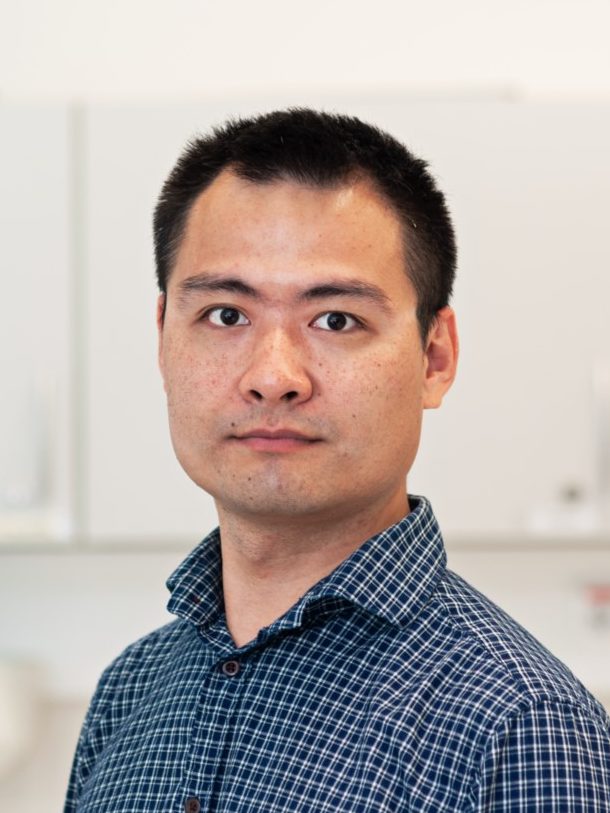
Dag Sehlin is a Professor at Uppsala University working at the Department of Public Health and Care Sciences; Molecular Geriatrics/Rudbeck Laboratory. His research focuses on developing advanced antibody-based imaging techniques and therapeutic approaches for neurodegenerative diseases, particularly Alzheimer's disease. He maintains an active research program with numerous publications appearing through 2025. Sehlin's research interests center on amyloid-beta pathology, blood-brain barrier penetration mechanisms, and antibody engineering for neurodegenerative disease applications. His work explores how bispecific antibodies can be engineered to cross the blood-brain barrier via transferrin receptor-mediated transport, enabling both diagnostic imaging and potential therapeutic interventions for Alzheimer's disease. His team also investigates alpha-synuclein pathology related to Parkinson's disease and develops novel imaging techniques for detecting protein aggregates in the brain. Analysis of his recent publications reveals a clear research trajectory focused on optimizing antibody design for brain delivery, with particular attention to transferrin receptor binding affinity, antibody valency, and pharmacokinetic properties. His work bridges molecular imaging, antibody engineering, and neurodegenerative disease pathology, with applications spanning both diagnostic PET/SPECT imaging and potential immunotherapies. Sehlin collaborates extensively with researchers across multiple disciplines, including nuclear medicine, molecular imaging, and neuroscience. His laboratory appears to focus on developing and testing brain-penetrating antibody constructs using various animal models of neurodegenerative diseases. The team employs advanced imaging techniques including PET, SPECT, and fluorescence microscopy to evaluate antibody distribution and target engagement in the brain.