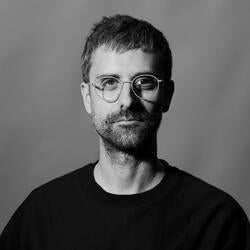
Lucía Jalón Oyarzun is a Lecturer and Scientist at École Polytechnique Fédérale de Lausanne (EPFL), affiliated with the School of Architecture, Civil and Environmental Engineering (ENAC). She holds dual teaching appointments at EDAR-ENS (Doctoral Program in Architecture) and SSIE-ENS (Environmental Sciences and Engineering School), while serving as Head of Research at ALICE (Atelier de la Conception de l'Espace). Her work bridges architectural practice, theoretical research, and political philosophy through interdisciplinary investigation of spatial practices under contemporary capitalism. Her educational background includes graduation from ETSAM School of Architecture of Madrid, a Master in Advanced Architectural Projects, and a PhD titled 'Exception and the rebel body: the political as generator of a minor architecture' completed in 2017. Prior to her current position at EPFL since 2019, she was Director of Academic Affairs at Escuela SUR in Madrid (2017-2020) and a researcher at the Cultural Landscape Research Group at Universidad Politécnica de Madrid since 2010. Jalón Oyarzun's research centers on clandestine spatial practices , affective image theory , and minor architectures as frameworks for understanding how bodies navigate, resist, and transform spatial environments under capitalist and disciplinary regimes. Her work investigates the political dimensions of landscape as affective image, environmental semiotics, and the anaesthetic effects of contemporary attentional economies on spatial capabilities. She employs architectural ethnography, historical analysis, and philosophical inquiry to examine spatial resistance through embodied knowledge, particularly in contexts like the Underground Railroad and Sahrawi refugee camps. Her recent publications reveal a trajectory moving from theoretical explorations of minor architectures and political resistance toward practical applications in sustainable mobility through concepts like passage-paysage , which reimagines urban thoroughfares as landscape infrastructures supporting low-carbon mobility. Her scholarship increasingly engages with digital environments, examining how interstitial spaces within highly monitored digital landscapes might foster minor architectures capable of blooming outside dominant control systems. Principal investigator for ALICE laboratory's contributive design approach Curator of '4R Resistencia, Rebeldía, Revuelta, Revolución' exhibition (2018) Contributor to FOODSCAPES, the 2023 Spanish Pavilion at the Venice Biennale Researcher on Sahrawi oral and embodied architectural knowledge As a supervisor, Jalón Oyarzun guides doctoral students in exploring spatial practices, architectural theory, and political dimensions of design. Her lab, ALICE, functions as a collaborative space for developing alternative architectural practices based on collective authorship and common knowledge. Current projects focus on transforming urban infrastructure through landscape design, examining digital environments as spatial territories, and developing methodologies for architectural ethnography that capture embodied knowledge systems often excluded from traditional architectural discourse.