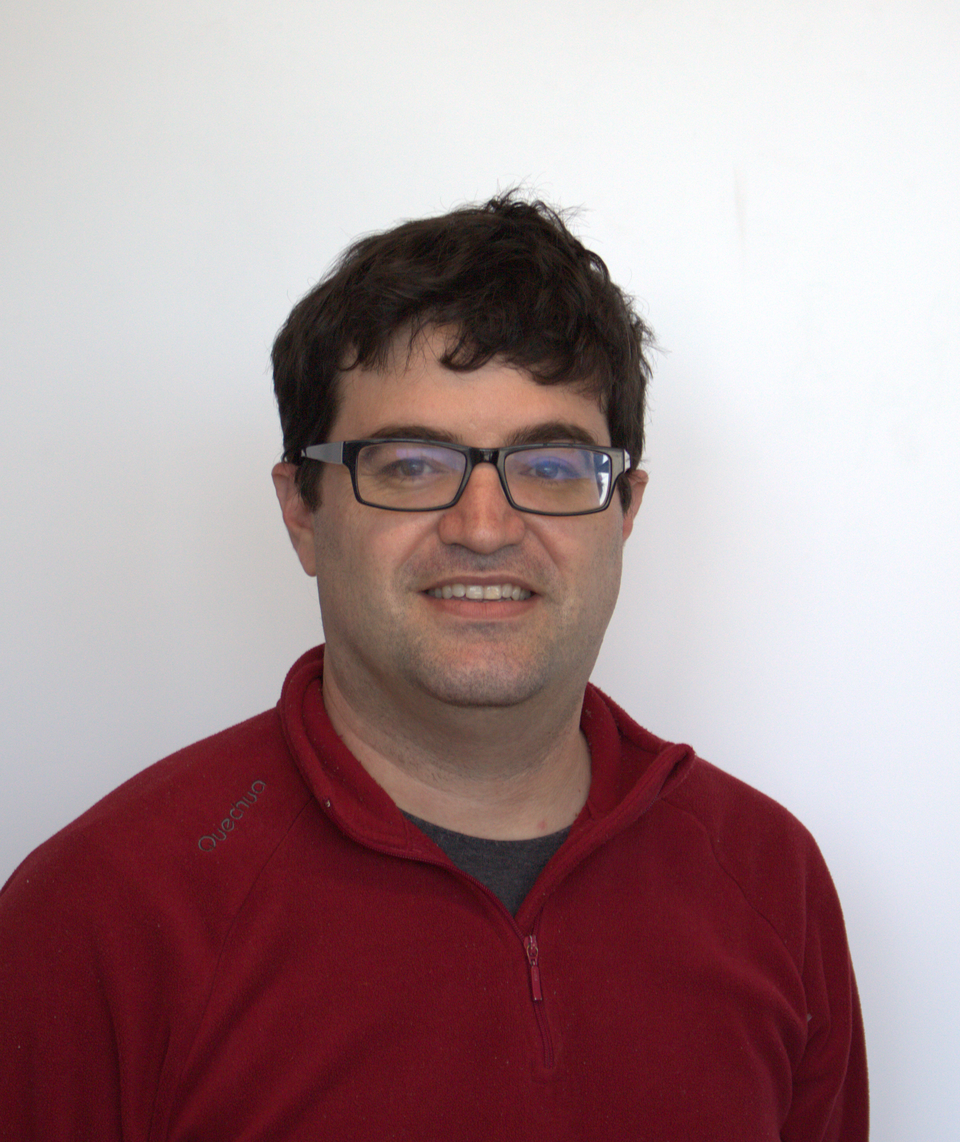
Jean-Luc Autran is an Exceptional University Professor (PRCE2) at Aix-Marseille University, affiliated with the Department of Detection, Radiation and Reliability (DETECT) within the Faculty of Sciences. Since July 2023, he has been temporarily assigned to the University of Rennes for managerial roles. His research focuses on radiation effects in microelectronics, particularly soft errors caused by atmospheric neutrons, muons, protons, and terrestrial radiation in nanoscale devices. Key Research Areas: Microelectronics Reliability, Single-Event Effects, Atmospheric Radiation, Neutron Interactions, Muon Physics, Radiation-Hardened Design. Scientific Leadership: As an Honorary Member of the Institut Universitaire de France (since 2003), he leads multidisciplinary efforts from radiation metrology to multi-physics circuit simulation via tools like GEANT4, SRIM, and NGSPICE. His work spans 25+ years, evolving from quantum transport in nano-MOSFETs (1998-2008) to atmospheric radiation effects (2005-present). Recent Contributions: 2025 studies on ultrawide-bandgap semiconductors, deep learning-based radiation simulations, and JET Tokamak neutron experiments. He pioneers a multi-scale Single-Event Effect simulation framework for decananometer CMOS, integrating particle physics, device modeling, and system-level error rate prediction. Scientific Awards: Honorary Member, Institut Universitaire de France (2003 class). Educational Impact: Teaches graduate courses in quantum mechanics simulation, nanoelectronics reliability, and radiation detection at Aix-Marseille University, with lectures delivered in English for international audiences.
Daniel Nagy is an Assistant Professor at the Department of Electronics and Computing within the Higher Polytechnic School of Engineering at the University of Seville. His research focuses on nanoelectronics, semiconductor device simulation, and TCAD technologies. He leads the ARQCOMP research group, specializing in computer architecture and novel transistor design. Education details are not explicitly provided in the texts, but his academic focus suggests advanced training in electronics engineering or related fields. His research interests include quantum transport phenomena, nanoscale device variability analysis, and computational modeling of FinFETs, nanowire FETs, and nanosheet transistors. He has extensively contributed to TCAD simulation frameworks such as NESS (Nano-Electronic Simulation Software), emphasizing open-source tools. Research Trends: His work emphasizes transistor scaling challenges for sub-2nm nodes, device variability mitigation, and the development of modular simulation tools. Key topics include nanosheet FET optimization, POM-based molecular memory systems, and benchmarking of emerging transistor architectures. His studies often bridge quantum mechanics (via Schrödinger equation modeling) with classical transport phenomena. No scientific awards are mentioned in the provided texts. He has advised no publicly listed PhD/Master’s students. His ARQCOMP group collaborates on next-generation electronic device architectures and simulation methodologies. Labs/Teams: The ARQCOMP group focuses on advancing computer architecture and nanoelectronic device simulation through interdisciplinary approaches, integrating computational physics, materials science, and electrical engineering.
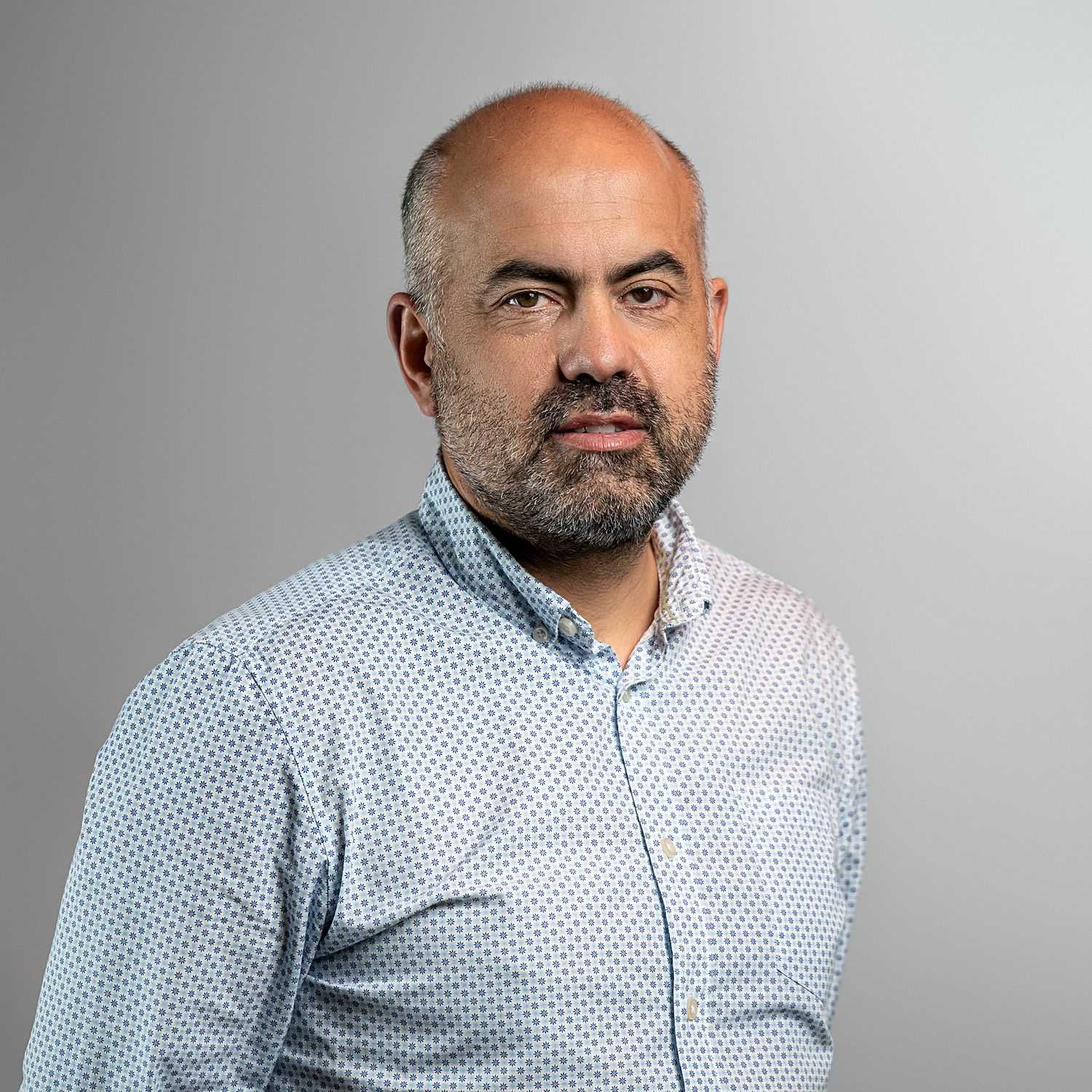
Prof. Dr.-Ing. Guillermo Payá Vayá leads the Chair for Chip Design for Embedded Computing at Technical University of Braunschweig's Faculty of Electrical Engineering, Information Technology, and Physics. His research focuses on processor architecture design, FPGA/ASIC implementations, and optimization techniques for embedded systems, particularly in high-performance, low-power, and radiation-hardened computing domains. Primary research interests include: Application-Specific Instruction Set Processors (ASIPs) and compiler co-design Radiation effects characterization and fault-tolerant hardware Ultra-low-power processor architectures for embedded AI Hardware acceleration of neural networks and computer vision algorithms Memory subsystem optimization and parallel computing techniques Recent publications demonstrate strong emphasis on radiation-hardened electronics (35% of recent works), AI accelerator design (27%), and ultra-low-power systems (20%), with growing interest in biomedical applications. Experimental validation through FPGA prototyping and semiconductor testing is a consistent methodology across research domains. Leads research team investigating: Radiation-tolerant FPGA architectures (Trumann, Weide-Zaage) Vector processor optimization (Gesper, Thieu) Nano-scale controller design (Weißbrich) AI-hardware co-design (Kautz, Beyer)
Matthias Bucher is a Professor at the Department of Electronics and Computer Architecture , School of Electronic & Computer Engineering , Technical University of Crete, Greece. His research focuses on analog/RF integrated circuit design, compact modeling, and semiconductor device physics. Education : PhD (1999) and MSc (1993) in Electrical Engineering from EPFL, Switzerland Research Areas : EKV3 MOSFET compact modeling, RF characterization, nanoscale CMOS, and high-voltage device modeling Courses Taught : Electronics II, Analog CMOS Circuit Design, Special Topics in Analog CMOS Circuit Design His work emphasizes compact modeling for RF and analog circuits, with applications in nanoscale devices and radiation-hardened electronics. Recent publications highlight open-source PDK initiatives, Verilog-A standardization, and noise modeling in advanced transistors. He leads the Electronics Laboratory at TUC and collaborates with microelectronics companies. Bucher is a member of IEEE and the Technical Chamber of Greece, with over 45 publications and two book chapters to his credit.
Michael Quell is a Researcher at the Microelectronics Research Department (E360-01) at TU Wien. His work focuses on numerical methods for semiconductor process simulation, including level-set techniques, hierarchical mesh processing, and high-performance computing. He holds a Dipl.-Ing. (Master's equivalent) and a Dr.techn. (PhD) in technical sciences. His research emphasizes parallel algorithms for material flow simulation, adaptive mesh refinement, and TCAD applications. Education: Dipl.-Ing. and Dr.techn. in Technical Sciences Research interests span computational engineering, numerical analysis, and semiconductor fabrication modeling. Key contributions include shared-memory parallel implementations of the Fast Marching Method, hierarchical re-distancing algorithms, and feature detection for topography simulations. His work often addresses challenges in nanoscale fabrication processes and multi-material wet etching. Collaborations involve projects on parallel mesh adaptation frameworks and quantum transport simulations. He has contributed to advancing computational tools for semiconductor process design and manufacturing optimization.
Marco Ernesto Vallone is a Fixed-term Assistant Professor at the Department of Electronics and Telecommunications (DET) at Politecnico di Torino (PoliTO), where he is also a member of the PhotoNext Interdepartmental Center for Applied Photonics. His academic appointments include membership in the College of Electronic, Telecommunications, and Physics Engineering. He holds national scientific qualifications for Associate Professor positions in Electronics (09/E3), Theoretical Physics of Matter (02/B2), and Experimental Physics of Matter (02/B1). Dr. Vallone's research spans multiple areas of optoelectronics and semiconductor physics, with a particular focus on infrared detectors, light-emitting diodes, silicon photonics, and photodetectors. His work combines theoretical modeling with practical applications, specializing in multiphysics CAD of vertical-cavity surface-emitting lasers (VCSELs), efficiency and reliability of visible and UV LEDs, multiscale physics-based modeling of optoelectronic devices, far-infrared image sensor design, and Si and III-V photonic integrated circuits. His research addresses critical challenges in high operating temperature (HOT) infrared detectors, germanium-on-silicon waveguide photodetectors, and plasmonic structures for enhanced optoelectronic performance. His extensive publication record from 2022-2025 demonstrates a consistent research trajectory focused on advancing infrared detection technology, photodetector design, and semiconductor device modeling. His work shows a progression from fundamental quantum mechanical investigations to practical engineering applications, particularly in collaboration with industry partners like Cisco, Huawei, and AIM Infrarot-Module. The research consistently bridges theoretical physics with practical device engineering, with increasing emphasis on plasmonic enhancement techniques and high-temperature operation of infrared detectors. Scientific Qualifications: National Scientific Qualification as Associate Professor in Electronics (09/E3), since November 2020 National Scientific Qualification as Associate Professor in Theoretical Physics of Matter (02/B2), since May 2021 National Scientific Qualification as Associate Professor in Experimental Physics of Matter (02/B1), since May 2021 Dr. Vallone serves as a PhD co-supervisor and Master's thesis co-supervisor, notably guiding Matteo Giovanni Carmelo Alasio's doctoral research on "Ge-on-Si photodetectors for silicon photonics: multiphysics modeling and design." His research funding includes multiple industrial contracts as Principal Investigator with AIM Infrarot-Module, Cisco Systems, and Huawei, focusing on infrared detector design, silicon photonics integration, and laser development. He has also participated in international research collaborations with Boston University, University of Cambridge, University of Padova, and University of Modena and Reggio Emilia, particularly studying GaN/InGaN multi-quantum well LEDs. As a member of the Microwave and Optoelectronics Group (MOG) at DET, Dr. Vallone contributes to the department's research infrastructure while maintaining active industry partnerships that translate academic research into practical applications for telecommunications, defense, and astronomical imaging systems.
Paolo PAVAN is a Full Professor at the Department of Engineering 'Enzo Ferrari' of the University of Modena and Reggio Emilia (UNIMORE). He leads research in neuromorphic electronics, semiconductor devices, and wearable biomedical sensors. His work spans memristor-based neural networks, power electronics (GaN MOSFETs), and driver safety systems leveraging physiological signals like PPG and skin conductance. He teaches advanced courses on electronic systems design, neuromorphic hardware, and analog electronics. Research interests include neuromorphic computing architectures, reliability of emerging memory technologies (RRAM/FeFET), and GaN-based power devices. He has published extensively on topics like defect dynamics in semiconductors, in-memory computing, and automotive safety systems. His lab (e-lab.unimore.it) focuses on bridging device physics and circuit design for next-generation electronics. Recent studies highlight contributions to spiking neural networks using hybrid CMOS-memristor systems, driver drowsiness detection via TCNs, and TCAD analysis of GaN device instabilities. His work addresses both fundamental physics and practical applications, emphasizing energy efficiency and reliability in emerging technologies.
Antonio García Loureiro is a Full Professor in the Department of Electronics at the University of Santiago de Compostela (USC), Spain. His research focuses on high-performance computing applications in semiconductor device simulation, photovoltaics, and wireless power transmission. He leads multiple research projects including rePowerSiC and HiPerHC2DA, and has extensive collaborations with international institutions. Dr. García Loureiro received his MSc in Electronic Physics and PhD in Electronics and Computer Science from the University of Santiago de Compostela in 1994 and 1999, respectively. He has been a visiting researcher at the Edinburgh Parallel Computing Centre (UK) and the Device Modeling Group at the University of Glasgow (UK). His primary research interests span high-performance computing for semiconductor device simulation, photovoltaic systems, and wireless power transmission technologies. He specializes in parallelization and optimization of numerical simulators for semiconductor devices, transistors, and solar cells. His work bridges the gap between computational methods and practical electronic device design, with applications in energy harvesting and conversion systems. Recent publications reveal a strong trend toward machine learning applications in semiconductor device modeling and optimization of laser power converters. His research group has made significant contributions to III-V nitride-based optical photovoltaic converters, silicon carbide systems for space applications, and high-efficiency photovoltaic technologies. The work spans from fundamental semiconductor physics to practical engineering applications in wireless power transmission. Dr. García Loureiro has received support for numerous research projects including: rePowerSiC: High-Efficiency High-Power Laser Beaming In-Space Systems Based On Sic (2024-2028) HiPerHC2DA: High Performance, Heterogeneous and Cloud Computing for Demanding Applications (2023-2026) Ultra-Efficient Micro-Scale New Generation Hybrid Concentrator Photovoltaic Systems (2020-2023) Network on variability in Nanoelectronics (2014-2016) He leads a research team focused on semiconductor device simulation and photovoltaic technologies, with strong connections to international research groups working on high-performance computing applications in electronics. His laboratory utilizes advanced computational resources for semiconductor device modeling and optimization.
Oves Badami is an Assistant Professor in the Department of Electrical Engineering at the Indian Institute of Technology Hyderabad. His research focuses on semiconductor devices, computational nanoelectronics, and TCAD tool development for modeling and simulation of nanoscale transistors. Research includes carrier transport in nanoelectronic devices and multiscale modeling. Advises doctoral and master’s students on projects like physics-aware machine learning simulations and RRAM-based authentication systems. Contact: oves.badami@ee.iith.ac.in , Room B-204, Academic Block B, IIT Hyderabad, Kandi, Sangareddy, Telangana - 502285.
Gian Franco Dalla Betta is a Full Professor at the Department of Industrial Engineering, University of Trento, and Deputy Coordinator of the Doctoral Programme in Materials, Mechatronics and Systems Engineering. His work focuses on silicon radiation detectors, CMOS image sensors, and microelectronics for high-energy physics and medical imaging applications. Secondary School Degree, Pio X Institute, Treviso (1985) M.Sc. in Electronic Engineering, University of Bologna (1992) Ph.D. in Materials, Technologies and Electronic Devices, University of Trento (1997) His research spans: Radiation detector design (PIN diodes, strip/pixel detectors, 3D sensors, LGADs) CMOS photodetectors (SPADs, SiPMs, CAPD) Radiation damage modeling and mitigation Hybrid neutron detectors and active-edge terminations Recent publications highlight advancements in 3D sensor design for timing applications, LGADs for particle tracking, and CMOS SPAD arrays. Key subfields include radiation hardness, charge multiplication, and TCAD-aided process optimization. Scientific recognition includes the IEEE Transactions on Nuclear Science 2025 Best Paper Award . His work has been instrumental in detector production for CERN experiments like ATLAS and ALICE. At ITC-IRST (now FBK), he pioneered silicon fabrication processes for radiation detectors and contributed to international collaborations such as INFN and CMS upgrades.
Lucio Pancheri is an Associate Professor at the Department of Industrial Engineering , University of Trento. His research focuses on semiconductor devices, CMOS sensors, and radiation detection technologies. 1996: Scientific School Certificate at Liceo 'B. Russell', Italy 2002: M.S. in Materials Engineering, University of Trento (cum laude) 2006: PhD in Information and Communication Technologies, University of Trento Research Interests: Design and characterization of silicon photodetectors for high-resolution radiation detection, SPADs in CMOS for time-resolved imaging, and fully depleted CMOS sensors for medical and particle physics. Collaborates with INFN, FBK, and international institutions. Key Article Trends: Recent work emphasizes 4D particle tracking , radiation hardness in advanced CMOS, and hybrid perovskite/organic detectors . Applications span medical imaging , high-energy physics , and flexible electronics . Scientific Roles & Awards: IEEE Senior Member (2022) Chair, IEEE IEDM ODI Subcommittee (2023) Technical Committee, IEEE IEDM (2021-2022) Associate Editor, IEEE Transactions on Electron Devices (2018-present) Collaborations & Projects: Leads the ARCADIA project for customized fully depleted CMOS processes. Works with University of Munich on hybrid CMOS-organic sensors and integrates detectors for UAV-based radiation monitoring ( DRAGoN ).
Professor Peter Gammon is a leading researcher in Silicon Carbide (SiC) power electronic devices at the University of Warwick’s School of Engineering, serving as faculty since 2012. He holds a MEng and PhD, alongside prestigious fellowships like SMIEEE, MIET, and SFHEA. His work focuses on advancing SiC technology for electric vehicles, satellites, renewable energy, and grid applications. He leads the REWIRE Innovation and Knowledge Centre (UKRI-funded £11m), aiming to commercialize wide-bandgap semiconductors with over 30 industrial partners. Research Interests include optimizing SiC MOSFET design, radiation-hard devices for space, and high-voltage architectures. His team collaborates across the SiC supply chain, ensuring lab-to-market transitions. Key grants include the £2.5m EPSRC-funded UP-SiC project (2024-2027) and the EPSRC Centre for Power Electronics Switch Optimisation Theme (2018-2021). Facilities include the Science City Cleanroom, SiC CVD reactor, and packaging cleanroom. Notable awards include the Royal Academy of Engineering Research Fellowship (2012-2017). His research group, the PEATER Group, specializes in SiC device development with global recognition. Advising PhD students in areas like neutron testing and rad-hard devices, Gammon also delivers industry-focused tutorials on SiC power electronics. Recent projects include SiCSat (EPSRC £746k) for satellite applications and AdvanSiC (Horizon Europe £988k) for medium-voltage grids. His work bridges academia and industry, addressing challenges in SiC yield, cost, and reliability while exploring emerging applications like space and high-voltage grid systems.
Felipe Iza is a Professor of Low-Temperature Plasma Science and Engineering at Loughborough University, U.K. , affiliated with the School of Mechanical, Electrical and Manufacturing Engineering . He holds a BSc from the University of Navarra (Spain), MSc and PhD from Northeastern University (USA). His career includes roles as Postdoctoral Fellow at Pohang University of Science and Technology (South Korea) and Research Professor before joining Loughborough in 2007. He is the founding technical director of Zayndu Ltd and has led roles such as Director of Postgraduate Research and Open Research Lead. His research focuses on experimental and computational low-temperature plasmas for biomedical, agricultural, and environmental applications, emphasizing microplasmas and atmospheric discharges. Key professional activities include membership in the American Vacuum Society (AVS), Institute of Physics (IoP), and IEEE (Senior Member). He has organized major conferences like ICOPS 2012 and chairs committees for Plasma Physics and Technology symposia. His work bridges plasma physics with engineering applications, particularly in plasma-liquid interactions for bioengineering and sustainability. Scientific Achievements: Developed plasma-based technologies for biogas production, crop enhancement, and sterilization. Pioneered studies on reactive species in atmospheric plasmas and their biomedical/agricultural impacts. Advanced plasma modeling for semiconductor manufacturing and materials processing. Grants & Labs: Recipient of European COST actions funding (TD1208, CA19110). Leads the Plasma and Pulsed Power research group at Loughborough. Developed a DBD plasma microbubble reactor for biomass pretreatment.
Rakshith Saligram is an Assistant Professor in the Min H. Kao Department of Electrical Engineering and Computer Science at the University of Tennessee, Knoxville, part of the Tickle College of Engineering. His research focuses on cryogenic VLSI circuits, quantum computing hardware, and TCAD modeling. He holds a PhD from Georgia Institute of Technology, an MS from the University of Southern California, and a BE from BMS College of Engineering, India. Education: PhD Electrical and Computer Engineering, Georgia Tech (Atlanta, U.S.) MS Electrical and Computer Engineering, University of Southern California (Los Angeles, U.S.) BE Electronics and Communication, BMS College of Engineering (Bangalore, India) His research interests include cryogenic circuits, compute-in-memory systems, and high-performance computing architectures. Recent work spans cryogenic DRAM designs, analog CIM systems, and cryogenic CPU optimization. His publications highlight advancements in low-temperature operation (down to -270°C) for quantum computing applications. Awards & Recognition: Colonel Oscar P. Cleaver Dissertation Proposal Award Nominee (2023) EDS PhD Fellowship (2022) Qualcomm Innovation Fellowship Finalist (2022) He has organized collaborations with IMEC USA and presented at venues like IEEE CICC and IEDM. His lab focuses on bridging cryogenic electronics and quantum computing infrastructure.
Nicolò Zagni is a Postdoc Researcher at the University of Modena and Reggio Emilia (UNIMORE) , focusing on Gallium Nitride (GaN) and Ferroelectric device reliability. He earned a PhD in Information and Communication Technologies (ICT) in 2021 with a thesis on Simulation and Modeling of GaN Electronics . His research spans power electronics , dynamic on-resistance (RON) instabilities , phase-transition logic switches , and negative capacitance transistors . He has explored GaN device degradation under OFF-state stress , hole emission from carbon traps , and ferroelectric endurance . Key article trends include device simulation (TCAD) , trap dynamics in GaN , and novel materials for RF/millimeter-wave amplifiers . Collaborations include institutions like Purdue University and studies on SiC and MoS₂ applications.