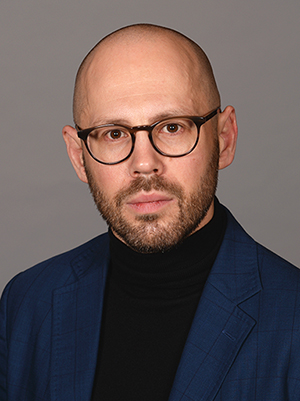
Antonio Fábregas (b. 1978) is a Professor at the Department of Language and Literature, Norwegian University of Science and Technology (NTNU), specializing in Spanish grammar, variation, morphosyntax, comparative linguistics, and semantics. He has authored 8 monographs and over 150 articles/book chapters. Research : Focuses on syntax, semantics, phonology, and their interactions in word formation. Explores Spanish language variation, sociolinguistic contact phenomena, and theoretical morphology. Teaching : Engaged in linguistics education at NTNU (office: Bygg 4 Dragvoll, Trondheim). Publications : Recent work includes analyses of Spanish prefixation, argument structure, elative compounds, and negation-participle constructions. Key contributions to morphological theory and Romance language comparison.
Sverre Stausland Johnsen is Professor of General Linguistics and Scandinavian Linguistics in the Department of Linguistics and Scandinavian Studies at the University of Oslo. His academic work focuses on language change within the fields of phonology, historical linguistics, and sociolinguistics, with particular emphasis on Norwegian language history and Scandinavian languages. Johnsen's research interests span phonology, sound change, language change, historical linguistics, and sociolinguistics. His work often examines how linguistic structures evolve over time, with special attention to Norwegian orthographic reforms, phonological patterns in Scandinavian languages, and the historical development of linguistic features. He has made significant contributions to understanding vowel harmony, retroflexion in Norwegian, and the historical development of grammatical structures in Old Norse and related languages. His recent publications demonstrate a consistent focus on Norwegian language history, orthography reforms, and phonological patterns. The 2021-2025 publications show particular emphasis on Somali tonal systems, Norwegian word formation, stress patterns in loanwords, and historical aspects of Norwegian orthography, especially regarding the 1901 spelling reform. His work combines theoretical linguistic frameworks with detailed historical analysis of Scandinavian languages. Johnsen is actively involved in two research groups: Language Change and Phonology. His ongoing projects include studies on the spread of uvular /r/ in Norway, the historical development of grammatical structures, and the relationship between phonetic perception and phonological change. His research often bridges theoretical linguistics with practical applications in understanding language evolution and variation.
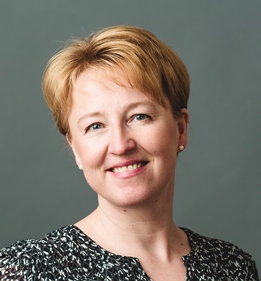
Yulia Rodina is a Professor of Linguistics and Language Acquisition at UiT The Arctic University of Norway, affiliated with the Department of Language and Culture. She leads the AcqVA-Nor research group and directs the Flere språk til flere initiative. As Deputy Chair of the HSL Faculty Research Ethics Committee, she oversees ethical standards in research. Her research focuses on multilingualism, second/third language acquisition, and language attrition using experimental psycholinguistic methods. Key themes include grammatical gender, morphosyntax, and cross-linguistic influence in languages like Russian, Norwegian, Bosnian, and Serbian. She investigates heritage language development in children across Norway, Germany, and the UK, and explores language variation and change in Norwegian dialects. Rodina teaches courses in Second Language Acquisition, Multilingualism, and Varieties of English. She supervises MA theses on topics such as gaming's role in vocabulary acquisition and syntactic development in bilingual children. Her work is supported by projects funded through the Arctic MSCA, RCN, and EU initiatives like AcqVA Aurora and MultiGender. She collaborates with international teams on studies like the MAP project (Heritage Russian in Spain) and CLIMAD (cross-linguistic influence in multilingualism). Her labs include AcqVA, PoLaR, and C-LaBL, focusing on acquisition, variation, and attrition processes.
Professor Ivar Berg is a leading scholar in Scandinavian linguistics at NTNU's Department of Language and Literature. His research focuses on the history of Norwegian and related languages over the past 1,500 years, encompassing both structural linguistic changes and sociolinguistic shifts. He teaches courses on modern Norwegian dialects and grammar, including NORX2200 (Old Norse/Runology) and NORD1106 (Dialectology and Language History). Research Interests: Historical sociolinguistics of Scandinavian languages Old Norse and medieval Icelandic textual analysis Toponymic evolution and cultural geography Phonological changes in Norwegian dialects Language policy during the Reformation Recent Work Trends: His 2025 doctoral dissertation on Latin manuscripts in medieval Iceland highlights intertextual recycling processes. Recent articles (2024-2021) explore palatalization in Norwegian phonology, toponymic history, and case system evolution. His 2019 book Språket som vart norsk provides a comprehensive overview of Norwegian language development from Proto-Norse to the 19th century. Outreach: Engages in public lectures on topics like dialect preservation, historical literacy practices, and the sociolinguistic impact of the Reformation. Recent speaking engagements include the University of Bristol (2025), SWPS University (2025), and the Nordic Dialectology Conference (2022).
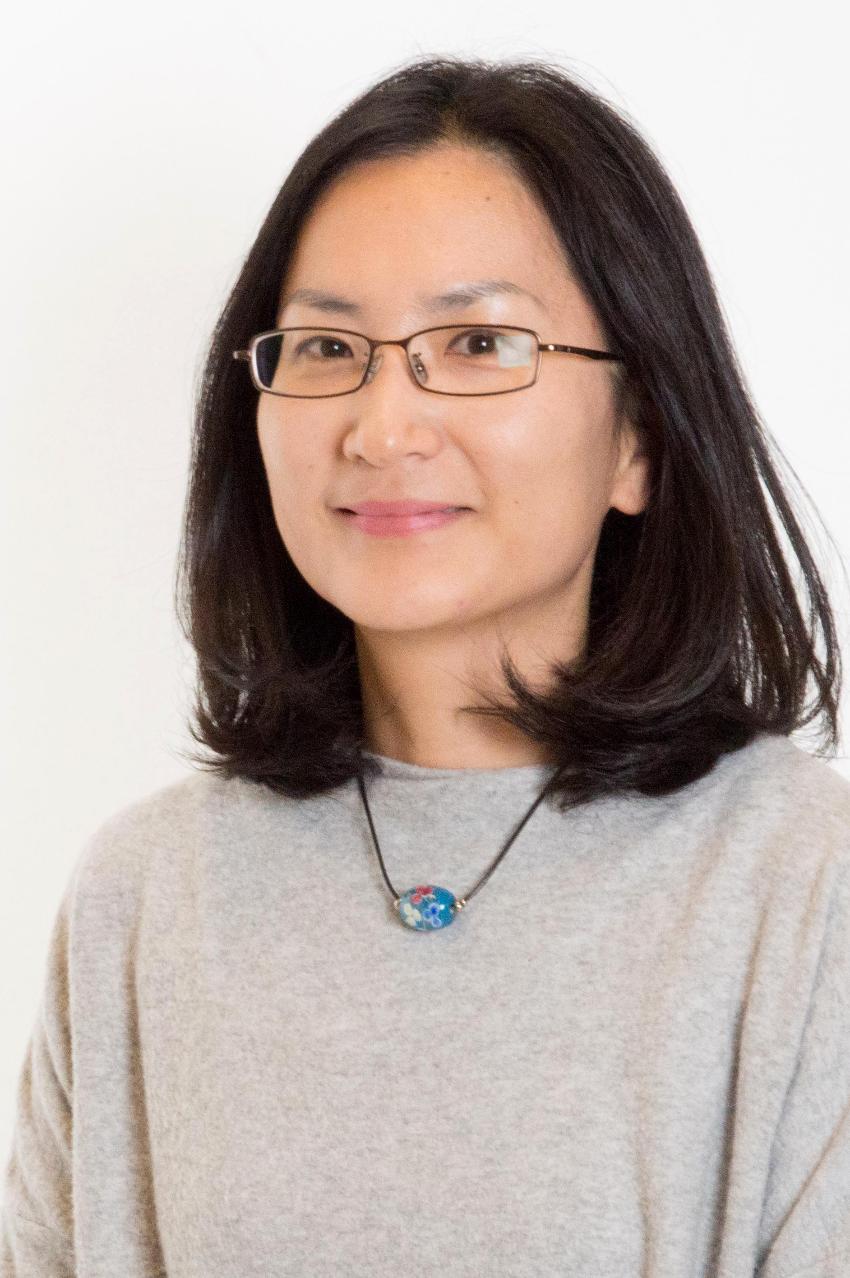
Minjeong Son is an Associate Professor at the University of Tromsø - The Arctic University of Norway. Her research focuses on teacher education reform, intercultural communicative competence, and plurilingual pedagogy. She actively collaborates with schools through reinforced school-university partnerships, emphasizing practical integration of theoretical concepts. Key research interests include: Third-space partnerships in teacher education Development of intercultural competence in English classrooms Plurilingual approaches for pre-service teachers Educational systems analysis using activity theory Recent work examines contradictions in creating innovative teacher education models, with notable contributions to Nordic educational journals. She co-leads the Research in Teacher Education Practices (RiTE) group and participates in AcqVA-Nor initiatives. Publications explore topics ranging from motion verb syntax in Austronesian languages (2008) to contemporary Norwegian educational challenges (2025). Her work bridges linguistic theory with practical pedagogical implementation.
Anu Laanemets is an Associate Professor in Scandinavian Languages at the University of Oslo , specializing in Norwegian linguistics. Email: anu.laanemets@iln.uio.no Phone: +47 22854906 Office: Niels Henrik Abels vei 36, Henrik Wergelands hus, Oslo Research Interests include historical syntax, comparative linguistics, and corpus-based studies. Recent work explores pannekakesetninger (Norwegian pancake sentences) and existential constructions in Norwegian dialects. Publications highlight collaborations on treebank development and diachronic syntax analysis. She contributes to projects involving grammatical structures and linguistic variation. Completed Projects include research on Scandinavian language corpora and historical syntax patterns.
Gabriela Saldanha Viva is a Researcher at the Centre for Sustainable Healthcare Education (SHE) at the University of Oslo. She serves as Project Manager for the Erasmus+ Partnership "DEBATING DEMOCRACY" and coordinates the Honors Certificate on the Politics of Sustainability in Public Health. Additionally, she is a member of the MEDRA research team and organizes the SHE Talks lunchtime seminar series. Her educational background: Degree in Legal Translation from the Universidad de la República (Uruguay) MPhil from UMIST (now the University of Manchester) PhD from Dublin City University, Ireland Dr. Saldanha Viva's research focuses on the intersection of language, knowledge, and power. As a linguist and discourse analyst, she investigates how language shapes collective understandings of the world and influences social processes. Her work spans corpus linguistics, translation studies, and the analysis of health policy discourse, with particular attention to sustainability in healthcare education and democratic concepts in public health. She is also deeply engaged in methodological questions regarding what constitutes valid knowledge in research. Her recent publications reveal a strong trend in applying corpus-based methods to analyze health policy and translation phenomena. She has made significant contributions to understanding subjectification in antimicrobial resistance policy, the role of translators as artistic performers, and the methodological foundations of translation theory. Her work bridges humanities and health sciences, fostering interdisciplinary dialogue. Her scientific awards and honors include: Elected Member of the Executive Council of IATIS IATIS Solidarity & Scientific Excellence conference bursary (2021) Honorary Research Fellow, University of Warwick (2021-2024) Dr. Saldanha Viva has secured research funding including: CircleU Interdisciplinary Research Network: Global Health and Individual Responsibility: Complementary or Contradictory Concepts? (2022-2023) British Academy/AHRC/ESRC Visiting Fellowships Sponsor (2009) Her current projects include the Erasmus+ DEBATING DEMOCRACY initiative and multiple SHE Corpus research groups. She is actively involved in several research groups under SHE, including those investigating antibiotic resistance and complexity in health education, critical concept analysis in health education, Knowledge in Translation (KNOWIT), and the Medicalisation of Democratic Rights in debates about Abortion (MEDRA).
Dagmar Haumann is a Professor of English Linguistics at the Department of Foreign Languages at the University of Bergen. Her research focuses on historical linguistics, syntax, morphology, and language acquisition, with a particular emphasis on diachronic processes such as reanalysis, grammaticalization, and syntactic change in English. She has extensively studied adverbial structures, tough-constructions, and corpus-based methodologies. Haumann’s academic contributions include over 30 publications, including monographs, edited volumes, and peer-reviewed articles. Notable works include The Development of Speaker-Oriented Adverbs in English (2025) and Digitally-assisted Historical English Linguistics (2023). Her research often combines theoretical frameworks with empirical corpus data, addressing topics like argument structure changes, modal particles, and multilingualism. She has supervised numerous master’s theses and doctoral dissertations on topics ranging from Norwegian L2 learners’ challenges to historical syntactic phenomena. Her work frequently collaborates with scholars like Kristin Killie and Matthias Eitelmann, exploring reanalysis mechanisms and diachronic variation in English. Haumann’s teaching and supervision emphasize cognitive linguistic principles and practical applications of corpus linguistics in language education. She is an active participant in international conferences, contributing to discussions on language change methodologies and digital humanities approaches in linguistics.
Christer Johansson is a Professor in the Department of Linguistic, Literary and Aesthetic Studies at the University of Bergen, Norway. His research spans psycholinguistics, cognitive linguistics, discourse analysis, computational linguistics, and neuroaesthetics. He is actively involved in interdisciplinary projects combining language, cognition, and visual perception. University: University of Bergen School: Faculty of Humanities Department: Department of Linguistic, Literary and Aesthetic Studies Email: christer.johansson@uib.no Phone: +47 55582262 His educational and professional background reflects deep engagement with both theoretical and experimental approaches to language and cognition. While specific degrees are not listed, his long-standing academic position and research output suggest a strong foundation in linguistics and cognitive science. His research interests include psycholinguistics, anaphora resolution, corpus linguistics, language processing, and neuroaesthetics, particularly the cognitive perception of faces in medieval and religious art. He investigates how linguistic structures are processed and how visual and linguistic cognition interact. The 15 most recent publications show a clear trend toward interdisciplinary research, combining linguistic analysis with cognitive experiments and aesthetic theory. Early work focused on computational models of analogy and anaphora, while recent work explores metadiscourse, facial perception, and neuroaesthetic principles in historical contexts. Key themes include language processing, written composition, and the cognitive underpinnings of aesthetic experience. No scientific awards are mentioned in the provided texts. Christer Johansson has advised doctoral students, including Vibeke Rønneberg, whose thesis examined written composition and dyslexia. His research has been supported by the Research Council of Norway (Project 213534). He has organized academic workshops (e.g., WAR I and WAR II) and developed software tools for anaphora resolution and memory-based learning. He is a core member of the Humlab research group at the University of Bergen, which focuses on empirical aesthetics, digital humanities, and cognitive approaches to language and art. His collaborative work with Per Olav Folgerø and others explores topics such as facial perception in medieval iconography and the cognitive effects of language use.
Kristin Bech is a Professor of English Linguistics at the Department of Literature, Area Studies and European Languages at the University of Oslo. She specializes in historical linguistics with a focus on Germanic languages, particularly Old and Middle English. Her academic career combines rigorous research with exceptional public engagement. Department of Literature, Area Studies and European Languages, University of Oslo Member of the Institute Board at ILOS Former Chair of the National Professional Body for English Former Vice President for Education at the International Society for the Linguistics of English Professor Bech's research centers on language history, medieval linguistics, and syntactic changes across Germanic and Romance languages. She has particular expertise in noun phrases in older Germanic languages including Old English, Old Norse, Old High German, and Old Saxon. Her work utilizes corpus linguistics and annotation methods to analyze historical language patterns and changes. She emphasizes the importance of understanding language history to appreciate contemporary linguistic phenomena and challenges misconceptions about language change. Her recent publications focus on syntactic structures in early Germanic languages, particularly examining word order patterns and noun phrase construction across different historical periods. These works reveal fascinating connections between language structure and historical context, showing how linguistic elements evolve through time while maintaining underlying grammatical principles. The Student Parliament's Teaching Award 2023 (for Word Festival and music lectures) Knight of Dend Most Excellent Order of the Owl (2015) Knight of the Academic Order of the Book Globe (2023) Professor Bech actively mentors students and has developed innovative teaching approaches that combine linguistic scholarship with public engagement. She has created musical lectures that trace English language history through song, from Gregorian chants to The Beatles. Her research has been supported by the Research Council of Norway through projects on information structure and syntactic change (2011-2014) and noun phrases in early Germanic languages (2017-2021). As festival director for the Word Festival in 2020 and 2022, she organized language exhibitions and creative writing competitions that brought linguistic scholarship to the public. Her work bridges academic research and public understanding of language history, making complex linguistic concepts accessible to general audiences.
Piotr Garbacz is an Associate Professor at the Department of Linguistics and Nordic Studies (ILN), University of Oslo , since 2017. He previously served as Head of Department at ILN (2017-2020) and at the Department of Linguistics, University of Southeast Norway (2014-2016). His academic career includes postdoctoral and associate professor roles at UiO (2010-2014). PhD in Nordic Linguistics, Lund University (2010) MA in Swedish Philology, Jagiellonian University (2003) Research Interests: Garbacz specializes in syntax and morphology of Nordic languages , focusing on the interplay between these areas within generative grammar . He investigates dialectology (particularly Elvdalian and Ovansiljan dialects), language history (Swedish, Germanic, and Indo-European), and etymology . His work also extends to heritage language maintenance , as seen in the NorPol project (2020-2024) funded by the Norwegian Research Council. Article Trends: His publications since 2024 emphasize dialect revitalization , heritage language dynamics , and syntactic variation in Scandinavian languages. Key subfields include word order , negation , quantifier movement , and case systems , reflecting his expertise in generative grammar and historical linguistics . Scientific Awards: ILN Teaching Prize (2014) Teaching Award from the Student Parliament at UiO (2024) Supervision: Garbacz has mentored PhD and MA students in topics such as language change , negation , case systems , and heritage language acquisition . He currently supervises research on Swedish causative verbs and Faroese syntax . Labs & Projects: He was a key researcher in the NorPol project (2020-2024), analyzing Polish-Norwegian bilingualism, and contributes to Artificial Intelligence in language analysis .
Tanja Kupisch is a Professor of Romance Linguistics at UiT The Arctic University of Norway . Her research spans bilingualism, minority languages, and bilectalism, with a focus on phonological and syntactic variation. Education : Not explicitly mentioned in the text Research Interests : Phonological differences between European and Brazilian Portuguese Crosslinguistic influence in bidialectal speakers Age of onset effects in dialect acquisition Heritage language phonology and sociolinguistic attitudes Publication Trends : 15 most recent articles focus on bilingual phonology, dialect acquisition, and heritage language maintenance Keywords: Bilingualism, Dialectology, Phonetics, L2 Acquisition, Language Contact, Sociolinguistics Scientific Awards : No specific awards mentioned in the provided text
Nazareth Amlesom Kifle is an Associate Professor at the Department of Languages, Literature and Culture at the University College of Southeast Norway. Their primary research interests span linguistics and language didactics, focusing on syntax, morphology, lexical semantics, and second language acquisition. They hold a PhD from the University of Bergen (2012), an MA in English Language Teaching from Lancaster University (1998), and a BA in Language Studies from the University of Asmara (1996). Key research areas include syntactic functions and semantic roles (e.g., applicative constructions, causative/passive structures) and language didactics topics like learners' language and grammar pedagogy. Courses taught include English grammar, language variation, second language acquisition, and research methodology. Recent publications (2023–2005) explore teacher education in grammar, computational linguistics for language translation, and library information practices. They are affiliated with the 'Language in the individual and society' research group.
Anne Mette Sunde is a Research Fellow at the Department of Language and Culture, UiT The Arctic University of Norway in Tromsø. Her research focuses on language contact phenomena, particularly the influence of English on Norwegian, including structural borrowing, lexical innovations, and the sociolinguistic dimensions of language change. She investigates these dynamics in contexts such as digital gaming subcultures, teacher education, and media discourse. Her work explores how English impacts Norwegian grammar, vocabulary, and orthography, analyzing both subtle structural changes and overt language mixing. Sunde’s studies often address public debates about language preservation and policy, emphasizing the cultural implications of linguistic homogenization. She is affiliated with research groups like C-LaBL (Cultural and Linguistic Variation in Bilingualism) and AcqVA-Nor, contributing to interdisciplinary discussions on language acquisition and variation. Key contributions include analyses of Norwegian gaming terminology ('gamernorsk'), teacher students’ perceptions of Bokmål reform, and the syntactic effects of English on Norwegian reflexive pronouns. Her publications span peer-reviewed journals, edited volumes, and media commentary, advocating for nuanced understanding of language evolution in multilingual societies.
Hans-Olav Enger is a renowned Professor of Scandinavian Linguistics at the University of Oslo since 2008. He has held previous academic positions at the University of Stavanger (2003–2008) and Stockholm University (1992–1993, 1996–2000), and served as a part-time "Guest professor/Professor II" at the University of Zurich (2012–2019). His work focuses on the Department of Nordic Languages with expertise in morphology, grammatical gender, and diachronic linguistics. Current affiliation: University of Oslo, Nordic Languages Previous roles: Professor II (Zurich), Professor (Stavanger), Lecturer (Stockholm) Key projects: MultiGender (2019–2020), co-editor of Maal og Minne (2016–2024) Enger's research delves into grammatical gender systems , inflectional morphology , and grammaticalization processes in Scandinavian languages. His work explores the interplay between semantic rules and morphological structures, particularly in Norwegian dialects. Notable contributions include analyzing the Animacy Hierarchy , changes in plural inflection , and the autonomy of morphology in the context of sound laws. His publications reveal a focus on historical linguistics , morphosyntactic variation , and agreement patterns across Scandinavian languages. Enger has contributed to understanding gender assignment mechanisms , definiteness markers , and syntactic evolution in Norwegian dialects and beyond. Enger has supervised MA theses on topics like gender appropriation in Norwegian , linguistic features in multiethnic environments , and inflectional class changes . He actively participates in the Language Change research group and has co-edited the journal Maal og Minne since 2016.