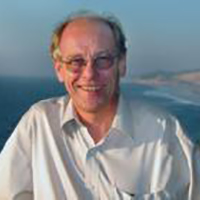
Steven Constable is a Professor of Geophysics at the Institute of Geophysics and Planetary Physics (IGPP) within the Scripps Institution of Oceanography at UC San Diego. He specializes in electrical conductivity studies of Earth’s crust and mantle, seafloor instrumentation development, and geophysical data analysis. His research focuses on understanding tectonic processes, subduction zone dynamics, and marine geohazards through electromagnetic methods. Education: B.S., University of Western Australia Ph.D., Australian National University Research Interests: Electrical conductivity of crust and mantle Seafloor instrumentation development Magnetotelluric and controlled-source electromagnetic (CSEM) methods Subduction zone fluid dynamics CO 2 sequestration monitoring Mid-ocean ridge magmatism Grants & Collaborations: NSF-NERC Collaborative Research: Magnetotelluric imaging of plume-ridge interactions (Galapagos) Magnetotelluric Investigation of the Salton Trough (MIST) Experiment PI-LAB Experiment at the Equatorial Mid-Atlantic Ridge Labs & Teams: He leads the Marine Electromagnetics Lab , developing cutting-edge instrumentation for marine geophysical surveys. His team collaborates globally on projects ranging from Arctic permafrost assessment to subduction zone imaging.
Hui Cao is the John C. Malone Professor of Applied Physics, Professor of Physics, and Professor of Electrical Engineering at Yale University. Her research focuses on mesoscopic physics, complex photonic materials, nanophotonics, and biophotonics, with experimental investigations into unconventional lasers, coherent light control, and disordered photonic systems. She leads a lab exploring applications in speckle-based imaging, deep-tissue optics, and chip-scale spectrometers. Education: Ph.D. in Physics from Stanford University (1997). Awards include the William E. Lamb Medal (2015), Guggenheim Fellowship (2013), and fellowships from the American Physical Society and Optical Society of America (2007). Research emphasizes random lasers, microcavity lasers, and wavefront shaping to control light in diffusive media. Key innovations include a disordered photonic chip spectrometer and methods to suppress nonlinear instabilities in fiber amplifiers. Awards: 12 major honors including AAAS Fellowship and multiple endowed professorships Patents: 3 core photonic technologies including random laser imaging and fiber amplifier control systems Lab Activities: Developing novel optical devices leveraging disorder and nonlinear effects
Andrea Ianiro is a Full Professor in the Aerospace Engineering Department at Universidad Carlos III de Madrid (UC3M), where he leads research in fluid dynamics, turbulence, and heat transfer. His work bridges experimental techniques and machine learning applications for flow analysis and control. He serves as Associate Editor of the International Journal of Heat and Mass Transfer (2025-2028) and directs the EFM Lab (Experimental Fluid Mechanics Laboratory) at UC3M. Professor Ianiro's research focuses on turbulence characterization, boundary layer flows, and the application of machine learning to fluid mechanics problems. His work spans experimental techniques including Particle Image Velocimetry (PIV), infrared thermography, and advanced data processing methods. Recent research emphasizes data-driven approaches for flow field reconstruction, turbulence control, and heat transfer optimization in wall-bounded flows. His projects often combine theoretical, experimental, and computational approaches to address complex fluid mechanics challenges. The analysis of his recent publications reveals a strong trend toward integrating machine learning with traditional fluid mechanics. His work increasingly focuses on using deep learning techniques (particularly CNNs and GANs) for flow field prediction from limited measurements, developing meshless computational methods for flow analysis, and applying optimization techniques (including genetic algorithms) to heat transfer enhancement. His research maintains a strong experimental foundation while embracing data-driven approaches to tackle turbulence modeling challenges. Associate Editor of the International Journal of Heat and Mass Transfer (2025-2028) Professor Ianiro leads multiple significant research projects including SPANDRELS (SParse AND paRsimonious Event-based fLow Sensing, 2025-2030), HumanIC (Human-Centric Indoor Climate for Healthcare Facilities, 2024-2027), and EXCALIBUR (Extraction of machine learning strategies for turbulent flow control, 2023-2026). His work has attracted funding from the European Commission, Spanish National Research Agency, and industry partners including Airbus. He has supervised numerous theses on topics including AI-based sensing of turbulent flows, convective heat transfer control, and turbulent boundary layers. At UC3M, Professor Ianiro directs the Experimental Fluid Mechanics Laboratory (EFM Lab), which focuses on advanced measurement techniques for fluid flow and heat transfer characterization. The lab specializes in PIV/PTV techniques, infrared thermography, and the development of novel experimental approaches for turbulence research. Current research directions include machine learning applications for flow field reconstruction, plasma-based flow control, and heat transfer optimization in complex flow configurations.
Horst A. von Recum, PhD, is the Executive Vice Chair of the Case School of Engineering and a Professor in the Department of Biomedical Engineering at Case Western Reserve University. He is also a member of the Cancer Imaging Program at the Case Comprehensive Cancer Center. His research focuses on developing novel platforms for molecular and cellular delivery, including affinity-based systems for controlled drug release and directed stem cell differentiation. Key applications include HIV therapies, wound healing, ocular disease treatments, and tissue engineering. His work emphasizes improving drug delivery precision through molecular interactions and enhancing stem cell viability for therapeutic use. Dr. von Recum’s research interests span drug delivery systems, biomaterials science, and regenerative medicine. His lab explores cyclodextrin polymers for sustained antibiotic release, affinity-driven drug refilling mechanisms, and engineering biocompatible materials to combat implant-related infections. Recently, his team has investigated microbiome interactions with neural implants and developed polymer-based solutions for localized chemotherapy. Notable contributions include advancements in PMMA bone cement composites for drug refillable depots, cyclodextrin hydrogels for controlled release, and affinity-based systems for anti-fibrotic treatments. His work bridges materials science with clinical applications, addressing challenges in orthopedic infections, neural interfaces, and cardiovascular regeneration. Scientific achievements include over 100 peer-reviewed publications. Research funding has supported projects on antimicrobial coatings, drug delivery mechanics, and stem cell differentiation. Dr. von Recum collaborates across disciplines to translate biomaterial innovations into clinical solutions.
Karen Bandeen-Roche is a Professor and the Hurley-Dorrier Professor and Chair of the Department of Biostatistics at the Johns Hopkins Bloomberg School of Public Health, with joint affiliations in the School of Medicine and the School of Nursing. She is a leading expert in biostatistical methodology, particularly in latent variable models, longitudinal analysis, and multivariate survival methods applied to aging and gerontology. Her research focuses on developing statistical models for unobservable processes such as frailty, resilience, and functional status in older adults. She has made significant contributions to the measurement of aging-related constructs and has extensive collaborative work in ophthalmology and neurology. Her methodological work includes mixture models, measurement error correction, and latent class modeling. The recent publications highlight a strong trend in gerontological biostatistics, with a focus on frailty, dementia risk, resilience, and multisystem physiological responses in aging. Her work integrates complex data from observational cohorts and clinical studies, often employing innovative latent variable frameworks to address measurement challenges in health outcomes. Scientific Awards and Honors: Marvin Zelen Leadership Award in Statistical Science (2016) Fellow of the American Statistical Association (2001) Brookdale National Fellow (1997) Golden Apple Award for Excellence in Teaching (2010) Garland Clay Award (1999) Chair, NIH BMRD Study Section (2006–2008) President, Eastern North American Region, International Biometric Society (2011–2013) Executive Board, International Biometric Society (2015–2022) Board of Directors, National Institute of Statistical Sciences (2020–2023) Karen Bandeen-Roche has been deeply involved in advising and training the next generation of researchers. She co-directs a training program in Biostatistics and Epidemiology of Aging and has received multiple teaching and mentoring awards. She has served on numerous academic committees, including appointments and promotions, faculty senate, and ethics committees at Johns Hopkins. Her grants and collaborative research span aging, dementia, ophthalmology, and cardiovascular health, often supported by NIH and other federal agencies. She leads the Center on Aging and Health and is actively involved in interdisciplinary research initiatives that bridge biostatistics, medicine, and public health. Her lab and research team focus on developing and applying advanced statistical methods to understand the biological and social determinants of healthy aging.
Xihui Liu is an Assistant Professor at the Department of Electrical and Electronic Engineering (EEE) and Institute of Data Science (IDS), The University of Hong Kong, with a courtesy appointment in the Department of Computer Science. She holds a PhD from the Chinese University of Hong Kong and a bachelor’s from Tsinghua University. Her research focuses on generative models, multimodal AI, computer vision, and their applications in embodied AI and AI for Science. Education: PhD in Multimedia Lab (MMLab), Chinese University of Hong Kong (2017–2021) Bachelor’s in Electronic Engineering, Tsinghua University (2013–2017) Research Interests: Generative models for 3D content and multimodal systems Embodied AI and vision-language integration Applications in scientific domains Awards: Adobe Research Fellowship (2020) Rising Stars in EECS (2021) WAIC Rising Stars Award (2022) Her work emphasizes interactive generative systems and benchmarks like T2I-CompBench. She co-organized workshops on multimodal foundation models and embodied AI, and currently serves as Area Chair for CVPR, NeurIPS, and ICLR.
Michael Boutros is a Full Professor at Heidelberg University and Head of Division at the German Cancer Research Center (DKFZ). He currently serves as Dean of the Medical Faculty at Heidelberg University (since 2023) and Director of the Marsilius Kolleg (since 2020). He has held leadership roles including Coordinator of the Functional and Structural Genomics Program at DKFZ (2014–2023) and Acting Scientific Director (2015–2016). His academic base is within the Medical Faculty, focusing on molecular oncology and functional genomics. PhD, Witten/Herdecke University (1993–1996) Postdoctoral Research, Harvard Medical School (1999–2003) MPA, John F. Kennedy School of Government, Harvard University (1999–2001) Additional training: Cold Spring Harbor Laboratory, SUNY Stony Brook His research centers on Wnt signaling, functional genomics, and cancer pathways. He leads major research initiatives such as CRC 1324 on Wnt signaling and the ERC Synergy Grant DECODE. His work integrates high-throughput screening, CRISPR, and systems biology to dissect signaling networks in cancer and development. He has pioneered genome-wide RNAi and CRISPR screens to identify novel regulators of Wnt signaling across models. The 15 most recent articles reflect a strong focus on Wnt pathway regulation using functional genomics in both Drosophila and mammalian systems. Themes include high-throughput screening, CRISPR-based validation, cross-species conservation, and therapeutic targeting. Keywords span Cancer Biology, Systems Biology, and Signal Transduction, with subfields like RNAi, ubiquitination, stem cell regulation, and machine learning in image analysis. Michael Boutros has received numerous scientific honors: Elected member, Leopoldina National Academy of Sciences (2022) Elected member, Heidelberg Academy of Sciences (2022) EMBO Member (2013) ERC Advanced Grant (2012) Johann-Georg Zimmermann Research Award (2007) EMBO Young Investigator (2005) Member, 'Die Junge Akademie' (2003) He has been a recipient of the Emmy-Noether Program, McCloy Fellowship, Boehringer Ingelheim PhD Fellowship, Studienstiftung Fellowship, and Fulbright Fellowship. As a mentor and research leader, he has supervised numerous early-career scientists and coordinated large collaborative grants including the FP7 'CancerPathways' project. He currently serves as Speaker of the Research and Strategy Commission at Heidelberg University and Managing Director of the Health and Life Science Alliance Heidelberg Mannheim. He leads the CRC 1324 on Wnt signaling and is Coordinating PI of the ERC Synergy Grant DECODE. He is also Spokesperson of DFG Research Group 1036 and Coordinator of the former FP7 Coordinated Project 'CancerPathways'. His lab employs cutting-edge functional genomics tools to decode signaling networks in cancer and development.
Sergiusz Michalski is a Professor at the Institute of Art History within the Faculty of Philosophy at the University of Tübingen, where he has held his position since 2001. Previously, he served as Managing Director of the Art History Institute at TU Braunschweig from 1996-2001 and completed his Habilitation at Goethe University Frankfurt in 1995. His distinguished academic career spans multiple European institutions including universities in Munich, Leipzig, Frankfurt, Kiel, Fribourg, Zurich, and Torun. Michalski's research focuses encompass Reformation and Art, Mannerism, 16th and 17th century Dutch and Flemish painting, Art theory, 18th century French painting, 20th century art, Public monuments, and Methodological questions in art history. His scholarly output includes approximately 270 publications with notable books such as 'The Reformation and the Visual Arts' (1992), 'Public Monuments' (1998), 'L'art de l'Europe Centrale' (2008), and 'Einführung in die Kunstgeschichte' (2015). His recent publications demonstrate continued engagement with contemporary issues in art history, particularly in public monument discourse, digital methodologies, and Central European art traditions. Michalski has edited several prominent art history journals including Ars Artibus et Historiae, Folia Historiae Artium, and Ikonotheka. Member of Royal Swedish Academy for Literature and Humanities Member of Polish Academy for Sciences and Arts Member of Göttingen Academy of Sciences Member of Academia Europaea / The Academy of Europe London Member of Latvian Academy of Sciences Member of Council of Experts of European Science Foundation Michalski maintains an active research profile with recent publications addressing digital methodologies in art history, contemporary monument discourse, and Central European art traditions. His international scholarly network is reflected in his editorial roles and academy memberships across Europe.
Eddie C. Red is an Associate Professor of Mathematics and Computational Sciences at Morehouse College , where he currently serves as the Interim Dean of the Science, Technology, Engineering, and Mathematics (STEM) Division. He earned his B.S. from Morehouse College (class of 2000) , followed by his M.S. and Ph.D. from Florida Agricultural and Mechanical University . Dr. Red also completed post-doctoral education at Lawrence Berkeley National Laboratory . Interim Dean, STEM Division Former Chair, Mathematics and Computational Science Division Former Chair, Physics & Dual-Degree Engineering Department Dr. Red’s research interests bridge atomic physics, quantum mechanics, and computational modeling , with a focus on: Photoionization cross-sections Bound states in the continuum Velocity map imaging techniques Mathematical formulations for quantum operators His work has resulted in publications in Physical Review A, Communications Physics, and the Journal of Physics B , alongside numerous conference presentations. Dr. Red has led the NuMaSS (Nuclear, Materials, and Space Science) Summer Enrichment Program for K-12 students and directed the Research Experience with Diversification Laboratory , emphasizing student training and research. Scientific awards include: Principal Investigator for Department of Energy National Nuclear Security Administration awards Dr. Red has served on multiple faculty governance committees, including the Admissions Committee , Faculty Grievance Committee , and Faculty Research Committee .
Professor Shervin Farridnejad is a faculty member at the Asia-Africa Institute of the University of Hamburg, where he holds the Professorship of Iranian Studies since September 2022. He also serves as the Head of the MA program 'Manuscript Cultures' at the Centre for the Study of Manuscript Cultures (CSMC) within the Cluster of Excellence 'Understanding Written Artefacts'. PhD in Ancient and Middle Iranian Philology and Zoroastrian Studies (2014) - Georg-August University Göttingen MA in Ancient Iranian Studies (2007-2009) - Georg-August University Göttingen MA in Fine Arts and Art History (2003-2006) - Tarbiat Modares University Tehran BA in Fine Arts (Painting) (1998-2002) - Tehran University His research focuses on Zoroastrianism , particularly examining its cultural and religious history from antiquity to the early Islamic period. He investigates the dynamics between Zoroastrians and non-Zoroastrians, Zoroastrian art and iconography, and manuscript cultures. His work also extends to Judeo-Persian literature , Ancient Iranian philology , and Persian calligraphy . Recent publications highlight ritual practices in Zoroastrianism, including sacrificial food traditions and gift-exchange theology. The 2024 article on canine roles in Zoroastrian meat ethics and 2023 works on Safavid manuscript iconography demonstrate his interdisciplinary approach combining textual analysis with visual culture studies. 2022-2024: Editorial board member for Sasanian Studies series 2020-2023: Book Review Editor of the journal Iranian Studies 2016-2022: Co-editor of Ancient Iran Series 2015-2024: Contributor to Bibliographia Iranica and DABIR journals As an active academic leader, he serves as Sustainability Officer of the Asia-Africa Institute, member of the CSMC Steering Committee, and deputy member of the Faculty Council of Humanities at University of Hamburg. His teaching spans from introductory courses on Iranian history to specialized seminars on Zoroastrian rituals and Persian manuscript cultures.
Prof. Vladimir Spokoiny is a leading figure in stochastic algorithms and nonparametric statistics at the Weierstrass Institute for Applied Analysis and Stochastics (WIAS) and Humboldt University of Berlin . His work bridges mathematical statistics with practical applications in finance, medicine, and machine learning. Born in 1959 in Moscow, USSR PhD from Lomonosov Moscow State University (1988) Habilitation from Humboldt University (1996) Head of WIAS research group since 2000 Professor at Humboldt University since 2002 Spokoiny's research focuses on adaptive nonparametric methods, high-dimensional data analysis, and statistical finance. His innovations in local homogeneity testing and propagation-separation methods have advanced volatility modeling, image analysis, and manifold learning. He employs Bayesian optimization frameworks and stochastic control techniques for financial instrument pricing. Recent scientific contributions include generalized bootstrap procedures for Bures-Wasserstein barycenters (2024), dimension-free Laplace approximation bounds (2023), and structure-adaptive manifold estimation (2022). His 19+ PhD students and editorial roles in top journals like The Annals of Statistics demonstrate sustained academic impact. International Statistical Institute member American Statistical Association fellow Institute of Mathematical Statistics member Bernoulli Society member
Lisa Wills serves as Assistant Professor of Computer Science at Duke University's Trinity College of Arts & Sciences and holds a joint appointment in Electrical and Computer Engineering at the Pratt School of Engineering since 2019. Her research bridges computer architecture and domain-specific applications, with a focus on hardware acceleration for computationally intensive fields. Dr. Wills earned her Ph.D. from Columbia University in 2014. Her academic journey reflects a deep commitment to advancing hardware-software co-design methodologies for real-world computational challenges. Her research centers on developing efficient hardware accelerators for big data analytics, particularly in genomics, graph processing, and database systems. She pioneers frameworks that simplify accelerator deployment while tackling critical bottlenecks in genomic data analysis, protein structure prediction, and privacy-preserving computing. Current work focuses on hardware-aware machine learning systems and energy-efficient architectures for emerging AI applications. Analysis of her publication record reveals a clear trajectory: from foundational work in database processing units (2014-2016) to specialized genomic accelerators (2019-2021), then evolving toward ML-enhanced design automation (2022-2023) and cutting-edge architectural abstractions (2024-2025). Her research consistently targets the intersection of hardware efficiency and domain-specific computational demands, with increasing emphasis on AI/ML workloads. Google ML and Systems Junior Faculty Award (2025) Dr. Wills actively mentors doctoral students including Chris Kjellqvist (lead architect of Beethoven accelerator framework), Mason Ma (PyTFHE FHE framework), and Mansi Choudhary (COCOSSim accelerator simulator). Her research is supported by significant grants including the NSF AI Institute: Athena ($20M, 2021-2027), Meta-funded ProSE accelerator project (2023-2026), and NSF CAREER award (2021-2026), totaling over $25M in active funding. She directs the APEX Lab (Application-driven Programmable Efficient Accelerated Systems), which develops open-source frameworks like Beethoven for FPGA/ASIC accelerator deployment and focuses on lowering barriers for non-hardware researchers to leverage custom acceleration in genomics, AI, and big data applications.
Tao Hou is an Assistant Professor in the Department of Computer Science at the University of Oregon, where he conducts research at the intersection of computational topology and machine learning. His academic journey includes a Ph.D. in Computer Science from Purdue University, a M.E. in Software Engineering from Tsinghua University, and a B.E. in Software Engineering from Beijing Institute of Technology. His research focuses on improving computational methods for topological data analysis, particularly through efficient algorithms for zigzag persistence and its applications across domains like neuroscience and materials science. Interdisciplinary applications in neuroscience (MICCAI 2024) and computational materials science (Comp. Mat. Sci. 2022) Developed open-source Python software packages for persistent cycle computation Contributed to advancements in zigzag persistence computational complexity Current research explores topological machine learning through projects like FastZigzag and LvlsetPersCyc . He teaches graduate courses on topological data analysis and algorithms theory, and actively seeks PhD students interested in combining mathematics with computer science.
Ramanujan Hegde serves as a Professor and Group Leader at the MRC Laboratory of Molecular Biology (LMB), University of Cambridge, where he directs research on membrane protein biosynthesis and cellular quality control mechanisms. His work examines how membrane proteins are accurately targeted to organelles, inserted into lipid bilayers, folded, and assembled into functional complexes, with emphasis on the cellular pathways that eliminate defective proteins to prevent disease. Professor Hegde's research program focuses on fundamental questions in cell biology: How do cells ensure precise membrane protein localization? What molecular machinery governs protein insertion and folding? How do quality control systems detect and degrade misfolded proteins? His investigations reveal that biosynthetic failures are common, triggering degradation pathways linked to diseases like neurodegeneration. Key research areas include: Intramembrane chaperone mechanisms for multipass membrane proteins Orphan subunit recognition during complex assembly Ribosome-associated mRNA degradation in autoregulation Proteasome assembly quality control ER membrane protein complex functions Molecular basis of protein aggregation diseases His 2017-2023 publications in Cell, Nature, and Science demonstrate consistent innovation in protein quality control, with landmark discoveries including UBE2O's role in orphan subunit degradation, the EMC as a transmembrane domain insertase, and TTC5-mediated tubulin autoregulation. These works bridge basic cell biology with disease mechanisms through rigorous biochemical and structural approaches. Professor Hegde mentors a research team of 11 scientists: Christine Desroches Altamirano Zhong Yan Gan Dino Janssen Ryan Judy Jennifer Miao Elizabeth Miller Tim Stevens Julia Toplak Huping Wang Haoxi Wu Eszter Zavodszky His laboratory operates within the MRC LMB's world-class infrastructure, utilizing advanced techniques in biochemistry, structural biology, and cell imaging. Supported by Medical Research Council funding, the group maintains strong collaborations across Cambridge and internationally to dissect protein biogenesis pathways with implications for therapeutic development in protein-misfolding disorders.
Abolfazl Asudeh is an Associate Professor in the Department of Computer Science at the University of Illinois Chicago and director of the Innovative Data Exploration Laboratory (InDeX Lab) . He is a Senior Member of ACM and IEEE , serving as Associate Editor for IEEE Transactions on Knowledge and Data Engineering , VLDB Ambassador , and VLDB Endowment Liaison to NSF . His research focuses on Algorithm Design for Data and AI problems , emphasizing efficient, accurate, and responsible solutions through Approximation Algorithms , Randomized Methods , and Computational Geometry . Recent work explores LLM optimization ( Needle ), fair data structures ( FairHash ), and responsible AI frameworks ( Chameleon ). Scientific awards include Communications of the ACM Research Highlight Google Research Scholar Award SIGMOD 2019 Research Highlight Best of VLDB 2020 SIGMOD 2017 Reproducibility Award Grants: NSF IIS-2348919 (2024-2027): Fairness-aware Data Structures NSF IIS-2107290 (2021-2024): Collaborative Fairness Research The InDeX Lab develops systems like Needle (image retrieval) and RSR (matrix multiplication). His work integrates fairness , reliability , and computational efficiency across data structures , LLMs , and responsible AI implementations.