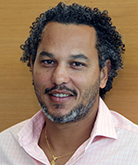
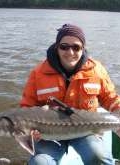
Scott Heppell is a Professor in the Department of Fisheries, Wildlife, and Conservation Sciences at Oregon State University, College of Agricultural Sciences. He leads the Heppell Lab, focusing on marine and freshwater fish ecology, conservation, and fisheries management. He is actively involved in international research, particularly in the Caribbean through the Grouper Moon Project. Education: Ph.D. in Physiology/Zoology, North Carolina State University MS in Physiology/Zoology, North Carolina State University BS in Biology, University of Washington His research spans physiological ecology of fishes, life history traits, and population responses to human impacts. He has conducted fieldwork on bluefin tuna, groupers, rockfish, and salmon across the Atlantic, Pacific, and Caribbean. His work integrates physiology, behavior, and ecology to inform sustainable fisheries and ecosystem management. His recent publications focus on marine conservation, fish population dynamics, microplastic ingestion, spawning aggregations, and acoustic monitoring. Trends show a strong emphasis on long-term ecological monitoring, conservation success stories (e.g., Nassau grouper recovery), and innovative techniques like hydroacoustics and machine learning in bioacoustics. Scientific Awards: William E Ricker Resource Conservation Award, American Fisheries Society (2021) Registry of Distinguished Teachers, OSU (2020) RM Wade Outstanding Teacher Award, OSU (2020) Meek Scholar, University of Alaska (2018) Oregon State University Richard M. Bressler Senior Faculty Teaching Award (2024) Past-President's Award, Oregon Chapter of the American Fisheries Society (2023) He advises graduate and non-thesis students and collaborates with agencies, NGOs, and universities globally. He teaches courses in fish physiology, fishery biology, and salmon management. He co-leads an international short course in Conservation Biology in Croatia. His lab, the Heppell Lab, conducts applied and basic research across diverse marine ecosystems, contributing significantly to marine conservation policy and practice.