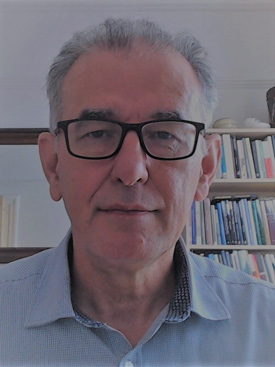
Lucas Introna is a Distinguished Professor of Organisation, Technology, and Ethics at Lancaster University's Management School. He holds a BCom, BA (Hons), MBA, and PhD. His research focuses on the ethical and social implications of technology, particularly information systems, informed by phenomenology and process philosophy. He has served as Associate Dean for Research (2010-2016) and Head of the Organisation, Work and Technology Department (2007-2010). **Research Interests:** Sociomateriality and performativity Ethical implications of IT (privacy, surveillance) Political studies of technology design Plagiarism and cultural values Virtuality and embodiment **Recent Work Trends:** His publications explore algorithmic governance, digital ethics, and the interplay between technology and social structures. Notable themes include blockchain trust dynamics, refugee precarity, and the ethical dimensions of facial recognition systems. **Awards:** IFIP Outstanding Service Award **Grants & Roles:** Co-founder of the Centre for the Study of Technology and Organisation Member of multiple ethics committees and editorial boards Visited professor at University of Amsterdam **Labs/Groups:** Affiliated with the Centre for Technological Futures and the Society Management and Society group.
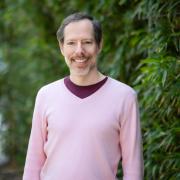
Douglas Stebila is an Associate Professor in the Department of Combinatorics and Optimization at the University of Waterloo, Faculty of Mathematics. His research focuses on cryptographic protocols, with an emphasis on post-quantum cryptography, TLS protocol security, and key exchange mechanisms. He has contributed to the design and analysis of cryptographic systems resilient to quantum computing threats, including work on hybrid key exchange methods and post-quantum TLS implementations. Stebila is involved in standards projects such as the Open Quantum Safe initiative, aiming to transition existing infrastructure to quantum-resistant algorithms. His recent work addresses security models for cryptographic protocols, including formal verification of key establishment schemes and analysis of real-world protocols like Signal and TLS. His research spans theoretical cryptography, applied protocol analysis, and implementation security. Key contributions include studies on obfuscated key exchange, verifiable decapsulation of post-quantum KEMs, and optimization of TLS handshake efficiency (e.g., TurboTLS). He also explores challenges in cryptographic protocol design, such as preventing double authentication and ensuring resistance against side-channel attacks. His work frequently bridges academic research with practical applications, emphasizing the transition of cryptographic innovations into real-world systems. Stebila collaborates with industry and academic partners on projects like the Open Quantum Safe initiative, which develops libraries for post-quantum cryptography integration. His publications often address security analyses of emerging protocols and their vulnerability to both classical and quantum adversaries. He has co-authored conference proceedings for major venues like CRYPTO and SAC, and contributed to standards documentation for protocols such as TLS and SSH.
Ranjit Lall is an Associate Professor of International Political Economy at the University of Oxford's Department of Politics and International Relations, and a Fellow of St John's College. His research focuses on international cooperation, development, technological change, and methodological innovations in machine learning and missing data analysis. He holds a PhD from Harvard University and a BA from Oxford, and has been recognized with the Merze Tate Award and Leamer-Rosenthal Prize for his work. Education : PhD in Government (Harvard University), BA in Philosophy, Politics, and Economics (University of Oxford) Affiliations : St John's College Fellow, Oxford's International Relations Network His research explores how international institutions function, leveraging computational tools like MIDASpy for missing data imputation. Key interests include civil society influence on global governance, accountability mechanisms, and the political economy of technological change. He previously worked at the Bank of England and Financial Times before academia. Recent Research Trends : Articles emphasize institutional performance metrics, pandemic-era voting behavior, and AI governance frameworks. His work bridges theoretical political science with practical computational methods. Awards : 2020 Leamer-Rosenthal Prize, 2018 Merze Tate Award Advising : Supervises six graduate students in international relations and political economy Lall collaborates on open-source projects such as the MIDAS software for data imputation and actively contributes to debates on transparent social science research practices.
Youssef M A Hashash is the W. W. Grainger Chair and Professor in the Department of Civil and Environmental Engineering at the University of Illinois. His research focuses on geotechnical and earthquake engineering, with emphasis on seismic site response analysis, soil-structure interaction, and advanced computational methods like the Discrete Element Method (DEM). He has led projects on infrastructure resilience, including studies of buried water reservoirs, railway systems, and post-earthquake reconnaissance. Hashash has developed influential models for site amplification in Central and Eastern North America, contributing to seismic hazard assessments. His work integrates experimental centrifuge testing, numerical simulations, and field data. Notable contributions include guidelines for implementing NGA-East ground motion models and advancements in pore-water pressure generation models for liquefaction evaluation. Key Research Areas: Ground movement, seismic response, soil dynamics, and geotechnical data systems Major Projects: NGA-East Geotechnical Working Group, Beirut Explosion Analysis, and LA Metro Tunnel Projects Recipient of prestigious awards including the NAE Membership (2022), PECASE (2000), and Walter L. Huber Prize (2006), he collaborates internationally on earthquake engineering and geotechnical innovations. His lab develops tools like the DEEPSOIL software for nonlinear site response analysis and explores AI applications in geotechnical data interpretation.
Michael Grabe is a Professor in the Cardiovascular Research Institute (CVRI) at the University of California San Francisco (UCSF). He holds a joint appointment in the Department of Pharmaceutical Chemistry. His work focuses on computational methods to study biological phenomena, particularly ion transport across membranes and the molecular mechanisms of ion channels/transporters. He has pioneered theoretical approaches to understand membrane protein function and organelle acidity regulation. Education: PhD in Physics, University of California, Berkeley (2002) ScB in Mathematics-Physics, Brown University (1996) Research Interests: Dr. Grabe’s lab investigates ion channel function, membrane remodeling by TMEM16 proteins, lysosomal pH regulation, and computational modeling of membrane-associated processes. Key themes include: Mechanics of ion transport and lipid flipping Protein-induced membrane deformations Simulations of organelle microphysiology Development of computational tools for membrane protein analysis Recent Research Trends: Recent work emphasizes dynamic protein design using AI (e.g., Science 2025), structural studies of K2P channels, and functional insights into TMEM16 scramblases. His team also explores SARS-CoV-2 protein interactions and mitochondrial uncoupling mechanisms. Awards: NSF CAREER Award (2009-2014) Alfred P. Sloan Research Fellowship (2009-2011) Shining Star Community Service Award (2012) Grants & Advising: Principal Investigator of NIH grants studying TMEM16 proteins (R01GM137109) and lysosomal physiology (R21GM100224). His lab trains graduate students and postdocs in computational biophysics and membrane biology. Labs/Teams: Leads the Grabe Lab at UCSF, which collaborates with experimental groups to bridge theory and experiment in membrane systems. Active in developing open-source tools like APBSmem for electrostatic calculations.
**Anirudh Krishna** is the Edgar T. Thompson Professor of Public Policy and Political Science at Duke University's Sanford School of Public Policy. He holds a PhD in Government from Cornell University (2000) and a Master's in Economics from Delhi University (1980). Prior to academia, he served 14 years in the Indian Administrative Service, leading rural and urban development initiatives. His research focuses on poverty dynamics, social mobility in developing countries, governance, and urban poverty. He has authored over 80 journal articles and eight books, including *The Broken Ladder: The Paradox and the Potential of India’s One-Billion* and *One Illness Away: Why People Become Poor and How they Escape Poverty*. **Education**: PhD in Government, Cornell University (2000); MA in Economics, Delhi University (1980). **Research Interests**: Structural constraints on poverty and powerlessness Social mobility pathways and barriers Urban poverty and slum dynamics Role of social capital in development Global governance and policy **Awards**: Honorary Doctorate (Uppsala University, 2012), Dudley Seers Memorial Prize (2015 and 2006), Olaf Palme Visiting Professorship (2007-08), and multiple fellowships including the Hubert H. Humphrey Fellowship. **Advising & Grants**: Advised over 30 students across Masters and PhD programs; convened NGOs promoting social mobility; collaborated with the World Bank and UN on development initiatives. His work bridges research and practice, emphasizing actionable policy solutions. **Key Projects**: Ladders of Opportunity initiative, investigating systems enabling talent ascension; studies on intergenerational mobility in India's districts and slums; analysis of geographic inequality in India.
Kari M. Koskinen is a University Lecturer at Aalto University's Department of Information and Service Management. His research focuses on cybersecurity, digital ecosystems, and technology management with applications in healthcare, agriculture, and smart cities. He frequently collaborates with scholars like Hadi Ghanbari and Sonja Hyrynsalmi on topics ranging from ransomware mitigation to sustainable mobility solutions. His work emphasizes real-world case studies, such as analyzing the Vastaamo psychotherapy clinic data breach and examining supply chain attacks in manufacturing. Key contributions include frameworks for cloud-based integration platforms, risk management in digital ecosystems, and the socio-technical implications of autonomous vehicles. Koskinen also explores visibility labor in NFT markets and how digital platforms address development challenges in the Global South. His teaching cases, published in the Journal of Information Technology Teaching Cases, bridge theoretical concepts with practical cybersecurity scenarios.
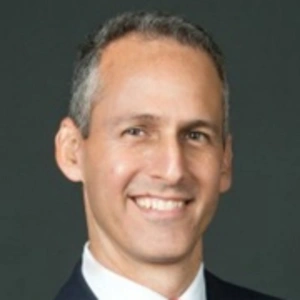
Gad Allon is the Jeffrey A. Keswin Professor and Professor of Operations, Information and Decisions at the University of Pennsylvania’s Wharton School. He directs the Management and Technology Program and teaches in the Education Entrepreneurship program. His research focuses on operations strategy, service systems, gig economy dynamics, and education technology. A co-founder of ForClass, a platform enhancing classroom engagement, he advises firms on service and operations strategy. Allon holds a Ph.D. from Columbia Business School and degrees from the Israeli Institute of Technology. Recognized as one of the ‘World’s Top 40 B-School professors under 40,’ he has pioneered work on behavioral drivers in service systems and gig economies. His recent research explores multihoming in gig work, machine learning in causal inference, and agile product development. Academic contributions span over 50 publications in top journals, emphasizing real-world applications of operations management theories. Education: Ph.D. in Management Science, Columbia Business School (New York) Bachelor’s and Master’s Degrees, Israeli Institute of Technology Research Interests: Professor Allon’s work bridges theoretical operations research with practical challenges in service systems, digital platforms, and educational technology. Key themes include optimizing customer service through behavioral insights, analyzing labor dynamics in gig economies, and leveraging machine learning for causal inference in business decisions. Notable Contributions: Co-founder of ForClass, addressing classroom engagement Leading studies on worker behavior in gig economies Groundbreaking work on call center retrials and service quality trade-offs Labs/Initiatives: Active in educational technology innovation through ForClass and advises on large-scale service marketplace design through Wharton’s Management and Technology Program.
Ethan McCormick is an Assistant Professor in the School of Education at the University of Delaware, specializing in longitudinal and psychometric modeling. He holds a Ph.D. in Psychology from the University of North Carolina at Chapel Hill (2020) and a B.S. in Biochemistry from the University of Arkansas (2013). His research focuses on integrating short-term and long-term longitudinal models to study behavioral and cognitive changes across the lifespan, with recent emphasis on educational data analysis and nonlinear random effects modeling. He is a Resident Faculty member of the University of Delaware’s Data Science Institute and previously served as an Assistant Professor of Methodology & Statistics at Leiden University (2022–2024). Dr. McCormick’s grants include the NWO Veni SSH Grant (2024–2027) for tracking educational outcomes via statistical modeling and the Jacobs Foundation Fellowship (2024–2026) for studying complex growth in math ability. His work bridges methodological rigor with applied neuroscience, examining brain-behavior relationships in developmental contexts through large-scale collaborations. Professional Experience : Assistant Professor, University of Delaware (2024–present); Assistant Professor, Leiden University (2022–2024) Key Research Themes : Longitudinal modeling, time series analysis, psychometrics, developmental cognitive neuroscience Awards : NWO Veni SSH Grant, Jacobs Foundation Fellowship His recent articles emphasize improving time-series methodologies, addressing limitations of two-time-point studies, and advancing models for asymmetric temporal dynamics. He collaborates internationally on projects simulating developmental datasets and analyzing neural correlates of behavior.
Dr. Zoe Li is an Associate Professor in the Department of Civil Engineering at McMaster University, with an additional role as an Associate Member in the Department of Computing and Software. She specializes in developing modeling and decision-support tools to address challenges in water resources management, environmental systems analysis, and climate change impacts. Her research focuses on hydrological modeling, probabilistic forecasting, risk analysis, and environmental systems optimization. She holds a B.Eng. from China and M.A.Sc./Ph.D. degrees from the University of Regina. Her work spans interdisciplinary collaborations, including studies on dam safety under climate change, wastewater treatment plant optimization, and AI-driven environmental monitoring. She has been actively involved in projects such as CityDNA, a digital tool to model urban environments for decision-making during crises like the pandemic. Dr. Li teaches courses in environmental systems engineering and principles of environmental engineering, emphasizing uncertainty quantification and sustainable practices. Her research publications (15+ recent articles) address topics like machine learning applications in environmental systems, climate change impacts on water resources, and infrastructure resilience. She advises graduate students in environmental engineering and systems optimization. Notable grants include funding from Roche Canada for pandemic-related urban modeling. Her work is frequently published in high-impact journals like Journal of Environmental Management and Water Resources Research .
Yintong Huo is a tenure-track Assistant Professor in the Department of Computer Science at Singapore Management University (SMU), School of Computing and Information Systems. He joined SMU in early 2024 after completing his PhD at The Chinese University of Hong Kong (CUHK) under Prof. Michael R. Lyu. His academic journey includes a Bachelor's degree from the University of Electronic Science and Technology of China. Education: PhD in Computer Science and Engineering, The Chinese University of Hong Kong (2024) Bachelor's degree, University of Electronic Science and Technology of China Huo's research focuses on intelligent software engineering , particularly empowering AI models (especially LLMs) for software development, testing, and operations. His work spans AI4SE, LLM4SE, AIOps, code intelligence, and multimodal software engineering . Two flagship projects define his current research: LogPAI - an open-source AI platform for automated log analysis adopted by leading tech companies, and WebPAI - a multimodal intelligence project for automatic webpage development. His research addresses critical challenges in software reliability, log analysis, and UI code generation through innovative applications of AI. His recent publications reveal a strong trend toward multimodal approaches in software engineering , combining vision and language models for UI code generation, and increasingly sophisticated applications of LLMs for log analysis and software reliability. Huo's work demonstrates exceptional impact, with multiple papers accepted at top-tier venues including ASE, ICSE, and FSE with high acceptance rates (e.g., 9.5% for ASE'25). Scientific Awards: ICSE Distinguished Reviewer Award (2025) ISSRE Distinguished Reviewer Award (2024) IEEE Open Software Services Award (2022, for LogPAI with 3k+ GitHub stars and 70k+ downloads) ACM SIGSOFT CAPS Travel Grants (ASE'23, ICSE'24, FSE'24) Nomination for Best Teaching Assistant Award (2022) National Scholarship (2019) Huo actively mentors students at multiple levels, currently supervising PhD students Shi Ying Chang and Dan Huang (co-supervised with Prof. David Lo), research engineer Minxing Wang, and visiting students including Shiwen Shan. His undergraduate mentee Truong Hai Dang will intern at Apple Inc. He maintains strong industry connections, with his LogPAI project adopted by world-leading tech companies. Huo serves on program committees for major conferences including ASE'25, ICSE'26, and FSE'26, and is recruiting fully-funded PhD students and research assistants for projects in AI4SE and multimodal software engineering. Huo leads the LogPAI and WebPAI research initiatives, which have evolved into substantial open-source projects with significant industry adoption. His team focuses on practical applications of AI in software engineering, with particular emphasis on reliability and usability in real-world systems. The research environment benefits from SMU's strong position in software engineering research, where the university ranks No. 2 globally in Software Engineering according to CSRankings (2020-2025).
Garrett M. Morris is an Associate Professor in Systems Approaches to Biomedicine at the University of Oxford, affiliated with the Department of Statistics and Green Templeton College. He holds roles as Deputy Director of Graduate Studies, Co-Director of the SABS R³ Centre for Doctoral Training, and Research Fellow at Green Templeton College. His research focuses on computational chemistry, drug discovery, and AI integration in biomedicine. He earned his DPhil from Oxford under Prof. W. Graham Richards, with subsequent work at The Scripps Research Institute and Oxford spinouts like InhibOx and Crysalin. Research interests include protein-ligand docking, virtual screening, and machine learning applications in cheminformatics. Notable contributions include the AutoDock software and the FightAIDS@Home project. He co-organizes conferences like the Royal Society of Chemistry’s 'AI in Chemistry' and founded Comp Chem Kitchen. His lab, Oxford Protein Informatics Group (OPIG), develops novel methods for drug discovery and evaluates AI-based docking methods' validity (e.g., PoseBusters). Recent work critiques AI docking methods' physical plausibility and generalizability. He advises numerous graduate students in statistics and drug discovery, with alumni in academia, pharma, and venture capital. Publications span molecular generation, scoring functions, and computational tools for drug design. Collaborations emphasize reproducibility, responsible research, and cloud computing in biomedicine.
Alan Duggan is a Research Fellow in the Department of Building & Civil Engineering at the University of Galway, affiliated with the Engineering Research Group (ERG). His work focuses on sustainable construction practices, environmental engineering, and the environmental impact of infrastructure projects, particularly in peatland regions. He specializes in carbon footprint analysis, geotechnical challenges in peatland construction, and the development of low-carbon materials and techniques. Principal Investigator in ERG Focus areas: Peatland rehabilitation, carbon sequestration in construction materials, and sustainable transportation infrastructure His research integrates geotechnical engineering with environmental science, addressing challenges in ground improvement, drainage systems, and carbonation processes. Key contributions include studies on stabilized peat as a carbon sink and embodied carbon analysis in motorway construction. His publications span environmental sustainability, material science, and infrastructure planning, emphasizing practical solutions for reducing environmental impact in construction projects.
Dr. George Chalhoub is a Lecturer (Assistant Professor) in Human-Computer Interaction at the UCL Interaction Centre (UCLIC), Department of Computer Science, University College London (UCL). He is also an Associate Member at the Department of Computer Science, University of Oxford, and a 2024–2025 Berkman Klein Fellow at the Berkman Klein Center for Internet & Society, Harvard Law School, Harvard University. His multidisciplinary research bridges cybersecurity, privacy, and human-centered computing, focusing on real-world technology use. DPhil in Cyber Security, University of Oxford (supported by Information Commissioner’s Office) MSc in Computer Science, University of Southampton (supported by Lloyd’s Register) BS in Computer Science, Lebanese American University His research centers on the security, privacy, and safety of digital technologies through a user-centered lens. Key areas include AI-powered systems (e.g., LLMs, smart assistants), emerging technologies in the wild (e.g., smart homes, IoT), embedded devices (e.g., routers), marginalized communities, data workers in AI, and online content creators. His work integrates UX principles to improve data protection in healthcare (e.g., NHS records) and children’s apps, with implications for GDPR compliance and responsible AI innovation. The analysis of his recent publications reveals a consistent focus on empirical studies of user experience in security and privacy, particularly in smart homes and data-intensive applications. His work spans design interventions, ethical frameworks, and policy-relevant findings, published in top venues like CHI, CSCW, SOUPS, and IJHCS. Themes include consent design, communal privacy, vulnerability patching, and developer support for privacy. UK Global Talent Visa recipient, UK Research and Innovation 2024–2025 Berkman Klein Fellow, Harvard University Dr. Chalhoub has advised on research projects related to secure networking by design and responsible AI (e.g., EWADA, RoboTIPS). He has received grant support from the Information Commissioner’s Office for his doctoral work. He is available for consultancy, collaborative research, grant assessment, and supervision of research degrees. His professional experience includes internships at Microsoft Research (Calc Intelligence) and Nokia Bell Labs (Social Dynamics), contributing to projects in AI and social computing. He is affiliated with research groups including the Human-Centered Computing group at Oxford, the UCL Interaction Centre (UCLIC), and the Berkman Klein Center at Harvard. His work is supported by tools and frameworks developed in collaboration with interdisciplinary teams focused on cybersecurity ethics, data governance, and platform accountability.
Prof. Aswin Gnanaskandan is an Assistant Professor in the Department of Mechanical & Materials Engineering at Worcester Polytechnic Institute (WPI), where he joined in August 2020. He directs the Computational Multiphase Transport Laboratory, focusing on developing high-fidelity models for multiphase flows with applications in engineering and biomedical fields. His research is funded by NSF, Office of Naval Research, NIH, and the Center for Advanced Research in Drying. Education: PhD, Aerospace Engineering & Mechanics, University of Minnesota (2015) MS, Aerospace Engineering & Mechanics, University of Minnesota (2012) BS, Aeronautical Engineering, Madras Institute of Technology (2006) Research Interests: Computational Fluid Dynamics (CFD), Multiphase Flow Modeling, Biomedical Acoustics, High-Performance Computing, and applications in underwater transportation, propulsion, and biomedical acoustics. His work bridges fundamental fluid mechanics with real-world challenges in energy, health, and environmental systems. Recent Research Trends: His articles focus on microbubble-enhanced ultrasound therapy, cavitation dynamics in propulsion systems, and multiphase flow modeling across scales. Key themes include improving thermal ablation precision in medical treatments and optimizing industrial processes like spray drying through advanced numerical techniques. Awards: Excellence in Research Award (WPI, 2024) NSF Engineering Research Initiation Award (2023) James Nichols Heald Research Award (WPI, 2022) Teaching & Advising: Teaches undergraduate/graduate courses in Fluid Mechanics, Thermodynamics, and Numerical Methods. Advises multiple Major Qualifying Projects and fosters interdisciplinary collaboration through lab activities. His lab actively engages with industry and academic partners on projects like HIFU therapy and sustainable energy solutions. Labs & Teams: Leads the Computational Multiphase Transport Lab, which collaborates on projects involving CFD solver development (MFC 5.0), exascale computing, and biomedical acoustics. Aligns research with UN Sustainable Development Goals (SDG 7, 9, 13).