معرفی
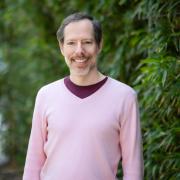
Michael Grabe is a Professor in the Cardiovascular Research Institute (CVRI) at the University of California San Francisco (UCSF). He holds a joint appointment in the Department of Pharmaceutical Chemistry. His work focuses on computational methods to study biological phenomena, particularly ion transport across membranes and the molecular mechanisms of ion channels/transporters. He has pioneered theoretical approaches to understand membrane protein function and organelle acidity regulation.
Education:
- PhD in Physics, University of California, Berkeley (2002)
- ScB in Mathematics-Physics, Brown University (1996)
Research Interests:
Dr. Grabe’s lab investigates ion channel function, membrane remodeling by TMEM16 proteins, lysosomal pH regulation, and computational modeling of membrane-associated processes. Key themes include:
- Mechanics of ion transport and lipid flipping
- Protein-induced membrane deformations
- Simulations of organelle microphysiology
- Development of computational tools for membrane protein analysis
Recent Research Trends:
Recent work emphasizes dynamic protein design using AI (e.g., Science 2025), structural studies of K2P channels, and functional insights into TMEM16 scramblases. His team also explores SARS-CoV-2 protein interactions and mitochondrial uncoupling mechanisms.
Awards:
- NSF CAREER Award (2009-2014)
- Alfred P. Sloan Research Fellowship (2009-2011)
- Shining Star Community Service Award (2012)
Grants & Advising:
Principal Investigator of NIH grants studying TMEM16 proteins (R01GM137109) and lysosomal physiology (R21GM100224). His lab trains graduate students and postdocs in computational biophysics and membrane biology.
Labs/Teams:
Leads the Grabe Lab at UCSF, which collaborates with experimental groups to bridge theory and experiment in membrane systems. Active in developing open-source tools like APBSmem for electrostatic calculations.