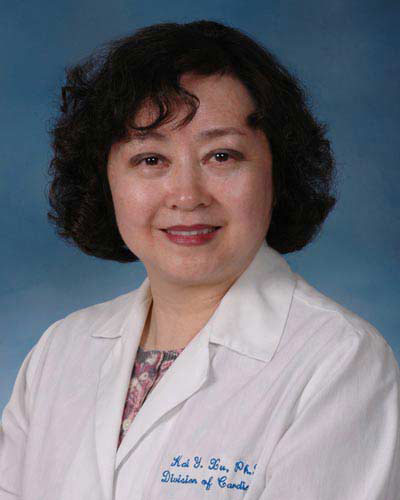
Jeanine A. Ursittiمشاهده پروفایل
استادیار
- membrane cytoskeleton
- microtubules
- spectrin
- +۵ مورد دیگر
Jeanine A. Ursitti, PhD, serves as Assistant Professor in the Department of Orthopaedics at the University of Maryland School of Medicine, where her research bridges fundamental cytoskeletal biology with clinical implications for muscular and cardiovascular pathologies. Her work focuses on spectrin-based membrane skeleton organization across diverse cell types including erythrocytes, skeletal myofibers, and cardiomyocytes. Her academic foundation includes: B.S. in Biology from Loyola University Maryland Ph.D. in Membrane Physiology from the University of Maryland Baltimore Postdoctoral Fellowship at The Wistar Institute, Philadelphia, PA Dr. Ursitti's research program centers on the structural and functional roles of spectrin isoforms, with particular emphasis on alternative splicing variants in cardiac and skeletal muscle. Her investigations span from basic erythrocyte membrane architecture to disease mechanisms in muscular dystrophy, cardiomyopathy, and aging-related tissue degeneration. Key contributions include characterizing spectrin's role in costamere formation, connexin 43 localization in cardiomyocytes, and keratin-spectrin interactions in striated muscle. Analysis of her 30-year publication record reveals an evolving trajectory from foundational erythrocyte cytoskeleton studies (1989-1996) toward increasingly clinically relevant cardiac and muscular research (2001-2013). Her recent work demonstrates how αII-spectrin complexes regulate cardiac conduction and protect against dilated cardiomyopathy, highlighting translational potential. The consistent thread throughout her career is the investigation of spectrin's role as a mechanical scaffold and signaling platform across diverse physiological systems. Dr. Ursitti maintains active collaboration with the University of Maryland's muscle biology research group, particularly with Dr. Richard J. Bloch's laboratory, as evidenced by her extensive co-authorship record. While specific grant details aren't provided, her sustained publication output suggests consistent research funding supporting her investigations into cytoskeletal pathologies. Her laboratory likely employs advanced techniques including immunocytochemistry, protein biochemistry, and transgenic mouse models to explore spectrin-related disease mechanisms.