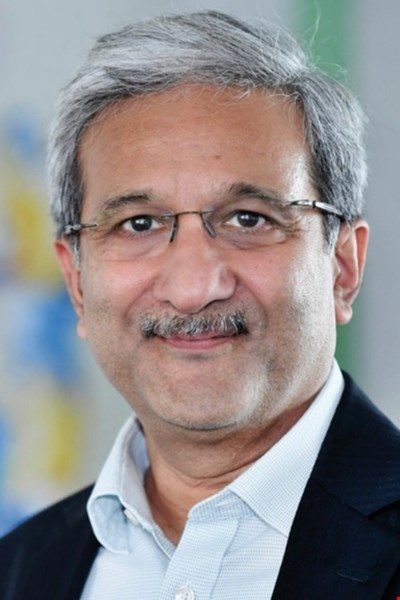
Dr. Wim Biemans is an Associate Professor at the Faculty of Economics and Business of the University of Groningen, specializing in Innovation Management and Marketing. He holds a PhD from Eindhoven University of Technology (1989) and has over 25 years of experience in research, teaching, and consulting. His work focuses on service innovation, B2B marketing, customer involvement in innovation, and the marketing-sales interface. He has authored over 100 peer-reviewed articles and books, including the best-selling Dutch B2B marketing textbook. His research has been recognized with awards like the Thomas P. Hustad Best Paper Award. He serves as Triage Editor for the Journal of Product Innovation Management and editorial board member for Industrial Marketing Management and Journal of Business & Industrial Marketing. Biemans teaches at the University of Groningen and multiple international institutions, including guest professor roles in Europe, Asia, and the U.S. He also designs executive programs for managerial training in innovation management and customer value creation. His recent research explores humor’s impact on creativity, digital tools in sales-marketing integration, and bridging technology-to-product development gaps. He emphasizes end-to-end value creation through intra-organizational collaboration and has published on the Valley of Death ecosystem challenges in innovation commercialization.
Professor Ashley Braganza serves as Dean of Brunel Business School at Brunel University London and holds the Chair in Business Transformation. He founded and co-directs Brunel's interdisciplinary Research Centre for Artificial Intelligence (established 2018), which includes a dedicated AI Lab and forms part of Brunel's broader AI Ecosystem. His leadership secured £3.5 million in grants during the 2022/23 academic year and a recent €5.8 million ELOQUENCE EU project (2024-2027). His academic qualifications include a PhD in Organisational Change and Information Systems from Cranfield University and an MBA in Strategic Management Responsibility from the University of Strathclyde. Professor Braganza's research centers on artificial intelligence, big data, change management, strategy implementation, process and knowledge management, and transformation-enabled information systems . His practice-based approach stems from over 40 major consultancy projects with global organizations including BT, Microsoft, McDonald's, Astra Zeneca, and UN agencies. He champions interdisciplinary experiential learning and rigorous academic research with real-world applications. Analysis of his 15 most recent publications reveals dominant trends in applying AI and digital technologies to healthcare supply chains, blockchain governance, and socioeconomic challenges like digital poverty. His work consistently bridges operations management, information systems, and social sciences while examining human-organizational impacts of technological transformation. His distinguished recognition includes: Election to the British Academy of Management College of Fellows for 25+ years of scholarly contribution and community service Professor Braganza has directed significant research initiatives including the British Academy-funded digital poverty study in Margate, UK-India collaborative projects on AI in healthcare productivity, and curriculum development for special needs trainers. His consultancy assignments with major corporations have co-created practical frameworks for implementing complex organizational change programs. He founded and chairs the British Academy of Management Special Interest Group in Transformation, Change and Development, and directs Brunel's AI: Social and Digital Innovation Research Centre, fostering cross-disciplinary collaboration through the Operations and Information Systems Management Research Group (OISM).
Miguel Ángel Bernal Merino serves as a Part-Time Lecturer in the Department of Modern Philology, Translation and Interpretation at the University of Las Palmas de Gran Canaria. Concurrently, he acts as convener of the MA in Translation at the University of Roehampton in London, managing its Specialised Translation, Audiovisual Translation, and Intercultural Communication pathways since 2005. His academic profile bridges theoretical research and industry application in localization disciplines. PhD in The Localisation of Video Games, Imperial College London MSc in The Localisation of Multimedia Interactive Entertainment Software, Imperial College London Certificate in Software Localisation, University of Limerick CELTA, University of Cambridge MPhil in Lip-Synched Dubbing, Universidad de Alicante MA in Hispanic Literature, University of Rhode Island BA in English & Spanish Linguistics, Universidad de Alicante Bernal Merino's research pioneers the expansion of Translation Studies into interactive media domains. His work on video game localization examines interactivity, cultural adaptation, glocalisation, and playability, while his audiovisual translation research investigates creativity in lip-synched dubbing, subtitling, and audiodescription. He extends these frameworks into gaming-based language learning through haptic environments and multisensory reinforcement, exploring physiological aspects of multilingual cognition and polysemiotic neural networks. This multidisciplinary approach fundamentally challenges traditional boundaries in translation theory. His publication trajectory reveals evolving industry-academia integration, shifting from foundational game localization frameworks (2008-2015) toward user-centered research and educational applications (2018-2024). Recent work emphasizes measurable business impacts through quality localization, regional market adaptations, and crowd-sourced methodologies, demonstrating consistent influence on professional standards across gaming and translation sectors. Fellow of the Higher Education Academy Bernal Merino supervises doctoral research on mobile game localization, transmedia fan experiences, and historical game content translation while developing industry-academia pipelines through projects like AHRC's Media Across Borders. His funded initiatives—including Maximising ROI through Quality Game Localisation and Video Games for Language Learning—bridge theoretical innovation with commercial implementation, focusing on glocalisation strategies, interactivity metrics, and playability optimization. These collaborations connect European universities, gaming studios, and localization service providers. As chair of the IGDA Localization SIG and member of GIR Discourse, Communication and Society, he directs international forums for game localization discourse. His work with Routes into Languages promotes audiovisual media in language education, while REF-readiness collaborations enhance research excellence across European institutions through his professional network spanning industry conferences like GDC Summit and Game Global.
Elisa B Schweiger is a Senior Lecturer (equivalent to Associate Professor) in Marketing at King’s Business School, King’s College London. She specializes in retailing, AI applications in marketing, multi-sensory marketing, and pricing strategies. Her research employs behavioral experiments, field studies, and text mining. Education: PhD in Consumer Psychology from the University of Bath. She also holds a background in psychology and marketing. Research Interests: Elisa’s work focuses on retail innovation, AI-driven consumer interactions, luxury branding, and the psychological underpinnings of consumer decisions. She explores how technology (e.g., voice assistants, mixed reality) impacts customer journeys and brand relationships. Her research bridges theory and practice, addressing topics like AI ethics, retail atmospherics, and consumer risk perceptions in energy technologies. Publications: Her work appears in top journals such as the Journal of the Academy of Marketing Science , Journal of Retailing , and Journal of Business Research . Recent topics include voice assistant evaluations, AI in lateral markets, and digital retailing trends. Awards: Recipient of the Dean’s Award for Early Career Researcher of the Year (2022), Journal of Retailing Davidson Best Paper Award Runner-up, and MMA Teaching Excellence Award. Teaching & Engagement: Teaches Marketing Analytics, Retailing, and research methods in graduate and executive programs. She serves on the editorial boards of Journal of Retailing and Journal of Business Research , and reviews for top marketing journals. Labs/Teams: Active in King’s Business School’s marketing research teams, focusing on innovation in retail and AI applications.
Aybars Tuncdogan is a Reader in Digital Innovation and Information Security at King’s Business School, King’s College London. He holds affiliations with the King’s AI Institute, King’s Cybersecurity Centre (Informatics), and King’s Cybersecurity Group (War Studies). A Fellow of the Higher Education Academy, he also serves on the editorial review board of Industrial Marketing Management . Education : PhD in Management, Rotterdam School of Management, Erasmus University MPhil in Business Research (Distinction), Erasmus University Bachelor’s in Business Management & Computer Science (Honors), Earlham College Research Interests : His work focuses on three pillars of digital innovation: generation (crowdsourcing, AI), marketing (digital brand personality, sales ambidexterity), and protection (information security, corporate espionage). He integrates psychology (individual differences, social identity) and computer science (machine learning/AI) frameworks. Publications Trends : Recent work addresses cybersecurity challenges in retail, AI ethics in healthcare, and interdisciplinary innovation. He frequently publishes in top-tier journals like Journal of Management and Scientific American , blending academic rigor with practitioner impact. Awards & Contributions : 2015 Best Paper Award (shared) Edited books including Oxford Handbook of Individual Differences and Strategic Renewal Teaching & Pedagogy : Develops innovative teaching methods like inquiry-based learning to foster student creativity. Taught modules on digital marketing, consumer behavior, and research methods. Labs/Teams : Contributes to cybersecurity initiatives at King’s, focusing on AI-driven defense mechanisms and organizational cyber resilience strategies.
Dongming Xu is an Associate Professor in Business Information Systems at the University of Queensland Business School. She holds a PhD from the City University of Hong Kong in Information Systems and has established herself as a prominent researcher in the field of information systems with over 100 publications in top-tier journals and conference proceedings. Her educational background includes a PhD from City University of Hong Kong in Information Systems, though specific details about earlier degrees are not provided in the available text. Dr. Xu's research focuses on the confluence of information technology use and innovation, with particular emphasis on IT entrepreneurship, social media applications in business contexts, and business intelligence systems. Her work explores how information systems influence society and business performance, with applications spanning disaster management, eFinance, eHealth, and knowledge management. She combines theoretical model building with laboratory and field experiments, often developing prototype systems to validate her research. Her publication record demonstrates consistent high-quality output across multiple domains of information systems research, with recent work emphasizing digital disruption, platform ecosystems, social media in disasters, healthcare technology, and micro-learning applications. Her research shows a clear trajectory from foundational work on intelligent agents and decision support systems toward contemporary topics in digital transformation and platform-based innovation. Associate Editor, Information & Management Associate Editor, Journal of Electronic Commerce Research Associate Editor, Australasian Journal of Information Systems Dr. Xu has supervised numerous PhD students to completion, with research topics spanning digital disruption, IT startup development, social media in disasters, conceptual modeling, and environmental management. She has received multiple research grants, including current funding for 'Empowering Australia's Visual Arts via Creative Blockchain Opportunities' (2023-2026) and past projects on 'Smart micro learning with open education resources' (2018-2022). Her research has been supported by various agencies including the Hong Kong Government Research Grant Council, The National Natural Science Foundation of China, The University of Queensland, and City University of Hong Kong. She leads research in several key areas including IT entrepreneurship, business intelligence systems, and social media applications across multiple domains. Her work often involves developing innovative systems such as web-service-agent-based family wealth management systems, decision support systems for securities exception management, and knowledge management systems for disaster management.
Professor Byron Sharp is a Professor of Marketing Science and Director of the Ehrenberg-Bass Institute for Marketing Science at the University of South Australia. The institute is recognized as the world’s largest center for research into marketing, housing over 60 marketing scientists. He plays a pivotal role in advancing evidence-based marketing principles globally. Research Interests: Marketing Science and Empirical Generalizations Brand Growth and Customer Acquisition Advertising Effectiveness and Mental Availability Consumer Behavior and Loyalty Patterns Market Modeling (e.g., Dirichlet model) Evidence-Based Marketing Practice His recent publications reveal a consistent focus on quantifying brand performance, buyer behavior, and advertising impact. Trends in his articles emphasize the application of statistical models (e.g., NBD, Dirichlet) to understand consumer repertoires, loyalty, and the effects of advertising cessation. His work bridges academic rigor with practical marketing applications, particularly in brand strategy and media planning. Scientific Awards and Recognition: His book How Brands Grow was voted Marketing Book of the Year by AdAge readers. Recognized by Warc (2015) as one of the most influential marketing books of the past decade. Advising, Grants, and Collaborations: While specific student names are not listed, he leads a large research team and frequently collaborates with prominent scholars such as Jenni Romaniuk, John Dawes, and Robert Kennedy. His work is supported by industry partnerships and institutional funding through the Ehrenberg-Bass Institute, enabling large-scale empirical studies using real-world data. Labs and Teams: He directs the Ehrenberg-Bass Institute, which functions as a major research laboratory focused on marketing science, conducting longitudinal studies, empirical generalizations, and collaborative industry research.
Ariel Katz is an Associate Professor at the Faculty of Law, University of Toronto, where he teaches intellectual property, constitutional law, cyberlaw, and the intersection of competition law and intellectual property. He holds an SJD from the University of Toronto and prior degrees from the Hebrew University of Jerusalem. His research focuses on the economic analysis of competition law and intellectual property, with additional interests in digital trade, pharmaceutical regulation, and constitutional issues. LL.B., Hebrew University (1997) LL.M., Hebrew University (2001) S.J.D., University of Toronto (2005) Professor Katz’s research interests lie at the intersection of law, economics, and innovation policy. He explores how intellectual property and competition laws shape markets, innovation, and access to knowledge. His work critically examines doctrines such as fair dealing, copyright exhaustion, and collective administration of rights, often from a comparative and transatlantic perspective. He investigates the economic rationales behind legal rules and their implications for digital platforms, libraries, and global research. His recent publications demonstrate a sustained engagement with copyright and antitrust policy, particularly in digital environments. Themes include text and data mining, fair use evolution, data governance, and the impact of trade agreements on domestic law. His scholarship frequently bridges legal theory and practical policy, influencing academic and public discourse. Notable recognition includes: The Canadian Association of Research Libraries (CARL) Award of Merit (2022) Professor Katz has advised on policy matters, including submissions on copyright term extension under CUSMA. He was Director of the Centre for Innovation Law and Policy (2009–2012) and has collaborated with scholars across North America. He maintains an active blog and has written op-eds in major Canadian newspapers. His work appears in leading journals such as the University of Chicago Law Review , Antitrust Law Journal , and BYU Law Review . He is affiliated with the University of Toronto’s Faculty of Law and contributes to SSRN and public intellectual forums. Professor Katz has been involved in digital scholarship initiatives and has written on the role of libraries in knowledge ecosystems. His work connects legal doctrine with broader societal challenges, including access to medicines, digital rights, and constitutional integrity, particularly in the context of Canada and Israel.
Prof. Dr. Sven Heidenreich is a full Professor of Business Administration, specializing in Technology and Innovation Management at the University of Saarland. He leads an active research group and holds a prominent position in the German-speaking academic community, with consistent recognition in national and international rankings. University: University of Saarland Department: Business Administration Research Focus: Technology and Innovation Management Email: sven.heidenreich@uni-saarland.de His research centers on innovation processes, particularly consumer integration, co-creation, resistance to innovation, and sustainable business models. He employs a quantitative-empirical approach to study individual and organizational aspects of innovation, with applications in digital services, video games, and green innovation. The recent publications reflect a strong trend in understanding consumer behavior in innovation contexts, including greenwashing, leapfrogging, co-creation, and the role of personality in entrepreneurial success. His work frequently appears in high-impact journals such as Journal of Product Innovation Management , R&D Management , and Technological Forecasting and Social Change . Top 0.5% researcher worldwide in Innovation Management (ScholarGPS 2024) JPIM Outstanding Reviewer Award 2023 Multiple appearances in WirtschaftsWoche Economist Rankings (2018–2024) Finalist, Best Paper Award, IRCSM 2024 Prof. Heidenreich supervises doctoral researchers and has led significant research projects, including the DFG-funded TRIP project on integrating different consumer types into new product development. His team includes postdocs, junior professors, and scientific staff, indicating active mentorship and collaborative research. He also collaborates with researchers across Europe and beyond. He leads the DFG project TRIP and has secured funding from major German research bodies. His lab focuses on empirical studies involving consumer panels, student experiments, and idea competitions to validate innovation theories in realistic settings.
Linda A. Hill serves as the Wallace Brett Donham Professor of Business Administration at Harvard Business School and is Faculty Chair of the Leadership Initiative. She is widely recognized as one of the top experts on leadership and innovation globally, with her work shaping how organizations approach creative problem-solving and organizational development. Dr. Hill earned her B.A. summa cum laude in psychology from Bryn Mawr College, followed by an M.A. and Ph.D. in Behavioral Sciences from the University of Chicago. After completing a post-doctoral research fellowship at Harvard Business School, she joined the faculty where she has remained a prominent figure in organizational behavior research. Her research focuses on leadership development, building agile innovative organizations, implementing global strategies, and digital leadership. Hill is particularly known for her work on collective genius—the concept that innovation emerges from the right organizational conditions rather than individual brilliance alone. Her research has evolved to address scaling innovation across organizations and ecosystems, with increasing emphasis on digital leadership in contemporary business environments. Dr. Hill's scholarly output reveals consistent themes of practical leadership frameworks that help organizations navigate complex challenges while fostering creativity. Her recent work shows a progression toward understanding how innovation can be systematically scaled across organizational boundaries and through digital transformation initiatives. Thinkers50 top ten management thinker (2013, 2021) Thinkers50 Innovation Award (2015) Warren Bennis Prize for Excellence in Leadership (2015) Leadership Axiom Business Book Award Gold Medal (2015) #5 in Top 20 MIT SMR articles of 2020 Included in Thinkers50 since 2011 Named to Inc. 2025 Female Founders 500 List Shortlisted for 2025 Thinkers50 Innovation Award Beyond academia, Hill has extensive advisory and consulting experience with major global organizations including Google, Microsoft, IBM, and numerous Fortune 500 companies. She has chaired numerous Harvard Business School Executive Education programs and developed innovative online learning platforms for leadership development. Her practical experience spans leadership development, innovation strategy, global implementation, and diversity initiatives across multiple industries. Dr. Hill serves on the Board of Directors of Relay Therapeutics and the Board of Trustees of The Kresge Foundation, ArtCenter College of Design, and Brigham and Women's Hospital. She also serves on advisory boards for the American Repertory Theater, Aspen Institute programs, Calit2, and several other organizations, demonstrating her commitment to applying leadership principles across diverse domains.
Keith Obadike is a Professor in the Department of Art at Cornell University's College of Architecture, Art, and Planning (AAP), where he also serves as Director of Undergraduate Studies. He is an acclaimed interdisciplinary artist and composer, known for his collaborative work with Mendi Obadike, which spans sound art, digital media, public installations, performance, and internet-based projects. His artistic and academic work critically engages with technology, race, history, and identity. Obadike earned a B.A. in Visual Art from North Carolina Central University and an M.F.A. in Sound Design from Yale University. Prior to joining Cornell, he taught at William Paterson University and held visiting positions at Princeton University, Columbia University, Northwestern University, and the Art Institute of Chicago. His research and creative practice focus on sound art, digital media, public art, performance, and collaborative practice , with strong interdisciplinary connections to Afrofuturism, data sonification, and social justice. He explores how sound and technology mediate racial identity, memory, and liberation, notably through the concept of acousmatic blackness , which he and Mendi developed to describe the racial perception of sound when its source is unseen. Obadike’s selected works include large-scale public sound installations such as Blues Speaker (for James Baldwin) , Free/Phase , Compass Song (Times Square Arts), and GuideStar (Space Needle, Seattle). His projects often use data sonification, archival research, and mythic storytelling, blending historical inquiry with futuristic vision. Notable series include the Opera-Masquerades , Americana Suites , and Numbers Station works, which transform databases of violence into sonic experiences. His honors include: Rockefeller New Media Arts Fellowship (2004) Louis Comfort Tiffany Biennial Award (2015) New York Foundation for the Arts Fellowship in Fiction New Music USA Creator Development Fund (2022) Obadike has received commissions and support from institutions such as the Vera List Center, Harlem Stage, Times Square Arts, the American Composers Orchestra, and the Cornell Mui Ho Center for Cities. He has exhibited and performed at The New Museum, The Whitney Museum of American Art, MoMA, and The Studio Museum in Harlem. His writings and publications include contributions to Studies into Darkness (2022), and artist books such as Four Electric Ghosts and Big House / Disclosure (both 2014). He has also released albums like Crosstalk (2008) and created internet artworks such as Blackness for Sale (2001) and The Interaction of Coloreds (2002), which are foundational in new media and critical race art. While specific advisees are not listed, his role as Director of Undergraduate Studies and Professor indicates active mentorship. His work is deeply collaborative, often co-created with Mendi Obadike, and supported by interdisciplinary teams and institutions.
Hailiang Chen serves as Professor in Innovation and Information Management, Assistant Dean (Taught Postgraduate), and Director of the Artificial Intelligence Research Institute at HKU Business School, The University of Hong Kong. His academic journey includes a PhD and MS from Purdue University and a BM from Tsinghua University. Doctoral Degree: Management Information Systems, Purdue University Master Degree: Economics, Purdue University Bachelor Degree: Information Management and Information Systems, Tsinghua University Professor Chen's research spans artificial intelligence, FinTech, social media analytics, and platform economics, with significant contributions to understanding how digital interactions shape financial markets and consumer behavior. His work frequently examines the intersection of technology adoption and economic outcomes, particularly in cryptocurrency markets, live-stream commerce, and venture capital decision-making. His research methodology combines large-scale data analysis with experimental designs to uncover causal relationships in digital ecosystems. His publications in elite journals like Journal of Financial Economics and Management Science demonstrate consistent impact, with multiple ESI Highly Cited Papers. Current projects include Gov-RAG for e-government services and comparative studies of AI search tools. His research has received continuous funding from Hong Kong's Research Grants Council for five consecutive years (2019-2023). Faculty Outstanding Researcher Award, HKU Business School (2022-23) INFORMS ISS Sandra A. Slaughter Early Career Award (2022) Association for Information Systems Early Career Award (2019) Three ESI Highly Cited Papers (Top 1% in field) Professor Chen actively contributes to academic service as Associate Editor for Journal of Management Information Systems and MIS Quarterly , and serves as Program Chair for the International Conference on Smart Finance. His industry collaborations include Alibaba, HSBC, and China Construction Bank, bridging academic research with real-world business applications in AI implementation and digital transformation.
Stephan Nüesch is a Professor and Director of the International Institute of Management in Technology at the University of Fribourg, affiliated with the Faculty of Management, Economics and Social Sciences. His research focuses on innovation management, artificial intelligence, sharing economy dynamics, organizational behavior, and technology leadership. He holds a prominent role in bridging academic research with practical business applications, particularly in digital transformation and healthcare systems. His work explores topics such as CEO-TMT shared cognition, human-AI collaboration, and value creation in emerging economic models. He teaches courses in management and technology strategy and actively contributes to interdisciplinary research initiatives. His recent articles address nonlinear relationships in economic systems, toolkit-driven innovation, and the impact of crises on organizational identity. Nüesch is a leading voice in leveraging technology for strategic advantage, with a strong emphasis on empirical analysis and policy implications.
Barry Babin is the Phil B. Hardin Professor of Marketing and Chair of the Department of Marketing, Analytics and Professional Sales at the University of Mississippi (Ole Miss) School of Business Administration. He also serves as Executive Director of the Academy of Marketing Science®. Education: B.S. in Industrial Engineering, Louisiana State University (1982) M.B.A. in Business, University of Central Florida (1987) Ph.D. in Business Administration, Louisiana State University (1991) Barry's research focuses on customer experience design , wine marketing , value creation , and marketing analytics . He has published over 200 works, including books like Multivariate Data Analysis and CB: A Consumer Value Framework , with an h-index of 88. His meta-analyses and sensory marketing studies have significantly influenced service and retail marketing practices. Recent publications highlight trends in augmented reality marketing , robotic shopping assistants , and sustainable packaging . His work spans consumer behavior , salesforce management , and digital innovation . Awards: AMS Harold W. Berkman Distinguished Service Award Barry has directed over 20 dissertations/theses and consults on graduate program structures. He is a sought-after speaker in France and globally on marketing research topics.
Kanchana Kariyawasam serves as Associate Professor in the Department of Accounting, Finance and Economics within Griffith University's Business School. Holding a PhD in IP Law from Griffith University, an LL.M (Advanced) in IP Law from The University of Queensland, and an LL.B (Hons) from the University of Colombo, she maintains active research affiliations with the Law Futures Centre (2009-2024) and Griffith Asia Institute (2019-present). Her research spans Intellectual Property Law with specialized focus on Copyright and Artificial Intelligence, IP and Right to Repair, Patent Law in Biotechnology, and Gender Equality in IP systems. Current projects examine AI-generated works, digital exhaustion doctrine, and NFT legality under Australian copyright frameworks, reflecting strong alignment with Sustainable Development Goals 4 (Quality Education) and 9 (Industry Innovation). Professor Kariyawasam's funded research portfolio includes significant projects such as the WIPO Study on Illegal Retransmission of Live Broadcasts (2023), Queensland Government Ewaste initiatives (2022), and Griffith University's Right to Repair Workshop (2020). Her publications demonstrate consistent output in high-impact journals including European Intellectual Property Review and International Journal of Law and Information Technology , with recent works analyzing AI copyright challenges, spatial data protection, and medical device repair rights. Deputy Vice-Chancellor's 2024 Student Experience of Teaching Survey Commendation Green Impact Gold Award Recipient (2023, Griffith Repair Cafe) Highly Commended Griffith Award for Excellence in Teaching (Large Classes) Two GBS teaching citations She currently supervises five doctoral candidates researching AI data privacy, patent law intersections, and agricultural IP issues, while having successfully completed supervision of four doctoral theses including works on female entrepreneurship and agribusiness marketing. As Coordinator of Griffith Repair Cafe and Steering Committee Member of Australian Repair Network, she bridges academic research with community engagement on repair rights and e-waste reduction.