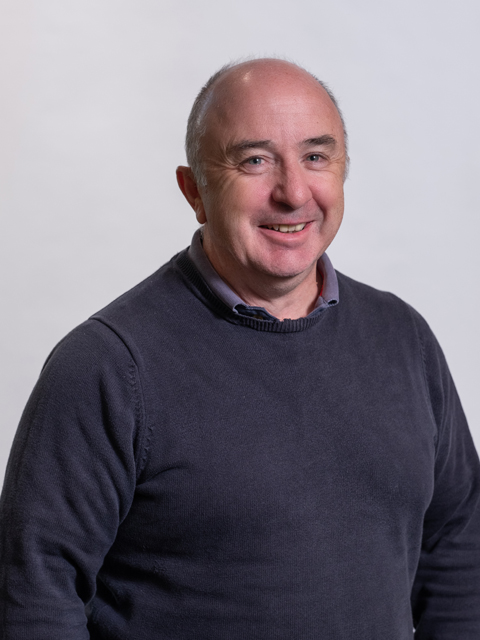
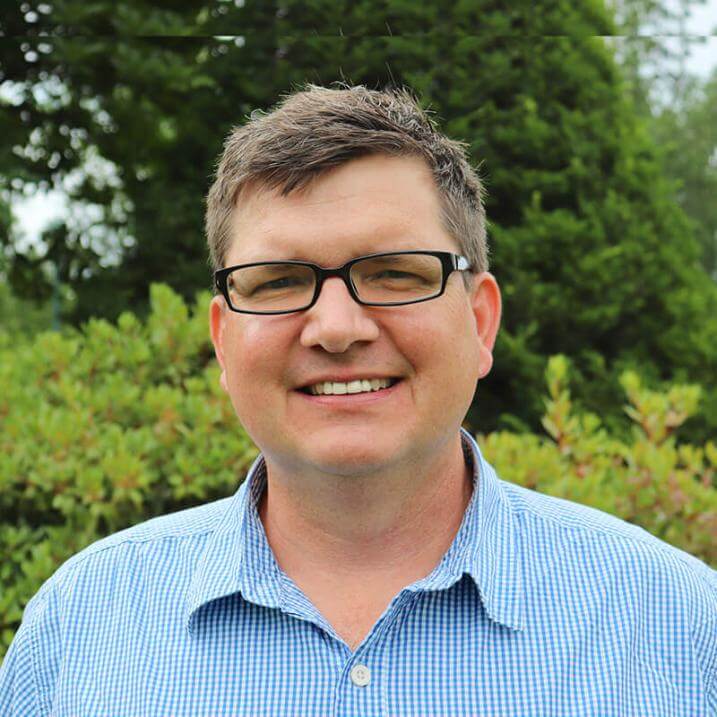
Kaelan Moat is a Part-Time Assistant Professor in the Department of Health Research Methods, Evidence, and Impact at McMaster University. His work focuses on bridging research evidence with health policy decisions, particularly through knowledge translation frameworks and institutional capacity building in health systems. Research Interests: Dr. Moat specializes in evidence-informed health policymaking, critical interpretive synthesis methods, and global health systems strengthening. His research examines: Institutional processes for embedding evidence in policy Ethical dimensions of policy dialogues Knowledge translation infrastructure in government systems Resource optimization in healthcare services Publication Analysis: His 15 most recent publications (2013-2025) demonstrate a strong focus on health policy implementation frameworks, particularly using critical interpretive synthesis to analyze: Evidence-to-policy institutionalization Global health governance structures Knowledge translation tool development Policy support organizations in low-middle-income contexts Ethical considerations in policymaking and stakeholder engagement are emerging themes in his recent work.
Maria Bruselius-Jensen is an Associate Professor at Aalborg University's Department of Culture and Learning, Faculty of Social Sciences and Humanities. She is affiliated with the Centre for Youth Research (CeFU). Her research focuses on youth participation, social communities, and civic engagement, with a particular emphasis on how young people navigate institutional and societal structures. She holds a PhD in Humanities from Roskilde University (2011), specializing in poetic perspectives on school meals. Her academic roles include leading projects such as SINCRONY (2024-2027) exploring intersectional inclusion and participation, and Pædagogiske veje til bedre trivsel (2022-2025) addressing well-being in vocational education. She has also held visiting scientist roles at Simon Fraser University and the University of British Columbia (2015-2016). Bruselius-Jensen's research interests span youth activism, social media analysis, and participatory methodologies. Key areas include: Youth participation dynamics in organizations Impact of social communities on well-being Civic engagement strategies in marginalized groups Climate activism among Danish youth Her work has been featured in 78+ media engagements, including analyses of youth disillusionment with climate activism and the evolving role of social communities. She actively contributes to policy debates through participatory methods in education and health promotion. Notable grants include leadership roles in 14 projects, including GreenEdTech (2022-2026) addressing sustainability in education technology. She supervises PhD candidates and has authored/co-authored 53 publications since 2007.
Sandra Eady is a Professor in the Department of Education at Queen Margaret University (QMU), specializing in teacher education, mentorship, and social justice in education. Her work focuses on improving educational practices through research-informed strategies and fostering supportive environments for beginning teachers. She has authored/co-authored multiple books including *Mentoring Teachers in Scotland: A Practical Guide* (2022) and contributed to peer-reviewed journals addressing topics such as feedback mechanisms, action research methodologies, and curriculum design. Her research interests span educational policy critique, partnership dynamics in higher education, and the integration of social justice frameworks into teacher training programs. Notable contributions include analyzing the lived experiences of education students and investigating the role of research in mentorship practices. Eady has also explored cross-disciplinary themes like spiritual development through science education and bilingual language use in primary settings. Collaborations with institutions and educators emphasize practical application, such as developing feedback strategies that 'feed forward' to enhance learning and evaluating the impact of mixed-age collaborative approaches in creative writing. Her work consistently bridges theoretical frameworks with real-world educational challenges, advocating for equitable and evidence-based practices.
Dr Stuart Middleton is an Associate Professor at the University of Southampton, affiliated with the School of Electronics and Computer Science within the Faculty of Engineering and Physical Sciences. He is a member of the Agents, Interaction and Complexity research group, the Centre for Machine Intelligence, and the Centre for Democratic Futures. His research focuses on Natural Language Processing (NLP), particularly information extraction and human-in-the-loop NLP, with applications in law enforcement, defence, mental health, and environmental science. His research interests include Natural Language Processing , Information Extraction , Human-in-the-loop NLP , Active Learning , Adversarial Training , Rationale-based Learning , and Argument Mining . He specializes in scenarios with limited or fragmented data, developing methods for few/zero-shot learning, graph-based models, and multimodal analysis. His work spans domains such as mental health, digital ethics (e.g., sharenting), defence, and climate science. The recent publications highlight a strong trend in applying NLP to societal challenges, including mental health monitoring through social media, ethical AI, multimodal argumentation in political debates, and climate data analysis. His work combines technical innovation in prompt engineering, summarization, and graph-based modeling with real-world impact. AI for defence: readiness, resilience and mental health (2024) Extraction and summarization of suicidal ideation evidence (2024) Sharenting and social media properties (2024) Implementing responsible innovation (2024) ConversationMoC: mood change detection (2024) Dr Middleton is actively involved in PhD supervision and academic leadership as Deputy Director of the UKRI MINDS Centre for Doctoral Training. He supervises multiple PhD students working on NLP and AI projects. He has secured research funding from ESRC and EPSRC for projects such as ProTecThem2.0 , SafeSpacesNLP , and GloSAT . He leads the Natural Language Processing modules COMP3225 (UG) and COMP6253 (PG) and mentors students in NLP research. He is a Fellow of The Alan Turing Institute and a member of the EPSRC peer review college, contributing to national research strategy and evaluation. His research is conducted within interdisciplinary teams, including collaborations with criminologists, social scientists, and environmental researchers. He is part of the Agents, Interaction and Complexity group and contributes to the Centre for Machine Intelligence and Centre for Democratic Futures , focusing on AI systems that interact meaningfully with humans and society.
Christophe Choquet is a full Professor of Computer Science at the University of Le Mans since 2009, currently based at the LIUM (Laboratoire d’Informatique de l’Université du Mans). After an early career as an R&D engineer in the Airbus consortium developing digital training systems, he held lecturer positions at the Universities of Nantes and Le Mans, led the LIUM TEL research group (2007–2012), and served as Vice-President of the University of Le Mans (2012–2015). Research Interests: His work lies at the intersection of Technology-Enhanced Learning (TEL) , learning analytics , and model-driven engineering . A central theme is the instrumentation of learning systems —designing real-time data capture and feedback loops that allow educators to continuously adapt and personalize instruction. Specific foci include: Synchronous speech-transcription tools for live classroom analytics. Model-driven re-engineering of learning environments. Context-aware indexing and reuse of pedagogical scenarios. Design patterns that translate educational intent into deployable system features. He currently coordinates the French National Research Agency (ANR) PASTEL project, which advances these agendas in higher-education settings. Scientific Production & Impact: With more than 90 peer-reviewed publications, his recent articles (2015–2019) demonstrate a clear trajectory toward real-time, data-rich classroom instrumentation , coupling speech-to-text analytics with fine-grained pedagogical indicators. Earlier work established foundational models for usage-tracking languages (UTL) and design-rationale frameworks that remain widely cited in the TEL community. Awards & Recognition: While no specific medals or fellowships are listed, his repeated roles as conference chair (e.g., EIAH 2013) and keynote organizer underscore his recognized leadership. Advising & Grants: He has supervised numerous PhD students and post-docs whose names appear as co-authors, including Vincent Bettenfeld, Mariem & Meriem Chaabouni, Jean-Pierre Clayer, Aymen Abedmouleh, Hassina El Kechaï, and others. Current funding includes the ANR PASTEL grant and ongoing industrial partnerships around classroom analytics. Laboratory & Teams: He is affiliated with LIUM (Laboratoire d’Informatique de l’Université du Mans), where he previously headed the TEL (Technology-Enhanced Learning) research team. The lab provides interdisciplinary collaboration with linguists, educational scientists, and data scientists.
Janet Burge is an Associate Professor in the Department of Mathematics and Computer Science at Colorado College, where she co-chairs the department. She holds a PhD from Worcester Polytechnic Institute (2005) and a bachelor's degree from Michigan Technological University. Her research focuses on Design Rationale —methods for capturing decision-making processes in software design to preserve critical knowledge over system lifespans. She integrates 20+ years of industry experience as a software engineer and AI researcher into her academic work. Her research interests span Design Rationale , Human-Computer Interaction , and Software Engineering , with emphasis on collaborative tools, decision documentation, and AI-driven text mining. She investigates how rationale capture improves software maintenance, team coordination, and educational outcomes. Burge's publications show consistent focus on empirical studies of software design processes, with recent work exploring distributed meetings, AI-assisted rationale extraction, and educational tools. Key trends include interdisciplinary approaches blending AI optimization, human factors, and pedagogy to address complex design challenges. Grants: NSF, 2022: Distributed Fragmented Software Design Meetings ($599,994; $132,758 to CC) NSF, 2009: CAREER: Rationale Capture for High Assurance Systems ($527,864) NSF, 2009: CPATH-2: Incorporating Communication Outcomes into CS Curriculum ($799,996) She teaches courses including Software Design, Computer Science I, Human-Computer Interaction, and Team Software Projects. She mentors undergraduate researchers through SCoRe and NSF REU programs, emphasizing project-based learning in rationale capture and software engineering.
Dr. George Edward Torrens is a Senior Lecturer at Loughborough University's School of Design and Creative Arts, specializing in Industrial Design with a focus on Assistive Technology and User-Centered Design. With over 40 years of practical experience as an Industrial Designer, he joined Loughborough University in 1994 to validate his design approaches academically. His educational background includes a PhD (2015) on research methods in Assistive Technology product development, a BA Hons in Design for Industry (1988), and engineering certificates from earlier in his career. Torrens has developed significant resources like Usability-NET, a free online design process guide, and has been instrumental in inclusive sports product design, notably creating low-cost accessible solutions like a cardboard boccia ramp. His research primarily focuses on the intersection of Industrial Design, Assistive Technology, and User-Centered Design methodologies. Torrens has pioneered the Loughborough User-Centred Assistive Technology (LUCAT) design process, taught to over 500 students since 2000. His work explores cultural influences on disability perception, communication formats for assistive technology design, and the application of design methods in inclusive product development. Much of his recent research examines cross-cultural perceptions of assistive devices through semantic differential analysis. Torrens has made significant contributions to understanding how design processes can be optimized for assistive technology development, with publications spanning product semantics, inclusive sports equipment, and academic approaches to design education. His research consistently addresses the practical implementation of user-centered methodologies in real-world design contexts. 2022 Higher Education (HEA) / Advance HE Fellow Named inventor on four patent applications (two GB and one US patents granted) Founding member of Dexterity Research Limited, the first Loughborough spin-out to win a DTI SMART Award 2009 Audi Design Foundation funding for innovative wrist fracture support As an educator, Torrens has supervised numerous students through the LUCAT process and has developed resources to address academic procrastination among design students. His industry engagement includes partnerships with organizations like Boccia England, Special Olympics GB, and the Youth Sports Trust. He has also organized international design competitions, including the Inclusive Sports Product Design Hack sponsored by JLR Shine network. Torrens maintains active collaborations with designers, coaches, and disability organizations to advance inclusive design practices.
Dr. Simon Jorgenson is an Associate Professor in the Department of Education at the University of Vermont (UVM), affiliated with the College of Education and Social Services. He serves as Program Coordinator for the Place-Based Education Undergraduate Certificate and the Education for Sustainability Certificate of Graduate Studies. Previously, he worked as a classroom teacher and instructor for the National Outdoor Leadership School (NOLS). His teaching focuses on social studies and science education through John Dewey's experiential learning principles, complemented by field supervision for pre-service teachers. Education: Ph.D. in Educational Studies, University of Cincinnati M.A. in English, Middlebury College M.A. in Educational Studies, University of Cincinnati His research explores the intersection of K-12 STEM education and environmental education, with a focus on teachers' lived experiences and policy implementation. Key projects include analyzing STEM schools in innovative policy environments and examining teacher rationales for environmental projects. His work frequently addresses curriculum design, teacher professional development, and equity in education. Publications span topics like place-based learning, green pedagogy, and historical curriculum analysis. Notable recent works include studies on STEM teacher training programs and trauma-informed educational practices. Jorgenson's research consistently emphasizes practical, community-rooted approaches to education reform. He has advised no formally listed graduate students, though his teaching roles likely involve mentoring pre-service educators. No specific grants or lab affiliations are mentioned, though his program coordination roles suggest involvement in institutional initiatives around sustainability and place-based education.
Professor Linda DeRiviere is a faculty member in the Department of Political Science at the University of Winnipeg, currently on leave until December 31, 2024. She holds a Ph.D. in Economics (University of Manitoba, 2005) and an M.A. in Economics (2000). Her research focuses on public policy and administration, with an emphasis on social welfare, gender studies, and health policy. She teaches courses in program evaluation, public finance, governance, and Indigenous approaches to policy analysis. Her research explores topics such as intimate partner violence, economic impacts of FASD, cervical cancer screening models, and human capital methodologies. Notable projects include SSHRC-funded work on community learning partnerships and economic analysis of marginalized populations. She has collaborated with organizations like the Manitoba Research Alliance for Transforming Aboriginal and Inner-City Communities. Her publications span journals like Violence and Victims , Canadian Public Policy , and Feminist Economics , addressing intersections of economics, public policy, and social equity. Her work often bridges theoretical frameworks with applied policy solutions, particularly in disadvantaged and Indigenous communities. Grants and partnerships include funding from the Social Sciences and Humanities Research Council via CURA programs. She contributes to interdisciplinary initiatives in public administration, emphasizing evidence-based policy design and community engagement strategies.
Cynthia Van Hee is a Senior Researcher and lecturer at Ghent University's LT3 (Language and Translation Technology Team), where she conducts cutting-edge research in computational linguistics and natural language processing. Her work focuses on developing advanced systems for irony detection, sentiment analysis, and cyberbullying detection, with applications across multiple languages and social media platforms. Dr. Van Hee's primary research interests span several interconnected domains within computational linguistics: Sentiment analysis (including implicit sentiment, emotion detection and aspect-based sentiment analysis) Irony and sarcasm detection in social media Cyberbullying detection and classification Multilingual natural language processing Machine learning applications for social media analysis Her recent publications demonstrate a strong focus on irony detection across multiple languages, with particular attention to confidence scoring, explanation generation, and multilingual capabilities. She has also expanded her research into ethical AI considerations, exploring the social implications of language technologies and developing frameworks for virtuous data management. Her work bridges theoretical advances in NLP with practical applications in social media monitoring, news diversity, and healthcare contexts. Dr. Van Hee is actively involved in several major research projects: SentEMO : Developing a multilingual adaptive platform for aspect-based sentiment and emotion analysis NewsDNA : Exploring diversity in news through algorithmization AMiCA : Automatic Monitoring for Cyberspace Applications, focusing on cyberbullying detection As an educator, she teaches several courses including Audiovisual Language Techniques, Natural Language Processing, Project Management, and Desktop Publishing, helping to train the next generation of language technology specialists. Her commitment to knowledge dissemination is further evidenced by her contributions to educational publications explaining language technology fundamentals to broader audiences.
Hui-Chuan (Jane) Li is a Lecturer in Mathematics Education at the University of Edinburgh since 2018, affiliated with the Moray House School of Education and Sport and the Institute for Education, Teaching and Leadership (IETL). She holds a PhD in Education from the University of Cambridge (2015) and has extensive teaching experience in Brunei and Taiwan. Her research focuses on curriculum design, social constructivist pedagogy, and the integration of sustainability into mathematics education. Jane has held roles such as Programme Leader for Graduate Professional Development in Brunei and currently oversees the MSc Transformative Learning and Teaching (mathematics specialism) at Edinburgh. Education Background: PhD in Education (Cambridge, 2015), MPhil in Education (Cambridge), MSc in Mathematics (National Kaohsiung Normal University, Taiwan), BA in Mathematics (National Changhua University of Education, Taiwan). Research Interests Curriculum materials design and development Social constructivism in mathematics teaching Assessment strategies in fractions STEM and sustainability education International comparative education studies Professional Contributions Jane serves on the editorial board of Frontiers in Education and reviews for journals like Educational Studies in Mathematics and ZDM. Her work emphasizes interdisciplinary approaches, teacher education, and sustainability in mathematics pedagogy. She has presented at international conferences (e.g., ICME-13, BERA), focusing on PBL implementation, fraction proficiency frameworks, and curriculum philosophy. Awards and Affiliations Fellow of the Institute of Mathematics & its Applications (FIMA) Supervision and Grants Jane supervises postgraduate students in mathematics education and leads PGDE Secondary mathematics programs. Her work includes grants supporting STEM sustainability projects and comparative curriculum studies.
Louise Møller Haase is Vice-Dean at the Faculty of Technical Sciences, Aarhus University, with her primary affiliation in the Dean's Office. She is a key academic leader and researcher focusing on circular economy, sustainable design, and engineering education. Her work bridges academic research, policy development, and industrial application. Institution: Aarhus University Faculty: Faculty of Technical Sciences Department: Dean's Office Role: Vice-Dean and active researcher Her research interests center on enabling systemic transitions toward sustainability. Key areas include circular economy, product longevity, sustainable public procurement, and digital tools such as the Digital Product Passport. She emphasizes relational and systemic approaches to sustainability, advocating for stakeholder engagement and value preservation in sufficiency-based models. The recent publications reflect a strong trend in applying design thinking and systems theory to sustainability challenges. Her work spans industrial case studies, policy recommendations, and educational innovation, particularly in engineering contexts. She develops practical tools like the LaST Tool and guides for circular procurement, demonstrating an applied, transdisciplinary approach. Louise Haase has not received any explicitly mentioned scientific awards in the provided text. She leads and participates in multiple research projects, including PROLONG, CircularTex, and Design2.Use, often securing competitive grants. These projects involve collaboration with industry, public institutions, and interdisciplinary teams. While no formal students are listed, her collaborative publications suggest mentorship and team leadership. Her work in engineering education reform highlights her influence beyond research into academic strategy and institutional development. She is involved in several research labs and teams focused on sustainable design and circular transitions, including those developing tools for design rationale, longevity assessment, and digital disruption. These teams operate at the intersection of design, engineering, and policy, supporting both academic and practical implementation of circular economy principles.
Fernando Colina is an Associate Professor at the Marketing and Decision Sciences Department of Salem State University , Massachusetts. With a career spanning over two decades, he has held dual roles as both a faculty member and an administrative leader, focusing on business analytics, data integrity, and higher education assessment. His responsibilities include curriculum redesign for quantitative requirements, teaching graduate courses in data analytics, and advising students. PhD, MBA, and BS from University of Massachusetts Boston Colina’s research bridges machine learning applications with business intelligence , emphasizing predictive analytics for student success, systems thinking in institutional accountability, and assessment frameworks for accreditation compliance. His work also explores data warehousing and cybernetic systems in academic governance. Analysis of his publications reveals a trajectory from technical SAS/SQL programming (2004-2012) to modern applications of machine learning and systems theory in higher education assessment (2018-2024). Collaborations with scholars like G. Blanco-Ramirez and Z. Tang highlight interdisciplinary approaches in educational data mining and event management risk analysis . Active in professional societies: ASHE (Association for the Study of Higher Education), MOBTS (Teaching Society for Management Educators) Colina’s advisory roles include curriculum development for competency-based education at UMass Boston (2000-2003) and serving on the Bertolon Assessment Committee at Salem State (2015-2016). He pioneered data retrieval systems for institutional compliance and contributed to national workshops on learning outcomes assessment.
Gloriana Gonzalez Rivera is a Professor in the Department of Curriculum and Instruction at the University of Illinois Urbana-Champaign , with affiliations to the Center for Social & Behavioral Science and the Siebel Center for Design . Her research focuses on problem-based mathematics instruction , analyzing teachers' decision-making processes and strategies for leveraging student prior knowledge in geometry classrooms. Her work has explored interdisciplinary approaches like integrating visual arts contexts into geometry teaching, supported by a $1.38M NSF DRK-12 grant for developing human-centered design modules . She received the 2022 AERA Mid-Career Award and was named University Scholar (2022-2025) , reflecting her impact in mathematics teacher education . NSF CAREER grant recipient Co-PI on cross-institutional projects with University of Puerto Rico Visiting Professor at Design School Kolding, Denmark (2024) She has published extensively on teacher reasoning , discourse analysis , and technology-enhanced professional development , particularly through animations and video clubs in Lesson Study contexts. Her earlier career includes teaching mathematics in Massachusetts and Puerto Rico , and editorial leadership in Mathematics Teacher Educator .
Kamilla Kohn Rådberg is a Researcher at the Entrepreneurship and Strategy department of Chalmers University of Technology (Gothenburg, Sweden). She combines academic research with teaching leadership in engineering education and supervision of thesis work. Research focus: Innovation management, inter-organizational collaboration, and strategic leadership in academic-industry partnerships Education: MSc in International Business Administration and Law, PhD in Technology Management and Economics Experience: Executive PhD at Volvo Cars (FENIX program 2000-2005), private sector background in automotive and management consultancy Research Trends: Her work examines multi-actor innovation ecosystems , knowledge infrastructure development , and boundary-spanning managerial practices . She analyzes how organizations balance perspectives during innovation and explores the evolving role of universities in societal transformation. Notable Projects: 2021-2022 project on digitalization in the built environment (VINNOVA-funded), 2019-2021 innovation management in construction (VINNOVA), and collaborative work on MAX IV/ESS research infrastructure (Swedish Foundation for Strategic Research). Teaching Role: Course leader for TEK510 Organizing for Innovation with Anna Yström. Supervises Master's theses and assists in PhD supervision within the "Managing In-Between" research group led by Associate Professor Susanne Ollila.