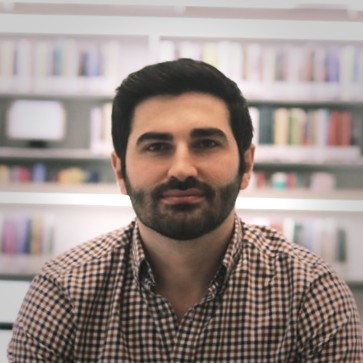
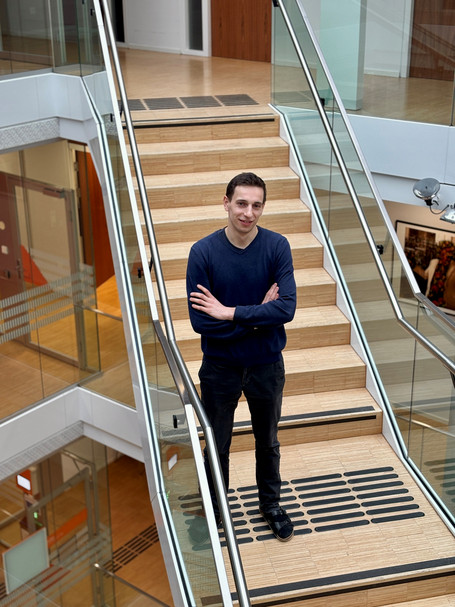
Dr. Irfan Batur is an Assistant Research Professor at Arizona State University's School of Sustainable Engineering and the Built Environment. His work bridges transportation systems, sustainability, and human behavior, focusing on travel demand forecasting, emerging mobility technologies, and equity in urban transit. PhD in Civil, Environmental, and Sustainable Engineering (Arizona State University, 2023) MS in Industrial and System Engineering (Istanbul Sehir University, 2014) BS in Industrial Engineering (TOBB Economy and Technology University, 2012) Dr. Batur's research explores four pillars: Travel Behavior & Demand Modeling Societal Wellbeing & Accessibility Emerging Mobility Technologies Human Adaptation to Extreme Environments He employs advanced econometric and machine learning techniques to analyze complex datasets, contributing to policy frameworks for sustainable transportation. While his publications focus on automated vehicles, ridehailing impacts, and pandemic-era mobility shifts, no scientific awards are mentioned. As Assistant Director at TOMNET and TBD University Transportation Centers, and Coordinator for Technology Transfer, he leads collaborative efforts in transportation research. His students include PhD candidates in joint projects with senior researchers like Dr. Ram Pendyala and Dr. Chandra Bhat.
Dr. Nicola Ranger is a Senior Research Fellow at the Environmental Change Institute, University of Oxford, and Executive Director of the Oxford Martin Programme on Systemic Resilience. She also serves as Director of the Resilient Planet Finance Lab and holds a Senior Visiting Research Fellowship at the Grantham Research Institute of the London School of Economics. Her work bridges climate science, economics, and finance to address global sustainability challenges with practical policy applications. Dr. Ranger completed her doctorate in Atmospheric Physics from Imperial College London and conducted postdoctoral research in climate economics and policy at the London School of Economics. Her educational background provides a strong foundation for her interdisciplinary work at the intersection of climate science and economic decision-making. Her research focuses on measurement, valuation, and integration of resilience and environmental sustainability impacts within decision-making frameworks across multiple scales. Key areas include: Quantitative risk analytics and scenario analysis for climate and environmental risks Sustainable finance mechanisms and investment alignment with climate goals Systemic resilience to climate impacts and cascading risks Policy frameworks for climate adaptation and resilience Economics of climate change and environmental sustainability Her recent publications demonstrate a strong trend toward integrating climate and nature-related risks into financial systems, with increasing focus on AI applications for climate risk assessment, development of taxonomies for adaptation finance, and the macro-critical importance of nature for financial stability. Her work increasingly addresses the systemic nature of climate risks and the need for coordinated global responses across multiple sectors. Dr. Ranger holds multiple influential advisory roles that demonstrate recognition of her expertise: Senior Advisor for the World Bank Member of the European Commission High Level Expert Group on Sustainable Finance in Low and Middle Income Economies Academic Visitor at the Bank of England Member of the UK Green Taxonomy Advisory Group Co-Chair of the Resilient Planet Data Hub with the UN and Insurance Development Forum Dr. Ranger leads several significant research initiatives, including the Resilient Planet Finance Lab, the Oxford Martin Programme on Systemic Resilience, and the Global Finance and Economy Group. Her work with international organizations has helped shape global approaches to climate risk management and sustainable finance. She has been instrumental in founding initiatives such as the G20-V20 InsuResilience Global Partnership and the Global Shield Financing Facility. Her laboratory and research teams focus on developing data-driven approaches to assess climate and nature-related financial risks. The Resilient Planet Finance Lab serves as a partnership between Oxford University and LSE, bringing together interdisciplinary expertise to develop innovative solutions for sustainable finance challenges, with particular focus on emerging and developing economies.
Meta Berghauser Pont is a Professor of Urban Morphology and Urban Planning at Chalmers University of Technology. She leads the Spatial Morphology Group (SMoG), focusing on quantitative analysis of urban form, space syntax, and design theory. Key research themes: urban density, sustainable cities, social-ecological systems, pedestrian movement modeling Authored the 2023 book Spacematrix: Space, Density and Urban Form , redefining density metrics Her work bridges analytical urban morphology with practical urban planning applications, particularly in noise/air quality management, transport infrastructure, and digital twin city modeling. She manages pedagogical development for architecture programs at Chalmers. Active projects include: Digital Twin Cities Centre (EU/VINNOVA) Sustainable Urban Form (Formas) Green Infrastructure Integration (Mistra Urban Futures) Multi-scale Climate Proofing (VINNOVA) Urban Design Calculator (Naturvårdsverket) Her lab develops open-source tools like the Place Syntax Tool (PST) for morphological analysis of cities.
Alejandro Kuratomi is an Assistant Professor in Data Science at the Department of Computer and Systems Sciences (DSV), Faculty of Social Sciences, Stockholm University. His academic journey includes a Ph.D. in Machine Learning (2024), M.Sc. in Engineering Design: Mechatronics (2019), and dual B.Sc. degrees in Industrial and Mechanical Engineering (2014). Ph.D., Machine Learning – DSV, Stockholm University M.Sc., Mechatronics – KTH Royal Institute of Technology B.Sc., Industrial Engineering – Universidad de Los Andes B.Sc., Mechanical Engineering – Universidad de Los Andes Kuratomi’s research focuses on Machine Learning Interpretability , Algorithmic Fairness , and Multivariate Time Series Classification , with applications in GNSS error estimation and healthcare decision-making. He develops interpretable models like CRITS and ORANGE to address technical and ethical challenges in AI. His recent work explores Transformer/LLM interpretability , mechanistic explanations , and integer-justified counterfactuals . While no awards or students are mentioned, his publications highlight interdisciplinary efforts combining computer science, ethics, and engineering.
Salvatore Rampone is an Associate Professor at the Department of Law, Economics, Management and Quantitative Methods (DEMM) of Università degli Studi del Sannio (Unisannio). His research focuses on Machine Learning , Internet of Things (IoT) , and Cybersecurity , with applications in intrusion detection, bioinformatics, and financial systems. Research Interests : Privacy-preserving Machine Learning Hybrid Cloud-IoT Architectures Genetic Programming Neural Network Applications Data Processing in Distributed Environments Recent Publication Trends : His work spans federated learning for IoT security ( 2025 ), DNA splicing site prediction ( 2020 ), meningitis classification ( 2019 ), RFID-based traceability systems ( 2015 ), and geological data analysis using neural networks ( 1995-1996 ). Key technologies include Apache Spark , MLlib , and Wavelet Transform . Teaching Activities : He teaches courses like Applied Machine Learning and Principles of Computer Sciences across multiple degree programs including Statistical and Actuarial Sciences and Economics and Management .
Alex Weissensteiner is a Full Professor of Quantitative Finance and Rector at the Free University of Bozen-Bolzano (unibz). He previously held academic positions at Leopold Franzens University in Innsbruck, the University of Liechtenstein, and served as Professor of Financial Engineering at the Technical University of Denmark from 2013–2015. At unibz, he held leadership roles including Director of the Bachelor's Degree in Economics and Management (2015–2020) and Pro-Rector for Studies (2020–2024) before becoming Rector in 2024. His research focuses on Life-cycle asset allocation Parameter uncertainty in financial models Scenario generation for investment decisions Asset-liability management Market microstructure dynamics Information economics in financial markets Recent publications emphasize portfolio optimization under uncertainty, option-implied risk analysis, and agricultural risk management. His work combines theoretical finance with empirical validation, often applying quantitative methods to banking, insurance, and pension systems. Scientific recognition includes EU grants for "Understanding Pensions in Europe" (2016) and "Understanding Saving in Europe" (2019) Regular contributions to leading journals like Journal of Banking & Finance and Quantitative Finance Invited presentations at major finance conferences (Jackson Hole, AFA, DGF) As Rector, he maintains active research collaborations with scholars including Mogens Steffensen (University of Copenhagen), N. Branger, T. Dangl, and L. Garlappi. He serves on the editorial board of Risks journal and has consulted for provincial education policy bodies.
Dr. Christian Panse is the Unit Head of Computational Mass Spectrometry at the Functional Genomics Center Zurich , ETH Zurich. His work spans bioinformatics, data processing, and visualization in proteomics, with a focus on method development and software engineering. Research Interests: Christian Panse specializes in proteomics and computational mass spectrometry , developing tools like prolfqua and rawrr for quantitative proteomics analysis. His research addresses standardization in proteomics core facilities and cross-resource data comparison. Recent work includes harmonizing quality controls across proteomics laboratories Creating user-friendly R packages for differential expression analysis Advancing fragmentation techniques for post-translational modification studies Publications Trends: His articles emphasize proteomics data reliability , software tools , and method validation in mass spectrometry. Collaborations with institutions like the Core for Life alliance highlight his role in community-driven standardization efforts.
Gonul Colak is a Professor of Finance at Hanken School of Economics in Helsinki, Finland. He has held academic positions at Florida State University and Wichita State University, and has been a visiting scholar at Stern School of Business at New York University and at Turkish Central Bank's Istanbul School of Central Banking. His research has been published in top finance journals including Review of Financial Studies, Journal of Financial Economics, and Journal of Financial and Quantitative Analysis. Dr. Colak received his Doctor of Science (Economics and Business Administration) from the University of Iowa in 2004, with a focus on Business Economics. His educational background also includes a Master of Science in Economics from the University of Iowa (2001) and a Bachelor of Science in Electrical and Electronics Engineering from Bilkent University in Turkey (1998). Professor Colak's research primarily focuses on political uncertainty, corporate finance, and financial econometrics . His work spans a wide range of topics including equity issuance, investor relations, corporate restructurings, financial intermediation, executive compensation, S&P 500 Index additions, capital structure, and cash holdings. His recent work has increasingly focused on Environmental, Social and Corporate Governance (ESG) issues, as evidenced by his Climate Finance Award at the 7th Liechtenstein Workshop of Sustainable Finance in 2023. His research employs sophisticated econometric techniques to analyze complex financial phenomena, often connecting political events with market outcomes. Analysis of Professor Colak's recent publications reveals a strong focus on the intersection of political economy and financial markets, with particular attention to IPO markets, stock price volatility, and corporate financing decisions. His work often examines how political uncertainty affects corporate behavior and market outcomes. Recent publications incorporate machine learning techniques for predicting IPO returns and analyzing systemic risk in energy markets. His research shows a clear progression from traditional corporate finance topics toward more complex analyses of political and environmental factors affecting financial markets. Professor Colak has received several prestigious awards including: Climate Finance Award at the 7th Liechtenstein Workshop of Sustainable Finance (2023) International Workshop on ESG-Values (IWESGV) (2023) Best Paper Award at 2018 Young Finance Scholars Conference Beliefs and Learning in Initial Public Offerings and Bank-runs (2009) Playing the Waiting Game in the IPO Markets (2009) Professor Colak has been actively involved in PhD thesis supervision and examination. He has secured significant research funding including an Academy of Finland Research Grant (445,412 EUR, 2017-2021) for the project 'CEO mobility - to limit or not to limit?' and a General Research Fund from the Research Grants Council of Hong Kong (781,500 HKD, 2019-2021) for 'Credit Market Sentiment and the Debt Trap.' His current externally funded projects include 'Insider Trading around Environmental, Social, and Governance Scandals' and 'Modeling the Structure and Dynamics of Energy, Commodity and Alternative Asset Prices.' Professor Colak is an active member of the finance research community, serving as an Associate Editor for the Journal of Financial Stability since 2019. He regularly participates in conferences including the Southern Finance Association Conference and contributes to academic discourse through peer review activities for journals such as Journal of Financial Intermediation and Journal of Banking & Finance.
Anton Pichler is a researcher at the Institute for Transport and Logistics Management at Vienna University of Economics and Business (WU). His work focuses on mapping global supply chains and economic networks to enhance resilience and sustainability. He previously held a James S. McDonnell Fellowship at the Complexity Science Hub in Vienna and completed his PhD in Mathematics at the University of Oxford. Education: Master’s in Quantitative Finance (WU), PhD in Mathematics (Oxford) Pichler’s research explores the interplay between microeconomic interactions and macroeconomic dynamics through complex network structures. He investigates how localized disruptions—such as those during the Covid-19 pandemic—can cascade globally, affecting supply chains, labor markets, and financial systems. His work bridges economics, climate science, and network theory. His recent publications emphasize granular supply network data for climate transitions, pandemic shock propagation, and systemic risk optimization. Collaborations with institutions like the OECD and policy engagement through G20’s Think20 highlight his impact on global frameworks. Scientific Awards: James S. McDonnell Fellowship Anton appreciates WU’s world-class infrastructure and collaborative environment, noting the importance of interdisciplinary teamwork in advancing his research agenda.
Runhuan Feng is a Professor of Statistics and holds a secondary appointment in the Department of Mathematics at the University of Illinois at Urbana-Champaign. He is affiliated with the College of Liberal Arts & Sciences. His research focuses on risk analytics, actuarial science, quantitative finance, pension planning, healthcare data analytics, and innovations in FinTech/InsurTech. Recent work addresses risk aggregation methodologies, peer-to-peer insurance models for flood risks, multi-risk insurance frameworks, mortality shock management, and editorial leadership in actuarial science. His research bridges theoretical models with practical applications in finance and insurance sectors. No scientific awards are explicitly mentioned in the profile. Advising and grants sections remain unspecified. His research outputs reflect interdisciplinary collaboration, as seen in his editorial role and co-authored studies.
Larry V. Hedges is the Board of Trustees Professor of Statistics and Social Policy at Northwestern University's School of Education and Social Policy (SESP), one of the university's most distinguished academic positions. He also holds affiliations with the Institute for Policy Research and previously served as the Stella M. Rowley Professor at the University of Chicago. His work focuses on statistical methods for meta-analysis, evaluation research, and interdisciplinary applications across social, medical, and biological sciences. Education: PhD (1980), Mathematical Methods in Educational Research, Stanford University MA (Statistics), Stanford University BA (Mathematics), University of California, San Diego Research Interests: Development and application of statistical techniques for meta-analysis, causal inference, and evidence-based policy evaluation. Notable areas include frameworks for international comparative education studies, cost analysis of systematic reviews, and gender/ethnic gaps in academic achievement. Awards: Yidan Prize for Education Research (2018) – World's largest education award Sells Award for Distinguished Multivariate Research (2014) Statistician of the Year (2013) Fellowships: American Academy of Arts and Sciences, American Statistical Association, National Academy of Education Professional Contributions: Co-founder of the Society for Research on Educational Effectiveness, member of the National Education Sciences Board, and contributor to major initiatives like the What Works Clearinghouse. His work emphasizes rigorous methodological standards across disciplines. Labs/Teams: Leads methodological research through SESP and collaborative projects at the Institute for Policy Research, focusing on policy-relevant statistical innovations.
Dr. Abani Pradhan is a Professor and Director of the Graduate Program in Nutrition and Food Science at the University of Maryland's College of Agriculture and Natural Resources. He leads the Center for Food Safety and Security Systems and advises student organizations like the Food Science Club and the Graduate Student Organization. His expertise spans food safety, microbial risk assessment, and AI-driven analytics. Educated at institutions including Cornell University and Indian Institute of Technology, he holds a Ph.D. in Agricultural and Food Engineering. Research focuses on foodborne pathogens (e.g., Listeria, Salmonella), predictive microbiology, and integrating genomics with risk assessment. He teaches courses like Food Safety Risk Assessment and Food Quality Control. Recognized with over 30 awards, including the Dean Gordon Cairns Award and Chauncey Starr Award, he also serves on national advisory committees and professional societies like the Society for Risk Analysis. His interdisciplinary work addresses global food safety challenges through machine learning and systems modeling.
Prof. Shana Sturla is a Full Professor at the Department of Health Sciences and Technology (D-HEST) at ETH Zurich. Her research focuses on understanding human toxicity through the lens of chemical structure-reactivity relationships, with a particular emphasis on dietary chemicals and nucleic acid interactions. Her work bridges toxicology, biochemistry, and molecular biology, aiming to elucidate mechanisms linking chemical exposure to cancer initiation and treatment. Research interests include Mechanisms of mutagenesis via DNA-damaging agents Biomarkers for precision cancer therapy Safety assessment of nanomaterials Gut microbiota-mediated chemical toxicity Systems toxicology approaches for exposure modeling Recent studies highlight her lab's work on DNA repair pathways (e.g., MGMT protein function), microbiome-driven metabolism of dietary carcinogens, and PBK modeling to predict internal exposure. Her interdisciplinary approach combines synthetic chemistry, bioanalytical techniques, and computational modeling to address translational toxicology challenges. Key methodologies include Genome-wide DNA damage mapping In vitro-to-in vivo extrapolation High-content imaging for toxicity assessment Physiologically based kinetic modeling No scientific awards or grants are explicitly listed in the provided text, but her extensive publication record reflects significant contributions to toxicology and cancer biology.
Laura Moss is a Professor in the Department of English Language and Literatures at the University of British Columbia's Faculty of Arts. She currently serves as Joint Faculty Representative on the UBC Senate (2024-) and previously held the position of Associate Dean, Students in the Faculty of Arts (2020-2023). Her scholarship focuses on Canadian and postcolonial literatures, with particular expertise in African literatures and environmental humanities. Education: BA from the University of Toronto MA from the University of Guelph PhD from Queen's University Professor Moss's research spans Critical Race Studies, Environmental Humanities, Gender and Sexuality Studies, Indigenous Literary Studies, Poetry and Poetics, and Post/Anti/Decolonial Studies. Her current project, "Climate Warnings: The Power of Canadian Environmental Art, Literature, and Creative Activism," examines how Canadian artists and writers engage with environmental crises. Her scholarly work demonstrates a consistent commitment to interrogating the intersections of literature, politics, and identity formation across national contexts, with particular attention to Canadian and African literary traditions. Professor Moss has received significant recognition for her scholarly contributions, including: UBC Killam Teaching Prize (2013) Prize for the Best Edited Collection in Canadian Studies by the Canadian Studies Network (2021) Scholarly and Research Communication Journal Innovation Award (2019) Moss has supervised numerous graduate students working on diverse topics including Post-multiculturalism, the Newfoundland diaspora, South Asian Canadian Literature, South African Protest Writing, Nineteenth-century Women's Nature Writing, and Urban Writing in Vancouver. She has served in significant editorial roles including Editor-in-Chief of Canadian Literature (2015-2020) and as a contributing editor to Canlitguides.ca for nine years. Her leadership extends to academic governance as she served as Academic Convenor of Congress 2019 (with over 10,000 attendees) and Chair of the UBC Canadian Studies Program (2008-2011). She also held the Brenda and David McLean Chair in Canadian Studies at UBC (2019-2021).
Wu Yaozhong serves as an Associate Professor within the Analytics & Operations department, focusing on interdisciplinary research at the intersection of human behavior and operational systems. Research Focus: Behavioral Operations Management examines how psychological factors influence supply chain decisions, inventory management, and service operations through empirical and experimental methodologies This research domain bridges cognitive science with quantitative business analytics to optimize organizational performance.