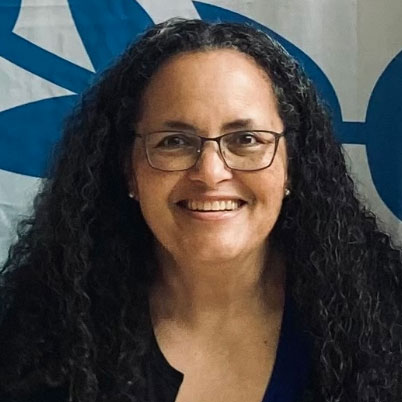
Jikai Liمشاهده پروفایل
دانشیار
Jikai Li is an Associate Professor of Computer Science in the Department of Computer Science at The College of New Jersey (TCNJ), part of the School of Science. His office is located in the STEM Building, and he can be reached at jli@tcnj.edu or (609) 771-2973. Dr. Li earned his educational qualifications from prestigious institutions: Ph.D. in Computer Science, The State University of New York at Buffalo, 2004 M.S. in Computer Science, Chinese Academy of Science, 1998 B.S. in Computer Science, Wuhan University, 1994 Dr. Li's research spans two major domains with a clear chronological progression. His early work (2003-2009) focused on optical burst switching networks, where he made significant contributions to traffic grooming, scheduling algorithms, and topology design in WDM optical networks. More recently (2017-2022), his research has pivoted to network security, particularly password security and authentication mechanisms. This evolution demonstrates his ability to adapt to emerging challenges in computer science while maintaining technical depth. His publication pattern reveals a strategic shift from specialized optical networking research to broader security applications. The earlier works represent deep technical contributions to a niche field, while his recent publications address more immediately applicable security concerns affecting everyday users. This transition reflects both personal research evolution and broader trends in computer science priorities. Dr. Li has been actively involved in institutional service at TCNJ: Committee Member, Department Promotion and Reappointment Committee (2010-Ongoing) Committee Member, School of Science Curriculum Committee (2009-Ongoing) Representative, Dept IT Liaison (2017-Ongoing) Committee Chair, Department Promotion and Reappointment Committee (2020-2022) Through his teaching of courses ranging from foundational programming to advanced security topics, and his mentorship of undergraduate research, Dr. Li contributes significantly to developing the next generation of computer scientists while maintaining an active research agenda that has evolved with the changing landscape of computer science.