Douglas D. Ready is an Associate Professor of Education and Public Policy at Teachers College, Columbia University , where he serves as Director of the Consortium for Policy Research in Education (CPRE-TC). His research focuses on the intersections of education policy, social policy, and educational equity, particularly how policies influence socio-demographic disparities in cognitive development. Research Interests: Ready’s work examines the structural determinants of educational equity, including school choice architecture, personalized learning, early childhood education, and the impacts of technology on instruction. He has published extensively in journals such as Educational Evaluation and Policy Analysis and Sociology of Education . Editorial Roles: Ready contributes to the academic community as a member of the editorial boards of Educational Evaluation and Policy Analysis and American Educational Research Journal . Key Projects: He has led analyses of programs like Teach to One: Math and Pre-K for All , exploring their effects on student outcomes and equity.
Dr. Zara Ersozlu is a Senior Lecturer in Mathematics Education within the School of Education at the University of Newcastle, Australia. With a distinguished international career spanning multiple continents, she has held academic positions at prestigious institutions including North Carolina State University (USA), Gazi and Gaziosmanpasa Universities (Turkey), National Taiwan Normal University (Taiwan), The University of Western Australia, Murdoch University, and Deakin University. Her academic journey includes tenured positions as an Associate Professor and leadership roles as Department Head and Chair in teacher education disciplines. Currently, she teaches undergraduate and postgraduate courses in mathematics education, including Effective Pedagogies in Primary Mathematics, K-6 Mathematics, K-6 Numeracy, and Digitally Supported Learning. Dr. Ersozlu earned her Doctor of Philosophy from Firat University in Turkey and her Master of Art from Sakarya University. Her extensive academic preparation is complemented by five years of practical teaching experience in public schools prior to entering academia. This blend of theoretical knowledge and practical classroom experience informs her approach to teacher education and educational research. At the broadest level, Dr. Ersozlu's research investigates solutions to real-life problems impacting people's well-being, success, and capacity to achieve. Her scholarly work spans primary and secondary mathematics education, the psychology of mathematics (including metacognition, self-regulation, and anxiety), cross-cultural educational studies, teacher education, virtual simulated learning environments, and educational assessment. She has increasingly focused on the transformative potential of AI and machine learning in education, exploring how these technologies alter teaching, learning, and research processes. Her methodological expertise encompasses both quantitative and qualitative approaches, allowing her to effectively analyze both small and large educational datasets. Analysis of Dr. Ersozlu's recent publications reveals a strong emphasis on mathematics anxiety, teacher education, and the integration of technology in learning environments. Her work demonstrates a consistent focus on practical applications of educational research to address real-world challenges in mathematics education. The interdisciplinary nature of her research connects educational psychology, technology integration, and cross-cultural perspectives, with particular attention to how these elements intersect in teacher preparation and student learning outcomes. 2023 ATEA Research Recognition Award from the Australian Teacher Education Association 2021 Fellow of the Higher Education Academy (Advance HE, UK) 2010 Fellowship Program for Postdoctoral Researchers from the Council of Higher Education of Turkey Dr. Ersozlu is deeply committed to mentoring the next generation of scholars, currently supervising four PhD students and having successfully guided ten students to completion. Her grant portfolio includes significant funding for projects such as Best Practice Guidelines for RPL in Initial Teacher Education Programs ($60,000), Exploring the Reciprocal Relationship Between Mathematics Anxiety and Mathematical Resilience ($2,599), and multiple conference travel awards. She serves as an Associate Editor for several prominent journals including the International Electronic Journal of Mathematics Education and as Editor for Interdisciplinary STEM Education. Her editorial work reflects her standing as a respected voice in mathematics education research. Dr. Ersozlu's academic leadership extends to her role in developing innovative teaching approaches that integrate virtual simulation technology and learning analytics. Her work with TeachLivE™, a mixed-reality classroom simulation platform, demonstrates her commitment to creating authentic learning experiences for teacher education students. Through these initiatives, she bridges the gap between educational theory and classroom practice, preparing future educators to effectively implement evidence-based teaching strategies in diverse learning environments.
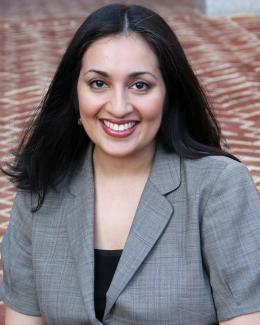
Pamela A. Morris-Perez is a Professor of Applied Psychology at the NYU Steinhardt School of Culture, Education, and Human Development and an Affiliated Professor at the NYU School of Global Public Health. She is an elected member of the National Academy of Education. Her research bridges developmental psychology, suicidology, education, and policy, with over $75M in research funding. She holds a BA from Columbia University and a PhD in Developmental Psychology from Cornell University. Her research focuses on early childhood interventions, adolescent suicide prevention (through ARCADIA), and policy impacts. Notable projects include a $5M IES-funded NYC Universal Pre-K initiative and a $10M NIH trial on parenting interventions. She has also led institutional roles as Vice Dean/Interim Dean of NYU Steinhardt, overseeing significant research growth and diversity initiatives. Research Themes: Suicidology, early childhood development, policy evaluation, pediatric health interventions. Key Projects: ARCADIA suicide prevention, NYC Pre-K expansion, pediatric primary care interventions. Her articles highlight interdisciplinary approaches to child development and policy, with recent work emphasizing adolescent mental health and pandemic impacts on early childhood programs. Awards include the National Academy of Education membership and a 2017 Best Paper Award. Leadership Achievements: 44% increase in research expenditures, tripling of faculty of color hires, pandemic response coordination. Grants & Funding: William T. Grant Foundation, NIMH, NIH, IES. Morris-Perez collaborates across academia and public agencies to translate research into scalable interventions, particularly in under-resourced communities.
Alison Slinskey Legg, Ph.D., is a Teaching Professor and Center Director at the University of Pittsburgh, specializing in expanding access to STEM education through large-scale interventions. She founded the Broadening Equity in STEM Center, a collective impact initiative bridging academic and professional sectors, and serves as Principal Investigator for the $10 million NSF INCLUDES ALLIANCE: STEM PUSH Network. Developed national network of pre-college STEM programs using improvement science Pioneered accreditation model for out-of-school STEM programs Created cross-program research on STEM student enrollment trends Her outreach initiatives include Pitt-Kits curriculum, mobile laboratories serving 10,000+ students annually, and teacher professional development programs. She co-created the PBS pilot Science Mission 101 , winning Pennsylvania Excellence in Broadcasting Award (2010). Recent research focuses on racial equity in STEM spaces, program quality standards, and pandemic-era educational continuity. Her work spans STEM education, equity frameworks, and interdisciplinary curriculum development. Notable awards include: Pennsylvania Excellence in Broadcasting Award for Children’s Programming (2010) Dr. Legg’s lab initiatives include the STEM PUSH Network, Gene Team summer research program, and a tri-state mobile laboratory network. She advocates for evidence-based practices in pre-college STEM education through scholarly publications and practitioner collaborations.
Dr. Gary Nihan serves as a Visiting Associate Professor in the Department of Sport and Movement Science at Salem State University . With a 36-year career in public education, he previously held leadership roles including K-12 Director of Health and Physical Education in Danvers Public Schools and administrative positions in Reading Public Schools. His expertise spans curriculum design , standards-based assessment , and bullying prevention in athletics . Education: Doctorate in Education (Curriculum Leadership) from Northeastern University Current Responsibilities: Supervising teacher candidates and teaching courses like First Responder and Fundamentals of Fitness Grant Work: Provides technical assistance for Carol M. White Pep Grants in Massachusetts and Maine Dr. Nihan's research focuses on evidence-based approaches to bullying prevention , instructional strategies in physical education, and pre-service teacher training . His publications and presentations emphasize sequential K-12 curriculum development and student growth measurement through NASPE PE Metrics. He also explores the integration of physical activity into community education programs. Recent works highlight interdisciplinary connections between physical education, health promotion, and behavioral science. His editorial contributions address systemic gaps in physical education programming and youth driver education policies. Dr. Nihan collaborates with institutions on grant management and sustainability strategies, while maintaining active teaching roles in both academic and community settings. Personal interests include cycling, skiing, golf, and fiction reading.
ChanMin Kim is a Professor in the Learning and Performance Systems department at Penn State College of Education. With over 80 publications and 2553 citations, their work focuses on integrating artificial intelligence , robotics , and educational technology into science and computer science education. Research interests: Science writing, AI-human partnerships, robotics in education, equity-focused technology design Key methodologies: Natural Language Processing, learning analytics, scaffolding strategies Recent work explores large language models in education, debugging processes in pre-service teacher training, and automated assessment systems for science explanations. While the provided data doesn't show specific scientific awards or student advisees, their publications in venues like British Journal of Educational Technology and Journal of Science Education and Technology demonstrate significant contributions to learning sciences. Kim collaborates extensively with researchers in AI, educational technology, and equity-focused domains.
Pål Roland is a Professor at the University of Stavanger, Faculty of Arts and Education, and affiliated with the Norwegian Centre for Learning Environment and Behavioral Research in Education. He is based in Stavanger and actively contributes to research and dissemination in educational leadership, implementation science, and behavioral research in schools and kindergartens. His research interests focus on implementation science , capacity building in educational organizations , social and emotional learning , bullying prevention , classroom interactions , and leadership in change processes . He emphasizes systemic and organizational approaches to sustainable development in pedagogical settings. The recent articles highlight a consistent focus on implementation quality, professional learning communities, leadership in educational change, and behavioral support in early childhood and school contexts. His work bridges theory and practice, often involving collaboration with school leaders and practitioners. Scientific Awards: No awards explicitly mentioned in the provided text. Advising and Grants: No formal advisees or grant information is listed in the provided content. However, his extensive collaborative research and leadership in dissemination suggest active involvement in research projects and networks, likely supported by external funding. Labs and Teams: He is a key researcher at the Norwegian Centre for Learning Environment and Behavioral Research in Education , which functions as a research group focused on improving learning environments through evidence-based practices. He frequently collaborates with researchers such as Sigrun K. Ertesvåg, Ella Maria Cosmovici Idsøe, and others on projects related to bullying, SEL, and implementation.
David A. Bergin is a Professor of Educational Psychology in the College of Education at the University of Missouri. With over 30 years of experience, his work focuses on motivation for learning in both academic and informal settings, particularly among underrepresented student populations. He has made significant contributions to understanding how interest enhances learning, achievement, and career choice. His research explores key areas including student motivation, the development of academic interest, engagement in STEM fields, classroom dynamics, and the role of teacher-student relationships. He has also investigated low-stakes testing motivation, college access initiatives for students of color, middle school engineering education, and summer research programs for teachers in neural engineering. These diverse yet interconnected themes reflect a deep commitment to equitable and effective learning environments. Bergin is the co-author of the widely used textbook Child and Adolescent Development in Your Classroom , now in its third edition, designed for pre-service teachers. His scholarly leadership includes serving as Past President of Division 15 (Educational Psychology) of the American Psychological Association and editorial roles in leading journals such as Journal of Educational Psychology , Educational Psychology Review , Contemporary Educational Psychology , and Journal of Counseling Psychology . His notable recognitions include: Outstanding College Teaching Award, University of Missouri College of Education (2018) Fulbright Scholar, Temuco, Chile (2013) Past President, APA Division 15 Bergin holds a PhD and an Educational Specialist degree in evaluation from Stanford University. His teaching excellence extends internationally, having taught a master’s course on motivation in Spanish during his Fulbright year. While specific advisees are not listed, his extensive research and academic leadership suggest active mentorship of graduate students. He has also contributed to grant-funded initiatives related to teacher development and equity in STEM education. Though no formal lab or research team name is mentioned, his work appears to be conducted through collaborative projects involving K–12 schools, teacher training programs, and university-based research initiatives focused on motivation and learning sciences.
Kristy Robinson is an Associate Professor in the Department of Educational and Counselling Psychology at McGill University , where she investigates classroom teaching practices and contextual factors that enhance student motivation and wellbeing. Her research program focuses on creating theoretical and empirical frameworks to support equitable instructional strategies for students' goal achievement. SSHRC-funded researcher FQRSC grant recipient Key Research Areas Motivational climate theory Expectancy-value-cost models STEM education equity Self-determination theory Emotion dynamics in learning Awards & Recognition Canadian Psychological Society President's New Researcher Award AERA Division C Outstanding Early Career Scholar AERA Motivation SIG Wilbert C. McKeachie Early Career Award Top-Producing Educational Psychology Scholar (2024) Research Platforms Director of MILES Lab (Motivation, Instructional, and Learning Experience Study) Developer of "mFlip" flipped classroom framework
Päivi Häkkinen is a **Professor and Vice Director** at the **Finnish Institute for Educational Research (FIER)**, part of the University of Jyväskylä. Her research focuses on technology-enhanced learning, particularly in collaborative problem-solving, computer-supported collaborative learning (CSCL), and the integration of virtual/augmented reality in education. She leads projects like the EDUCA Flagship for future education and LearnDigi , exploring digitalization in learning. Research Interests: She investigates ICT integration in education, learning analytics, and the cognitive and social dynamics of collaborative learning. Her work emphasizes remote collaboration mechanisms, digital tools for assessment, and AI-driven educational innovation. Key Projects: EDUCA Flagship: Addresses future education challenges through interdisciplinary research. LearnDigi: Examines technology’s role in knowledge construction and digitalization impacts. METEOR: Enhances transversal skills for early career researchers via teamwork methodologies. Recent Work Trends: Her publications analyze joint attention in remote collaboration, AI-human partnerships in education, and neural bases of problem-solving. She emphasizes practical applications for teachers and educators. Labs/Teams: Active in FIER and LearnDigi, focusing on collaborative learning design and technology evaluation.
Wei-Chen Hung is a Professor and Department Chair in the Department of Educational Technology, Research and Assessment at Northern Illinois University’s College of Education. He holds a Ph.D. in Instructional Systems Technology from Indiana University-Bloomington and is actively engaged in teaching, research, and leadership in educational technology. Ph.D., Instructional Systems Technology, Indiana University-Bloomington (with Minor in Information Science) His research focuses on problem solving, human-computer interaction (HCI), and performance support systems in educational contexts. He explores how technology can scaffold learning, enhance problem-solving skills, and support teachers in instructional design and classroom management. His work spans K–12, higher education, and professional training environments. The recent publications highlight a strong trend in developing and evaluating technology-enhanced learning environments, including intelligent tutoring systems, 3D virtual worlds, educational simulations, and performance support tools. These works span disciplines such as STEM education, nursing, and social sciences, reflecting an interdisciplinary approach to solving instructional challenges through technology. Wei-Chen Hung has secured significant research funding from agencies including the National Science Foundation, NASA, and the Illinois Department of Education. He has served as Principal Investigator and Co-Principal Investigator on multiple grants focused on educational simulations, research methods training, and assistive technologies. National Science Foundation: Web-based Interactive Landform Simulation Model (WILSIM), $236,041, 2013–2016 (Senior Faculty Expert) Elgin Community College: Information security awareness, $10,000, 2011–2012 (Principal Investigator) National Science Foundation: Intelligent tutoring system for research methods, $150,000, 2008–2012 (Co-Principal Investigator) NASA: MARS Valley Networks Project, $20,000, 2005–2007 (Faculty Expert) Illinois Department of Education: Assistive technology for blind and visually impaired children, $75,000, 2005–2007 (Faculty Expert) He has contributed to the development of software tools and systems such as the Cause and Consequence behavior management system and performance support systems for educators. His lab and research initiatives emphasize applied design, usability testing, and evaluation of educational technologies in real-world settings.
Peter Bjorklund Jr. is a Lecturer in the Human Developmental Sciences program at the University of California San Diego (UCSD), where he also holds a postdoc appointment in the Education Sciences (EDS) department. His academic journey includes a B.A. in History from Occidental College, an M.A. in Curriculum and Instruction from Santa Clara University, an Ed.M. in International Educational Development from Teachers College, Columbia University, and a Ph.D. in Education from UCSD (2021). Research Focus: Social networks, belonging, trust, identity, and well-being in K-16 contexts Teaching: HDS 181 – Experimental Projects in Human Development His research explores teacher identity formation, preservice/early-career teacher social networks, and educational challenges in crisis contexts. Notable work includes a mixed-methods study on teacher network dynamics and a focus on urban refugee education policy in Kenya. He has published extensively on STEM pathways, educational equity, and pandemic-era digital learning. Professional Background: Seven years as a high school social studies teacher in the San Francisco Bay Area, followed by roles in international educational development and teacher training. Active in research partnerships to improve classroom inclusion and educator support systems.
Dr. Katherine Mason Cramer is a Professor and Program Chair for Middle/Secondary English Education at Wichita State University's School of Education. Her work focuses on affirming LGBTQ+ identities, inclusive pedagogy, and leveraging Young Adult Literature (YAL) to address gender diversity and intersectional identities in educational settings. She leads initiatives to disrupt heteronormative school cultures and develop queer-inclusive curricula. Education background: Holds a Ph.D., with expertise in English education and teacher preparation. Professional roles include program leadership, curriculum development, and fostering collaboration between university and K-12 educators. Research emphasizes LGBTQ+ representation in literature, teacher training for inclusive practices, and leveraging YA narratives to address societal issues. Key themes include queer youth visibility, intersectional identities, and creating safe educational spaces. Publications consistently address LGBTQ+ topics across education and literature, with recent work exploring transgender identities in middle grades texts and queer narratives in sports contexts. Her 2023-2024 articles highlight professional development strategies and curriculum integration of inclusive materials. No awards listed in available materials. Active in service roles related to teacher education program coordination and K-12/university partnerships. Operates from Hubbard Hall on Wichita State's main campus, coordinating initiatives that bridge theory and practice in English education. Engages in continuous program improvement through reflective pedagogical frameworks and digital tool integration.
Sonia Cabell, Ph.D., is an Associate Professor of Education in the School of Teacher Education at Florida State University and Research Faculty at the Florida Center for Reading Research (FCRR). Her research focuses on preventing reading difficulties in young children, particularly those from low-income backgrounds, by enhancing language and literacy interactions in early childhood (birth–age 8). She emphasizes closing achievement gaps through evidence-based interventions. Research Projects: Cabell Lab : Investigates early literacy interventions and teacher-student interactions. Teaching Together : Evaluates tiered interventions combining school and home strategies for pre-K students. VOICES II : Studies teacher language behaviors to improve preschoolers’ language skills. CKLA Read Aloud Project : Tests a content-rich curriculum’s impact on reading comprehension. Awards: 2020 Robert M. Gagné Research Award (recognizing outstanding contributions to education research). Advising & Teams: Supervises doctoral students (Deborah Slik, Rebecca Vasile, C.J. Espittia) and collaborates with lab personnel like Marcy Wyatt (Program Manager) and Ansley Kramer (Lab Manager). Former students include Dr. HyeJin Hwang (University of Minnesota) and Dr. Sen Wang (Boston University). Professional Activities: Featured in podcasts (e.g., Science of Reading: The Podcast ), presented at TEDxFSU, and contributed to EdWeek and Forbes articles.
Dr. Diane Tepylo is an Associate Teaching Professor at the Faculty of Education, Ontario Tech University. She is located at Charles Hall, Room 336 in the Downtown Oshawa campus. Her contact information includes the email diane.tepylo@ontariotechu.ca and phone number 905.721.8668 ext. 3768. Dr. Tepylo holds a PhD in Applied Psychology and Human Development from the Ontario Institute for Studies in Education (OISE), focusing on mathematics teaching and learning within STEM fields. Her research interests include Coding and K-12 education, Inclusive mathematics education (particularly for at-risk students, English language learners, and culturally responsive pedagogy), Learning through technology, Spatial reasoning in STEAM education, and STEAM teacher development for both pre-service and in-service educators. She emphasizes innovative pedagogical approaches, such as flipped classrooms and problem-solving challenges to enhance student engagement and learning outcomes. Dr. Tepylo teaches a diverse range of courses across multiple programs, including: Bachelor of Commerce: BUSI 1915U (Business Mathematics I) Bachelor of Education: EDUC 1311U and EDUC 2408U (Coding and Communication), CURS 4140U and CURS 4141U (Mathematics Curriculum Studies) Bachelor of Arts, Educational Studies: EDST 1000U (Foundations of Learning), EDST 1100U (Problem and Inquiry-Based Learning), EDST 3170U (Developing Numeracy), EDST 4000U (Inquiry and Professional Practice), EDST 4120U (Games and Simulations for Learning), EDST 4610U (Coding and Maker Pedagogies for Young Children) No scientific awards or grants are explicitly mentioned in the provided information. Her work focuses on bridging educational theory and practice, with a strong emphasis on student-centered learning and technology integration.