Blaine Long is a faculty member at the School of Rehabilitation & Medical Sciences, focusing on athletic training and therapeutic modalities. He holds a PhD and has extensive experience in sports injury rehabilitation and athletic performance optimization. Education: BS from Millikin University, MS from Indiana State University, PhD from Brigham Young University Research interests: Therapeutic modalities for pain management, joint neuromechanics, and athletic training pedagogy Teaching: Courses include Therapeutic Modalities (ATR 681), Manual Therapy (ATR 687), and Pharmacology (ATR 794) His scholarly work explores the efficacy of cryotherapy, moist heat, myofascial release, and kinesio taping in musculoskeletal recovery. Recent studies (2020-2025) analyze temperature-based interventions, muscle cramp prevention, and electrotherapy techniques. 2023: Outstanding Educator Award, Great Lakes Athletic Trainers' Association 2023-2024: Multiple service awards from Michigan/National Athletic Trainers' organizations As Interim Associate Dean of Health Professions, he contributes to academic leadership while maintaining active research and clinical practice.
Michal Piovarci is a Researcher (Postdoc) at ETH Zurich's Computational Design Lab led by Bernd Bickel. He holds a Ph.D. from USI Lugano (2020) under Piotr Didyk, receiving the Eurographics PhD Award for his thesis on Perception-Aware Computational Fabrication. His research focuses on computer graphics, computational fabrication, and haptic/appearance reproduction, emphasizing perception-driven solutions. Education: Ph.D., USI Lugano (2020) Previous postdoc at ISTA's Visual Computing Group Research interests include 3D Printing Innovations Haptic Feedback Systems Material Perception Modeling Directional Surface Design Professional Activities: Area chair at ACM Symposium on Computational Fabrication (2024), program committee roles at SIGGRAPH, SAP, and Eurographics. Organized Computational Fabrication Seminars (2021-2022). Grants: SNSF Project Funding (CHF 1M, 2025-2029) and FWF Lise Meitner Grant (2022-2023). Teaching: Taught Scientific Machine Learning for Design (ETH Zurich, 2024) Computational Fabrication (TU Wien, 2022)
Kerry Stephen Seiler is a Professor at the University of Agder in Norway, specifically within the Department of Sport Science and Physical Education under the Faculty of Health and Sport. He has been actively involved in research and consultation since the late 1990s, including roles as a research consultant for the Sorlandet Regional Hospital and the Norwegian Olympic Federation. Masters in Exercise Science (1987), University of Arkansas PhD in Kinesiology (Exercise Physiology and Biochemistry, 1995), University of Texas His research focuses on Exercise Physiology , particularly the interaction between brain and body during physical exertion and how cardiovascular systems adapt to training . He developed the SPADE research group (Sports Performance and Athlete Development Environments) and is a leading voice in 80/20 endurance training principles. Recent publications emphasize training intensity distribution , low-intensity endurance strategies , and polarized training models . His work often intersects with practical applications in professional cycling and endurance sports. Fellow, European College of Sport Science Fellow, American College of Sports Medicine He has contributed extensively to media platforms like Fast Talk Laboratories , The Roadman Cycling Podcast , and Podcast Feel Better Live More , discussing topics ranging from Zone 2 training to exercise as a longevity tool .
Leslie K. John is the James E. Burke Professor of Business Administration at Harvard Business School , where she conducts behavioral science research on decision-making, privacy, and health behaviors. Her work bridges psychology, marketing, and public policy. Harvard Business School Behavioral Scientist Consumer Psychology Health Policy Consultant Research Interests include: Privacy Decision-Making: Understanding motivations for personal data sharing with firms and employers. Health Behavior: Designing psychological interventions for weight loss and reduced sugary drink consumption. Marketplace Irrationality: Exploring cognitive biases in organizational and consumer contexts. Publication Trends show interdisciplinary work spanning behavioral economics, psychology, and health policy with repeated collaborations across institutions. Key themes include incentive design, disclosure mechanics, and cognitive bias exploitation. Scientific Awards : Wired Innovation Fellow Association for Psychological Science awards Marketing Science Institute recognition Professional Activities include corporate consulting (Goldman Sachs, J.P. Morgan, Commonwealth Bank), keynote speaking on behavioral economics, and teaching material development for Harvard Business School cases.
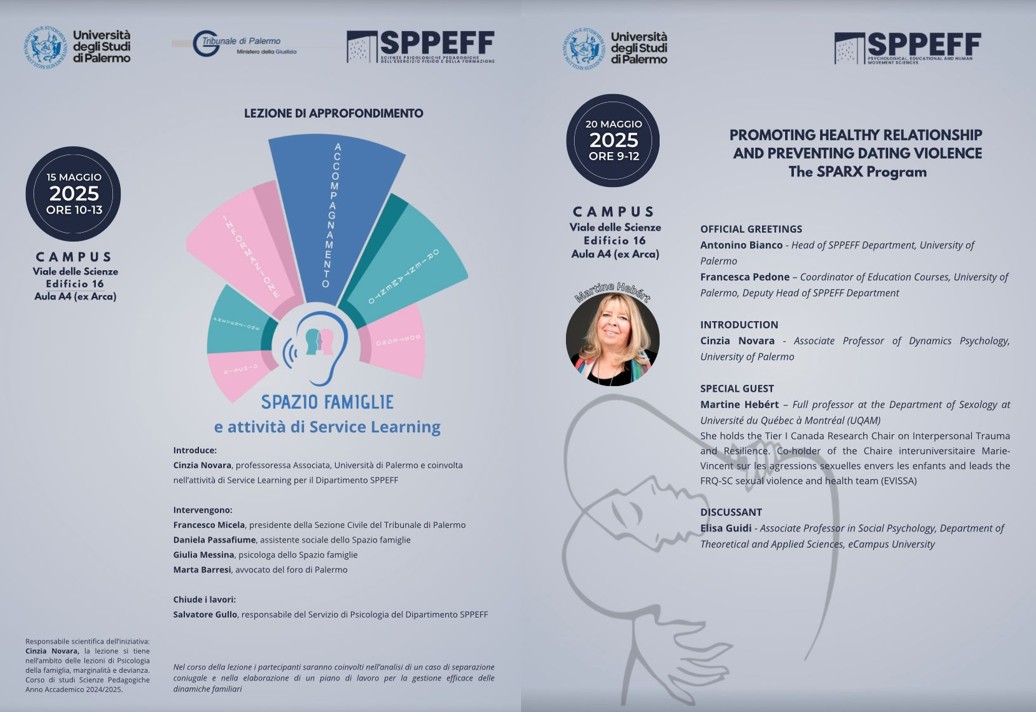
Cinzia Novara is an Associate Professor in the Department of Psychological, Pedagogical, Physical Exercise and Training Sciences at the University of Palermo. She is actively engaged in teaching and research, focusing on community psychology, family dynamics, intercultural education, and youth mental health. Her teaching includes courses such as Family Psychology, Marginality and Deviance, and Network Interventions in Community Work. Her research interests center on community wellbeing, migration, school inclusion, and the psychological impact of digital technologies. She explores how social support, school climate, and intercultural dynamics influence the lives of adolescents, migrants, adopted children, and LGBTQ+ individuals. Her work often integrates participatory methods and service learning to foster social transformation. Her recent publications (2023–2025) show a strong focus on emotional intelligence, vulnerable narcissism, social media use, and the psychological effects of the pandemic on university students. The research consistently emphasizes community resilience, inclusion, and the role of educational environments in shaping psychological outcomes. Themes such as sense of community, coping strategies, and identity in multicultural families recur across her work. Scientific Projects: PRIN 2022 - CURA: Children as vulnerable users of IoT and AI-based technologies T@les at home - Multilingual Families Erasmus K2 Project “CARE” CORI 2017 & 2019: Civic engagement and migrant acculturation Micropolis: Community welfare model Prevention of pathological addictions among university students Work Addiction and Community Psychology Family Space and Service Learning She supervises internships and thesis work, advising students through direct engagement and institutional portals. She leads initiatives under the Third Mission of Unipa, including the UNIPA Parents' Service and Family Space, promoting community-based learning and social inclusion. Her projects often involve cross-cultural collaboration, particularly with Spain, and focus on building inclusive educational cultures.
Norbert M. Schmitz is a Professor of Aesthetics at the Muthesius Academy of Fine Arts in Kiel, Germany. He has held academic roles at institutions including the University of Wuppertal (1992-1996), University of Siegen (2000), Ruhr University Bochum (1991-2000), and the University of Art and Design in Zurich (1999/2000). His international lecture activities span Austria, Switzerland, France, USA, and Pakistan. Institute of Art, Design and Media Studies: Aesthetics Muthesius Academy of Fine Arts (Faculty) Research and Publications: Schmitz’s work focuses on intersections of modernist art , film studies , media theory , and visual culture , with particular emphasis on topics like interactive media art , cinematic artist portraits , and synthetic realities . His edited volumes include works on embodiment , temporal media , and design anthropology . Academic Collaborations: Frequent co-editor with Lars C. Grabbe and Patrick Rupert-Kruse , contributing to the Yearbook of Moving Image Studies (YoMIS) and other key publications. His editorial work spans institutions in Darmstadt, Marburg, and Vienna. Key Themes: Explores media as aesthetic strategy , evolutionary perception , intermediality , and technological materiality across film, art, and design. Analyzes modernist paradigms in works by Eisenstein, Tarkovsky, and Bauhaus theorists.
Sean Downey is an Associate Professor of Art and Director of the Low-Residency MFA program at Maharishi International University (MIU) in Fairfield, IA. He has been a long-standing educator in fine arts, previously serving as Senior Lecturer in Fine Arts at Brandeis University since 2007 and mentoring in MFA programs at Lesley University and New Hampshire Institute of Art. His academic background includes a BFA from the Kansas City Art Institute and an MFA from Boston University. Downey's research and artistic practice explores the intersection of digital and analog media, particularly how virtual reality, photogrammetry, and 3D scanning inform contemporary painting. His work investigates the relationship between personal and collective memory, time, and perception, often juxtaposing autobiographical elements with historical artifacts and period spaces. He is deeply engaged in how translation across media alters meaning, especially as digital imagery re-enters the physical world through oil painting. His recent creative output includes solo and group exhibitions across the U.S., such as Why Each Perfumed Flower (2022), Transmutations (2017), and The Work on Paper Show (2017), reflecting a sustained engagement with painting, curation, and interdisciplinary exploration. His exhibitions often explore symbolic, existential, and cultural themes, blending personal narrative with broader historical resonance. His scientific and artistic honors include: James and Audrey Foster Prize (2015, with kijidome) MacDowell Colony Fellowship (2015) Massachusetts Cultural Council Artist Fellowship (2014) Blanche E. Colman Foundation Award (2013) Theodore and Jane Norman Award for Faculty Scholarship (2017, 2011/12) Ucross Foundation Residency (2010) As a mentor and visiting critic, Downey has advised students at Boston University, Dartmouth College, Rhode Island School of Design, Massachusetts College of Art, and Montserrat College of Art. His curatorial work includes founding kijidome, a collaborative initiative that curated exhibitions like Green Dream and S01E01 , emphasizing experimental and interdisciplinary formats. He has received support from multiple artist residencies and fellowships, underscoring his national recognition in the visual arts community. He maintains an active studio practice and continues to exhibit nationally, contributing significantly to contemporary discourse in painting and new media.
Lara Lesch is an academic researcher affiliated with the Faculty of Psychology and Sport Science at Bielefeld University . She serves as an Academic Councillor since March 2025, following a postdoctoral role and research assistantship in the same department from June 2024 to February 2025 and January 2021 to May 2024 respectively. Her academic background includes a Doctorate in Sport Science (Dr. phil.) completed in March 2021, a Master’s degree in Sport Management from Tübingen University (2017-2020), and a Bachelor’s degree in Sport and Sport Science from Mainz University (2013-2017). Academic Councillor, Department of Sport Science, Bielefeld University (2025–present) Post-Doc, Department of Sport Science, Bielefeld University (2024–2025) Research Assistant and Doctoral Student, Department of Sport Science, Bielefeld University (2021–2024) Lesch’s research focuses on gender dynamics in sports leadership , organizational change in sports institutions , and inclusion in both non-profit and commercial sports organizations . Her recent publications emphasize the structural and societal barriers to women’s representation in sports governance, organizational responses to inclusion and diversity mandates, and the evolving competencies required in elite sports coaching. Her work appears in journals such as the European Journal for Sport and Society , where she has contributed empirical analyses on gender diversity and organizational performance. Lesch also investigates the impact of global crises, such as the COVID-19 pandemic , on corporate social responsibility practices within sports entities. Her methodological approach includes both quantitative citation analyses and qualitative assessments of stakeholder experiences in unique settings like prison sports programs . Lesch is actively involved in student academic advising for programs including the 1-Subject Profile "Economy and Society" and the MA program in Organizational Development & Management. She is responsible for the module 61-PW-WAM Scientific Work and Methods , indicating her commitment to academic training and research methodology in sports science education.
Jana Gonnermann-Müller is a research assistant at the Chair of Business Information Systems, Processes and Systems at the University of Potsdam . Holding an M.Sc. in Psychology from Humboldt University of Berlin, her work focuses on human-machine interaction, particularly examining learning, decision-making, and trust in technological collaborations. Degree: Master of Science (M.Sc.) in Psychology Alumni: Humboldt University of Berlin Current Role: Scientific Associate at University of Potsdam Research explores cognitive factors in augmented reality and AI assistance systems , employing experimental designs and eye tracking methodologies. Key projects include investigating visual guidance in AR, comparing AR display types, and developing frameworks for generative AI in education. Publications (2023-2025) demonstrate expertise in digital education , cognitive load optimization , and technology-enhanced learning . Collaborations span institutions like Hong Kong Polytechnic University , University of California, Davis , and Weizenbaum Institute , with corporate consulting on learning technology implementation. Technical focus areas include: Human-System Design Optimization Eye Tracking & Usability Studies AI Recommender Systems Industry 4.0 Implementation Research applications extend to: Secondary Education Technology Assembly Line AR Integration Change Management Systems Maintenance AR Visualization
Tuğba KANMAZ is an Assistant Professor at Kırşehir Ahi Evran University, Faculty of Education, Department of Basic Education since 2024. Previously, she held academic positions at Kütahya Dumlupınar University from 2018-2024, including roles as Department Head and Vice Dean . PhD in Preschool Education (Gazi University, 2023) Master's in Preschool Education (Gazi University, 2017) Bachelor's in Primary Education (Muğla Sıtkı Koçman University, 2014) Her research focuses on Preschool Education and Early Childhood Education , with emphasis on Computational Thinking , Creative Drama , and Technology Integration . Her work explores: Robotics and coding education for preschoolers Peer relationships and bullying prevention Movement programs for children with disabilities Parental involvement in digital education 21st-century skills in early childhood Recent publications analyze trends in drama-based pedagogy, coding tools like ScratchJr, and pandemic-induced learning losses. Awards include the 2023 Academic Incentive Award and 2022 Best Oral Presentation at international conferences. Collaborations span institutions including Gazi University and Kafkas University.
Prof. Svetoslav Kosev is a faculty member at the Faculty of Fine Arts of the University of Veliko Tarnovo St. Cyril and St. Methodius. His research bridges computer technology with visual arts , focusing on 3D modeling , digital media , and interactive art . He actively explores the ethical implications of AI in art and integrates augmented reality into classical graphic works. Fields of Interest : Computer technology in fine arts, 3D graphics, interactive multimedia, digital humanities Projects : Founder of the annual Vision Forum for 3D graphics, leader in digitization initiatives, and developer of digital art platforms Research Focus : Kosev investigates how digital tools like AR and 3D printing transform traditional art practices. His work spans artistic innovation and educational technology , particularly in training future artists through interdisciplinary methods . Google Scholar entries reflect his engagement with AI ethics , algorithmic art , and technological aesthetics . Publications highlight collaborations between Bulgarian and Polish institutions , with applications in VR technologies , calligraphy , and interactive visual works . He has contributed to academic discourse through edited volumes and conference proceedings.
Maurizio Mancini is an Associate Professor in the Department of Computer Science at Sapienza University of Rome. His research focuses on Human-Computer Interaction, Affective Computing, and Multimodal Interaction, with applications in Virtual Reality, Embodied Conversational Agents, and Digital Commensality. He has contributed to understanding expressive movement analysis, social robotics, and adaptive systems in gaming and mindfulness contexts. 2024 : 8 publications on VR mindfulness, reinforcement learning, digital commensality, and multimodal interaction 2023 : 4 studies on human-food interaction, gait recognition, and AI human-likeness 2022 : 5 papers on social robots, collaborative dining, and anomaly detection His work spans topics like nonverbal leadership in full-body improvisation, transactive memory systems in group interactions, and computational models for human-food interaction. Teaching includes courses on Human-Machine Interaction and Programming.
Nadine Bergner is a Professor in the Teaching and Research Area of Learning Technologies (Informatik 9) at the Faculty of Computer Science, Dresden University of Technology (TU Dresden). Her work focuses on innovative approaches to computer science education across various educational levels, from primary schools to university settings. She leads research on learning technologies, VR applications in education, and teacher training in computer science. Prof. Bergner's research spans multiple dimensions of computer science education. She has developed and evaluated numerous educational approaches including VR serious games, physical computing with Arduino, and specialized learning environments like the InfoSphere student lab. Her work emphasizes making computer science accessible and engaging for diverse learners, including young children, senior citizens, and pre-service teachers. She has made significant contributions to understanding how students form mental models of computer science concepts and how these can be effectively developed through targeted educational interventions. Her recent publications reveal a strong focus on emerging technologies in education, particularly virtual reality applications for computer science learning. She has been exploring how different interaction modalities in VR affect learning outcomes, presence, and enjoyment. Another major thread in her recent work involves machine learning education, where she has developed concept inventories and game-based learning approaches to make complex ML concepts accessible to learners. She has also been actively researching how to integrate computer science and AI competencies into teacher education across various disciplines. Prof. Bergner has made substantial contributions to the development of educational materials and frameworks for computer science education. Her work includes creating resources for programming education ("Apps programmieren für Dummies Junior"), designing concept inventories for machine learning assessment, and developing comprehensive approaches to building computational thinking skills from early childhood through higher education. She has been instrumental in shaping computer science education policy through initiatives like the Dagstuhl Declaration on education in the digital networked world. Her research often involves collaborative projects with schools and teachers, focusing on practical implementation and evaluation of computer science education approaches. She has been particularly active in developing teacher training programs and materials to support the integration of digital competencies into school curricula. Her work with the InfoSphere student lab has provided valuable insights into how extracurricular learning environments can shape students' perceptions of computer science.
Ørjan Grøttem Martinsen is a Professor of Electronics at the Department of Physics, Faculty of Mathematics and Natural Sciences, University of Oslo. He also holds a temporary research position at the Medical Technology Business Area of Oslo University Hospital. With over three decades of experience, he has established himself as a leading expert in bioimpedance research and applications. Education: High-voltage engineer degree (1983) Cand. scient. in electronics/measurement technology (1990) Dr. scient. with thesis on skin's electrical properties (1995) Professor Martinsen's research centers on bioimpedance—the passive electrical properties of biological tissues that vary with anatomy and physiology. His work spans diverse applications including medical diagnostics (skin cancer detection), food quality assessment (fresh vs. thawed fish), skin condition monitoring (moisture levels), and stress level evaluation. His research bridges physics, engineering, and medical applications, creating practical diagnostic tools from fundamental electrical principles. He has pioneered methods to characterize tissue properties through impedance measurements, with particular focus on electrodermal activity and skin impedance. His recent publications (2022-2025) demonstrate a strong interdisciplinary approach combining bioimpedance with machine learning, robotics, and advanced signal processing. The work spans from fundamental biophysics (GABA detection, tissue characterization) to practical applications (dental anxiety assessment, ADHD treatment evaluation). Key trends include integration of AI with bioimpedance measurements, development of novel sensor systems, and expansion into new application areas like optogenetics and micro-robotics. Awards and Recognition: IEEE Senior Member (2006) CLABIO Award (2012) Fellow at Institute of Physics (FInstP) (2015) Dr. Honoris Causa, Tallinn University of Technology (2018) UiO Innovation Award (2019) Member of Norwegian Academy of Technical Sciences (2021) Professor Martinsen has served as Editor-in-Chief of the Journal of Electrical Bioimpedance since 2010 and was President of the International Society for Electrical Bioimpedance (2010-2016). His research has attracted significant funding, enabling collaborations across engineering, medical, and biological disciplines. He has supervised numerous students and researchers in the Bioimpedance Group at UiO, fostering a strong research environment that bridges theoretical and applied work. His work is conducted primarily through the Oslo Bioimpedance Group and Sensorama SmartSense research teams, which focus on developing innovative measurement techniques and applications of bioimpedance technology. These groups maintain strong collaborations with medical institutions and industry partners to translate research findings into practical healthcare solutions.
Aaron Sell is an Assistant Professor of Psychology & Criminology at Heidelberg University in the United States. His academic work focuses on evolutionary explanations of human behavior, particularly in the domains of aggression, anger, and formidability. He is affiliated with the zIReN Network, where he contributes to research on evolutionary psychology and its applications to understanding human social behavior. Sell earned his BA from Ohio University and his PhD from the University of California, Santa Barbara. His research expertise lies in evolutionary psychology, with a particular focus on the functional design of emotions like anger and hatred. He has published extensively on topics related to aggression, formidability estimation, and the evolutionary underpinnings of social emotions. Sell's research interests center on understanding human emotions through an evolutionary lens. He has developed and tested the recalibrational theory of anger, which posits that anger evolved as a bargaining emotion to negotiate for better treatment. His work on hatred proposes the neutralization theory, distinguishing hatred as a distinct emotion from anger. He also investigates how human perceptions of formidability influence social interactions, conflict resolution, and justice systems. His research demonstrates how modern societal institutions, particularly criminal justice systems, reflect evolved human nature and ancestral logic of conflict. Sell's publications reveal a consistent focus on how emotions function as adaptations to solve specific social problems faced by our ancestors. His work bridges evolutionary theory with practical applications in criminology and social psychology, showing how evolved mechanisms continue to shape human behavior in modern contexts. His research on the visual and vocal assessment of physical strength has demonstrated correlations between upper body strength and perceptions of dominance, militancy, and bargaining power in social conflicts. BA, Ohio University PhD, University of California, Santa Barbara Sell teaches a variety of courses including Introduction to Criminology and Criminal Justice, Introduction to Psychology, Methods and Statistics in the Behavioral Sciences, Psychology and the Law, Policing and Law Enforcement, Social Psychology, Senior Seminar, and Intermediate Data Science. His teaching reflects his interdisciplinary expertise spanning psychology and criminology.