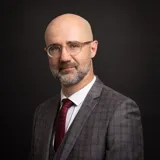
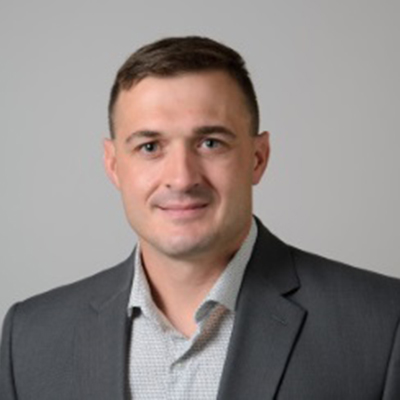
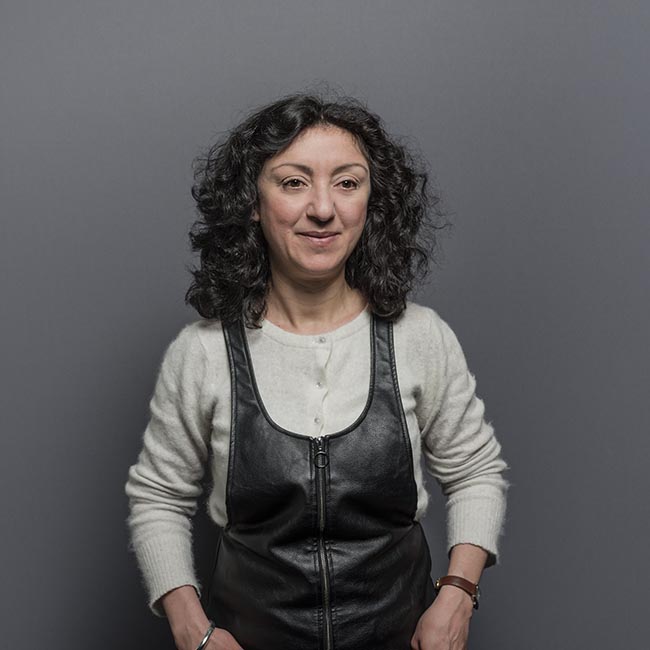
Simon O'Keefe is a Professor in the Department of Computer Science at the University of York. He holds a DPhil in Computer Science from the University of York, preceded by MSc degrees in Operational Research (Lancaster) and Information Processing (York), and a BA in Natural Science/Engineering from the University of Cambridge. His research focuses on bio-inspired computation, particularly neural networks and unconventional computing paradigms. He has held roles including Deputy Head of Department (Online) and previously served as Reader (2022-2024), Senior Lecturer, Lecturer, and Research Assistant at York. His work spans computational neuroscience, neuromorphic engineering, and AI applications in crisis response. Notable contributions include studies on reservoir computing using nanomagnetic devices, Arabic temporal understanding, and domain adaptation techniques. His publications explore topics like spike-based computing, cellular automata classification, and dependency-based bilingual embeddings. Prof O’Keefe’s research integrates theoretical computer science with practical applications in robotics, disaster informatics, and chemical computing systems. He leads the Artificial Intelligence research group at York and has contributed to interdisciplinary projects involving biochemistry and materials science.
Martin Ebers is a Visiting Professor of Information Technology Law at the School of Law, Faculty of Social Sciences, University of Tartu, Estonia, currently serving part-time. His career includes roles as Associate Professor and dotsent (senior lecturer) in IT Law from 2019 to 2022, with part-time appointments since 2023. He specializes in AI regulation, data protection, consumer rights, and EU legal frameworks for emerging technologies. Research interests focus on governance of AI and robotics, particularly in healthcare, legal technology, and digital identity. Notable projects include 'Machine learning and AI powered public service delivery' (2019–2022), addressing AI in public administration, and 'Protection of consumer rights in the Digital Single Market' (2018–2021). He leads publications on the EU AI Act, generative AI regulation, and ethical challenges in AI-driven healthcare. Advised doctoral students on topics like AI liability, telemedicine regulation, and EU consumer law. Supervised research projects include 'The Promise and Perils of AI in Public Administration' (2023) and 'Liability for Artificial Intelligence' (2021). Active in editing legal handbooks like 'Rechtshandbuch ChatGPT' and contributes to journals like European Journal of Risk Regulation and Recht Digital .
Dr. Magda Karagiannakis is a Senior Lecturer at the Law School of La Trobe University in Melbourne, Australia. She holds a Graduate Certificate in Higher Education and has extensive experience as an international lawyer, barrister, and academic. Her primary affiliations include La Trobe University, where she coordinates the Juris Doctor program and oversees the mooting program, and the Victorian Legal Admissions Board (VLAB), where she served as a statutory member for over six years. She has also contributed to international legal frameworks through roles such as prosecutor in the International Criminal Tribunal for the former Yugoslavia and legal advisor to the UN Inquiry in Lebanon. Dr. Karagiannakis' research focuses on international criminal law, public international law, and corporate accountability. She has published extensively on topics such as the insanity defense in international law, fitness to stand trial standards, and ICC procedural frameworks. Her work often bridges legal theory with practical applications, including training judges and legal professionals globally. Current roles: Course Co-ordinator of Juris Doctor program, Member of Academic Board's Coursework Committee Past roles: Member of Victorian Legal Admissions Board (2015–2021), Director of Mooting (2018–2021) Education: PhD (University of Melbourne), LLM (Leiden University), LLB (Monash University) Her professional activities span judicial training, legal policy development, and international legal practice. Notably, she has led La Trobe’s mooting program to success in competitions like the Vis Arbitration Moot and Nuremberg Moot. She advises on legal education governance and has contributed to the accreditation of academic law courses in Victoria.
Michele Chiari is a researcher at TU Wien's TrustCPS group, with former affiliations at Politecnico di Milano's DEIB department. His work focuses on formal methods, temporal logic, and verification of safety-critical systems. Current affiliation: TU Wien, TrustCPS group Former affiliation: Politecnico di Milano, DEIB His research bridges temporal logic and probabilistic model checking , with innovations like Pushdown Operator Precedence Temporal Logic (POTL) for recursive program verification. Current projects include probabilistic pushdown automata verification under the MSCA PF CORPORA initiative. Articles in recent years explore signal temporal logic tableau methods , probabilistic hyperproperties for decentralized planning , and parallel parsing with operator precedence grammars . These align with his expertise in formal verification and approximate computing. Scientific awards: Best Student Paper Award at AAMAS 2025 He actively contributes to open-source tools like TAFFO for floating-point precision tuning and OPPAS for recursive probabilistic program verification. Collaborations span academic conferences (ECOOP, CAV) and H2020 projects like PIACERE.
Michele Chiari is a Research Fellow at TU Wien, serving as Principal Investigator for the MSCA PF project CORPORA under the TrustCPS group led by Univ-Prof Ezio Bartocci. His work focuses on formal methods for safety-critical and real-time systems, with a specialization in temporal logic, formal languages, and automata theory.
Dr. Ofer Fridman is a Senior Lecturer in War Studies and Director of Operations at the King’s Centre for Strategic Communications (KCSC) within King’s College London’s School of Security Studies. He joined the university in 2016 and holds a PhD from the University of Reading, an MA from Interdisciplinary Centre Herzliya, and a BA from Hebrew University Jerusalem. His research focuses on strategic communications, Russian military thought, and contemporary conflicts, with a particular emphasis on information confrontations involving Russia. He is a member of the Canadian Network on Information and Security (CANIS) and the editorial board of the International Centre for Counter-Terrorism (ICCT). Dr. Fridman teaches courses such as 'Strategic Communications: Theories & Concepts' and 'Applied Strategic Communications.' He has supervised multiple PhD students as first or second supervisor. His work includes analyzing the Kremlin’s strategic communications, Russian hybrid warfare, and disinformation dynamics. Notable publications include Russian Hybrid Warfare: Resurgence and Politicisation (2022) and Strategiya: The Foundations of the Russian Art of Strategy (2021). He frequently contributes to discussions on Ukraine, the Western Balkans, and global security challenges. His research often explores the intersection of military strategy, information warfare, and geopolitical shifts, with a focus on Russia’s role in modern conflicts. Key areas of his research include Russian strategic culture, information warfare tactics, and the impact of disinformation on international relations. He has led studies on disinformation in the Western Balkans and advises on counter-disinformation strategies. His recent work, such as Deciphering Russian Enigma (2025), delves into Russian strategic narratives and their global implications. He actively participates in academic events, including symposiums on Russian audiences and geopolitical shifts. Dr. Fridman’s collaborations include projects with organizations like the European Parliament and the Community of Democracies. He has been cited over 50 times and is involved in policy-oriented research, such as the Counter-FIMI Toolbox for Diplomats. His work bridges academic analysis and practical policy solutions, emphasizing the need for strategic communication frameworks to address modern security challenges.
Christian Wolff serves as a Researcher at the Photovoltaics and Thin Film Electronics Laboratory (PV-LAB) within the Institute of Microengineering at EPFL's School of Engineering. He leads a research group pioneering advancements in perovskite-based photovoltaics, specializing in tandem solar cell architectures that achieve record efficiencies while addressing stability challenges for commercial deployment. His academic foundation includes a Physics doctorate from the University of Potsdam focused on halide perovskite solar cells, preceded by undergraduate studies at Ludwig-Maximilians-Universität München investigating nanoparticulate photocatalysts for water splitting. This was followed by EPFL postdoctoral research funded by a Marie Skłodowska-Curie fellowship. Wolff's research program centers on pushing the boundaries of photovoltaic efficiency through innovative materials engineering. Key thrusts include developing stable perovskite-silicon tandem configurations, mastering degradation mechanisms in halide perovskites, and creating scalable fabrication techniques for industrial translation. His work integrates advanced spectroscopy with device physics to optimize carrier management and photon harvesting. Analysis of his 2025 publications reveals a concentrated focus on perovskite-silicon tandem systems, with dominant themes in large-area manufacturing (60 cm 2 modules), interface engineering for stability, and novel light management strategies. The research demonstrates strong industrial relevance through solutions addressing scalability, UV degradation, and economic viability while maintaining scientific rigor in materials characterization. Recognition for his contributions includes: Marie Skłodowska-Curie Actions individual fellowship Carl-Ramsauer-Price from the Physical Society of Berlin Multiple publication and conference awards Wolff actively mentors the next generation of photovoltaic researchers, currently supervising six PhD candidates while having successfully graduated Guesnay Quentin Jean-Marie Armand. His group operates within EPFL's PV-LAB, which maintains strategic partnerships with semiconductor manufacturers to accelerate technology transfer. Current projects focus on exceeding 30% efficiency in commercial-scale tandem modules while solving operational stability challenges through advanced encapsulation and material design. The PV-LAB under Wolff's leadership combines fundamental materials research with applied engineering, utilizing state-of-the-art thin-film deposition and characterization facilities. The team's collaborative approach bridges academic discovery and industrial implementation, with recent work emphasizing manufacturable solutions for next-generation solar technologies.
Alex Beckstrand is an Adjunct Lecturer at Central Connecticut State University and Delivery Assurance Manager at Pratt & Whitney (Raytheon Technologies), with concurrent service as a U.S. Marine Corps Reserve Infantry Officer specializing in foreign security force advising. His academic work bridges military history and international relations, featuring teaching appointments at both Central Connecticut State University and the University of Connecticut where he instructs courses in U.S. History and International Studies. His educational qualifications include: Ph.D. in History from the University of Connecticut (Advisor: Frank Costigliola) M.A. in International Relations from American University (2019) B.A. in History from Virginia Military Institute (2010) Beckstrand's research centers on Civil-Military Relations, U.S. Military and Diplomatic History, and Grand Strategy, with deep expertise in World War I/II contexts and US-Middle East relations. His scholarship consistently examines historical precedents for contemporary national security challenges, particularly presidential command decisions, military force structure evolution, and resource diplomacy in geopolitical conflicts. His field combines archival historical analysis with policy-relevant strategic assessment. His publications reveal a methodological focus on diplomatic-military intersections, with recurring themes of civil-military tension during interventions, strategic adaptation in global conflicts, and lessons from early 20th-century oil diplomacy for modern resource security. Key contributions analyze Woodrow Wilson's command during the Punitive Expedition, historical alternatives to the all-volunteer force model, and WWII-era strategic analogies for contemporary threats. Beckstrand's scholarly recognition includes: Doctoral Dissertation Fellowship (University of Connecticut, 2022/2023) World Politics and Statecraft Fellowship (Smith Richardson Foundation, 2022) Excellence in Teaching Award Honor Roll (Central Connecticut State University, 2022) Rear Admiral Samuel Eliot Morison Supplemental Scholarship (Naval History and Heritage Command, 2022) Thomas G. Paterson Graduate Fellowship (University of Connecticut, 2020) George C. Marshall Scholar (2010) His teaching portfolio spans U.S. History surveys and International Studies seminars, recognized for pedagogical excellence. Research funding from the Smith Richardson Foundation and Naval History and Heritage Command supports his dissertation on civil-military relations. His military experience—including combat deployment to Afghanistan and advisory roles in Jordan, Morocco, and Tunisia—directly informs his academic perspective on security force assistance and regional dynamics. As host of the 'New Books in Military History' podcast, he actively engages with scholarly discourse through interviews with leading historians. Beckstrand maintains dual operational roles: as a Marine Corps Foreign Security Force Advisor conducting assessments in North Africa and Eastern Europe, and as a supply chain manager at Pratt & Whitney overseeing defense-critical engine delivery. His Arabic language training (Fez, Morocco) and regional deployments underpin specialized expertise in Middle Eastern security affairs, while his podcast platform amplifies emerging scholarship in military history.
Dr Naira Taroyan is a Senior Lecturer in Psychology at the University of Sheffield Hallam University, affiliated with the Sheffield Institute of Social Sciences (SIS) within the College of Social Sciences and Arts. She holds a PhD in Cognitive Neuroscience (2008) and a prior PhD in Psychophysiology (1995). Her research focuses on brain-behavior correlations in visual perception, cognitive functions, and neurodegenerative disorders like dyslexia and Alzheimer’s disease. Education includes a Biology undergraduate degree and MSc in Psychophysiology from Yerevan State University (Armenia), followed by a PhD in Visual Psychophysiology at Moscow State University. Postdoctoral research at Brown University (USA) and the University of Sheffield preceded her 2007 appointment at SHU. Research interests span: Electrophysiological methods (EEG/ERP) for studying visual perception Cognitive mechanisms of reading and dyslexia Alzheimer’s disease neurophysiology Visual-spatial attention and hemispheric lateralisation Coherent motion perception Publications (2000–2021) reveal a focus on ERP studies of visual processing abnormalities in disorders, with recent work on lightness contrast/assimilation and nicotine’s effects on auditory ERP components. Awards: No explicit prizes listed, but active in professional organizations: British Association of Cognitive Neuroscience (BACN), International Brain Research Organisation (IBRO), and Organisation for Human Brain Mapping. Supervises three PhD students in reading/language and visual perception domains, including completed theses by Samuel Acaster (2018) and Emma Lethbridge (2015). Active in MSc Clinical Cognitive Neuroscience program, teaching Perception & Cognition modules and electrophysiology techniques.
Tenzin Dorjee serves as an Adjunct Assistant Professor of Political Science at Columbia University, specializing in international relations and comparative politics with a focus on religious influences on political behavior and transnational repression dynamics. His research critically examines Tibet-China relations, nonviolent resistance strategies, and diaspora politics through rigorous academic analysis and field-based investigations. His educational foundation includes a B.A. in International Relations from Brown University followed by M.A. and Ph.D. degrees in Political Science from Columbia University. This academic trajectory established his expertise in political theory, research methodology, and area studies essential for analyzing complex ethno-political conflicts. Dorjee's research program integrates multiple interconnected domains: Religious epistemology's impact on political decision-making Transnational repression mechanisms targeting diaspora communities Nonviolent resistance strategy development under authoritarian regimes Cultural preservation in state assimilation contexts Comparative analysis of minority policies in China's western regions His publication record reveals consistent thematic concentration on Tibetan political struggles, with evolving methodological sophistication from historical analysis to contemporary policy evaluation. Key trajectories include documentation of Chinese assimilation policies, strategic assessments of resistance movements, and innovative examinations of digital activism constraints. His scholarly recognition includes: Stephanie G. Neuman Fellowship at Columbia's Saltzman Institute of War and Peace Studies (2021-2022) Charlotte Newcombe Doctoral Dissertation Fellowship from Institute for Citizens and Scholars (2023-2024) Through his Senior Researcher position at Tibet Action Institute, Dorjee bridges academic scholarship with practical human rights advocacy, developing strategic frameworks for nonviolent resistance training and transnational campaign coordination. His work demonstrates sustained commitment to translating theoretical insights into actionable movement strategies while maintaining rigorous academic standards.
Jia Liu is a Professor at Tsinghua University's School of Information Science and Technology, Department of Computer Science, with a distinguished research career spanning multiple disciplines in computer science and engineering. Her extensive publication record demonstrates leadership in artificial intelligence, machine learning, and their applications across diverse domains. Dr. Liu's research interests encompass the development and application of advanced computational techniques to solve complex real-world problems. She has pioneered innovative approaches in neural network architectures, medical imaging analysis, remote sensing applications, and multi-agent systems. Her work on Asym-UNet and ThreeF-Net has significantly advanced breast lesion segmentation techniques, while her contributions to digital twin technology have enhanced nuclear reactor operations and Martian exploration systems. Analysis of Dr. Liu's recent publications reveals a strong trend toward interdisciplinary research that bridges theoretical computer science with practical applications in healthcare, environmental monitoring, defense technology, and education. Her work demonstrates consistent innovation in algorithm development, particularly in adapting machine learning techniques to domain-specific challenges. Dr. Liu maintains an active research program with numerous collaborations across academia and industry. Her work on federated learning for dual carbon initiatives reflects her commitment to addressing global sustainability challenges through technological innovation. As an educator, Dr. Liu has developed innovative teaching methodologies that integrate virtual reality and game-based learning, particularly in language education. Her research on interactive e-learning environments demonstrates her dedication to improving educational outcomes through technology.
Florian Herzog is a Lecturer at the Lucerne School of Computer Science and Information Technology (HSLU). He holds a PhD in Bioinformatics from ETH Zurich, a Master of Science in Bioengineering and Biotechnology from EPFL (with a research stay at Columbia University), and a Bachelor in Life Sciences and Technologies from EPFL. His professional roles include Senior Researcher at HSLU and Co-Leader of the CAS Artificial Intelligence program. Herzog's research focuses on Cognitive Robotics, Artificial Intelligence, Discrete Optimization, and Data Science, with projects addressing AI-driven process optimization in tourism and technical customer service. He co-leads the Cognitive Robotics Lab and has contributed to research on hybrid teaching formats and AI applications in design and production processes. His academic contributions span computational biology, bioinformatics, and applied AI. Education: PhD in Bioinformatics, ETH Zurich Master of Science in Bioengineering and Biotechnology, EPFL (with research at Columbia University) Bachelor in Life Sciences and Technologies, EPFL Research Interests: Cognitive Robotics and AI applications in real-world systems Discrete optimization for scheduling and precedence constraint problems Data science methodologies for process automation AI-driven solutions in tourism and customer service Notable Projects: "Intelligente Auskunftssysteme im Tourismus" (AI-based tourism information systems) "Kognitive Services im Technischen Kundendienst" (cognitive services in technical customer service) Optimizing design/production processes via AI Lab Affiliation: Cognitive Robotics Lab at HSLU.
Jana Koehler is Professor and Co-Head of the AI Robotics Research Lab at Lucerne University. With a strong background in industrial research (IBM, Schindler) and academia, she leads research in AI planning, constraint programming, and business process automation. Her work focuses on industrial applications of AI, including manufacturing optimization (cable wiring benchmarks), tourism information systems, and cognitive customer service solutions. Recent publications explore approximation algorithms for combinatorial problems and constraint pattern modeling. Koehler has developed courses on AI fundamentals, knowledge representation, and software architecture. She coordinates projects on child welfare data collection and women's participation in computer science.
Francesco Pontiggia is a PreDoc Researcher at the Institute of Computer Engineering, Faculty of Informatics at TU Wien. His research focuses on formal verification of probabilistic systems, cyber-physical systems, and automated controller synthesis. He contributes to the ProbInG project (2020–2025), developing model checkers for probabilistic operator precedence languages and related formalisms. Key research interests include probabilistic hyperproperties, formal methods for probabilistic programming, and verification techniques for recursive stochastic systems. His work bridges theoretical foundations with practical tools such as POPACheck and POMC, targeting applications in automated planning and program analysis. Recent publications (2019–2025) emphasize advancements in model checking algorithms for probabilistic systems, operator precedence languages, and exception handling mechanisms. These works address challenges in verifying complex systems with stochastic behaviors and conditional probabilities. He collaborates on projects integrating formal methods with compiler design, runtime verification, and cyber-physical system design. His research has led to tool implementations and theoretical frameworks published in top-tier venues like QEST and ACM Transactions on Programming Languages and Systems.
Michele Chiari is a PostDoc Researcher at TU Wien's TrustCPS Group led by Prof. Ezio Bartocci. Previously, he was a PhD candidate and PostDoc at Politecnico di Milano's DEIB in the DeepSE group. His primary affiliations include TU Wien and the TrustCPS group, with a focus on formal verification and cyber-physical systems. Education: PhD candidate and PostDoc at Politecnico di Milano's Department of Electronics, Information, and Bioengineering (DEIB). Research interests include formal methods for safety-critical systems, temporal logic, automata theory, model checking for recursive probabilistic programs, infrastructure-as-code modeling (DOML), floating-point computation verification, and approximate computing. Research highlights: Development of POTL (Probabilistic Operator Temporal Logic), model checkers for operator precedence languages (POMC), and contributions to the PIACERE and CORPORA projects. His work bridges theoretical formal methods with practical applications in software engineering and embedded systems. Key projects include leadership of the EU-funded MSCA PF CORPORA project (2023–present) and contributions to the PIACERE H2020 initiative. Collaborations include tools like TAFFO (floating-point precision tuner) and DOML (Infrastructure-as-Code modeling framework). Labs/Teams: Core member of TU Wien's TrustCPS Group and former contributor to Politecnico di Milano's DeepSE Group. Active in conferences like CAV, RV, and CAiSE, with recent service roles on OOPSLA and RV program committees.